
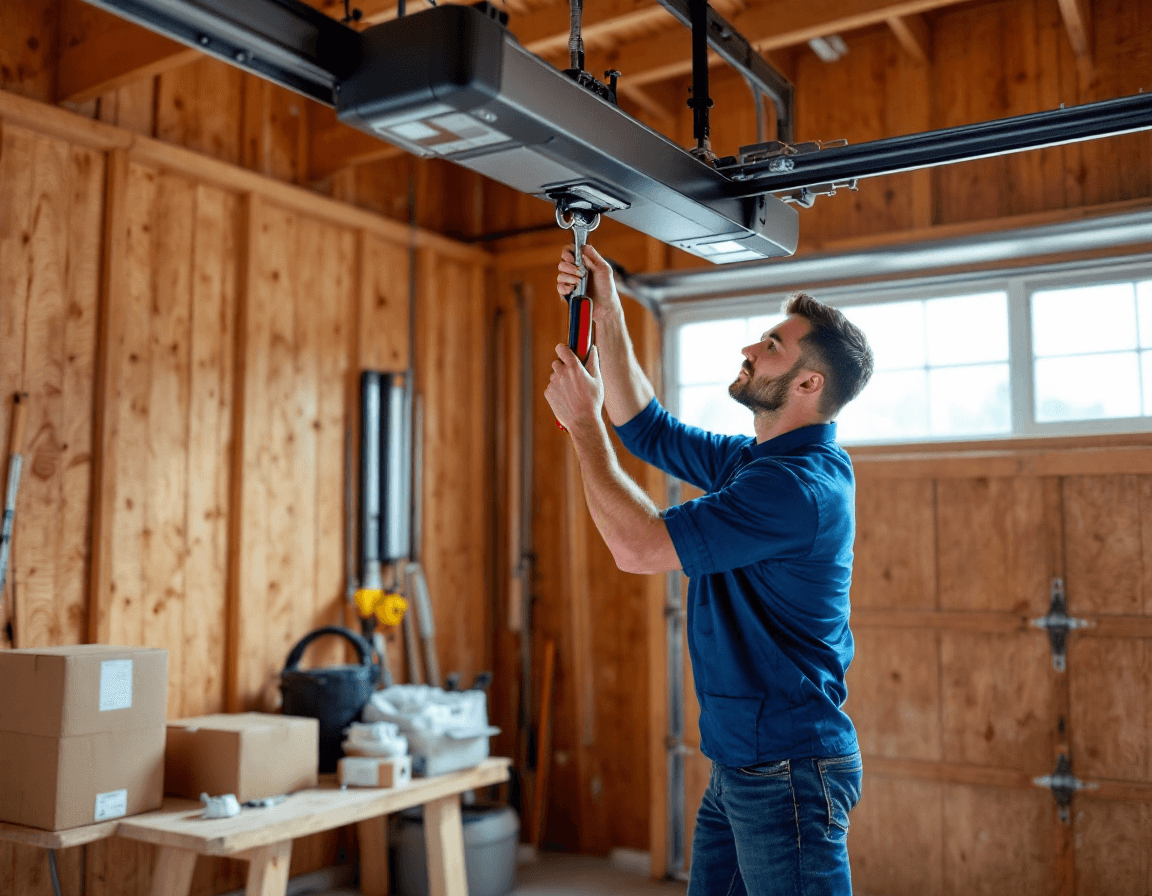
A garage door opener that groans, stalls halfway through its cycle, or ignores the remote on a damp November morning is more than an annoyance. For many households in Kent, WA, it is the point where repairing an aging motor stops making financial sense and installing a new opener becomes the smarter choice. Garage door opener installation and replacement in Kent covers everything from swapping a worn-out belt-drive unit to upgrading an older chain-drive model with modern safety and connectivity features. Our technicians at Seattle Garage Door Fix handle these installs across the city and surrounding neighborhoods, from homes near Kent Station to properties on East Hill and streets close to Panther Lake.
Kent's housing stock is varied. You will find mid-century ranch homes with single-car garages, newer subdivisions with wide two-car bays, and older properties where the garage was added decades after the house was built. Each layout asks something different of an opener, including how much ceiling room is available, whether the door is a standard sectional or a lighter specialty model, and how often the family runs the door each day. Before any new unit goes in, we look at these details so the opener you end up with fits the building and the way you actually use it.
Price is a question nearly every homeowner asks first. Installed pricing for a new opener in our service area generally falls between $275 and $650, and the exact number depends on the model, drive type, and any accessories you choose. We will walk through what that range includes later on this page, because the lowest quote is not always the best value once you account for features, warranty coverage, and the quality of the work itself.
Reading the Signs Your Current Opener Has Quit on You
Most openers do not fail without warning. They give off a series of clues over months or even years, and recognizing them early can save you from being stranded in the driveway at six in the morning. A unit that has become noticeably louder than it was when it was new is often telling you that the gears, bearings, or drive components are wearing unevenly. A rattling or clunking sound at the end of travel can point to loose mounting hardware or a trolley that is starting to bind along the rail.
Speed and reliability problems are just as telling. If the door now takes twice as long to open as it did a few years ago, the motor may be struggling to lift the panels, which can happen when springs have lost tension or the opener's internal components are fatigued. Intermittent failures are especially frustrating because the door may work fine for a week and then refuse to respond to the remote on a rainy evening. Those on-and-off symptoms often mean a failing logic board, a weakened receiver, or corroded connections that trap moisture after repeated Pacific Northwest rain cycles.
It is worth noting what an opener installation does not include. The springs, cables, and drums are part of the door's counterbalance system, and that system carries significant tension even when it looks inactive. Our technicians will evaluate the door during an opener replacement, but any spring or cable repair must be performed by a licensed professional with the right tools and training. Homeowners should never attempt to adjust or replace torsion springs themselves, since a sudden release can cause serious injury.
- Door runs noticeably louder, grinds, or vibrates through the ceiling
- Opening or closing takes much longer than it used to
- Remote or keypad works only some of the time
- Auto-reverse or safety sensors trigger for no clear reason
- Unit feels hot after normal use or emits a burning smell
- Light fixture on the opener flickers or fails repeatedly
Belt Drive, Chain Drive, or Wall Mount: Matching the Motor to Your Kent Garage
Choosing the right drive style is one of the most consequential decisions in an opener replacement. Chain-drive openers use a steel chain running along a rail, which is durable and generally the most affordable option. The trade-off is noise: a chain moving over metal gears is audible inside the house, especially in homes where a bedroom sits above or beside the garage. Chain drives remain a sensible pick for detached garages, workshop spaces, or households where the opener's sound is not a daily concern.
Belt-drive openers use a reinforced rubber belt in place of the chain, and the difference in operation is immediately noticeable. The belt runs quietly and smoothly, which makes it the usual recommendation for attached garages in Kent neighborhoods where living spaces share a wall or ceiling with the garage. Belts also require less lubrication over time, though they do need periodic tension checks, and they should be kept away from moisture and temperature extremes that can stretch or age the material faster.
Wall-mount openers take the motor off the ceiling entirely and bolt it to a sturdy interior wall beside the door. This frees up overhead space, which matters in garages where storage racks, bikes, or a lift hang from the joists. Wall-mount units are also a good solution for homes with low ceilings or for garages with unusual track layouts. Our team measures the header, wall thickness, and clearance before recommending a wall-mount model, because the mounting surface has to be solid enough to handle repeated starts and stops.
How Pacific Northwest Damp and Wind Shape Opener Choices
Western Washington's climate affects garage equipment in ways that homeowners in drier regions may never encounter. Kent sees long stretches of gray, damp weather, and the moisture that settles into garages during fall and winter can accelerate corrosion on exposed metal, wiring terminals, and sensor connections. A good installation starts with checking the garage for humidity sources, such as an unvented dryer, an uninsulated slab that sweats in cold months, or a door seal that has pulled away from the floor.
Wind is the other local factor to plan around. Storms that roll through the South King County area during the cooler months can knock out power for hours, sometimes longer, and they can also flex the door and tracks enough to throw off alignment. An opener mounted on a secure bracket with properly tightened hardware handles these conditions far better than a unit that was installed quickly and never rechecked. We pay particular attention to bracket anchoring, track bracing, and the way the header holds the motor during high winds.
Seasonal temperature swings also matter. Lubricants can thicken during cold snaps, and rubber components can harden, which is why we select lubrication and drive components suited to the local range of conditions. A clean, dry, and well-balanced door is easier on any opener, so during installation we check the door's alignment and confirm the seals and weatherstripping are still doing their job. Those small details prevent the kind of premature wear that drives many homeowners to call us a few years after an inexpensive install.
Rolling-Code Security and Why an Older Unit Is a Liability
Openers made before the widespread adoption of rolling-code technology transmit a fixed signal every time you press the remote. A thief with a simple scanner can capture that code and reuse it to open the door later. Rolling-code systems change the transmitted signal with every use, so a captured code is useless for future access. If your opener is more than a decade old and still relies on fixed codes, replacing it is one of the most practical security upgrades you can make to a Kent home.
Security is not limited to the remote. Many older openers lack modern safety features such as photo-eye sensors that stop and reverse the door when something blocks the path, or auto-reverse mechanisms that respond correctly to resistance. Current safety standards require these protections, and they are especially important in households with children or pets who may wander near a closing door. A new installation brings the entire system up to current safety expectations, not just the motor.
Keypads and exterior wireless entry systems deserve a similar review. If the keypad on your garage wall still uses a simple code that has been the same for years, or if the old unit allows unlimited remote programming without any notification, a replacement lets us configure user access, disable unused remotes, and set up secure entry options. We walk you through how each remote is paired so you know exactly which devices can open the door, and we remove outdated remotes from the memory during the install.
Wi-Fi and myQ Control Without the Gadget Overload
Smart garage control has moved from novelty to practical convenience for many households. Wi-Fi-enabled openers, including models that work with the myQ app, allow you to check whether the door is open from your phone, close it remotely after leaving for work, and receive alerts when it moves. For families whose schedules change often, these features can take the guesswork out of whether the garage was left open. Some systems also let you grant temporary access to a delivery driver or house sitter without handing over a physical remote.
Connectivity is only as good as the signal in your garage. Many Kent homes have brick, stucco, or thick framing between the router and the garage, and a weak connection can cause delayed notifications or failed commands. During the consultation we test signal strength at the opener location and recommend a mesh node or extender if the coverage is marginal. This is a small step, but it prevents the frustration of an app that shows the door as offline when you need it most.
It is also worth being realistic about features. Not every household needs voice assistant integration, automatic scheduling, or video monitoring, and paying for features you will never use is a common regret. We help you decide which capabilities genuinely add value to your routine and which ones are nice extras. A straightforward Wi-Fi model with reliable alerts often covers what most people want, and it keeps the setup simple for everyone in the house.
Battery Backup for Kent Windstorms and Outages
Power interruptions are a fact of life in the Pacific Northwest, particularly when wind storms bring down lines or trees across roads in the surrounding area. Without battery backup, an opener is useless during an outage, and the garage door becomes a manual task that can be difficult to manage with a heavy door and no assistance. Battery backup units keep the opener running for a limited number of cycles, which is enough to get your vehicle in or out and to close the door securely while you wait for power to return.
Battery backup options vary by manufacturer and by the model you choose. Some systems are built into the opener, while others are add-on kits that connect to the existing unit. The number of cycles a battery provides depends on the battery capacity, the door's weight, and whether the opener is running hot after repeated use. We explain these practical limits during the consultation so you know what to expect, rather than assuming the battery will carry you through a multi-day outage.
Batteries also need attention. Lead-acid and lithium-based backup batteries have different service lives and temperature tolerances, and the Pacific Northwest's mild but damp conditions are generally manageable for both when the unit is installed in a sheltered location. Plan on checking the battery as part of your regular maintenance, and replace it according to the manufacturer's guidance rather than waiting until it fails. A battery that has quietly lost capacity will not help you during the one storm you were counting on it.
What a Installed Price Between $275 and $650 Actually Covers
Homeowners often compare opener quotes by the number on the bottom line, but the real question is what that number includes. A price in our range generally covers the opener unit itself, the mounting hardware, the rail and drive components matched to the model, installation labor, programming of remotes and keypads, safety sensor alignment, and a functional test of the door's force and reversing settings. It should also include a clear explanation of the warranty and what happens if something goes wrong after the install.
Where the price moves within that range depends on the drive type, whether the opener is a basic model or a feature-rich smart unit, and whether a battery backup is included. A wall-mount installation may require additional bracing or a custom bracket, and that adds labor and materials. Smart features and battery kits add their own cost, but they are also the upgrades that most change how the system performs during a storm or a busy morning.
Be cautious of any quote that seems dramatically lower without explanation. A bargain opener may use lighter-duty rails, skip the safety sensor check, or leave out the programming steps that keep unwanted remotes out of the system. We recommend asking each provider exactly what is included, what warranty applies to the unit and the labor, and whether the door itself was inspected. A transparent quote is a better predictor of a durable installation than the lowest figure on the page.
Our Installation Walkthrough, Step by Step
A typical replacement begins with a visit to assess the existing opener, the door, and the garage space. Our technician checks the age and model of the current unit, looks at the header and ceiling framing, measures the available clearance, and tests how the door moves by hand when it is disconnected. We also review the electrical outlet location, since a dedicated and properly grounded receptacle is important for the new opener's reliability. This is where we decide between belt, chain, or wall-mount configurations based on your garage and priorities.
Once the model is confirmed, the old opener is disconnected and removed with care, and the mounting area is prepared. The new rail is assembled and fastened to the header and ceiling bracket, and the motor is lifted into position and secured. The trolley is connected to the door arm, and the release cord is installed at a height that is easy to reach but out of the way of vehicles and children. Every fastener is checked for tightness, because loose hardware is one of the most common causes of noise and early failure.
The final stage involves programming and testing. We set the travel limits so the door opens and closes fully without overrunning, adjust the force settings for safe operation, and align the photo-eye sensors near the floor on both sides of the door. Each remote, keypad, and smart-control device is paired and tested, and any old remotes are cleared from memory. Before we leave, we run several complete cycles, confirm the auto-reverse responds correctly to an obstruction, and walk you through the manual release so you can operate the door during a power outage.
Repair or Replace: When the Math Favors a New Opener
Not every opener problem calls for a full replacement. A worn remote, a misaligned sensor, or a blown fuse can often be fixed for far less than the cost of a new unit. The decision becomes more complicated when the opener is aging, when the parts needed for repair are no longer manufactured, or when several components are failing at once. In those cases, repeated repair bills can quickly approach the price of a modern opener that comes with a fresh warranty and current safety features.
A useful rule of thumb is to compare the repair estimate against the age of the unit and the number of problems you have had recently. An opener that has needed multiple service calls in a short period is often a sign that the motor or logic board is nearing the end of its life. Replacing the unit at that point gives you dependable operation, rolling-code security, and the option to add battery backup or smart control without the compromises of a patched-up system.
We are straightforward about this choice. If a repair will restore reliable operation at a reasonable cost, we will say so. If the opener is beyond economical repair, we will explain why and outline the options at different price points within our range, so you can decide with clear information rather than pressure.
Safety Boundaries: What We Handle and What Stays With a Pro
Garage door systems combine powerful motors with heavy panels and high-tension springs, and that combination demands respect. Opener installation and replacement is work our licensed, bonded, and insured technicians perform every day, including mounting the motor, setting travel limits, programming safety sensors, and testing reversing behavior. Homeowners can help by keeping the area clear, sweeping away debris from the sensor path, and reporting any unusual noises or movement right away.
Some tasks should never be attempted by homeowners. Torsion springs, extension springs, cables, drums, and their mounting hardware store substantial energy, and a mistake during adjustment or replacement can cause severe injury. If your door has a broken spring, a frayed cable, or a drum that has slipped, stop using the door and call a licensed professional for spring and cable work. We recommend keeping the door disconnected from the opener until a qualified technician has inspected the counterbalance system.
Safe operation also depends on habits. Keep children away from the wall-mounted controls and remotes, avoid walking under a moving door, and test the auto-reverse by placing a board on the floor in the door's path once a month. If the door reverses without touching anything or fails to reverse when it should, disconnect the opener from power and schedule service. These simple checks, combined with a properly installed opener, give your family a safer and more predictable garage.
If your Kent garage door opener is loud, unreliable, lacking modern security, or simply past the point of repair, Seattle Garage Door Fix can help you choose the right drive style, feature set, and battery backup for your home. Call (888) 799-3819 to schedule an inspection, ask about installed pricing between $275 and $650 depending on the model, and get a clear recommendation from a licensed team that serves Kent and the surrounding ZIP codes, including 98030, 98031, 98032, and 98042.