
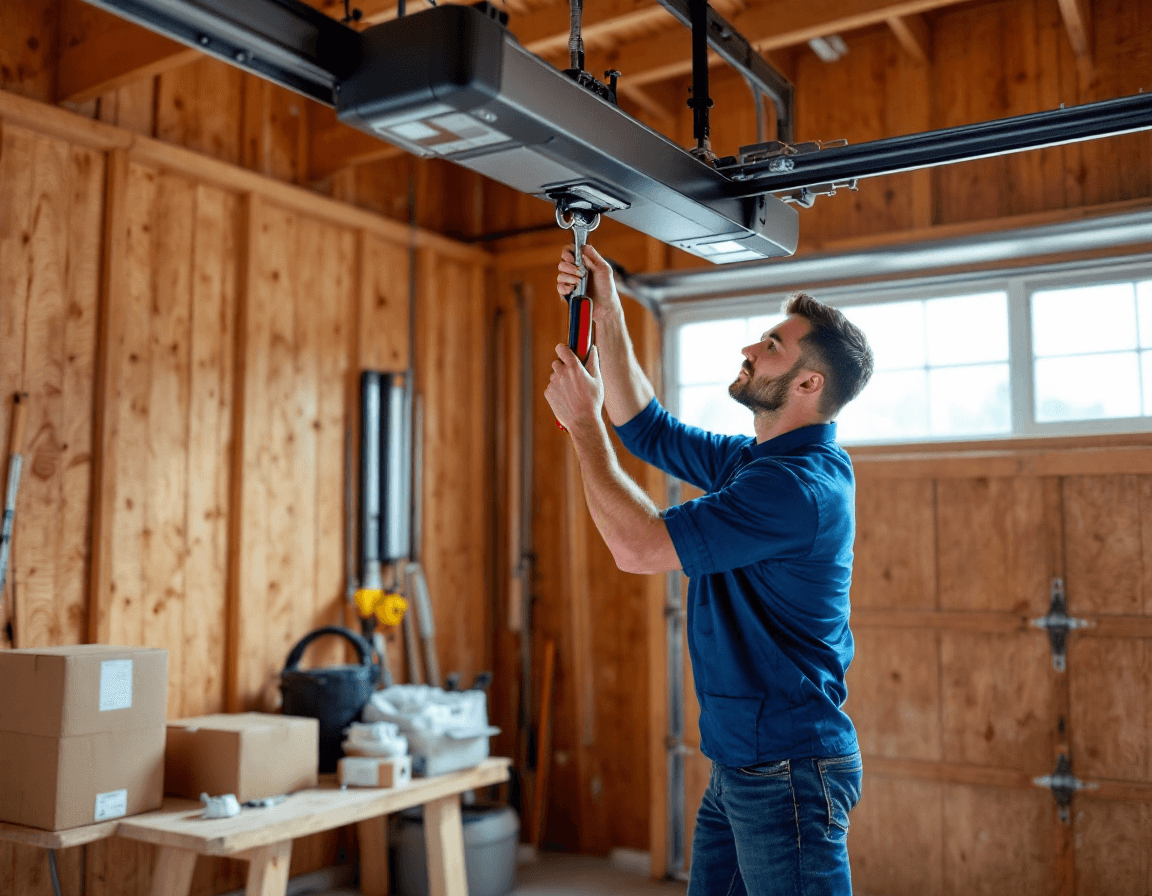
Garage Door Opener Installation & Replacement in Covington, WA is one of the most practical upgrades a homeowner can make, because the opener is the part of your garage door system that does the most work every day. If your garage is in Covington Town Center's surrounding neighborhoods, near the Jenkins Creek corridor, or anywhere else in the 98042 ZIP code, you have probably noticed how often the door cycles, especially on school runs, weekend errands, and the early-morning drive to work. When that motor starts grinding, stalls halfway up, or ignores the remote, the whole household feels it. A well-chosen replacement can restore quiet, reliable operation and add security features that older units simply never had.
Seattle Garage Door Fix installs and replaces belt-drive, chain-drive, and wall-mount smart openers across Covington and the surrounding King County communities. Installed pricing typically falls between $275 and $650, and the exact figure depends on the opener model, the drive style, whether you want battery backup, and how much work the existing track and wiring require. We are a licensed, bonded, and insured company, so the installation is handled by trained technicians who understand the tension, alignment, and safety checks that a new opener demands. This page walks through how we think about the decision, from reading the signs your current unit is giving you to choosing features that match the way you actually live.
Nobody needs to become an expert in motors or radio frequencies to make a good choice. What matters is understanding a few tradeoffs, such as how noise levels differ between drive types, why rolling-code security is no longer optional, and how battery backup can keep you from being stranded during an outage. The sections below are written the way a technician would explain it at your kitchen counter, with local context included so the advice fits the homes and weather we see in Covington every week.
Recognizing When Your Current Opener Is Sending a Clear Message
Most openers do not fail without warning. A unit that once lifted the door smoothly may begin to hesitate at the top of its travel, groan through the first few inches of movement, or reverse itself for no obvious reason. Some homeowners notice that the door closes slower than it used to, while others find that the remote works only when they stand in a specific spot near the driveway. These changes are often the opener's way of saying its internal components are wearing out, and waiting until it stops entirely usually means a more urgent and less convenient installation.
Loud operation is one of the most common complaints we hear, and it is worth taking seriously. A chain-drive opener that rattles the entire garage wall can wake a bedroom on the other side of the house, and in attached garages the vibration can travel into living space. Unreliable behavior is another red flag, such as the door stopping partway, the safety sensors flashing errors that were not there last season, or the light turning on and off by itself. A few signs are worth tracking because they suggest the opener has reached the end of its useful life:
- The motor runs noticeably longer than it used to before the door reaches the floor or ceiling.
- The door reverses or stops without an obstruction, even after the sensor eyes are cleaned and aligned.
- The unit makes a new grinding, popping, or squealing sound that appears during every cycle.
- Replacement parts are no longer available, or the repair quote approaches the cost of a new installed opener.
If you see one or two of these symptoms, a diagnosis can clarify whether a simple adjustment will solve the problem or whether the opener itself needs to be replaced.
Matching the Drive Type to Your Covington Garage
Choosing between belt-drive, chain-drive, and wall-mount designs is less about fashion and more about how your garage is built and how you intend to use it. Belt-drive openers use a reinforced rubber belt in place of a metal chain, and that single change has a large effect on noise. Because the belt runs more quietly through the rail, belt-drive units are usually the top choice for homeowners whose garages share a wall with a bedroom, a home office, or a media room. They tend to be a good fit in attached garages in Covington's newer subdivisions, where living space sits close to the door.
Chain-drive openers remain a sturdy, budget-conscious option, and many of them handle heavy doors well. They are louder than belt-drive units, but for a detached garage or a workshop where noise matters less, a quality chain-drive model can deliver years of dependable service at a lower installed price. Wall-mount openers are mounted to the wall beside the door rather than to the ceiling, which frees up overhead space. That is useful when you store bikes, kayaks, or ladders near the ceiling, or when your garage has a low ceiling or an unusual track layout.
Matching the drive to the space is only part of the decision. We also check the door weight, the track condition, and the existing mounting points before recommending a model, because an opener rated for a lighter door will labor under a heavy insulated panel. A good installer will explain why a particular drive suits your garage rather than simply pushing the most expensive unit on the shelf.
Rolling-Code Security and What Older Openers Leave Exposed
Older garage door openers often used fixed-code remotes, meaning the signal sent from your clicker stayed the same every time you pressed the button. That predictability made it possible for someone with inexpensive equipment to capture the signal and reuse it later. Rolling-code technology changes the code with every use, so a captured signal becomes useless almost immediately. If your opener is old enough that the remote is a basic fixed-code design with little to no security encoding, upgrading to rolling-code protection is one of the clearest security improvements available.
This matters in Covington for practical reasons. Many homes here sit on quiet residential streets where neighbors know each other's cars, routines, and vacation schedules, and a garage that opens without a trace can be a real vulnerability. Even the most careful households sometimes leave a remote in a car that gets parked on the street, or share a remote with a family member who has since moved away. A rolling-code system lets you reset pairings and retire lost remotes without replacing the entire opener. We also recommend reviewing the keypad or wall control you use every day, because a secure remote paired with an exposed keypad code is only half a solution.
Security upgrades should be part of the conversation even if you are only replacing the opener for noise or reliability. Asking whether a new unit includes rolling-code encoding, how remotes are programmed, and whether the emergency release can be locked from the outside are all reasonable questions for an installer. A reputable technician will answer them plainly and explain what the system does and does not protect.
Smart Wi-Fi and myQ Control for Everyday Covington Life
Many homeowners now want the ability to check on the garage door from the couch, the grocery store parking lot, or a vacation rental. Smart openers that connect to Wi-Fi, and that work with platforms such as myQ, make that possible through a smartphone app. Notifications can alert you when the door opens or stays open longer than expected, and some setups let you grant temporary access to a family member, dog walker, or contractor without handing over a physical remote. For households juggling school pickups, late shifts, and frequent trips over the Lake Sawyer and Kent-Kangley corridors, those features can be genuinely useful.
Wi-Fi connectivity depends on the signal reaching the garage, and that is worth checking before installation. Garages that sit at the back of a lot, or that are built with thick concrete walls, sometimes need a range extender or a repositioned router to keep the connection stable. Our technicians can test signal strength during the site visit and suggest a practical fix if the opener's location is an issue. We also remind homeowners to keep the app updated and to use a strong, unique password for their account, since smart convenience is only worth having when the account itself is secure.
Smart features are not a substitute for physical safety. Every automatic opener needs working photo-eye sensors near the floor, an accessible manual release, and a clear view of the door while it moves. If a smart app ever shows the door moving when nobody has triggered it, that is worth investigating immediately. Connected convenience should always sit on top of a properly installed and tested system.
Battery Backup and Staying Mobile During Power Outages
Western Washington is known for its wind, and windstorms that knock out power across King County are a familiar part of life. When the electricity goes out, a standard opener cannot lift the door, which can leave you stuck inside or outside a garage at the worst possible time. Battery backup units are designed to keep the opener running for a set number of cycles during a power interruption, which can make a meaningful difference for households with medical equipment, a parent who needs to leave for an emergency, or a family that simply wants to get the car out in the morning.
Backup batteries vary in capacity and in how many door cycles they can support, so it helps to think about how you would actually use the system. A household with two cars and daily commutes may want a model that can handle several cycles without recharging, while a single-car garage used mainly on weekends may be fine with a more modest unit. Batteries also have a limited lifespan, and they should be inspected and replaced according to the manufacturer's guidance. We often recommend checking the backup battery each season, especially before the stormier months, so it is ready when the lights go out.
It is also important to know the manual release. Every opener, with or without battery backup, should be operated by a clearly labeled emergency release cord that lets you disconnect the door from the motor. We show homeowners how to use the release safely during the installation visit, including the precaution of keeping the door fully closed when reconnecting it. A battery backup gives you options during an outage, but understanding the manual release ensures you can still get out if the backup is depleted.
A Typical Installation Visit in a Covington Home
A replacement appointment usually begins with a walkthrough of the garage, the existing opener, and the door itself. The technician checks whether the door is balanced, whether the tracks are straight and secure, and whether the hardware is in good condition. If the door has worn rollers, a bent track, or a frayed cable, those issues should be addressed before the new opener goes in, because a strong motor cannot compensate for a door that is out of balance. Any spring or cable work requires a licensed professional, and it should never be attempted as a do-it-yourself job, since the tension stored in springs can cause serious injury.
Once the door is confirmed sound, the old opener is removed and the new unit is mounted to the ceiling or wall according to its design. The rail is assembled, the trolley is attached to the door, and the limit settings are programmed so the door stops at the correct open and closed positions. The safety sensors are aligned, tested, and checked for proper reversal behavior, and the remote controls, keypad, and smart connections are paired. Electrical connections are verified, and the technician confirms that the outlet and grounding meet the requirements of the new unit.
Before the visit ends, the technician should walk you through the controls, the app setup if applicable, the battery backup if you chose it, and the manual release. You should also receive written information about warranty coverage and maintenance intervals. A thorough installation takes time, and rushing through the safety tests is a sign to ask more questions. We want every homeowner to leave the appointment understanding how the system works and feeling confident about using it.
Understanding the $275 to $650 Price Range
Installed pricing for garage door openers commonly ranges from $275 to $650 in our service area, and the spread reflects real differences in the equipment and the work involved. Entry-level chain-drive models sit at the lower end, while belt-drive units with quieter motors, advanced rolling-code security, Wi-Fi connectivity, and battery backup generally fall higher on the scale. The opener model itself is the largest factor, but other items can shift the final number, including whether the existing track needs repair, whether the wiring must be updated, and whether a wall-mount installation requires additional bracketing.
Homeowners sometimes ask why two openers that look similar can differ by several hundred dollars. The answer often comes down to motor quality, noise reduction, warranty length, and the feature set. A quieter belt-drive motor uses more refined components, and a smart unit includes electronics that must be tested and paired during installation. Battery backup adds hardware and, in many cases, a separate module to maintain. A clear quote should list the opener, any accessories, the labor, and any additional parts needed, so you can compare options on equal footing.
The most useful way to think about the price is as a long-term decision rather than a one-time expense. A reliable opener that runs quietly for many years may cost less per year than a cheaper unit that needs repairs every season. Ask your installer to explain the warranty terms, the availability of replacement parts, and the expected maintenance schedule before you commit. Good value comes from matching the opener to your daily needs, not from choosing the lowest number on the page.
Deciding Whether to Repair or Replace Your Opener
Not every opener needs replacing, and sometimes a repair is the smartest move. A failed limit switch, a worn trolley, a damaged sensor, or a dead remote can often be fixed for a modest cost, and that may be the right call if the rest of the unit is in good shape. The decision becomes more complicated when multiple components are failing at once, when the motor is overheating, or when parts are no longer manufactured. In those cases, repeated repairs can add up quickly, and the total can approach the cost of a new installed opener.
A simple way to frame the decision is to ask three questions. First, how old is the opener, and does it still meet current safety and security standards? Second, has it needed repairs more than once in the past year? Third, would a newer model solve a problem you actually have, such as noise, connectivity, or outage protection? If the answers point toward age, repeated repairs, and a clear benefit from upgrading, replacement is usually the more sensible path. If the unit is relatively new and the issue is isolated, a targeted repair may serve you well.
Our technicians will give an honest assessment during the visit. We would rather tell you that a repair will last than sell you a new opener you do not need, and we will explain the reasoning behind the recommendation. Whatever you decide, make sure the opener's safety reversal and sensor system are tested, because those features protect people and pets from injury.
Keeping a New Opener Running Well Through Covington's Seasons
Pacific Northwest weather is mild compared with much of the country, but it is not gentle on garage equipment. Winter rain, damp air, and the occasional hard freeze can affect the door's tracks, rollers, and weatherstripping, and that moisture can migrate into the opener's electrical components if the garage is poorly ventilated. Spring and fall are good times to inspect the system, clean the sensor lenses, and check that the door still closes and reverses properly. Many Covington homeowners also notice that the door sticks slightly during the wettest months, which is often a sign that the tracks need cleaning and light lubrication.
Routine maintenance does not require specialized tools. Keep the photo-eye sensors free of cobwebs and dust, wipe down the tracks, and test the door's auto-reverse function by placing a flat object in its path and confirming that the door stops and reverses. Lubricate the moving hardware with a product recommended by the manufacturer, and avoid oils that attract grit. Check the remote batteries and the backup battery on a regular schedule, and keep the emergency release cord accessible so it can be used quickly if needed.
Some tasks should always be left to professionals. Spring replacement, cable repair, and any work involving the door's tension system must be performed by a licensed technician, because those components store enough force to cause serious injury. If you notice a frayed cable, a cracked spring, a door that drops unevenly, or a noise that suggests a hardware failure, stop using the door and call for service. Taking care of these small details will help your new opener deliver quiet, dependable performance for years to come.
Ready to talk through the right opener for your Covington garage? Call Seattle Garage Door Fix at (888) 799-3819 to schedule an assessment, ask about belt-drive and smart models, and get a clear installed quote before any work begins. Our licensed team can explain your options, handle the installation safely, and make sure your new system is tested and ready for everyday use.