
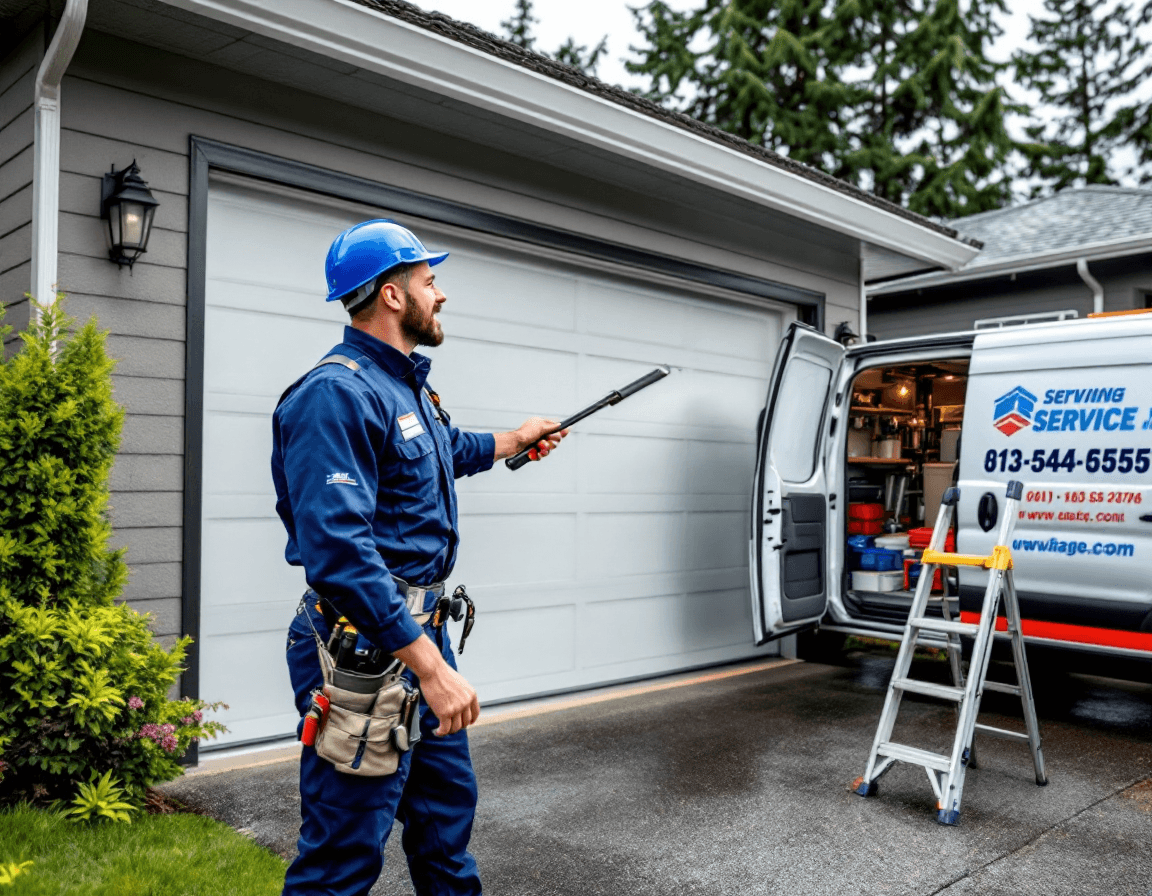
Garage Door Repair in Covington, WA is one of those services homeowners rarely think about until the door stops cooperating on a dark weekday morning with the car already running. Covington sits in the southeast corner of King County, where neighborhoods of single-family homes, many with attached two-car garages, sit close to green belts, creek corridors, and the Covington Town Center shopping and dining area. Those attached garages take a daily beating from the Pacific Northwest climate, from damp autumn air to freezing mornings in January. When a door won't open, closes unevenly, or makes a noise you've never heard before, it usually means something is wearing out, shifting out of adjustment, or getting pushed past its limits by the weather.
This page is written for Covington homeowners who want to understand what their garage door is telling them before they pick up the phone. We'll walk through the most common symptoms we see on residential doors in and around the 98042 ZIP code, explain what usually causes each one, and describe what a professional repair typically involves. Typical residential repairs in our area run roughly $95 to $450, depending on the part, the complexity of the fix, and whether the door needs adjustment or replacement components. We'll also be clear about which jobs belong only to a trained, licensed technician, because a few garage door tasks carry serious injury risk.
Think of this as a practical guide from a technician who spends a lot of time in Covington driveways. We won't promise that every problem is a five-minute fix, and we won't pretend a door can be repaired without seeing it in person. What we can do is help you make sense of the signs, narrow down the likely cause, and decide whether a quick adjustment or a fuller service call makes the most sense for your household.
Why Covington Doors Feel the Damp Season First
The Pacific Northwest brings long stretches of moisture, and garage doors are among the parts of a house most exposed to it. Steel tracks, rollers, hinges, and torsion or extension springs all respond to humidity and temperature swings, and the effect is especially noticeable in Covington during the wet months when the garage floor stays cool and the air around the door hangs heavy. Moisture encourages surface rust on hardware, and rust makes moving parts drag. Rollers with nylon or steel wheels can flatten, seize, or pop out of their track when the lubrication that once kept them quiet has washed away or hardened.
Temperature changes add another layer. Metal expands slightly on warm afternoons and contracts on cold mornings, which can shift the alignment of a door that already has a loose bracket or a worn hinge. Many Covington homes have garages that are not heated, so the springs and openers face near-freezing starts and then milder daytime conditions, and that cycle can reveal weakness that stayed hidden all summer. A door that moved fine in July may protest in December simply because the metal is cold and the lubricant has thickened.
Because of this, the first thing a technician usually checks on a Covington call is the condition of the hardware rather than the opener alone. Looking at the rollers, the hinge joints, the track bolts, and the springs can reveal whether the trouble is moisture-related or a result of a single failed component. A few minutes of visual inspection often explains a symptom that seemed mysterious from the inside of the house.
Reversing Before the Floor: Reading the Safety Signals
One of the most common complaints we hear is a door that starts to close, touches the floor or gets close, and then rises back up. This behavior is usually intentional. Modern openers include safety reversal systems that stop and reverse the door if they detect an obstruction, and the same system can trigger when the photo-eye sensors near the floor are misaligned, dirty, or blocked. Spider webs, dust, sun glare from a west-facing garage door, or a bump from a bicycle can all interrupt the sensor beam and make the door think something is in the way.
Sensor problems are often easy to diagnose. The two small units mounted on either side of the door, usually about six inches above the floor, should face each other, and their indicator lights should be steady. If one light blinks or stays off, the wires may be damaged, loose at the bracket, or pinched where they run along the wall. Covington garages that see heavy yard traffic, pets, or stored items against the wall sometimes have sensors knocked out of line without anyone noticing.
Reversal can also come from the door's force settings rather than the sensors. If the door has become heavier over time because of stiff rollers or a tired spring, the opener may interpret normal resistance as an obstruction. That is why a technician will often check travel limits and force settings together with the sensors and hardware. Here are a few things Covington homeowners can check safely before calling:
- Wipe both sensor lenses with a soft, dry cloth and make sure nothing is blocking the beam.
- Confirm both sensors have steady indicator lights and that the mounting brackets are tight and aimed at each other.
- Look for shoes, tools, or stored boxes that might be sitting in the door's path near the floor.
- Clear cobwebs or dust from the sensor housings, since they can cause intermittent reversal.
If the door still reverses after these checks, the cause is likely inside the opener's settings or the door's balance, and that calls for a professional look.
Grinding, Squealing, and Banging Through a Wet Winter
Noise is the symptom that tends to bring the most worried phone calls. A grinding sound usually points to a dry or worn roller, a bearing that has lost its lubrication, or a gear inside the opener that needs attention. Squealing often comes from metal rubbing on metal, sometimes at the hinges or where the rollers ride inside the track. Banging or a sharp clunk, especially at the top or bottom of travel, typically means a loose bracket, a track that has shifted, or a door that is out of balance and dropping hard onto its stops.
The sounds change with the seasons in ways that frustrate homeowners. A door that is quiet in August can howl in November because cold metal is stiffer and moisture has pushed old grease out of the joints. Covington's wet months also invite debris into the track, including fir needles and grit blown in from the yard, which can scrape rollers and create a rhythmic grinding that gets louder each time the door runs. Homeowners sometimes assume the opener itself is failing, when the real problem is a dirty track or a roller that has worn flat on one side.
A good repair for noise begins with identifying where the sound originates. Technicians often run the door slowly by hand (only with the opener disconnected) and listen to each section of travel. They check whether the noise comes from the rollers, the hinges, the center bearing, the drive chain or belt, or the springs. Lubrication with a proper garage door lubricant can solve some of these issues, but it should be applied to the right parts and never to the door's sensors or the opener's motor housing.
When the Door Stops Halfway or Jams in the Track
A door that stops partway up or down, or jams in the track entirely, is one of the more stressful situations to face in the morning. Often the trouble begins as a small misalignment: a roller has popped out of the track, a track section has loosened from its wall bracket, or a panel has been twisted slightly by an impact. When the door meets resistance, the opener stops or reverses to protect itself and the people nearby. In many cases the door cannot move again until the obstruction is cleared and the track is brought back into alignment.
Stuck doors in Covington are sometimes caused by the cold. A door that has been sitting overnight in a near-freezing garage can become stiff, and if the rollers are already tight, the extra resistance is enough to stall the motor. A bit of gentle encouragement, like inspecting the track for visible debris and checking for ice or condensation in the lower sections, can sometimes reveal the source. However, a jammed door can also indicate a broken spring, a cable problem, or a door that is about to fall, so it's important not to force it.
If the door is stuck, disconnect the opener only if you are certain the door is safe to move manually and nobody is in the path. Do not try to pry the door, pull on cables, or reach into the springs. A technician will inspect the track, the rollers, and the balance of the door before deciding whether the repair is a simple re-seat or a more involved component replacement.
Remote Dead and Wall Button Silent: Tracing the Signal
When the remote doesn't respond and the wall button does nothing, the first question is whether the problem is power or control. Check the outlet or breaker that feeds the opener, and confirm the opener's light and lock indicators behave normally. If the opener has no power at all, the cause might be a tripped breaker, a loose plug, a failed power module, or a garage circuit that shares load with a freezer or a space heater. Covington homes built in different decades can have very different wiring, so an electrician or trained technician should take the lead if the wiring looks questionable.
If the opener has power but the remote does nothing, the battery in the remote or the receiver antenna may be the issue. Remote batteries lose strength in cold weather, and the antenna wire on some older openers can break or get pinched. A wall button that fails while the remote works often points to a damaged low-voltage wire, a stuck button, or a control panel that has taken on moisture. Each of these can be checked systematically, which is faster than simply replacing parts until something works.
Keep in mind that some openers have a lockout feature that disables the wall button or remote if it has been activated, so a silent button is not always a failure. Check the opener's control panel for a lock indicator, and review the manual for the lockout procedure. When in doubt, a professional can confirm whether the problem is a setting, a wiring fault, or a failed component.
Crooked Doors, Uneven Travel, and Panels Off Track
A door that looks crooked, rises unevenly, or sits lower on one side is a symptom that deserves attention even if it still opens. Uneven travel can happen when one spring has weakened more than the other, when a cable has frayed or slipped, or when a track has come loose from its anchor on one side. Over time the strain on the door panels, the opener, and the hardware increases, so a door that is slightly off can become seriously unsafe.
Covington garages often have tight clearance because of the way many homes were framed, and that can make even small track problems noticeable. A track that is out of plumb or a header bracket that has settled slightly can make the door rub against a wall or the jamb. In some cases the door panels themselves have been bent or cracked, which can cause a section to drop out of its track. These problems rarely fix themselves, and attempting to force a crooked door back into line can damage the rollers, the hinges, and the panels.
Repairing a crooked door involves checking the track alignment, the tension of the springs and cables, the condition of the hinges, and the security of the wall and ceiling brackets. A technician may need to re-square the tracks, replace a damaged roller, or rebalance the door. This is one of the areas where a professional visit is strongly recommended, since cable and spring work involves stored energy that can cause severe injury if mishandled.
Doors That Slam Shut Too Fast
A door that drops quickly or slams at the end of its closing cycle is more than an annoyance. A fast drop can strain the bottom seal, crack panels, and create a serious pinch hazard for kids, pets, or anyone reaching under the door. It can also mean the door is not balanced properly, the springs have lost tension, or the opener's close-speed settings have been altered. Sometimes the problem is simply that the door is out of balance, and the opener is working harder to control its descent than it was designed to.
Doors that slam often come with other symptoms, such as banging at the bottom, a rattling sound, or a bottom seal that has been torn. The seal may be damaged by the impact, and the door panels may flex more than they should during closing. In older Covington homes, the bottom seal may have stiffened from repeated temperature changes, and a hard drop can crack it or pull it loose from the door. Checking the seal should be part of any closing-speed inspection.
Adjusting the close speed or force on the opener is sometimes part of the solution, but it should never be used to mask a balance problem. A technician will test the door's balance by lifting it partway and checking whether it stays in place, which helps confirm the spring tension is correct. When the springs are worn, replacement is usually the safest path, and that work belongs to a licensed specialist.
Sagging Panels, Visible Gaps, and Bottom Seal Wear
Visible gaps around the edges of the door, sagging sections, and a bottom seal that no longer meets the floor can all be signs of wear that affects comfort and security. In Covington, gaps can let in rain, leaves, and cold drafts, and they can make the garage more humid, which speeds up rust and corrosion inside the door. A door that sags in the middle may have a damaged section, a loose hinge, or a track that has pulled away from its anchor.
Many homeowners first notice a gap when water seeps under the door during a storm or when the garage smells damp after a week of rain. A bottom seal that has cracked or hardened will no longer block moisture, and replacing it can be a relatively inexpensive fix that makes a noticeable difference. However, a seal can only do its job if the door itself sits square and level, so the seal check often goes hand in hand with a track and balance inspection.
Sagging or bowed panels deserve closer attention. A panel that has lost its shape can throw off the rest of the door, and in some cases it can pull hinges loose or stress the rollers. Replacing a single panel is sometimes possible, but the match in color, style, and insulation rating can be difficult to find for older doors. A technician can evaluate whether the panel should be replaced, the door reinforced, or the entire unit considered for replacement.
What a Typical Covington Visit Covers and Costs
Homeowners often want to know what a repair visit looks like before they schedule one. A typical Covington service call starts with a conversation about the symptoms, when they began, and whether the door has been running normally in the weeks before. The technician then inspects the door, the tracks, the rollers, the hinges, the springs, the cables, the opener, the sensors, and the wall control, looking for the source of the problem rather than only the most obvious sign. Once the cause is identified, the technician explains the options and the approximate cost before doing the work.
For most residential repairs, our typical range is $95 to $450. The final figure depends on the parts needed, the time required, and whether the door needs adjustment, a replacement roller set, a new sensor pair, a bottom seal, a track repair, or a more involved component swap. Some jobs are quick adjustments that can be completed in a single visit, while others may require ordering a part and returning later. A clear explanation of what is included should always come before any work begins.
It can help to gather a few details before calling. Note the door's make and model if you know them, describe the symptom as specifically as possible, and mention whether the door has been making new noises or behaving differently since a recent storm or cold snap. Those details help a technician arrive prepared and can shorten the visit.
Spring and Cable Work Belongs to a Licensed Technician
Torsion springs and extension springs store a great deal of energy, and cables carry significant tension even when the door appears still. Attempting to wind, unwind, or replace a spring without the right tools and training can result in serious injury, including broken bones, lacerations, or worse. For this reason, spring and cable work should always be handled by a licensed, bonded, and insured professional who knows how to release tension safely and how to match replacement parts to the door's weight and size.
Homeowners sometimes see a broken spring and assume a quick fix is possible, but a broken spring often means the door is no longer balanced and can drop unexpectedly. Even a door that seems to hang in place may be held by stored tension that can release suddenly. Keep children and pets away from the door, do not attempt to lift a door with a broken spring by hand, and call a professional for inspection. The technician can confirm the damage, replace the spring or cable as needed, and rebalance the door so it operates smoothly.
We take this part of the job seriously because the risk is real. Our technicians work only within their training and licensing, and we recommend that every homeowner treat spring and cable work as a professional task. When a symptom points to these components, the safest move is always to call, not to experiment.
Garage doors in Covington deal with a particular mix of moisture, cold snaps, and busy household schedules, and a small problem can turn into a stuck door on the morning of an important appointment. If your door won't open or close, reverses before it reaches the floor, grinds or bangs, moves unevenly, sags, slams shut, or ignores the remote or wall button, we can help you figure out what's going on and get it fixed properly. Call Seattle Garage Door Fix at (888) 799-3819 to schedule a repair visit in Covington, and we'll walk you through what to expect before any work begins.