
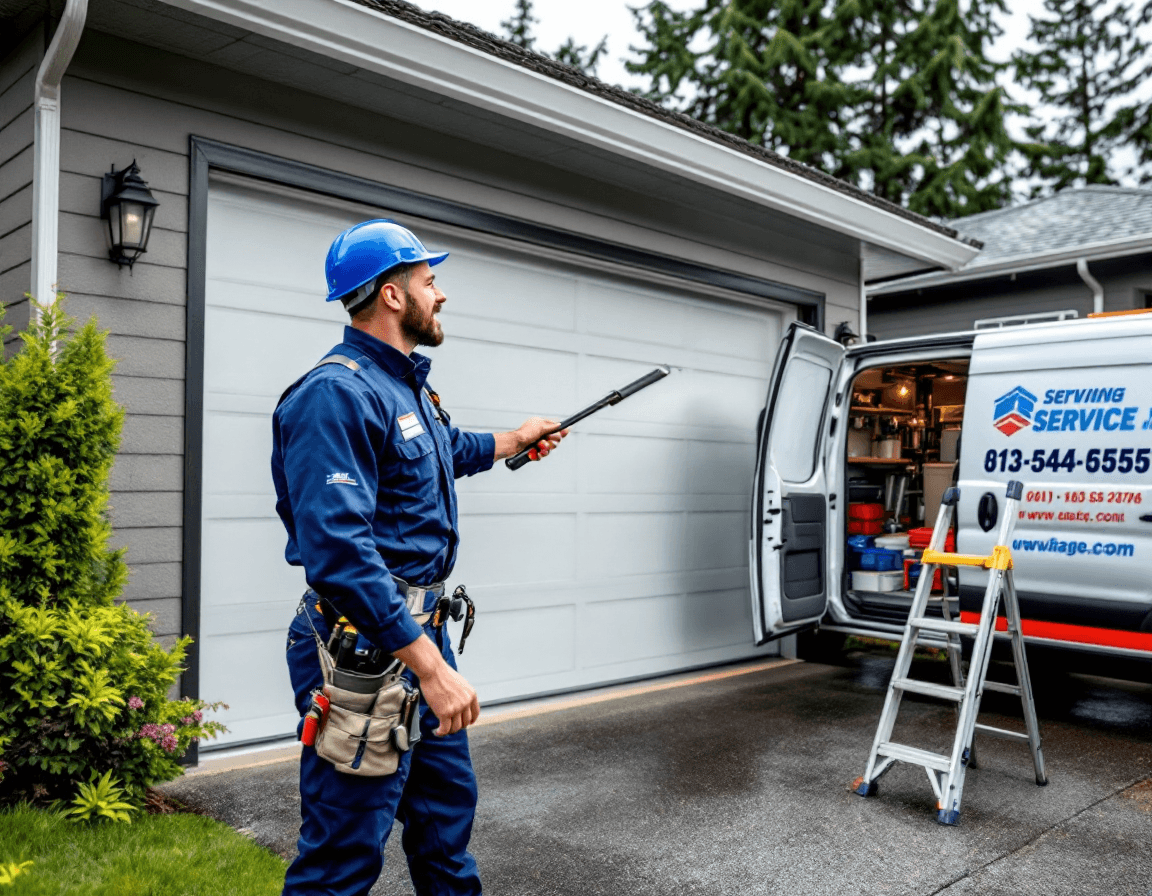
Garage door repair in Black Diamond, WA is a common need for homeowners across this part of southeast King County, where a door that sticks, stalls, or refuses to close can turn an ordinary morning into a scramble. Our technicians work throughout the area, from older homes on quiet rural lots to newer houses in planned communities, and the problems we see tend to follow the same patterns: damp weather, long stretches between maintenance, and small faults that grow into full breakdowns. Most residential repairs we handle fall between $95 and $450, depending on the part involved and how much diagnosis the door needs. This page explains what tends to go wrong, what the symptoms mean, and when it is time to call a licensed professional instead of trying a fix yourself.
Garage doors in Black Diamond live a harder life than many homeowners expect. The Pacific Northwest brings long, wet stretches from fall through spring, cool nights that pull moisture into metal and wood, and enough temperature swing that steel panels, tracks, and springs expand and contract throughout the year. A door that works perfectly in July can feel sluggish by November, and that gradual change is often the first clue that something needs attention. Understanding the typical wear patterns for this climate helps you catch problems early, before a minor adjustment becomes an emergency service call.
Whether your door is on a quiet street near Lake Sawyer, tucked into a newer block in Ten Trails, or anchored to an older house with a detached or tandem garage, the goal of this guide is the same: help you read what your door is telling you, act safely, and know when to bring in trained hands. Read through the sections below for the symptoms that matter most, then call (888) 799-3819 if your door is stuck, unsafe, or simply not behaving the way it should.
Why Wet Winters and Cool Nights Wear Down Garage Doors Faster
Western Washington's weather is gentle in one sense and demanding in another. Rain is frequent from late autumn into spring, and humidity stays high even on days when the rain pauses. Moisture finds its way into exposed hardware, and once it does, it encourages surface rust on tracks, rollers, and hinges. Rust does not just look bad; it increases friction, which makes the opener work harder and makes the door move unevenly.
Temperature changes add another layer of stress. Steel and aluminum panels expand in warmer afternoons and contract overnight, and that movement can loosen fasteners over time. Wooden doors, which are still common in older Black Diamond neighborhoods, absorb moisture and can swell, warp, or bind in the track. Even insulated steel doors can develop problems when the seals around the edges stiffen in the cold and no longer slide cleanly.
Because of these conditions, we recommend a quick visual and audible check at least twice a year, ideally before the wet season begins and again in late spring. Look for orange or brown spots on the tracks, listen for new sounds during a full open and close cycle, and watch whether the door rises and lowers at a steady pace. Catching these early signs usually means a simpler, less expensive repair.
Reading the Warning Signs Before a Door Quits Mid-Cycle
Most garage doors send warnings long before they fail completely. The trick is recognizing those warnings for what they are. A door that hesitates for a second at the start of its travel, or that takes noticeably longer than it used to, is often showing early wear in the springs, rollers, or opener. Pay attention to changes rather than waiting for a dramatic failure, because the change is the signal.
Several symptoms commonly show up in homes we service across the Black Diamond area. Here are the ones that deserve prompt attention:
- The door will not open, will not close, or does not respond at all when you press the wall button
- The door reverses direction before it reaches the floor, even when nothing is blocking the path
- The door stops partway up or down and stays jammed in place
- Loud grinding, squealing, or banging occurs during operation
- The door moves unevenly, rises at an angle, or looks crooked from inside the garage
- The door slams shut faster than it should or drops with a hard thud
- Visible gaps appear at the top, sides, or bottom, or a panel looks sagged or bowed
- Part of the door has come out of the track or hangs loose from its rollers
If you notice any of these, stop using the door until it has been inspected, especially if it is slipping, leaning, or making a sudden new sound. Continuing to run a door with a damaged cable, a broken spring, or an off-track panel can cause additional damage or personal injury.
When the Door Reverses Before the Floor: Understanding Sensor Trouble
One of the most frustrating problems homeowners describe is a door that goes down, then suddenly rises again just before it reaches the ground. This behavior is built in as a safety feature. Garage doors are required to reverse when something interrupts the photo-eye beam near the floor, and that beam is designed to protect children, pets, and vehicles. When the system detects an obstruction it cannot confirm, the door reverses as a precaution.
In practice, the most common cause is misalignment. The two sensors mount on opposite sides of the door opening, usually about six inches above the floor, and they must face each other directly. A bump from a vehicle, a loose bracket, or even a shift in the wall over time can throw the beam off target. Sunlight streaming through a window at a low angle can also confuse the receiver, which is why we often find this issue during late-afternoon service calls on clear days.
Dirty lenses are another frequent culprit, particularly in garages where dust, cobwebs, or road grime collect near the floor. Wiring damage, especially where cables pass through a flexed or pinched section, can also cause intermittent reversals. A technician will usually check alignment, clean the lenses, inspect the wiring, and test the reversing force before concluding the diagnosis. Please do not disable the sensors to make the door work. That removes a critical safety protection, and the reversal can be the only thing standing between a closing door and a child or pet.
Grinding, Squealing, and Banging: Matching Each Noise to Its Source
Garage doors are noisy by nature, but certain sounds are clear signals that something needs attention. The key is learning to distinguish between them, because a grinding noise and a banging noise point to very different parts of the system. Paying attention to when the noise happens, and where it seems to come from, gives a technician a head start on diagnosis.
A grinding or scraping sound during travel often points to the rollers, the track, or the hinges. Worn nylon rollers can flatten and drag, while metal rollers that have lost their lubrication will grind against the track. Dirt and debris packed into a track can produce a similar sound. Squealing, especially on cold mornings, usually means dry hinges or rollers that need proper lubrication with a garage-door-appropriate product. Avoid heavy grease or household oils, which attract dust and can make the problem worse over time.
A banging or thudding sound is more concerning and should be inspected promptly. It can indicate a loose bracket, a worn bearing, a panel that has shifted in its track, or an issue with the springs or cables. If the bang happens at the very top or bottom of travel, the door may be hitting its stops because of imbalance. Any time a noise is accompanied by a visible gap, a dropping section, or a door that feels heavy or uneven, stop using the door and call for service rather than continuing to test it.
Crooked Travel and Doors Knocked Off Track in Local Homes
A door that rises at an angle, one side lagging behind the other, is a sign that the two sides are no longer moving in sync. This can happen gradually, as one roller wears faster than the other or one track loosens, or it can happen suddenly after a collision or a hard jolt. Either way, uneven travel places strain on the entire assembly and can quickly lead to a more serious failure if left alone.
Homes in newer neighborhoods such as Ten Trails sometimes have doors that were installed with larger panels or wider openings, and small installation variations can show up as crooked travel after a few seasons of use. Older homes in the broader Black Diamond area may have original track systems that have been bent, loosened, or patched over the years. In both cases, the solution starts with a careful inspection of track alignment, roller condition, and the fasteners that hold everything in place.
A door that has come completely off its track requires immediate attention. Do not attempt to force it back into position by pushing or pulling on the panels, and keep people and vehicles clear of the opening. A door that has jumped its track can shift unexpectedly, and the springs and cables that normally control its weight may be under tension. Our technicians handle track realignment and roller replacement routinely, and they will verify that the door is balanced before returning it to regular use.
Remote and Wall Button Failures: The Opener Side of the Story
When a door will not respond to the remote or the wall button, the problem is not always the door itself. Often it lies in the opener, the control system, or the power supply. Some of these issues are easy to check at home, and ruling them out first can save you a service call or at least help the technician work faster.
Start with the simplest possibilities. Confirm the opener is plugged in and that the outlet has power, since garage outlets sometimes sit on a switch or a GFCI circuit that has tripped. Check whether the remote batteries are fresh and whether the wall button shows any light or response. If the opener has a lock or vacation setting, make sure it is not enabled. Some systems also have a safety reverse indicator light that blinks to show a fault, and checking that light can point toward the sensor issues described earlier.
If these basic checks do not restore operation, the cause may be a failed logic board, a worn receiver, a damaged wall control wire, or a drive mechanism that has reached the end of its service life. Opener repair often involves diagnosing several components at once, which is why a professional inspection is usually the fastest route to a reliable result. Keep in mind that openers sometimes lose their programmed remotes after a power outage or a battery change, and reprogramming them is typically straightforward once the unit is confirmed to be working.
Here are a few quick checks you can perform safely before calling:
- Confirm power to the opener and the outlet it uses
- Replace the remote batteries and test the wall button
- Check that the lock or vacation mode is turned off
- Look for a blinking light on the opener or sensors that might indicate a fault
- Make sure the emergency release cord has not been pulled, which disconnects the door from the opener
Why Doors Slam Shut Too Fast and What Balance Has to Do With It
A door that drops quickly or slams against the floor is often showing signs of an imbalance problem. Garage doors are designed to be nearly weightless during operation, with torsion or extension springs carrying most of the load so the opener only has to guide the door. When the springs lose tension or the balance shifts, the door can fall faster than intended, and the impact can damage the panels, the floor seal, and the opener itself.
This is an area where we always recommend a licensed technician, and we want to be clear about why. Garage door springs store a great deal of energy, and adjusting, replacing, or tensioning them without the proper tools and training can lead to serious injury. The same caution applies to cables, which can snap under tension and cause harm. Even if you have watched a video or read instructions, spring and cable work should never be attempted as a do-it-yourself project. Our team handles these repairs with the correct equipment and safety procedures.
When the door slams shut, a technician will typically check spring tension, inspect the cables and drums, examine the opener's force settings, and verify that the door is balanced. They will also look at the bottom weather seal and the floor contact point, because a worn seal can make a door feel as though it is dropping faster than it really is. Addressing the underlying balance issue protects the rest of the system and restores the smooth, controlled motion you should expect from a healthy door.
Sagging Panels, Visible Gaps, and the Seal Problems Wet Seasons Create
A garage door that looks tired, with a sagging center section, a gap at the top where the weatherstripping has pulled away, or light showing around the edges, is more than a cosmetic concern. Gaps let in rain, cold air, pests, and moisture, which can accelerate rust and damage stored items. Sagging often signals that the door's internal structure, the springs, or the hardware holding the panels together has weakened, and it can lead to uneven travel if ignored.
In the Pacific Northwest, the bottom seal and the side and top weatherstripping take a lot of abuse. Rain runs underneath the door, mud and debris collect along the threshold, and repeated freezing and thawing can crack rubber seals over time. A bottom seal that has become stiff or torn will not sit flat against the floor, and that gap is often the reason a garage stays damp or cold even when the door appears to be closed.
Replacing worn seals is usually a manageable task, and many homeowners choose to have it done during a regular service visit. Panel replacement, sagging repair, and hinge or bracket reinforcement are more involved and should be handled by a professional. If a panel is cracked, bent, or separated from its neighbors, it can affect the entire door's balance and alignment. Any repair that involves the springs, cables, or structural bracing belongs in the hands of a licensed technician.
What a Typical Service Visit Looks Like and What Affects the Price
Many homeowners want to know what they are paying for before they schedule a visit, and it is fair to ask. A typical residential garage door service call starts with a diagnosis. The technician will confirm the symptoms you describe, inspect the door's operation through a full cycle, check the sensors, the tracks, the rollers, the hinges, the springs, the cables, and the opener, and then explain what they found before any work begins. This inspection is the foundation of a good repair, because it prevents guesswork and unnecessary parts.
Our pricing for most residential repairs falls between $95 and $450. Where a job lands in that range depends on several factors. The type of problem matters most, since a sensor realignment is far less involved than a spring replacement or a full opener swap. The door's size, weight, and material also play a role, as do the make and model of the opener and whether the required parts are in stock. Access can affect the time involved, especially in tight garages or when multiple components need attention at once.
It helps to have a few details ready when you call. Note the symptoms, when they started, whether the problem is intermittent or constant, and whether the door has been used recently after any incident such as a bump or power outage. Photos of visible damage can be useful too. Clear information allows the technician to arrive prepared, which often shortens the visit and helps you understand your options before deciding how to proceed.
Simple Habits That Keep Repairs from Coming Back
Most garage door problems are easier and less expensive to prevent than to fix. A few consistent habits can extend the life of the door, the opener, and the hardware, and they make the next service call less urgent. The most effective habit is a short monthly check. Open and close the door slowly while watching and listening, and note any changes in speed, sound, or alignment. Keep a simple log if it helps you spot trends over time.
Cleaning the tracks and sensor lenses is another easy routine. Wipe the sensor faces with a soft, dry cloth, clear away cobwebs and debris from the photo-eye area, and remove loose dirt from the tracks. Use a garage-door-specific lubricant on the rollers, hinges, and springs when the manufacturer recommends it, and avoid spraying lubricant onto the sensor lenses or the opener motor. Keeping the garage floor clear of items that might block the door's path also prevents accidental strikes that can knock sensors out of alignment.
Finally, schedule a professional inspection on a regular basis, especially before the wet season and after any noticeable change in performance. A technician can catch wear on springs, cables, and rollers that is invisible to the untrained eye, and they can confirm that safety systems are functioning correctly. Regular attention protects your household, keeps your door working smoothly through Black Diamond's damp winters, and gives you confidence that your garage door will open and close when you need it to.
If your garage door is stuck, noisy, crooked, reversing, or simply not behaving the way it should, do not wait for it to fail completely. Call Seattle Garage Door Fix at (888) 799-3819 to schedule a licensed technician who can diagnose the problem, explain your options, and get your door moving safely again.