
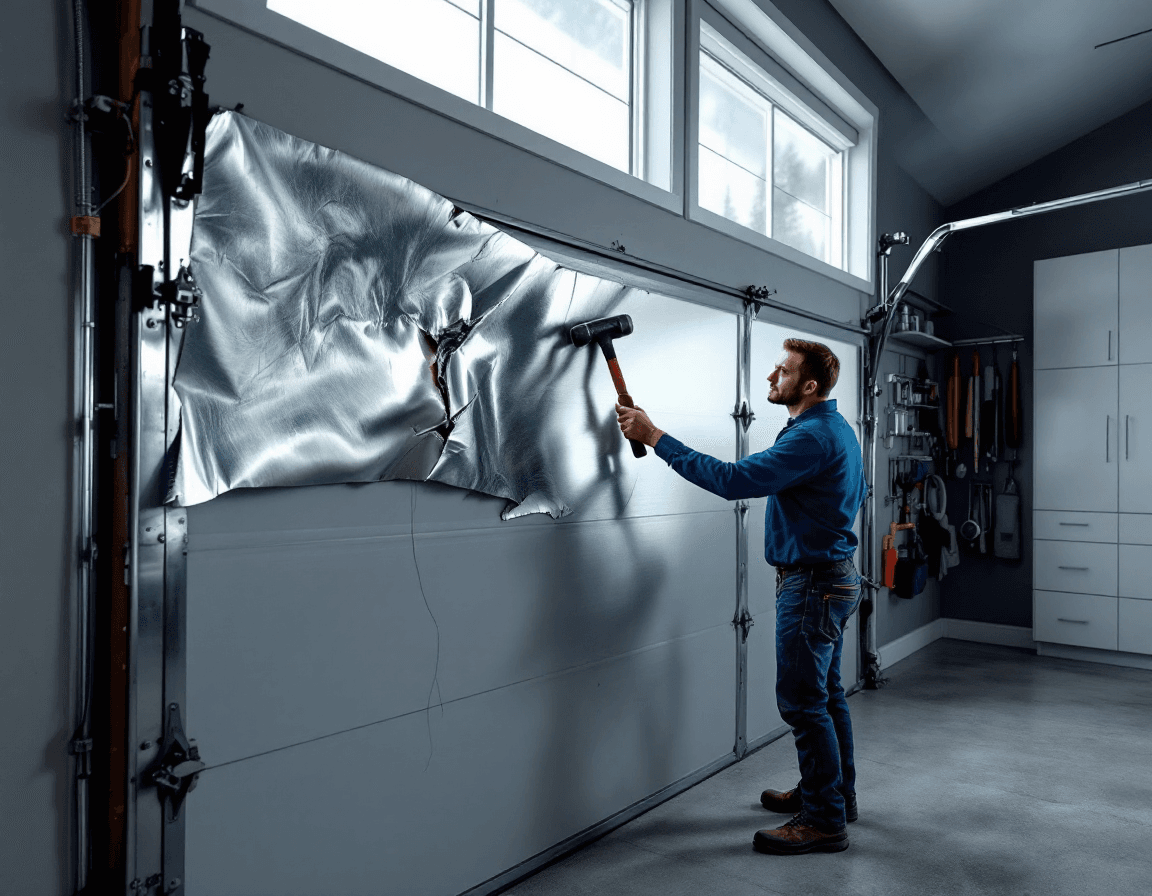
Garage door panel replacement in Black Diamond, WA is often the most sensible fix when one section of your door is damaged but the rest still works well. A dented panel after a backing mishap, a cracked section from a stray basketball, or a bottom panel that has soaked up months of rain can make the whole door look worse than it actually is. Replacing only the affected section, rather than the entire door, can restore both appearance and weather protection at a fraction of the cost. Our technicians serve homeowners across the Black Diamond area and can usually tell within one visit whether a panel can be swapped or whether the door has reached the point where a different approach makes more sense.
Black Diamond homes sit in a part of King County where the weather and the terrain both take a toll on garage doors. Winters are damp and extended, driveways often stay wet for days at a time, and the surrounding trees keep moss and debris close to the door bottom. Many properties here also have sloped approaches or tight turnarounds, which means a moment of distraction while backing out can put a bumper or side mirror into the lower panels. Understanding how these local conditions affect your door helps you decide when a panel repair is enough and when it is time to look at the bigger picture.
Seattle Garage Door Fix provides panel replacement, section matching, and honest repair-versus-replace guidance for homeowners throughout the area. Our work is handled by licensed, bonded, and insured technicians who understand that a garage door is a large moving assembly under spring tension. The sections below walk through what damaged panels look like, why some sections fail sooner than others in this climate, how we approach matching, what the typical price range covers, and what to watch for before you book. If you are reading this with a specific dent or crack in front of you, you are in the right place.
Reading the Dent: What Damage Patterns Reveal About Your Door
Not every dent tells the same story, and the shape and location of the damage often reveal more than the size does. A shallow, wide dimple across the middle of a steel panel usually comes from a low-speed impact, such as a bicycle, a rolling trash bin, or a kid's scooter. A sharp crease that runs across the panel and follows a line between two ribs suggests a harder strike, sometimes from a vehicle corner or a piece of equipment. When the metal is torn or the insulation foam inside has split, the panel typically needs replacement rather than straightening, because the internal structure no longer holds its shape.
On insulated steel and aluminum doors, the damage can extend further than what you see on the surface. A pressed-in area may have pulled the panel away from its edge channel, leaving a gap that lets air and water move into the cavity. Composite and wood-look panels are more brittle, so a cracked face often indicates that the material has lost its ability to flex, and a patch will rarely hide the fracture line for long. Taking a few clear photos from several angles, including one from inside the garage, gives a technician useful information before the visit.
Our technicians check how each damaged section connects to the rest of the door. We look at the hinges on either side of the panel, the roller stems that sit in the track, and the edge seals that run along the top and bottom of each section. If a dent has bent a hinge or twisted a track, the panel itself may be fine, but the door will not operate smoothly until the hardware is addressed. This is also the point where we begin to separate cosmetic damage from damage that affects safe operation.
The Bottom Section: Why Lower Panels Fail First Here
The bottom panel of a garage door takes more abuse than any other section. It meets the driveway, collects road splash, and sits closest to the snowmelt and runoff that move across a wet Black Diamond driveway during the long rainy season. Over time, water that gets past the bottom seal can wick into the lower edge of the panel, especially where the paint has chipped from a bumper strike or a shovel edge. Once moisture reaches bare steel or the core of a wood-composite panel, corrosion or swelling can begin quietly.
Moss and organic debris add another layer of trouble. Fir needles, leaves, and damp soil build up in the track and along the threshold, and they hold moisture against the bottom edge for long stretches. Homeowners often notice a dark stain or a soft spot on the lower panel only after it has been in this condition for a season or two. By that point the damage may be spreading upward into the panel's internal ribs or the foam layer, which is why an early look at the bottom edge is worth the effort.
Replacing a bottom section is often simpler than replacing a middle section, because the bottom panel usually has fewer hardware connections and lighter overall tension. Even so, the work should not be treated as a simple bolt-off, bolt-on job. The door must be supported correctly, and the springs must not be disturbed. If you notice that the bottom panel is rotted, rusted through, or separated from its end caps, have a licensed technician evaluate it before the door is used heavily, since a weakened bottom section can affect how the door tracks.
Backing Accidents and the Single-Panel Impact
A single damaged panel following a backing accident is one of the most common situations we see. A driver turns in a hurry on a narrow Black Diamond driveway, a side mirror catches the edge of a raised door, or a bumper taps the lower section while reversing out. The result is often a single crumpled panel, sometimes with a scuff line on the adjacent section where the impact transferred energy along the door's frame. The door may still roll up and down without complaint, which tempts many people to wait before calling.
In these cases, the most important step is to check the surrounding hardware before deciding what to replace. A strong impact can bend the end caps, loosen a hinge, or shift a roller out of its track. If a roller has jumped the track, the door may bind or roll unevenly, which can put strain on the cables and springs. Do not attempt to force a damaged door open or closed, and do not try to adjust any spring or cable component yourself, because stored spring tension can cause serious injury.
Insurance and documentation can also come into play after a collision with a vehicle. Take dated photos of the damage, note the approximate time, and keep any receipts for temporary repairs or boarding. If you plan to file a claim, let the company know that a licensed technician has inspected the door and provided a written description of the damaged components. We can supply that description to help you through the process, though the decisions about claims rest with you and your insurer.
Repair or Replace? Drawing the Line for Your Door
Deciding between repairing a panel and replacing it depends on the material, the extent of the damage, and whether the rest of the door is in sound condition. Light surface dents on steel panels may be straightened or filled in some cases, but the result is rarely invisible, and the paint finish often cracks along the repair. Deep creases, torn skins, and damage that has affected the insulation generally point toward replacement. A panel that has lost structural integrity should not be patched and left in service, particularly on a door that sees daily use.
Several signs suggest replacement is the better path. Consider replacing the section if you notice any of the following:
- The panel is cracked through the full thickness or has split along a seam
- Rust or rot has reached the inner ribs or the foam core, not just the paint surface
- The panel no longer sits flush with its neighbors, leaving visible gaps or uneven edges
- The original color or finish has faded so much that a patch would stand out in daylight
- The edge channels or end caps are bent or cracked, making a clean seal impossible
Some situations call for a broader conversation about the door itself. If the door is older, the panel style is discontinued, and several sections are damaged, replacing the entire door may cost less in the long run than sourcing and matching multiple individual panels. Our technicians will walk through these tradeoffs honestly, including what a full replacement would involve and how it compares to a section-by-section approach. We would rather recommend the option that protects your home and budget than sell a repair that will need to be repeated.
Matching a Faded or Mismatched Panel
Finding a replacement panel that matches the rest of the door is often the hardest part of the job. Garage door styles change over time, and a panel that was a standard option a decade ago may no longer be made in the same profile, texture, or color. Even when the model is still available, sun exposure and weather can leave the existing sections a slightly different shade than the day the door was installed. Placing a bright new panel next to a faded neighbor can make the door look more damaged than it was before the repair.
Matching begins with identifying the door manufacturer, the model series, and the panel profile. We look at the embossing pattern, the number and spacing of ribs, the window configuration if there is one, and the thickness of the panel. Color matching on steel doors often involves comparing the new panel to an area of the existing door that has been sheltered from sunlight, such as the inside face or the top section under the header. For wood-look and composite doors, texture and grain pattern matter as much as the color itself, and a close comparison in natural light is more reliable than a photo.
When an exact match is not available, we discuss options openly. Sometimes a slightly different shade can be blended by refinishing an adjacent section, which is a reasonable approach on steel doors with a durable factory finish. In other cases, the homeowner may prefer a complete door replacement so that every panel matches. We never promise a perfect match when the parts available simply do not allow one, because a realistic expectation is the best way to avoid disappointment after the work is done.
What a Panel Replacement Typically Involves
A panel replacement usually follows a predictable sequence, though the details vary with the door design. The technician first confirms that the door is in a safe, stable state and that the springs and cables are not being disturbed. The damaged panel is then separated from its neighbors, which often means removing the hinges and end caps that hold it in place and carefully supporting the adjacent sections. The new panel is positioned, the hardware is reattached, and the seals are set so the section sits flush and sealed against weather.
Several steps deserve attention from the homeowner as well. Here is what to expect on a typical visit:
- A visual inspection of the damaged section, the hinges, rollers, and tracks on both sides
- Confirmation of the door model and panel style so the correct replacement is ordered
- Temporary support of the door while the damaged panel is removed and the new one is installed
- Reattachment of hinges, end caps, and weather seals, with alignment checks along the full door height
- A test cycle to confirm smooth travel, proper sealing at the bottom, and even movement of the rollers
Replacement panels are generally ordered in advance, so the job may require a second visit. Ask whether the panel is in stock or must be sourced, and request an estimated timeline before scheduling. Keep the vehicle clear of the driveway on the day of the work so the technician has room to set up safely.
Pricing: What the $250 to $800 Range Covers
Panel replacement pricing for a single section typically falls between $250 and $800, depending on the door. The spread reflects real differences in the work. A standard steel panel on a common door model is generally at the lower end, while a custom insulated panel, a glass-inclusive section, or a wood-look composite panel on a higher-end door will land toward the upper end. The age of the door, the availability of the replacement part, and the amount of hardware work needed all influence the final figure.
Several factors can push a job toward the higher end of the range. A panel that requires special ordering from a manufacturer, a section with an integrated window, or a door that needs adjustment to the hinges and rollers after the swap will all add to the labor and materials. Damage that extends into the frame or tracks may also require additional parts. Our technicians give an itemized estimate after inspection, so you know what is included before any work begins.
Price is only one part of the decision. A low-cost cosmetic patch on a panel that is cracked or rotted may fail within months, leaving you with a second repair bill and a door that still looks damaged. Replacing the section properly with a matching or closely matching panel usually provides a more durable and attractive result. We would rather explain the tradeoff clearly than steer you toward the cheapest option that will not last.
When a Damaged Panel Points to a Larger Problem
A dented or cracked panel is sometimes just that, but it can also be a sign that other components have been stressed. A heavy impact to the lower section can throw a track out of alignment, bend a roller stem, or stress the cable drums and springs. Even when the door appears to operate normally after the collision, the hidden damage can cause uneven lifting, noise, or premature wear. A technician should look at the full system, not just the panel, before concluding the repair is complete.
Be alert to changes in how the door behaves. Watch for the door rising unevenly, rubbing or scraping along the track, making new popping or grinding sounds, or stopping partway through its travel. Any of these may indicate that the springs, cables, or drums have been affected, and those components are under high tension and must be handled only by a licensed professional. Do not attempt to adjust, loosen, or replace spring or cable parts yourself, as stored energy in these components can cause severe injury.
When a technician finds a spring or cable concern during a panel visit, the recommended course is to address it under the same inspection rather than leaving it for later. Our crews are licensed and insured for this type of work, and we will explain the findings and options clearly before anything is changed. Catching a small issue early often prevents a much more expensive failure down the road.
Keeping Replacement Panels Looking Right Through Local Seasons
Once a new panel is installed, a few habits help it blend in and last. Black Diamond's damp winters and periodic bright summer stretches both affect the finish of a garage door, and a new panel can look noticeably different after its first year of exposure if it is not cared for. Rinsing the lower edge of the door during the rainy months helps keep road salt, mud, and organic debris from sitting against the new seal. Clearing moss and needles from the track and threshold reduces the moisture that can migrate upward into the panel.
Choosing the right cleaner also matters. Mild soap and water are usually enough for steel and composite surfaces, while harsh abrasives or strong solvents can dull the finish or damage the seal. Inspect the weatherstripping along the bottom and sides at least a couple of times each year, since a worn seal can allow water to reach the lower panel and undermine the new work. If you notice a gap, a torn seal, or a section that no longer sits flush, schedule a look before the problem spreads.
Homeowners near the lake and along the wooded lots around Lake Sawyer often notice extra debris and humidity during certain seasons. A breeze off the water can carry pollen and fine dust onto the door, and the cooler, damp evenings can slow drying after rain. Adding a periodic wash to your routine and keeping the area around the door clear of stored items will help the new panel keep its appearance. Even small maintenance steps can extend the life of a replacement section considerably.
Questions to Ask Before You Book a Panel Replacement
Preparing a few questions before the visit can make the process smoother and help you compare options fairly. Ask what door manufacturer and model the technician sees, and whether the replacement panel is an exact match, a close match, or a different style entirely. Request a written estimate that breaks out the panel cost, labor, and any additional hardware. Ask how long the replacement panel will take to arrive if it must be ordered, and what the plan is if the first panel does not match well enough to install.
It is also reasonable to ask about the licensing, bonding, and insurance status of the crew, and about who will perform any spring or cable work if it becomes necessary. A trustworthy company will answer these questions directly and will not pressure you into decisions you have not had time to consider. Take notes during the conversation and keep copies of any estimates or invoices, since they will be useful for warranty questions and for any insurance claim tied to the damage.
Finally, think about your long-term plans for the home. If you expect to sell within a few years, a clean, matching door can help the property present well. If you plan to stay for a long time, investing in quality panels and a proper seal may be the better value. Either way, a careful inspection and an honest conversation will help you decide what makes sense for your Black Diamond home.
If you have a dented, cracked, or water-damaged garage door panel in Black Diamond, WA, our licensed, bonded, and insured team is ready to inspect it, explain your repair-or-replace options, and provide a clear estimate for the work. Call Seattle Garage Door Fix today at (888) 799-3819 to schedule your visit and get straightforward answers about your door.