
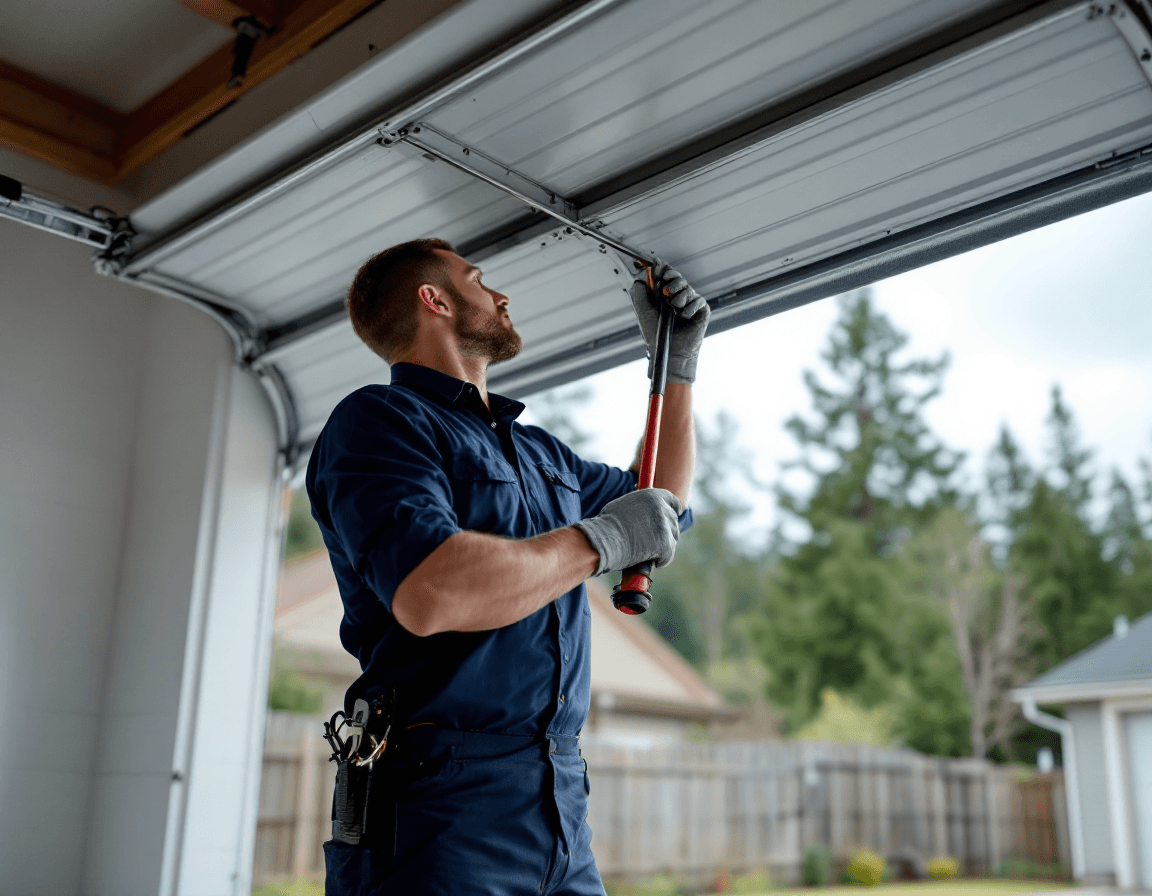
Garage door spring replacement in Black Diamond, WA is one of the most common repairs we handle for homeowners in this part of King County, and it is also one of the most urgent. The torsion or extension springs carry most of the weight of your door, so when one breaks, the door can go from manageable to immovable in an instant. Many Black Diamond households first notice the problem with a sharp crack from the garage, or with a door that suddenly refuses to rise past knee height. Either way, the sooner you understand what happened, the safer and less expensive the fix tends to be.
Black Diamond sits at the edge of the Enumclaw Plateau, where a lot of homes have detached garages, long driveways, and workshops that get used for far more than parking. Those garages take a beating from wet winters, cold mornings, and the daily cycling that comes with busy households and home-based businesses. Spring failure rarely comes from a single cause. It is usually the result of years of cycles, moisture, and tension working against metal that was rated for a fixed number of openings. This page explains what the symptoms mean, how a technician reads them, what replacement typically costs, and why precise balancing matters as much as the new spring itself.
The Crack That Sounds Like a Gunshot
A snapped spring is loud, and most people describe the sound as a bang that rattles windows or sends a dog running for cover. That noise is the stored energy of the spring releasing all at once, and it often happens when the door is closed or during the first lift of the morning. Many homeowners in Black Diamond hear it from inside the house and assume something has fallen off a shelf. Going to check is the right instinct, but once you confirm the bang came from the garage, the next steps matter a great deal.
After a break, do not try to lift or force the door open, and keep people and pets away from the door track. A broken spring can leave the door hanging unevenly, and the remaining spring or the cables may be under stress you cannot see. If you have a torsion system, look along the horizontal bar above the door for a split or a gap in the coil, but do not touch the winding cones or the bar itself. Stay clear of the area under the door until a licensed technician has inspected it.
Because the sound is so distinctive, a snapped spring is one of the easiest failures to identify over the phone. Our technicians serving Black Diamond ask a few quick questions about where the sound came from and what the door is doing now, which helps them arrive with the right parts. In most cases, the door can be secured and the spring replaced in a single visit.
Reading the Gap in a Torsion Coil
Torsion springs are the coiled steel bars mounted on a shaft above the door opening, and they are the most common spring type on modern residential doors. When one begins to fail, the first visible clue is often a small gap between two coils, sometimes so slight that it blends into the shadow of the bar. Other times the gap is wide enough to see daylight through, and the coil has visibly shifted out of its original line. Rust-colored flaking, a dull or pitted surface, or a bar that sags toward one side can all point to a spring nearing the end of its life.
A gap should be treated as a warning even if the door still seems to work. Once one coil has separated, the remaining tension is no longer balanced across the shaft, and the stress load on the other coils and the bearing plates increases. Continuing to operate a door with a visible gap can lead to a sudden break at the worst possible time, such as when someone is pulling a car out in the dark or when the door is already partially open. It is also common for a gap to appear on one side of a double-spring setup while the other side still looks fine, which is why both springs should be evaluated together.
Torsion springs are rated by cycle count, and most standard residential springs are designed for roughly ten thousand openings. Households that use the garage as their main entrance, or that cycle the door frequently for deliveries and trips, may reach that number sooner than expected. A technician can check the spring's cycle rating printed on the coil and compare it against the way your door is used. Knowing that number helps you plan ahead rather than reacting after a break.
When the Door Stops a Few Inches Off the Ground
Sometimes the door lifts a few inches, pauses, and then goes no further. Other times it will not budge at all, or it rises but feels like it is dragging an enormous weight. Both symptoms are classic signs that the springs have lost enough tension that they can no longer carry the door's weight. The door may look normal to the eye, but the mechanical balance has shifted to the point where the opener cannot compensate.
In many Black Diamond garages, this symptom shows up after a cold snap. Metal contracts in low temperatures, and a spring that was already weakened can lose enough tension to fail to lift the door that morning. Once temperatures climb again, the door may seem to work normally for a few days before the same issue returns. This on-and-off behavior is a reliable indicator that the spring is worn rather than that the opener needs adjustment.
It is worth emphasizing that a door which stops partway should never be forced. Pushing a heavy door up by hand, pulling on the bottom panel, or pulling a manual release cord while the door is hanging can cause a sudden drop or put strain on the cables. Stop, keep hands clear of the track, and schedule a service visit. Our technicians can typically determine within a few minutes whether the springs or the opener are responsible.
Opener Humming Without Movement
A motor that hums, clicks, or strains while the door barely moves can make homeowners suspect the opener itself. Replacing an opener is a much larger expense than replacing springs, so it is natural to want to rule out the motor first. The truth is that a garage door opener is designed to assist a balanced door, not to lift the full weight of a door whose springs are no longer doing their job. When the springs fail, the opener is forced to work against the entire load, and it may overheat or trip its safety features.
A useful way to tell the difference is to disconnect the opener and lift the door gently by hand, ideally with a helper and only after confirming the door is closed. A properly balanced door should stay roughly in place when you let go at about waist height. If the door drops quickly, rises too easily, or feels as if it is pulling hard in one direction, the springs are likely the cause. If the door moves smoothly by hand but the opener still struggles, the motor, trolley, or drive system may need attention.
Because this test involves handling a heavy door, it is best left to a trained professional. The door should never be lifted by hand while the springs are damaged or while a cable is loose. A licensed technician uses calibrated tools to check the balance and the opener together, so that repairs go to the right component the first time. This prevents a homeowner from paying for an opener replacement that does not address the real problem.
Cables That Jumped the Drum
When a spring breaks, the cables that run from the bottom bracket of the door up to the drums can slacken or come completely off the drum grooves. Loose cable is dangerous, because it can snap under tension or cause the door to tilt, jam, or fall unevenly. You may notice a cable hanging loosely near the track, a drum that has rotated out of position, or a door that sits crooked in its opening. In some cases, the cable has slipped out of its groove but remains attached, which is still a serious hazard.
Black Diamond homes with older doors sometimes have cables that have been stretched over many years of use. A broken spring can accelerate that wear by allowing one side of the door to drop faster than the other. Once cables have jumped or frayed, they should be replaced along with the spring rather than reattached. Trying to wedge a cable back onto a drum with a screwdriver or pliers is a common way people get hurt, and it rarely produces a lasting repair.
Whenever a cable is involved, the door should be considered unsafe until a licensed technician has examined it. Keep children and pets away from the door, do not climb onto the door or its hardware, and avoid operating the opener until the system has been secured. Any repair involving tension, cables, or drums should be performed by trained professionals who understand the forces involved.
Pacific Northwest Moisture and the Life of a Spring
Western Washington's wet winters and humid shoulder seasons are hard on steel, and garages in the Black Diamond area often see more moisture than homeowners realize. Condensation builds on cold metal during temperature swings, and that moisture can reach the spring coils, bearing plates, and cable hardware. Over time, surface rust weakens the steel and can create tiny stress points that eventually become cracks. Garages that are not insulated or ventilated tend to see this process sooner, especially when they are used for storing firewood, bikes, or outdoor equipment that carries damp soil and debris.
Seasonal patterns matter too. Many homeowners notice springs failing in late fall or early winter, when temperatures drop and the door is operated more often because of shorter days and more errands. Others see problems in early spring, after a long run of rain and damp mornings. The spring itself may have been weakened long before, but the extra load of cold and moisture pushes it past its limit. This is why an annual visual check is useful even when the door seems to work fine.
- Look for orange or brown flaking on the spring coils, especially where the coils touch one another.
- Watch for a bar or spring that appears to sag, lean, or sit off-center on the shaft.
- Check the bearing plates and cable hardware for rust trails or loose fasteners.
- Notice whether the door feels heavier on cold mornings than it did in summer.
- Listen for popping, ticking, or grinding as the door begins to lift.
If you see several of these signs together, schedule an inspection before the spring fails. A preventive replacement is far more manageable than an emergency call on a freezing morning when the family needs to leave for school or work.
Torsion Versus Extension Springs: Knowing Which System You Have
Not every garage door uses the same spring design, and knowing which one you have helps you understand the repair. Torsion springs mount above the door on a horizontal shaft and wind or unwind to lift the door in a smooth arc. They are the most common choice for modern residential doors because they are quieter, more stable, and generally longer-lasting when properly maintained. Extension springs run along the sides of the door, parallel to the horizontal tracks, and stretch as the door opens. You will often find them on older doors or on lighter residential models.
Each system has its own safety considerations. Torsion springs store tremendous energy in the winding tension, and they should only be adjusted with specialized equipment and proper training. Extension springs are also under high tension and can recoil violently if a safety cable is missing or damaged. Many extension systems include safety cables threaded through the spring centers, and these should be inspected whenever the springs are replaced. A technician will confirm the correct system before starting work.
- Torsion systems: spring mounted on a shaft above the door, usually one or two coils, quieter operation.
- Extension systems: springs running along the tracks, often found on older or lighter doors.
- Both systems: require a licensed technician for replacement, balancing, and cable service.
Knowing your system also helps when you request a quote. Torsion replacements often involve more precise winding and balancing, while extension replacements may involve safety cable checks and track alignment. Being able to describe what you see in the garage gives the technician a better starting point and can shorten the visit.
What a Spring Replacement Typically Costs in Black Diamond
For most residential spring replacements, the price generally falls between $180 and $450. That range reflects common variables such as the spring type, the door size, whether one or two springs are being replaced, and whether cables, drums, or bearing plates also need attention. A single extension spring on a smaller door will typically sit at the lower end, while a double torsion replacement on a larger or heavier door may reach the higher end. Specialty or high-cycle springs can change the final figure, which is why a technician should confirm the details on site.
It is wise to be wary of quotes that seem far below this range, especially if they do not include balancing, safety checks, or a clear explanation of the parts being installed. Replacing a spring properly takes more than slipping in a new coil. The technician must match the spring to the door's weight, verify the cycle rating, check the cables, and confirm that the door balances correctly before leaving. A low price that skips these steps can lead to a second failure, which costs more in the long run.
If you are comparing options, ask what is included in the quote, whether the technician checks the opener and cables, and whether the spring's cycle rating will be stated on the paperwork. A reputable company will be transparent about these items and will not pressure you into unnecessary repairs. Our team serving Black Diamond and nearby communities gives homeowners a clear explanation before any work begins.
High-Cycle Springs and Precise Balancing
Standard residential springs are rated for a particular number of cycles, but many households in the Black Diamond area open their garage doors far more often than the average. Families with teenagers, home offices with frequent deliveries, and rural properties where the garage is the main vehicle entrance can wear through standard springs faster than expected. High-cycle springs are engineered with heavier wire or different tempering to handle more openings over their lifespan. They are a sensible upgrade when your household's usage justifies it, and a technician can help you decide whether the investment makes sense.
Whatever spring type you choose, balancing is the step that determines how the door feels every day. A correctly balanced door should stay put when raised partway, lift smoothly without the opener straining, and close without slamming or drifting. An imbalanced door can close too fast, pull to one side, or sit crooked in its frame, and those symptoms can damage the track, rollers, and opener over time. Precise balancing involves adjusting the spring tension to match the door's exact weight, including any added hardware such as windows, insulation, or heavier panels.
Doors that close too quickly or land crooked are often treated as separate problems, but they frequently trace back to the same cause. Once the spring is replaced, the technician should test the door through its full range of motion, checking the lift, the stop point, and the closing speed. Small adjustments to the cables, tension, and track alignment can make a major difference in how the door behaves. A door that is properly balanced will feel calm and steady, and it will protect the rest of the system from unnecessary wear.
What Happens During a Spring Visit and Why Safety Comes First
A typical service visit begins with a conversation about what you have noticed, including the sound, the symptoms, and when the problem started. The technician then inspects the door, springs, cables, drums, bearing plates, and opener to confirm the cause. Once the diagnosis is clear, the technician explains the recommended repair, the parts involved, and the expected cost, and it is your choice whether to proceed. Replacement work is performed with specialized tools, and the door is tested thoroughly before the technician leaves.
- Initial conversation to review the sound, symptoms, and timeline.
- Full inspection of springs, cables, drums, track, rollers, and opener.
- Written explanation of the repair, parts, and price before work starts.
- Spring replacement, cable service if needed, and precise balancing.
- Final testing of lift, stop point, closing speed, and safety reversal.
Safety is the thread that runs through every part of this process. Spring tension is dangerous, and the energy stored in a torsion or extension spring can cause serious injury if it is released without control. That is why homeowners should never attempt spring replacement, winding, or cable repair on their own, no matter how handy they are. Licensed, bonded, and insured technicians have the training and equipment to handle these components safely, and that protection matters for your family and your property. If you are unsure whether your garage door is safe to use after a symptom appears, keep the door closed, keep people clear, and call a professional.
Whether your door is making a loud bang, stopping a few inches off the ground, or showing a gap in its torsion coil, a prompt inspection can prevent a larger problem. Our licensed team serves Black Diamond and the surrounding Western Washington communities, including the 98010 area near Ten Trails and Lake Sawyer, with fast scheduling and clear pricing. Call (888) 799-3819 today to arrange a spring inspection, and let a qualified technician restore safe, balanced operation to your garage door.