
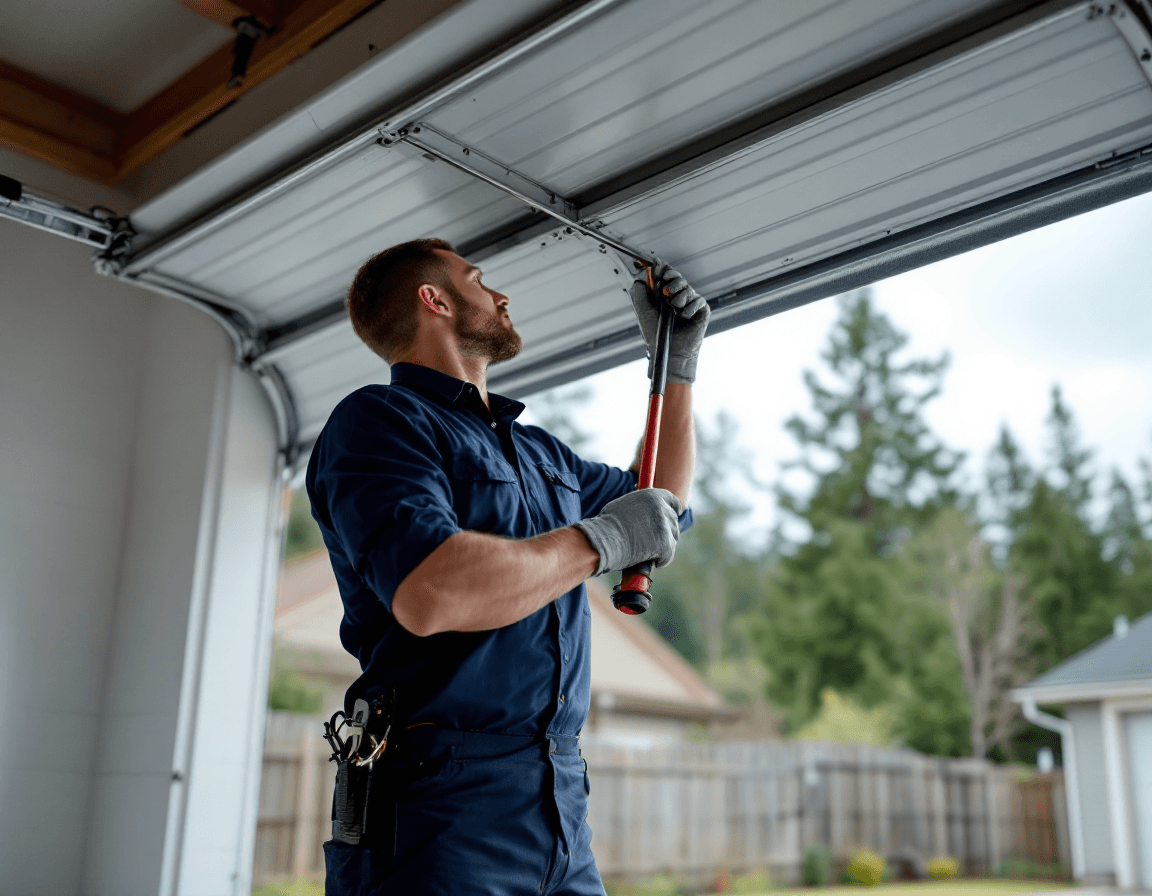
Garage Door Spring Replacement in Maple Valley, WA is one of the most common repairs we handle for homeowners across King County's southeast corner, and it is also one of the most important to get right. The springs that carry the weight of your door are under enormous tension even when the door looks perfectly normal, so a failure can happen without warning. When one breaks, the door often stops working entirely, and the sudden release of energy can damage the opener, the tracks, and anything nearby. Understanding what is happening above your garage can help you decide quickly and calmly what to do next.
Maple Valley homeowners live with a particular mix of conditions that affect garage hardware. Our winters bring long stretches of gray, wet weather, and the cold snaps that sometimes arrive in January can make metal more brittle and lubricants thicker. A garage that sits attached to a house may trap warm, humid air from the laundry room or a water heater closet, while an detached garage on a rural-feeling lot may see more condensation on its door panels. Whatever the arrangement, the combination of moisture and temperature swings gives rust and fatigue a head start, and that is why a spring that seemed fine last year can give out during the first cold week of the new year.
This page explains how spring failures happen, how to recognize the warning signs, what a professional replacement involves, and why precise balancing matters as much as the new part itself. It also covers the safety rules that every homeowner should follow, because springs and cables are the most hazardous components of a garage door. If you have already heard a loud bang or your door refuses to rise, the information below will help you understand what your technician is likely to find and what the repair should include.
Why Wet Winters Shorten the Life of Garage Door Springs
Springs do not wear out in a single moment. Each time the door opens or closes, the spring winds or unwinds a little, and the metal endures repeated stress over thousands of cycles. Moisture accelerates this process because it reaches the coil surface and begins forming surface rust, which creates tiny pits where cracks can start. In a climate where the air stays damp for much of the year, that corrosion can work quietly for a long time before anyone notices.
Temperature also plays a role. Steel becomes less flexible in cold conditions, so a spring that handled a warm August without complaint may struggle on a freezing morning in February. Garages in Maple Valley often see sharp day-to-night swings during shoulder seasons, and those repeated expansions and contractions add another layer of fatigue. Homeowners who park vehicles inside the garage may also notice that exhaust, road grime, and road salt used on nearby streets can settle onto the hardware and speed up corrosion.
Because of these factors, we tend to suggest that owners inspect their springs more often than the manual might imply. A quick visual check every season, especially after a wet stretch or a cold snap, can reveal early rust or flaking that signals the coil is nearing the end of its service life. Catching it early gives you the option of scheduling a planned replacement rather than dealing with a midnight failure.
Reading the Warning Signs Before the Spring Lets Go
Most spring failures announce themselves in advance, even if the signs are easy to overlook. A door that begins to feel heavier than usual, or that jerks slightly as it rises, often means the spring has lost some of its tension. Some owners describe the door as suddenly harder to lift by hand during the emergency release, which is a strong indication that the spring is no longer carrying its share of the load. Pay attention to changes that develop over a week or two, because they tend to get worse rather than better.
Visible damage is another clear signal. On torsion systems, look for a gap in the coil, a spring that has pulled away from its mounting bracket, or rust-colored flakes collecting on the floor beneath the shaft. On extension systems, check whether the springs have stretched unevenly or whether a safety cable has frayed. Any of these conditions means the spring should be evaluated by a professional before it fails completely.
Here are the symptoms that most often lead Maple Valley homeowners to call us:
- A loud bang from the garage, sometimes described as a gunshot or a heavy slam, which usually signals a spring snapping
- A door that will not lift at all, or that rises only partway before stopping
- A visible gap or separation in the torsion spring coil
- An opener that strains, hums, or clicks but the door barely moves
- Cables that have come loose from the drum or hang crookedly after a spring break
- A door that closes too quickly, drops suddenly, or sits crooked in the opening
Telling Torsion Systems From Extension Systems
Before anyone works on a spring, it helps to know which type your door uses, because the two designs behave differently and carry different risks. Torsion springs are mounted on a steel shaft directly above the door opening, usually in a single long coil or in two coils on wider doors. They twist as the door moves, and the energy stored in them is released as they unwind. Because the spring sits above the opening, it is often the component that homeowners notice first when it fails.
Extension springs run parallel to the horizontal tracks on each side of the door, typically with a pulley and cable arrangement that connects them to the bottom bracket. They stretch as the door lowers and pull back as the door rises. Many older doors and some lighter-weight residential models use this design, and extension springs often include a safety cable running through the center of each coil to restrain the spring if it breaks. Replacing these springs requires careful attention to that safety cable and to the tension setting.
If you are unsure which system you have, look above the door. A long tube-shaped coil mounted on a horizontal shaft indicates torsion. Coils that sit along the tracks on each side indicate extension. Your technician will confirm the type during the visit, and the choice of replacement spring depends on the door's weight, height, track configuration, and cycle expectations.
What a Professional Spring Replacement Involves in Maple Valley
A proper spring replacement is more than swapping a broken coil for a new one. The technician begins by securing the door so it cannot move during the work, then assesses the spring size, wire diameter, inside diameter, length, and cone style. Measurements matter because a spring that is even slightly wrong for the door's weight will either strain the opener or leave the door unbalanced. Once the correct replacement is selected, the old spring is carefully removed and the new one installed with the correct tension.
On a typical Maple Valley job, the work follows a sequence that protects both the technician and the household. Your technician will generally complete these steps:
- Inspect the door, opener, tracks, rollers, hinges, cables, and drums to confirm the spring is the root cause
- Lock the door in place and verify that the tension system is fully relaxed before any hardware is removed
- Measure the existing spring and confirm the correct replacement specifications for your door weight and height
- Install the new spring with the proper winding procedure, using calibrated equipment and never improvising with tools
- Check cable routing, drum seating, and bracket alignment before releasing the door
- Test the door through several full cycles to confirm smooth operation and proper balance
Because torsion springs store so much energy, this work should never be attempted by homeowners. Improvised winding bars, mismatched parts, and skipped safety checks are a common cause of serious injury. Licensed professionals carry the training, equipment, and insurance needed to handle these components safely, and they stand behind the work they perform.
Understanding the $180–$450 Price Range
Most spring replacements we perform fall within the range of $180 to $450, but several factors influence where a particular job lands within that span. The most significant is the type and quantity of springs involved. A single torsion spring on a standard single-car door usually costs less than a pair of springs on a wider two-car door, while extension systems may require additional hardware if cables or pulleys are also worn. The spring's cycle rating and material grade also affect the price, as does whether the replacement is a standard or high-cycle option.
Other variables include the door's height and weight, the accessibility of the components, and whether the technician also needs to replace cables or drums. A broken spring often damages cables, so the job may include new cable assemblies to restore safe operation. In some cases the existing opener, bearings, or rollers show wear that should be addressed during the same visit, although we always explain those recommendations before any additional work begins. Ask for a clear written estimate so you know exactly which parts and labor are included.
It is wise to compare the scope of work rather than simply the bottom-line number. A low quote that does not include proper balancing or cable inspection may leave you with a door that operates poorly and needs another visit. A complete, balanced installation with verified tension protects your opener and gives the new spring its best chance of reaching its rated life.
Choosing High-Cycle Springs for Busy Households
Standard torsion springs are often rated for around 10,000 cycles, where one cycle equals one full open and close movement. For a household that uses the garage only occasionally, that rating may last many years. Families who come and go several times a day, or who run a home-based business from the garage, can burn through that cycle count much faster. High-cycle springs are engineered with heavier-duty wire and processing to deliver a substantially longer rated life, which can be a practical upgrade for active homes.
High-cycle options are worth discussing if your household includes teenagers with busy schedules, multiple drivers, or a garage that doubles as a workshop or entry point. They also make sense if your existing spring failed early, since that can signal either a heavy usage pattern or a balance issue that should be corrected. A technician can help you weigh the extra cost against your typical usage and explain how the rated cycle count translates into real-world years. Keep in mind that cycle ratings are estimates based on manufacturer testing, and actual life depends on lubrication, balance, weather exposure, and how the door is used.
Choosing a high-cycle spring does not replace routine maintenance. Even the most durable spring benefits from proper balance, lubricated bearings, and an occasional inspection. Pairing a high-cycle replacement with a full balance check gives you the strongest combination of longevity and smooth operation.
Why Precise Balancing Matters as Much as the New Spring
A spring provides the lifting force that makes the door easy to move, but the balance between spring tension and door weight determines how the door actually behaves. A well-balanced door should stay roughly in place when you stop it halfway up, without drifting down or floating upward. An unbalanced door places extra strain on the opener, wears out rollers and bearings faster, and can cause the cables to ride unevenly on the drums. Balance is the difference between a spring that works and a system that works smoothly for years.
After a new spring is installed, the technician adjusts the tension to match the door's actual weight and any hardware changes made during the job. This step is performed with the door disconnected from the opener so the technician can observe its natural movement. Small adjustments to the spring winding or cable setup can dramatically improve how the door lifts, lowers, and stops. Skipping this step is one of the most common reasons a new spring feels like it does not quite fix the problem.
Homeowners often notice the benefits quickly. A balanced door opens at a steady pace, closes without slamming, and stays level as it travels. The opener motor runs more quietly and draws less strain, which can extend its service life. If your door was crooked, closing too fast, or stopping unpredictably before the repair, balancing is the step that usually resolves those issues.
Hidden Damage a Broken Spring Can Leave Behind
When a torsion spring snaps, the sudden release of energy can affect more than the coil itself. Cables may be yanked from their drums, drums can crack or slip on the shaft, and bearing plates can bend or separate from the wall. The shock can also loosen mounting brackets and damage the track near the top of the door. Even if the door appears to be stuck in place, the surrounding hardware may need inspection before any repair work begins.
Extension spring failures can produce similar problems. A snapped extension spring can cause the door to drop suddenly, and the bottom bracket may bend or the rollers may jump the track. If a safety cable is present, it should have held the spring in place, but the cable itself may be frayed or stretched after the event. Technicians check these components carefully because a damaged cable or drum can fail again under load if left unaddressed.
This is why a thorough inspection matters. A good technician will look at cables, drums, brackets, rollers, hinges, and tracks in addition to the spring, and will explain any findings before proceeding. Repairing only the visible break and ignoring nearby damage often leads to a second service call within weeks, which is frustrating and avoidable.
Staying Safe Around Tensioned Springs at Home
Garage door springs store energy that can cause severe injury if handled incorrectly, so safety should always come first. Homeowners should never attempt to wind, unwind, adjust, or remove a torsion spring, and should never try to release tension on an extension spring by hand. Even when a spring appears to have broken, it may still hold stored energy in the remaining coil or in the attached hardware. Stepping away and calling a professional is always the correct choice.
There are steps you can take safely while waiting for a technician. These precautions reduce the risk of further damage and help keep everyone in the household out of harm's way:
- Keep children and pets away from the garage door area until the repair is complete
- Avoid pulling on cables or hanging weight from the door to test it
- Disconnect the opener only if you can do so without touching the spring or door hardware, and never force the door open or closed
- Use the garage's side entry or another door while the repair is pending, if possible
- Take clear photos of the spring, cables, and drums so your technician can review the situation before arriving
Always confirm that any technician you hire is licensed, bonded, and insured, and ask how they handle winding and tension procedures. A professional should explain the work in plain language, respect your questions, and leave the area clean and safe when the job is finished.
Local Notes for Lake Wilderness, Four Corners, and Surrounding Maple Valley Streets
Maple Valley's landmarks give us a useful sense of the community we serve. Homes near Lake Wilderness often sit among mature trees and maintain shaded yards, which can keep garage floors and door bottoms damp for long stretches after rain. Residents around the Four Corners area frequently juggle busy commutes and errands, which can mean garage doors cycle more often than the owners realize. Whether your home is close to the lake, near the commercial core, or on a quieter residential street, the same principles of moisture control and regular inspection apply.
Our technicians understand that the mix of older and newer construction in the area means garage setups vary widely. Some homes still have original doors with exposed hardware, while others have more recent models with upgraded openers and sealed tracks. Each arrangement affects which spring type is most appropriate and how the balance should be set. Local knowledge helps us anticipate issues like condensation-driven corrosion or the effects of seasonal temperature swings on older components.
Wherever you live in the 98038 area, scheduling your spring inspection before the wettest months can help you avoid an emergency. Bringing in a technician during a calm season gives you time to compare options, consider high-cycle upgrades, and plan the work around your schedule. Preventive attention is almost always more comfortable than a broken spring on a cold morning.
Planning Your Maple Valley Spring Replacement With Confidence
A broken or failing spring is stressful, but it is also a solvable problem with a clear path forward. Start by noting the symptoms you have observed, when they began, and whether the door has recently changed in weight, speed, or alignment. Keep the garage clear of vehicles and stored items so the technician has room to work, and make sure the path from the house to the garage is safe. Write down any questions you want answered, such as the expected cycle rating, the warranty on parts, and what the balancing process will involve.
When you speak with a technician, expect them to ask about your door's size, your opener, and how often the door is used. A thorough visit includes a full inspection, a clear explanation of the replacement options, and a written estimate before work begins. Good professionals will also tell you when a repair is not needed or when a different solution makes more sense, which is part of building long-term trust with a homeowner.
If your garage door has gone silent, stopped mid-travel, or made a sound you will not forget, call Seattle Garage Door Fix today at (888) 799-3819. Our licensed, bonded, and insured technicians serve Maple Valley and more than 60 cities across the greater Seattle area, and we will walk you through every step of a safe, precise spring replacement.