
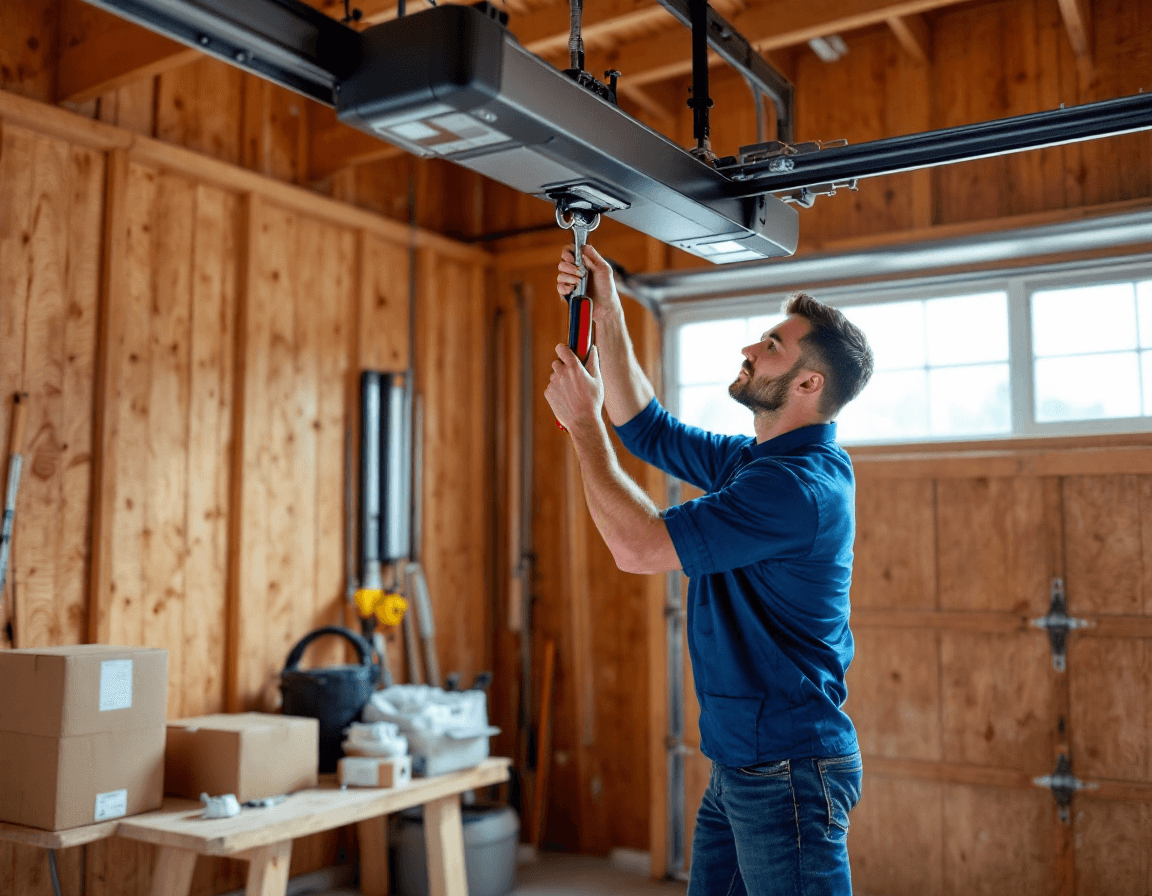
Garage door opener installation and replacement in Maple Valley, WA is one of the most practical upgrades a homeowner can make, and it is often the simplest fix for a garage that has started to feel unreliable. Many households in Maple Valley and the surrounding King County foothills keep the same opener for fifteen years or more, long after its motor has grown loud, its travel has become uneven, or its safety features have stopped working the way they should. A new opener can restore smooth, predictable operation, bring modern security to the door, and add conveniences such as phone alerts and battery backup that older units never offered. Installed pricing for most jobs falls between $275 and $650, with the final number depending mainly on the opener model, drive style, and any extras you choose.
Our technicians work across the Maple Valley area, including homes near Four Corners and the neighborhoods that border Lake Wilderness, as well as the wider 98038 ZIP code. Garages here see a particular mix of conditions. Winters bring long stretches of damp air, morning fog off the lowlands, and the occasional hard windstorm that knocks out power for hours. Summers are usually mild, but the difference between a dry afternoon and a humid evening can still affect the lubricants, wiring, and sensors inside an opener. A replacement unit should be chosen with these realities in mind, not just with the shelf specifications.
This page walks through how to tell when an opener needs replacing, how to choose between belt-drive, chain-drive, and wall-mount designs, what rolling-code security means for an older garage, how smart controls fit into a home network, and what happens during a professional installation. It also explains where the job stops being a DIY task and becomes a matter for a licensed professional. If you are weighing repair against replacement, or simply want to understand what you are paying for, the sections below should give you a clear picture.
Reading the Signs Your Opener Has Given Up
Most openers do not fail all at once. They send signals over months or years, and recognizing those signals early can save you from being stranded with a closed door on a cold morning. The most common warning is noise. A clattering chain, a grinding gearbox, or a motor that hums loudly before the door begins to move usually means worn gears, a loose drive component, or a trolley that has lost its smooth travel. Noise alone does not always mean replacement, but when it is paired with other symptoms, it often points to a unit that has reached the end of its useful life.
Slow or hesitant movement is another clear sign. If the door starts, stops, and then resumes, or if it takes noticeably longer to complete its cycle than it did a few years ago, the motor may be struggling to keep up with the door's weight. Intermittent operation, where the remote works sometimes but not others, can point to a failing logic board, a weak power supply, or interference that has built up over time. Because Maple Valley homes often sit on properties with mature trees and varied elevations, signal interference from nearby structures and power lines can make an aging receiver more sensitive than it used to be.
A practical way to decide is to compare the repair cost against the age of the unit. When a technician quotes a major repair on an opener that is already twelve to fifteen years old, the money is often better spent on a modern replacement with a warranty, quieter operation, and current safety features. Keep in mind that the opener is only one part of the system. The door itself, its springs, cables, rollers, and hinges should also be inspected, because a worn spring can make a new opener look like a failure.
Belt-Drive, Chain-Drive, or Wall-Mount: Matching the Drive to Your Garage
The drive style determines how the opener moves the door, and it influences noise, maintenance, and cost more than most buyers expect. Chain-drive openers use a steel chain running along a rail. They are typically the most affordable option, and they handle heavy doors well, but they are louder than the alternatives. In a garage with living space above or beside it, the racket can be noticeable, especially early in the morning or late at night. Chain-drive units are a sensible choice for detached garages, workshops, or homes where noise is not a major concern.
Belt-drive openers use a reinforced rubber belt in place of the chain. The result is a much quieter run, which is why many Maple Valley homeowners choose this style for attached garages that share a wall with a bedroom or family room. Belts also tend to stretch less than chains over time, and they require less frequent lubrication. The trade-off is a slightly higher purchase price, and belts should be kept away from moisture and solvents, since both can shorten their life.
Wall-mount openers attach to the side wall of the garage instead of the ceiling. They are useful when the ceiling is low, when a garage has an unusual layout, or when the ceiling joists cannot safely support a ceiling-mounted unit. Many wall-mount designs also free up overhead space for storage or a lift. Whatever drive you choose, the right model depends on the door's weight, height, and track configuration, which is why a site visit matters more than a catalog comparison.
Why Rolling-Code Security Matters for an Older Garage
Garage door remotes that rely on fixed codes are a real vulnerability. A fixed code transmits the same signal every time, which means a determined person with inexpensive equipment can record it and reuse it later. Rolling-code technology solves this by changing the transmitted code with every press of the button, so a recorded signal cannot be replayed to open the door. If your opener is an older model that still uses fixed codes, replacing it is one of the most effective security upgrades you can make to the garage.
Rolling-code systems are standard on most current openers, but older units vary widely in how they were built. Some pre-date rolling-code technology entirely, and others have receivers that can be retrofitted only partially. A technician can identify the receiver type, check the remote compatibility, and advise whether a retrofit kit makes sense or whether a full replacement is the better path. In most cases, a full replacement also brings updated entrapment protection and auto-reverse features that meet current safety expectations.
Security extends beyond the remote. Keypad entry, wall-mounted control panels, and smartphone access each introduce their own considerations. Changing default passwords, removing unused remotes from the memory, and reviewing who has access to the app are all simple habits that strengthen the system. A new opener installation is a good moment to do this housekeeping, because the old codes and forgotten fobs can be cleared at the same time.
Smart Wi-Fi Control and myQ Compatibility for Maple Valley Homes
Smart control has become one of the most requested features in opener replacements. Many homeowners want to check whether the door is closed from work, open it for a delivery driver, or receive an alert when it has been left open. Compatible systems, including myQ-enabled openers, connect to a home Wi-Fi network and can be managed through a smartphone app. Before choosing a smart model, however, it is worth thinking about the network the opener will depend on.
The most common issue in a garage is signal strength. Many garages sit at the far end of a house or behind thick exterior walls, and the router may be on another floor. Most smart openers use a 2.4 GHz connection, so a technician will often test the signal at the installation spot before recommending a model. If the signal is weak, a mesh extender or a relocated access point may be needed. Maple Valley homes built on sloped lots or with large wooded yards can have surprising dead spots, so a quick test during the site visit prevents frustration later.
Smart features are also a matter of convenience versus privacy. Some owners prefer a basic opener with a wall control and no network connection, and that is a perfectly reasonable choice. If you do connect the opener to the internet, use a strong, unique password for your account, enable two-factor authentication where offered, and keep the opener's firmware updated. A technician can walk you through these steps at the end of the installation so the system is ready to use from day one.
Battery Backup: Keeping the Door Working When the Power Goes Out
Power interruptions are a fact of life in the Pacific Northwest. Winter storms with heavy wind can bring down lines and leave neighborhoods dark for hours, and during those periods a standard opener is useless. A battery backup unit keeps the opener running during an outage, allowing you to open or close the door without resorting to the manual release cord. It is one of the most practical features for households that rely on the garage as their main entry point or that keep a vehicle inside for quick access.
Battery backup options differ in capacity and in how many cycles they support during an outage. Some units provide enough power for several door movements, while others are designed mainly to keep the opener responsive for a short period. Backup batteries also need periodic replacement, usually every few years, and a technician can explain the expected service interval for the model you choose. It is wise to note the replacement schedule on your calendar when the installation is complete.
Battery backup is also useful for safety during an outage. When the door cannot be operated electrically, people sometimes try to lift it by hand, which can be dangerous if the springs are under tension. A backup battery reduces that temptation, but it does not replace proper maintenance of the springs and cables. If your door is heavy, sticks, or seems unbalanced, have it inspected before attempting any manual operation.
What a Professional Installation Actually Involves
A good opener installation starts before the new unit comes out of the box. A technician will inspect the door, tracks, springs, cables, and rollers to confirm that the system is balanced and that the opener is sized correctly for the door's weight. They will check the ceiling or wall structure to make sure it can carry the opener's weight and vibration, and they will confirm the electrical outlet location and whether it meets the needs of the new unit. Skipping this assessment is one of the most common reasons a replacement opener underperforms.
During the installation itself, the opener is mounted, the rail or arm is assembled, and the trolley is connected to the door. The travel limits are set so the door stops at the correct open and closed positions, and the force settings are adjusted so the door reverses if it meets an obstruction. Safety sensors, which should be mounted close to the floor and aligned carefully, are installed and tested. Finally, the remotes, keypad, or smartphone app are programmed, and the system is run through several complete cycles to confirm that it operates smoothly.
Once the installation is complete, the technician should walk you through the controls, explain the safety reversal test, and show you how to use the manual release. You should be able to test the auto-reverse yourself by placing a flat object in the door's path and confirming that the door reverses when it contacts it. A clear explanation at the end of the job is a good sign that the work was done properly.
Safety Limits: When to Call a Licensed Professional Instead
Opener replacement is a manageable project for a trained technician, but it involves several components that can cause serious injury if handled incorrectly. Garage door springs are under very high tension, and the cables that run alongside them can snap and cause harm. These parts should never be adjusted, removed, or replaced by an untrained person. If your door has a broken spring, a frayed cable, or a bent track, call a licensed professional rather than trying to repair it yourself.
Electrical work also deserves caution. Many openers plug into a standard outlet, but some installations require a new circuit or a dedicated outlet, and the wiring must meet local code requirements. If you are not comfortable working with household electrical systems, have a licensed electrician or a qualified garage door technician handle the connection. A loose or improperly grounded connection can cause malfunctions and, in rare cases, fire risk.
Our technicians are licensed, bonded, and insured, and we handle spring and cable work as part of the same service visit when it is needed. We always recommend that homeowners leave this work to trained professionals rather than attempting it with improvised tools. If a technician tells you that a spring needs replacement, that recommendation is based on the condition of the door and the safety of your household.
Preparing Your Garage Before the Installation Day
A little preparation makes the installation faster and reduces surprises. Clear the area around the door and the ceiling mounting location so the technician has room to work. Move vehicles out of the garage if possible, and secure any items stored on shelves near the door's track. If you have pets, arrange for them to be kept indoors or in another room during the visit, since the work involves ladders, tools, and occasional loud noise.
Gather the information the technician will ask for. Know the make and model of your current opener if you have it, the approximate age of the door, and whether the door is insulated or made of steel, wood, or composite. Note any problems you have noticed, such as slow movement, noise, or remote failures, and mention any features you want, such as a keypad, a smartphone connection, or battery backup. This information helps the technician recommend the right unit the first time.
Finally, decide what matters most to you before the appointment. If quiet operation is the priority, belt-drive is usually the best fit. If budget is the main concern, a reliable chain-drive model can meet most needs. If you want full smart control, confirm that your home network reaches the garage. Having these priorities clear makes it easier to compare options and to understand the installed price range of $275 to $650.
Choosing Between Repair and Replacement in Maple Valley
Deciding whether to repair or replace an opener depends on several factors. A simple fix, such as replacing a worn remote, adjusting travel limits, or cleaning and realigning the safety sensors, is usually inexpensive and worth doing. However, if the logic board has failed, the gearbox is stripped, or the motor is overheating, the repair cost can climb quickly. Once the repair estimate approaches the cost of a new installed unit, replacement often provides better long-term value.
Age and parts availability also matter. Older openers may use components that are no longer manufactured, which makes repairs slower and more expensive. A new unit comes with a manufacturer warranty, and the installation itself is usually covered by the service provider's own workmanship guarantee. Those protections are worth weighing against the short-term savings of a repair on an aging machine.
Finally, consider how you use the garage. A household that depends on the door every day, or one that has experienced repeated power outages, may benefit from a replacement with battery backup and modern safety features even if the old unit still runs. A technician can help you weigh the options honestly, including recommending a repair when it is genuinely the better choice.
Scheduling Your Opener Installation With Seattle Garage Door Fix
If you are ready to move forward, the first step is a site visit or phone consultation so a licensed technician can confirm the right drive style, opener size, and smart features for your garage. Many homeowners find it helpful to describe the problem they are experiencing, share the age of the current opener, and mention any specific needs, such as battery backup or a quieter run. This allows the technician to bring the right options and give you an accurate installed price before any work begins.
Seattle Garage Door Fix serves Maple Valley and more than 60 cities across the greater Seattle and Western Washington area. Our technicians are licensed, bonded, and insured, and we install belt-drive, chain-drive, and wall-mount smart openers with battery backup options. Installed pricing typically ranges from $275 to $650, depending on the model you select and any additional work the door requires.
Whether your opener is loud, slow, unreliable, or simply out of date, a professional assessment is the best way to find the right solution for your home. Call (888) 799-3819 today to schedule your Maple Valley opener installation or replacement, and let a licensed technician help you choose a unit that fits your garage, your budget, and the way your household uses the door.