
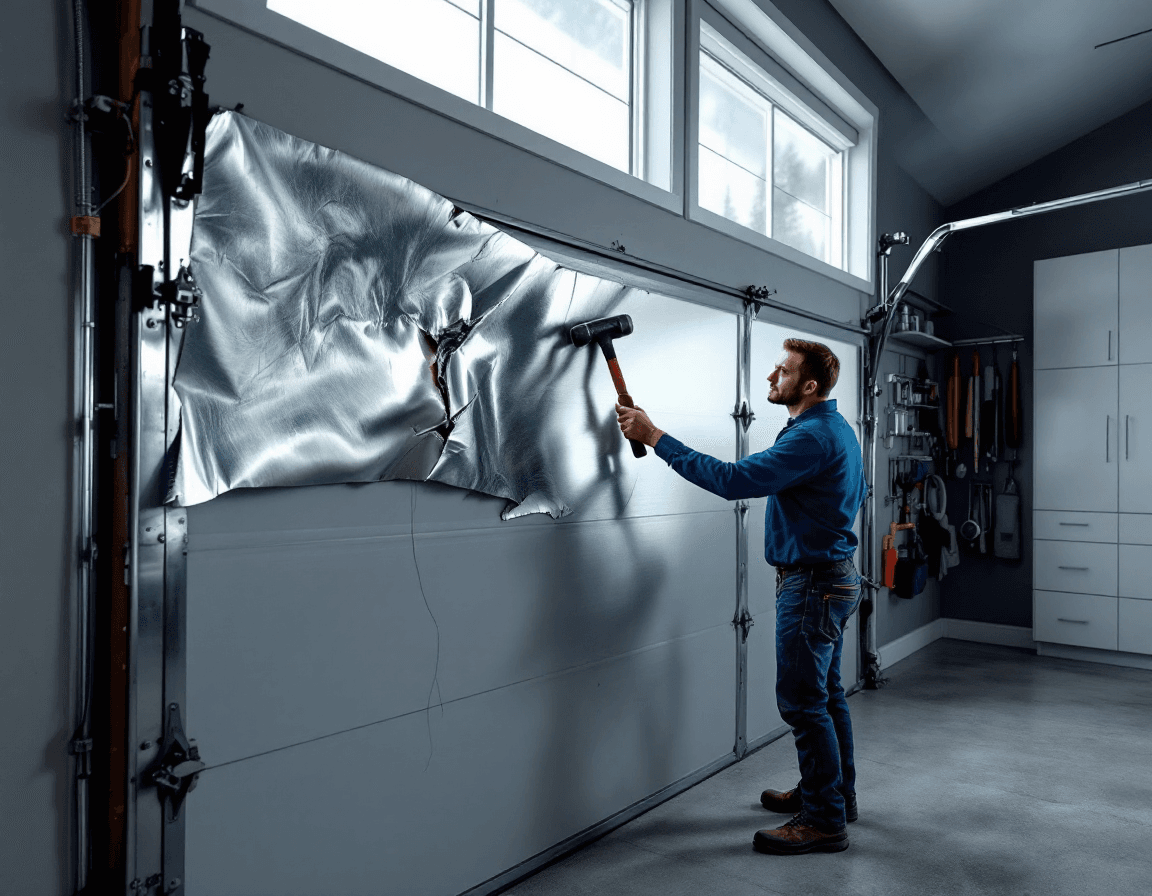
Garage door panel replacement in Maple Valley, WA is often the most practical fix for a door that still runs smoothly but looks rough. A single dented, cracked, or water-soaked section can make an otherwise healthy door look neglected, and it can let moisture, pests, and cold air into the garage. Our technicians work on steel, aluminum, wood, and composite doors across the Maple Valley area, from older homes near Lake Wilderness to newer subdivisions off the main arterials. Replacing one section, rather than the whole door, is usually a faster and more affordable path when the rest of the hardware is sound.
Maple Valley sits in the foothills southeast of Renton, and that location shapes how garage doors wear. Winters bring long stretches of drizzle and heavy rain, while summers are dry enough that sun and temperature swings take a toll on exposed paint and seams. Many homes here have driveways that run along wooded lots, so branches, gravel, and the occasional backing mishap are part of daily life. Whether you live near the Four Corners intersection or farther out toward the lake, a damaged panel tends to show up after a specific event, and the sooner it is addressed, the simpler the repair usually is.
This page explains how to recognize when a panel needs replacing, how to think through repair versus replacement, what typically affects pricing, and how the work is done safely. Panel replacement typically runs $250 to $800 per section, depending on the door's construction, insulation, and how difficult the panel is to source. If you are unsure whether a dent or crack is cosmetic or structural, a short inspection will clarify your options. Call (888) 799-3819 to talk with a licensed technician who can look at your door and explain the choices clearly.
Reading a Dent for What It Really Means
Not every dent calls for a new panel, and not every dent is merely cosmetic. A shallow ding in a steel section may affect only the finish, while a deeper crease can bend the internal ribs or insulation core that keeps the door rigid. Run your hand across the dented area and look at it from a low angle in morning light, since shadows reveal depth better than a direct view. If the metal has stretched or the edge has pulled away from the adjacent section, the damage is more than surface-level.
Pay attention to how the dent behaves when the door moves. A panel that rubs against a track roller, a guide, or the adjacent section during travel suggests the deformation is interfering with normal operation. Listen for scraping or a hollow knocking sound as the door goes up and down, because either can indicate that the damaged section is no longer sitting flat in its channel. Those symptoms usually mean the panel should be replaced before the stress spreads to the hinges or to neighboring sections.
A technician will check whether the dent has creased the panel's edge where it hinges to the next section. This matters because hinge fatigue can cause uneven gaps around the door and can make the remaining panels work harder. Replacing a dented panel while the hinge is still intact is generally simpler and less expensive than discovering a loose hinge later. When in doubt, have the door inspected while the damage is still limited to one panel.
Water Damage at the Bottom Section
The bottom panel takes the most punishment from wet conditions in Western Washington. Rain runs down the exterior face, pools against the threshold, and can soak into the lowest section during long wet stretches that are common from fall through spring. Over time, that moisture can work into hollow core panels, rust the steel facing from the inside out, or cause wood and composite materials to swell, split, and soften. Many homeowners first notice a musty smell or a faint line of water staining on the interior face of the door.
Check the bottom section for bubbling paint, flaking metal, dark staining near the seam, or a spongy feel when you press lightly on the surface. Inspect the bottom weatherseal as well, since a torn or compressed seal allows water to reach the panel edges and the floor. Some doors show corrosion at the rivets or bolts that join the bottom panel to the one above it, and that corrosion can weaken the connection even when the panel face looks acceptable. If the lower section feels soft or shows rot in wood or composite material, replacement is almost always the better option than attempting to seal it.
Bottom panels also take impact from wheelbarrows, lawn equipment, and snow shovels stored near the door. Because the bottom section is closest to the floor, it is more exposed to splashing from driveway runoff and to salt or grit tracked in during colder months. Addressing a compromised bottom panel promptly helps protect the springs and tracks above it from the dampness and debris that accumulate in the lower corners.
After a Backing-Up Accident
A common story in Maple Valley involves a car or truck backing into a garage with the door partly open or fully closed, often on a driveway that slopes slightly toward the street. A single impact can crease one section badly while leaving the rest of the door untouched. Sometimes the vehicle's bumper leaves a clear arc or a flat dent, and sometimes the damage is hidden behind a seam that looks intact at first glance. Any impact strong enough to bend metal deserves a close look, even if the door still opens.
After an accident, check the panel's alignment in the track and make sure the section moves without binding. Look for paint transfer, cracked insulation foam visible through a split seam, or a bowed panel that no longer sits flush with the neighbors. Check the nearest track, the roller on that side, and the end caps of the panel, because impacts often shift components out of their normal positions. If you notice any of these conditions, do not force the door open and closed repeatedly, since that can stress the springs and the cables.
If the door was damaged by a collision and an insurance claim is involved, photograph the damage from several angles before any repair begins. Keep the old panel if it is removed, as it can help document the extent of the damage. Our technicians can provide an assessment that describes which parts were affected, which helps when you speak with an adjuster. Describing the damage accurately is the most reliable way to keep the repair scope focused and fair.
Matching a Panel That Has Faded or Changed Over Time
Matching a replacement panel to the rest of the door is one of the most common challenges in panel work. Sun exposure fades paint and factory finishes, especially on the south and west-facing sides of a house, and the faded surface will not match a freshly painted or newly manufactured section. Doors installed a decade or more ago may also use a model or color that is no longer in current production, which makes exact matching harder. Even when the style is still available, color batches and finish textures can vary slightly.
Start by identifying the door manufacturer and model. A label is often printed on the inside edge of a section or on the header bracket, and the model number helps determine which panel sizes and profiles are compatible. Panel heights differ between door series, and some doors use insulated sections that are not interchangeable with non-insulated ones. Bringing a clean sample of the panel edge or the model plate to the appointment makes it far easier to confirm compatibility before ordering.
Color matching involves more than comparing swatches under a showroom light. Compare the faded panel and the replacement side by side in natural daylight, because the difference often becomes obvious only outdoors. Where an exact match is not available, technicians can discuss options such as refinishing the adjacent sections, choosing a replacement finish that complements the aging paint, or accepting a visible transition line that will fade less noticeably over time. Be realistic with yourself about what matching can achieve on a door that has weathered for many years.
Deciding Between Repair and Full Replacement
Choosing between a panel-level repair and a complete new door depends on the condition of the panel, the age of the door, and the state of the hardware around it. A single damaged section on an otherwise sound door often justifies panel replacement, since the cost is contained and the existing springs, tracks, and openers continue to serve their purpose. When multiple sections are rotted, delaminated, or dented, or when the door's insulation has failed across several panels, a full replacement may be the more sensible investment.
Consider the age of the springs and cables before committing to a panel repair. A door with worn springs or fraying cables may have other issues that will surface soon, and it can make sense to plan the panel work alongside a broader inspection. Our team can review the whole door so you can decide what is necessary now and what can wait. Spring and cable work carries serious risk because the tension stored in those components can cause severe injury, so that work must always be left to a licensed professional.
A simple way to frame the decision is to ask whether the rest of the door would still be worth keeping if the panel were fixed. If the tracks are straight, the rollers turn freely, the balance is correct, and the remaining panels are solid, replacing the damaged section usually makes sense. If several components are failing, a panel replacement may only delay a larger expense, and a conversation about a new door can help you weigh the long-term costs.
What Shapes the Price of a Single Section
Panel replacement is generally priced between $250 and $800 per section, and the final figure depends on several factors. The door's construction is one of the biggest influences, since insulated steel, aluminum, wood, and composite sections each have different material costs and assembly requirements. Panel size and the number of windows or decorative elements also matter, because a section with glass inserts or a specialized profile is more involved to source and install. Doors with discontinued models may require a more extensive search for compatible parts.
Access and condition of the surrounding hardware can also change the cost. If the damaged panel is near the top of the door, the technician may need to support the door more carefully during removal, and if rollers, hinges, or track sections also need attention, those items will be discussed separately. A panel that was damaged by water may reveal rust or rot in the adjacent hinges that should be addressed at the same visit. Every door is different, so the most accurate figure always comes from an on-site assessment.
Homeowners sometimes ask whether a cheaper panel option will hold up. Price differences often reflect insulation value, finish quality, and how well the section matches the original door's thickness and hardware. A lower-cost panel that does not match the door's profile may look acceptable at first but can cause alignment problems later. A clear conversation about the tradeoffs helps you choose the option that fits both your budget and the door's needs.
How a Technician Replaces One Section Safely
A panel replacement begins with securing the door so it cannot move unexpectedly. The technician will support the door with appropriate clamps or bracing, relieve tension where the design requires it, and disconnect the opener if necessary. Because torsion springs and extension springs store significant energy, the spring system must never be adjusted or removed by an unlicensed person. Our technicians are licensed, bonded, and insured, and they follow established safety procedures for every stage of this work.
Once the door is secured, the damaged section is detached from its neighbors by removing the hinge fasteners and any end caps or bottom brackets that hold it in place. The old panel is lifted out carefully, and the adjacent sections are checked for bending or hinge wear. The new panel is positioned, aligned with the existing sections, and fastened to the hinges. The technician then tests the door through several full cycles to confirm the new section tracks smoothly and sits flush.
Final steps include checking the weatherseal at the new section's edges, confirming the roller path is clear, and reviewing the door's balance. If the existing door was out of balance before the repair, the technician will discuss it rather than leaving the issue unaddressed. A short walkthrough at the end gives you the chance to ask questions about maintenance and to understand which signs would indicate a need for follow-up.
Here are a few things to expect during the visit:
- A brief inspection of the entire door, including springs, cables, tracks, and rollers, before work begins
- Securing the door and disconnecting the opener so the door cannot move during panel removal
- Careful alignment of the new section with the existing hinges and neighboring panels
- Multiple test cycles to confirm smooth travel and proper seal contact
Keeping New Panels Looking Right Through Northwest Weather
Once a new section is installed, a few simple habits help it last in the Pacific Northwest climate. Rinse the exterior with fresh water periodically during the wet season, particularly around the lower panels where grit and leaf debris collect. Mild soap and a soft cloth are generally enough, and abrasive pads should be avoided because they can scratch factory finishes. Pay attention to the seams where sections meet, since they can trap moisture and mildew.
Check the bottom weatherseal at least twice a year, ideally before the rainy season and again in late spring. A seal that has flattened, cracked, or pulled loose allows water to reach the lowest panel and the threshold, and it is an inexpensive part to replace. Keep the garage floor clear of standing water, and direct gutter downspouts away from the door opening if possible. Small adjustments like these protect the new section as much as the rest of the door.
Finally, watch for changes in how the door sounds and moves. A new squeak, a shift in the gap at the top or bottom, or a section that appears to sit slightly higher than its neighbors is worth reporting promptly. Early attention keeps a small adjustment from becoming a larger repair, and it helps preserve the appearance you achieved with the panel replacement.
When the Door Works Fine but Still Looks Wrong
Some homeowners come to us because the door opens and closes without trouble, but a single panel has changed the look of the entire house. Cosmetic damage affects curb appeal, resale impressions, and the sense that the home is well maintained. A dent that catches the afternoon light, or a color mismatch that stands out from the street, can be as frustrating as a mechanical problem. A panel replacement can restore the door's appearance while leaving the working components untouched.
It helps to think about the door as a finished surface as well as a mechanism. If the damaged section is visible from the street or from inside the home, prioritizing its replacement may be worth the expense even when no functional problem exists. Discuss the appearance goals during the visit so the technician can recommend a panel that best fits the door's style, color, and window pattern. Clear expectations make the result more satisfying.
If you are considering panel replacement but are not sure whether it is the right move, a short phone call can help narrow your options. Describe the damage, the age and brand of the door if you know it, and any symptoms you have noticed. Our team can explain what an inspection typically involves and what the next step would look like. To talk through your Maple Valley garage door and get a clear recommendation, call (888) 799-3819 today.