
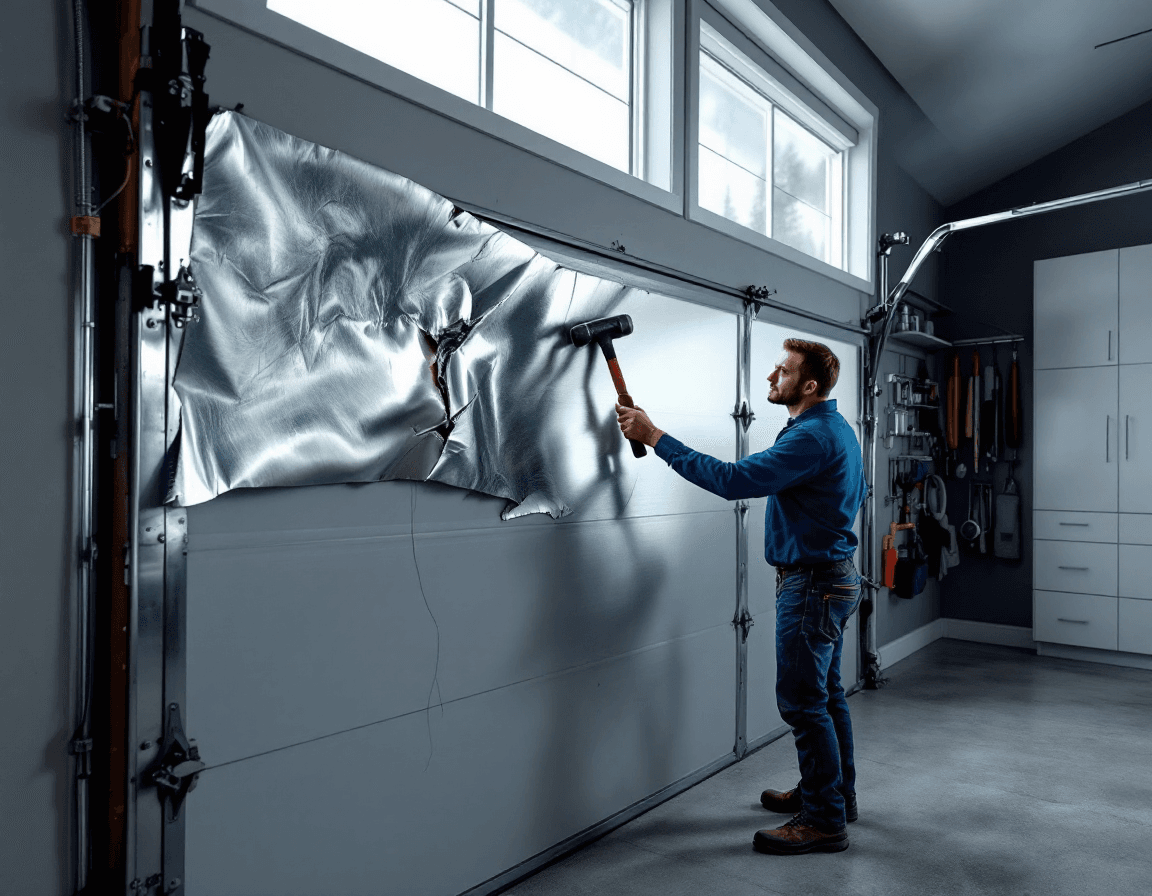
Garage Door Panel Replacement in Renton, WA is one of the most practical repairs a homeowner can choose, because a single damaged section often costs far less than a new door and can restore the curb appeal of the whole house. Renton sits along the Cedar River and the Lake Washington corridor, and its garages take a steady beating from wet winters, salt-laden air drifting in from Puget Sound, and the everyday bumps of busy family life. When one panel is dented, cracked, or rotting, the rest of the door may still be in good shape, which makes panel replacement a sensible middle path between patching and buying a new system.
This page walks through how we approach panel work for homes across Renton, including neighborhoods around The Landing, Highlands, Fairwood, and Talbot Hill. We cover the warning signs that a panel needs attention, how to judge whether a section can be repaired or should be swapped out, what goes into matching an older door, and what to expect on price. Our typical range for replacing one section runs from $250 to $800, and the final number depends on the door's material, insulation, and how many components have to come off to get the new panel in place.
Our service area includes ZIP codes 98055, 98056, 98057, 98058, and 98059, and we schedule visits with the same care whether your home is near the Renton Highlands hillside or tucked into a flatter block closer to the river. If a panel is giving you trouble, read through the sections below, then call (888) 799-3819 and describe what you are seeing. A technician can usually tell you within a few minutes of hearing the details whether a panel swap is the right fix.
Reading the Dents Before They Spread
A dent may look like a cosmetic issue, but on a steel or aluminum panel it often means the metal has been stretched and the coating has cracked. Once the protective finish is broken, moisture can settle into the seam and begin working on the core material, especially in a Renton winter when damp days stack up for weeks. We check the edges of every dent first, because a sharp crease near a hinge or a roller bracket can compromise how the section sits in the track. A shallow dimple in the middle of a panel is usually less urgent than a fold line that runs toward the edge.
Cracks deserve even closer attention than dents. A hairline crack in a vinyl or composite panel can widen over the course of a season as the door expands and contracts with temperature swings and wet-dry cycles. On insulated doors, a crack can also expose the foam core, which lets water in and reduces the thermal performance you paid for. If you notice a crack that runs through the decorative grooves or reaches the bottom edge of a section, plan on a replacement rather than hoping the crack stays put.
Dents are also a useful clue about the door's overall condition. If the dent came from a single impact, such as a basketball or a lawn tool, the surrounding panels are probably fine. If the door shows several small dents in a cluster, the damage may have come from hail, a falling branch, or a hard bump during a move, and it is worth having a technician look at the rails and rollers as well. We would rather catch a pattern early than replace one panel and then discover the same stress is bending the track.
Why Renton Garages Wear Panels Faster
Renton homes sit in a climate that is mild by national standards but hard on exterior metal and wood. Long stretches of gray, damp weather keep surfaces wet for extended periods, and that moisture gets into the bottom section of a door where it sits against the concrete slab. Even a garage with good drainage can see water wicking upward during a heavy rain, which is why bottom panels are often the first to bubble, swell, or rust. The problem is especially visible on older doors that were installed before modern weatherstripping became standard.
Salt and airborne debris add another layer. Homes in the broader Puget Sound area pick up a fine film of moisture and mineral residue, and in some seasons road grime and tree sap build up on the lower section of the door near the driveway. Over time this residue can dull finishes and encourage corrosion at fastener holes and seams. A panel that has been quietly corroding behind a painted surface can look fine from the street and still be structurally weak when you press on it.
Daily life in Renton also creates impact risk. Driveways in many neighborhoods are tight, and tall vehicles, trailers, and delivery vans often have to make close turns. Kids bounce balls off garage doors, and yard equipment gets moved in and out in a hurry. We see a steady number of cases where a single panel took the brunt of a bump that would have been harmless on a wall but was enough to crack or dent a thin door skin.
Repair or Replace: A Practical Decision Guide
Not every damaged panel needs to be swapped. Light surface scratches can often be touched up with a matching primer and paint, and a small dent that has not broken the finish may be pushed out with careful tooling. Cosmetic issues on an otherwise solid panel are usually a good candidate for simple attention, especially if the door is relatively new and the rest of the sections are in good condition. The goal is to avoid paying for a full replacement when the fix is essentially cosmetic.
Replacement makes more sense when the damage goes through the panel or affects its structure. Cracks that run across the full width, sections that have rusted through, bottom panels that have rotted or delaminated, and panels that bend the track when the door operates all point toward swapping the section. Some homeowners ask whether it is worth repairing a cracked panel with an adhesive or filler, and our honest answer is that such patches rarely last in a damp climate and tend to fail the next time the door flexes. A well-matched replacement section is usually the more reliable long-term decision.
Cost is the deciding factor for many households. Replacing one section commonly falls between $250 and $800, depending on the door. When a door is older, has several damaged sections, or uses a discontinued design, the total cost of multiple panels can approach or exceed the price of a basic new door. In those cases we walk through the numbers openly, so you can compare the value of keeping your current door against the benefits of an upgrade.
Matching an Older Door That Has Faded
Matching is one of the trickier parts of panel work. Garage doors exposed to Pacific Northwest sun and rain fade unevenly, and a panel that has been protected by the house's eave or a nearby tree may look very different from the rest of the door. Even when the new section is the same model, its color and texture can stand out, especially on steel doors with baked-on finishes. We would rather be upfront about this than promise a perfect match that the sun will reveal a few months later.
The first step is identifying the door manufacturer, model, and series. A label is often printed on the inside of a panel or on a sticker near the top of the door, and the number helps determine whether the original panel is still available. If the exact design has been discontinued, we look at the nearest compatible section that fits the same thickness, groove pattern, and hardware. Panel thickness matters because a mismatched section can throw off the door's balance and make the track sit unevenly.
When color is the main concern, consider the timing. A replacement panel fresh from the factory will look brighter than a door that has weathered for ten years, so some homeowners choose to repaint the full door or to paint the adjacent sections so the new panel blends in. Others accept a visible difference and treat the replacement as a clear repair. Either approach is reasonable, and we can talk through which one fits your home's exterior and your budget.
What We Check on the Door Besides the Dent
A damaged panel is rarely an isolated problem, so a thorough visit covers more than the section itself. We inspect the hinges that connect each section, because a panel that took an impact may have stressed the hinge leaves or loosened the rivets. The rollers, track, and brackets also get checked for alignment, since a bent track can cause a new panel to bind or rub. If the door has wood panels or a wood frame, we look for rot around the edges and fasteners.
The bottom weatherseal and the astragal, which is the rubber or vinyl strip along the bottom edge, are inspected as well. Water intrusion at the bottom of the door is often the reason a bottom panel rots, so replacing a damaged panel without fixing the seal can set up the same failure in a few years. We also check the door's balance during the visit. If a door has changed weight or tension because of a damaged section, the opener may strain, and that strain can shorten the life of the opener motor.
Some work on a garage door belongs strictly to licensed professionals. Removing sections from a door can involve releasing the door from its tension system, and any work near the springs or cables carries serious risk of injury. Spring and cable work should never be attempted by a homeowner, and that rule applies to panel jobs whenever the repair requires disconnecting the door from its lifting hardware. We handle that part of the process ourselves so you do not have to.
Panel Replacement Checklist for Renton Homeowners
If you are trying to decide whether to call for service, the following list can help you describe the problem clearly:
- Note which section is damaged and whether it is the top, middle, or bottom panel.
- Take a clear photo of the damage from several angles, including one showing the edges.
- Identify the door brand and model if you can find a label on the inside of a panel.
- Check whether the door still opens and closes evenly, and whether you hear grinding or popping.
- Look for water staining, white residue, or bubbling paint near the bottom section.
- Tell us whether the damage followed a specific event, such as a vehicle bump or a storm.
Having this information ready makes the first conversation faster and helps the technician bring the right replacement section. If you are unsure about any of these points, describe what you see anyway. A good technician can usually work from a photo and a short description.
Common Mix-Ups That Lead to Extra Costs
One frequent mistake is ordering a panel based only on the door's width. Two doors that look identical from the street may use different panel heights, groove spacing, or insulation thickness, and a section that almost fits can cause the whole door to misalign. Another issue is assuming that a panel from a salvage yard will work, when in reality its age, finish, and hardware may not match your current door. We prefer to confirm the exact specification before ordering, which saves a return trip.
Homeowners also sometimes delay repairs while waiting for a warm, dry stretch. In the Pacific Northwest, that dry window can be short, and a cracked panel that sat through a wet season may have already let water into the bottom section. Waiting can turn a one-panel job into a multi-panel job, and it can turn a cosmetic dent into structural damage. If you notice a problem in the fall, it is usually better to address it before the heavy rains set in.
Finally, some owners attempt the repair themselves after watching a video. Panel removal looks simple on screen, but a door under tension can move unexpectedly, and misaligned sections can drop or jam. Our standing advice is to leave any step that involves the door's lift system to a licensed professional. Your time is valuable, and so is your safety.
What a Typical Visit Looks Like in Renton
A typical visit starts with a quick walkthrough of the damaged area and a check of the door's operation. The technician will ask when the damage first appeared, whether the door has been acting differently, and whether any other sections show signs of wear. We then measure the affected panel and confirm the door's model, and we discuss whether the replacement should match the existing color or whether a repaint of the full door makes more sense. If parts need to be ordered, we will tell you the timeline before we start.
Once the replacement section arrives, the work itself is usually completed in a single visit for most standard doors. The technician secures the door, removes the damaged section, installs the new panel with the correct hardware, and checks that the track and rollers are running smoothly. Afterward, we run the door through several cycles to confirm it closes evenly and seals at the bottom. We also clean up the work area and show you the old panel if you want to see the damage firsthand.
Pricing is based on the door, the panel, and the complexity of the job. Our typical range for one section is $250 to $800, and we will give you a clear estimate before any work begins. There are no surprises buried in the paperwork, and if the inspection reveals a problem that needs separate attention, such as a worn spring or a failing opener, we will explain the options and let you decide how to proceed.
Protecting Your New Panel for Years to Come
After a replacement, a few simple habits extend the life of the new section and the rest of the door. Rinse the lower panels periodically during dry spells to remove road film and residue, especially if the garage faces a busy street or sits near a tree that drops sap. Inspect the bottom weatherseal each season, because a worn seal is the most common route for water to reach the bottom panel. Keep the tracks clear of gravel and leaves so the rollers can move freely.
Pay attention to how the door behaves after any bump, even a minor one. A slight shift in the door's movement can signal that a track has moved or a hinge has loosened, and catching that early prevents a larger repair. If you notice new gaps at the top or sides, or if the door seems to close unevenly, schedule an inspection before the problem spreads to adjacent panels.
Finally, keep your garage door on a regular maintenance rhythm. Lubricating moving parts, tightening hardware, and checking the balance annually help every panel sit where it should. A well-maintained door is less likely to dent, crack, or rot, and when damage does happen, the repair is usually simpler and less expensive.
Ready to talk through a damaged panel on your Renton home? Call Seattle Garage Door Fix at (888) 799-3819 and describe what you are seeing, including the section, the damage, and your door's brand if you know it. We serve homes across ZIP codes 98055 through 98059, from The Landing and Highlands to Fairwood and Talbot Hill, and we will give you a clear, honest recommendation on whether a panel swap, a repair, or a fresh door makes the most sense for your home.