
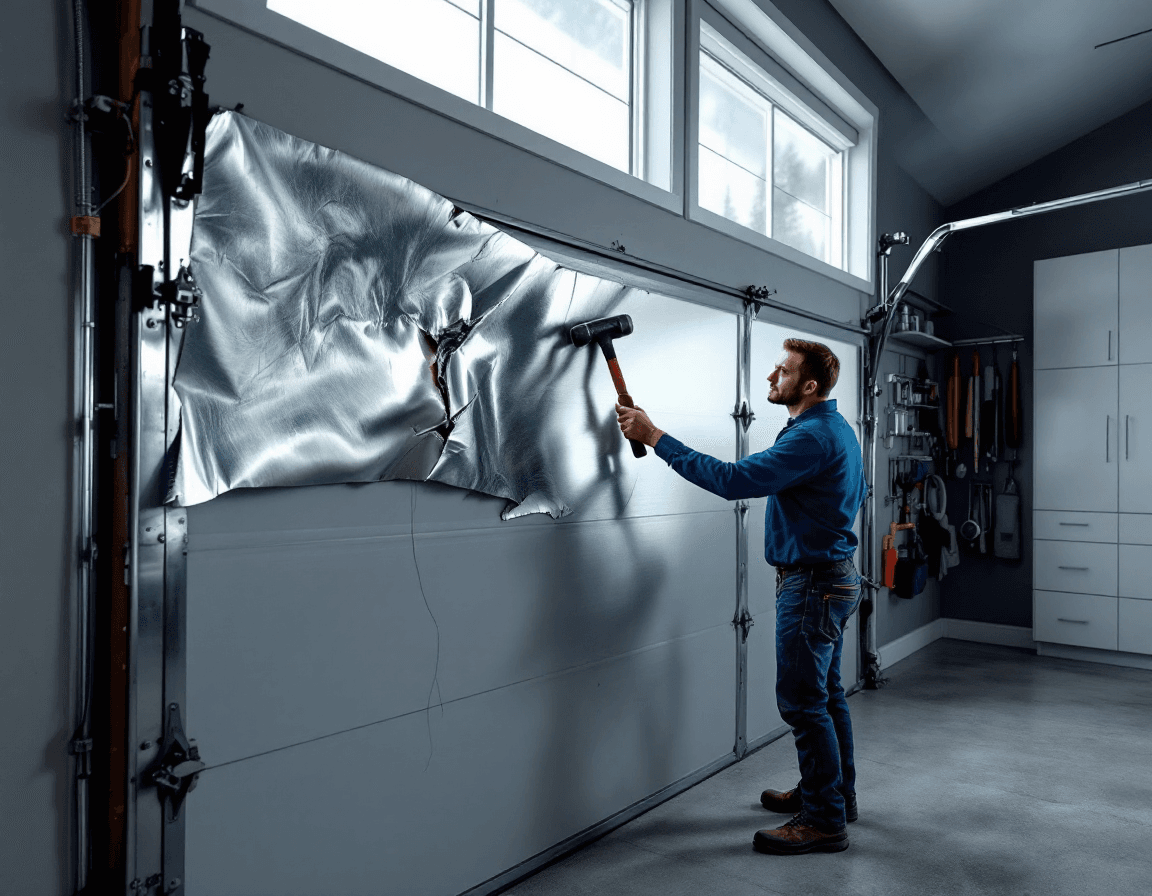
Garage door panel replacement in Tukwila, WA is often the most practical fix when a single section of your door is dented, cracked, or rotted while the rest of the system still works well. Tukwila sits at a busy crossroads in south King County, with Interstate 5 and Interstate 405 nearby, big-box retail around Southcenter, and a mix of older ranch homes and newer townhomes. Those conditions produce a steady stream of garage doors that look fine from the street but have a bent or split panel at the bottom, a bowed section where a car backed too quickly, or a sun-faded face that no longer matches the rest. Replacing the damaged section, rather than the whole door, can save a meaningful amount of money when the tracks, springs, opener, and rollers are still sound.
Our technicians at Seattle Garage Door Fix work across Tukwila and the surrounding area, including homes in the 98168, 98178, and 98188 ZIP codes. We regularly see homeowners near Tukwila Village and in the Allentown area who want a straightforward answer: can this panel be swapped, what will it cost, and how long will the door last afterward? This page explains how we think about panel damage, what causes it in our part of Western Washington, how we decide between repair and replacement, and what you can expect from a section swap. If you would rather talk it through by phone, you can reach us at (888) 799-3819 at any time.
Why Panels Take the Hits in South King County
Most garage door damage in Tukwila starts at the bottom of the door, because that is where things collide. Bikes, kids' scooters, recycling bins, and snowplowed curbside debris all find their way to the lowest section, and the bottom panel is the one most likely to be scraped, dented, or pushed inward. Many households also park with very little clearance, so a slightly off-center reverse can put a bumper or a trailer hitch against the door without anyone noticing until the next morning. A single impact like that often leaves a clean crease in one panel and nothing else obviously wrong.
Traffic patterns add to the risk. Homes near the commercial corridors see more delivery vehicles, contractor trucks, and visitors who do not know the driveway well, and those drivers occasionally clip a door while turning around. Wind also matters in this part of the region, since gusts coming off the Duwamish valley can rattle a loosely latched door and work a panel against its neighbor over months of cycling. None of these problems usually destroys a door outright, but together they account for a steady pattern of single-panel damage that homeowners end up needing help with.
Because the damage tends to be localized, many owners assume the whole door is compromised. In practice, a well-built sectional door is designed so that individual panels can be separated from the rest, and a skilled technician can remove and replace one section without disturbing the others. Understanding that design is the first step toward a repair that is both cost-effective and durable.
Reading the Damage: Dents, Cracks, and Hidden Rot
Not every dent is the same, and the type of damage tells you a lot about what to do next. A shallow dent across the middle of a steel panel may be mostly cosmetic and can sometimes be reduced without replacement, while a sharp crease or a crack running along the seam between two layers usually means the panel's structural integrity is gone. Insulated doors, which are common in newer Tukwila construction, add complexity because the foam core can be compromised even when the outer skin looks only lightly scratched. Running your hand along the panel and looking at it in raking light at dusk will reveal much more than a midday glance.
Rust and rot need special attention. Steel panels with chipped paint can begin corroding at the edges within a few seasons, especially where road grime and damp air collect, and wood or composite panels can soften at the bottom if moisture wicks up from the slab. Look for bubbling paint, orange staining along seams, a spongy feel when you press on the lower edge, or a faint musty smell that suggests trapped moisture inside an insulated section. Catching rot early often means the replacement is limited to one panel, whereas waiting can spread the problem to neighboring sections.
- Hairline cracks along a seam or near a hinge usually mean the panel is flexing beyond its design and should be inspected promptly.
- Creased or folded steel rarely returns to a true shape and typically calls for a replacement section.
- Soft, discolored, or crumbling bottom edges point to moisture damage that may extend into the surrounding framing.
- Foam core exposed at a cut or split means the insulation has lost its sealed barrier and will absorb water.
- Rust bleeding through the paint should be treated as an early warning, not a finished problem.
Water Works Its Way In: Bottom Sections and Moisture
Western Washington winters bring long stretches of rain, and garage doors absorb a surprising amount of it. Water tends to pool against the bottom seal and run along the lowest panel, especially on driveways that slope toward the house or where gutters overflow near the door. Over time that moisture soaks into the bottom section, swells wood or composite edges, and creates the perfect environment for rust on steel. Many of the bottom-panel replacements we are called to perform started as a slow, unnoticed leak that only became visible once the paint blistered.
Moisture also travels through the gaps around the door. If the weatherstripping along the bottom is worn, water can find its way behind the panel and sit against the inside face, where it is hard to see and slow to dry. Homes in shaded lots or those with thick hedges near the garage may stay damp longer, which can accelerate mildew and corrosion even when rainfall is moderate. Regular inspection during the wet months is far easier than dealing with a rotted section after a long winter.
If you notice water staining on the garage floor, a white or greenish film on the lower panel, or a door that feels heavier than it used to, schedule an inspection before the damage spreads. A technician can tell you whether the moisture is coming from the surface, the seal, or inside the section, and can recommend a replacement panel with appropriate insulation and coating for the local climate. Choosing a better-sealed panel at the time of replacement is often a small upgrade in cost that pays off in fewer repairs later.
The Backing Accident Checklist
A backing accident is one of the most common reasons we replace a single panel, and it is also one of the easiest to misjudge. Right after the impact, the door may still open and close normally, the opener may run without complaint, and the damage may look like nothing more than a scuff. Within days, however, the panel can start to sag, the seam can separate, or the door can begin to bind as the damaged section rubs against its track or neighbor. Treating the incident as a checklist, rather than a one-time event, helps you catch problems early.
Start by inspecting the entire door from both inside and outside the garage. Look for bent or misaligned sections, rollers that have popped out of the track, hinges that have been stretched, and any gap between panels that was not there before. Pay close attention to the tracks, since a bent track can cause the door to ride unevenly and put strain on springs and cables. If the door is out of level or the tracks show obvious damage, the panel is only part of the story, and a professional inspection is worth the time.
Document the damage with photos before you move the car or make any repairs. Those images are useful when you call for an estimate, and they can also support an insurance claim if the impact involved a third party. Keep the door closed and avoid forcing it open manually if it is bound up, since a damaged panel under tension can slip or drop. If the door is stuck, do not attempt to work on the springs yourself; call a licensed technician instead.
Repair or Replace? Making the Call on a Panel
Deciding between repairing and replacing a panel depends on how the damage affects the section's strength, appearance, and insulation. Minor surface dents on steel may be improved with careful reshaping, but any crease that breaks the paint, creates a sharp edge, or weakens the panel's connection to its neighbors usually justifies replacement. Cracked insulated panels generally cannot be restored to their original performance, because the foam core and the bonded skin depend on each other. Cosmetic issues that do not affect function may be acceptable to live with for a while, but structural or moisture damage rarely improves on its own.
Cost is part of the equation, though not the only one. Replacing a single section typically runs from $250 to $800 per section, with the final figure depending on the door's size, material, insulation, and whether the design is still available. When the damage is confined to one panel and the rest of the door is in good condition, panel replacement almost always makes more sense than replacing the entire door. If several panels are damaged, the tracks are bent, or the springs are near the end of their service life, a broader assessment may show that a full door replacement is the more sensible investment.
- Repair may be reasonable when the dent is shallow, the paint is intact, and the panel still sits square in the track.
- Replacement is usually the better choice when there are cracks, deep creases, foam exposure, or rot in the lower edge.
- Consider the whole door when more than two or three panels are compromised or when the door is more than about a decade old and showing wear elsewhere.
- Factor in energy performance if the door is insulated, since a damaged panel can reduce the thermal benefit of the whole assembly.
Matching a Panel You Can't Find Anymore
Matching is one of the trickiest parts of any panel job. Garage door manufacturers update their designs, change color options, and sometimes discontinue sections entirely, so a panel that was standard a decade ago may no longer be available in the same profile. Sun exposure also fades paint unevenly, which means even a perfect match from the factory can look mismatched next to a panel that has weathered for years. Homeowners in sunny stretches of Tukwila often notice this more than they expect, especially on south- or west-facing doors.
Start by identifying the door manufacturer, model, and series. That information is often printed on a label inside the top panel or on the door's hardware bracket. With those details, a technician can check whether the original panel is still supplied, whether a compatible section from a similar series will fit, or whether a custom approach makes more sense. Bring a clear photo of the full door, not just the damaged area, so the replacement's grooves, windows, and hardware alignment can be compared accurately.
When an exact match is no longer available, there are practical options. Some owners choose to replace the damaged section with a panel in a slightly different shade and then repaint the adjacent panels for uniformity. Others opt for a new door style that matches the existing profile with a different color, which can be more visually cohesive than a patchwork. A reliable technician will explain the tradeoffs honestly and show you what is realistically achievable before any work begins.
What a Section Swap Typically Costs Here
Pricing for garage door panel replacement is best understood as a range, because the actual number depends on the specifics of your door. Our standard guidance for a single damaged section is $250 to $800 per section, and that range reflects differences in door size, material, insulation, glazing, and the availability of the replacement panel. A small, uninsulated steel section on a basic door will generally fall near the lower end, while a large insulated section with windows or a specialty finish will land higher. Multiple panels, or work that requires additional hardware, will change the total.
It helps to understand what the estimate usually covers. A complete job typically includes removing the damaged section safely, inspecting the adjacent panels and hinges, fitting the replacement, adjusting the alignment, and testing the door through several full cycles. Any additional repairs found during the inspection, such as worn rollers or a frayed cable, should be presented as separate line items so you can decide what to address now and what can wait. Transparent estimates let you compare options without surprises.
Keep in mind that the most affordable quote is not always the best value. A panel installed without proper alignment can stress hinges, wear rollers unevenly, and create gaps that let in drafts and water. Ask whether the technician inspects the springs and cables as part of the visit, and whether they will explain any concerns in plain language. A clear, well-documented repair is worth more than a cheap one that needs to be revisited within a season.
How a Panel Swap Goes From Start to Finish
A typical panel replacement follows a clear sequence, and knowing it in advance makes the appointment less stressful. The technician begins with a visual and functional inspection of the entire door, including the tracks, rollers, hinges, weatherstripping, and opener operation. They confirm the door's manufacturer and model, verify the damaged section's dimensions, and discuss replacement options with you. If the door is under tension from its springs, the technician will work within the safety procedures appropriate for that system, which is one reason this work belongs in qualified hands.
Once the replacement panel is on site, the crew secures the door so it cannot move unexpectedly, removes the hardware connecting the damaged section to its neighbors, and carefully separates the panel. The new section is then positioned, hinges and rollers are reattached, and the door is cycled slowly to check for binding or uneven travel. Final adjustments often include tightening fasteners, realigning the bottom seal, and confirming that the lock engages smoothly. Testing the door with the opener and manually ensures that it operates correctly in both modes.
Before you leave, the technician should walk you through what was done and what to watch for. Ask about any maintenance steps, such as lubricating the rollers or checking the bottom seal after heavy rain. A good appointment ends with you understanding the door better than when it started, not just with a new panel in place.
Keeping New Panels Looking Right in Wet Weather
Once a new panel is installed, a little routine care goes a long way in the Pacific Northwest. Rain, moss, and road grime can settle on the lower sections faster than on the upper ones, so a periodic rinse with a mild, non-abrasive cleaner keeps the finish looking consistent. Avoid pressure washers aimed at seams or weatherstripping, since high-pressure water can force moisture into joints and damage seals. A soft brush and a garden hose are usually enough for routine cleaning.
Pay attention to the bottom seal and the threshold, since these are the first lines of defense against water. Replace worn or cracked weatherstripping before it allows moisture to reach the new panel, and check that the threshold drains away from the door. If you notice a damp patch on the garage floor after a storm, investigate the source rather than assuming it is simply condensation. Small adjustments made promptly can prevent the kind of bottom-edge damage that brought you to this page in the first place.
Finally, keep an eye on the surrounding panels after a repair. A new section will sometimes reveal subtle issues in its neighbors, such as slight warping or stiff hinges that were masked by the old damage. Noting these early observations lets you address them during routine maintenance instead of waiting for the next failure.
When Panel Work Crosses Into Spring and Cable Territory
Panel replacement is often straightforward, but it can intersect with components that carry serious risk. Torsion springs and extension springs store enormous energy, and cables under tension can snap or whip with force. Even if your damaged panel is the only visible problem, you should never attempt to adjust, release, or remove springs or cables yourself. The safe approach is to have a licensed, bonded, and insured technician handle any work that touches these parts, and to make sure they check the spring system whenever a panel is being replaced.
If the inspection reveals a worn spring, a frayed cable, or a bent shaft, the technician should explain the findings clearly and recommend the appropriate next step. Spring and cable work should always be performed by trained professionals with the right tools and safety equipment. Do not let a repair stall because a panel is the immediate concern; the rest of the door matters just as much for long-term reliability. Addressing the whole system during one visit often prevents a second, more expensive trip later.
If you are unsure whether your door needs panel work, spring work, or both, call us at (888) 799-3819 and describe what you are seeing. We will walk through the symptoms, explain your options in plain terms, and schedule a visit with a licensed technician who can take care of the job safely and thoroughly.
If your Tukwila garage door has a dented, cracked, rotted, or mismatched panel, you do not have to live with it or replace the whole door to fix it. Seattle Garage Door Fix can inspect the damage, explain whether repair or replacement makes sense, and quote a clear price for the section involved. Call (888) 799-3819 to schedule an appointment for homes across Tukwila and the 98168, 98178, and 98188 ZIP codes.