
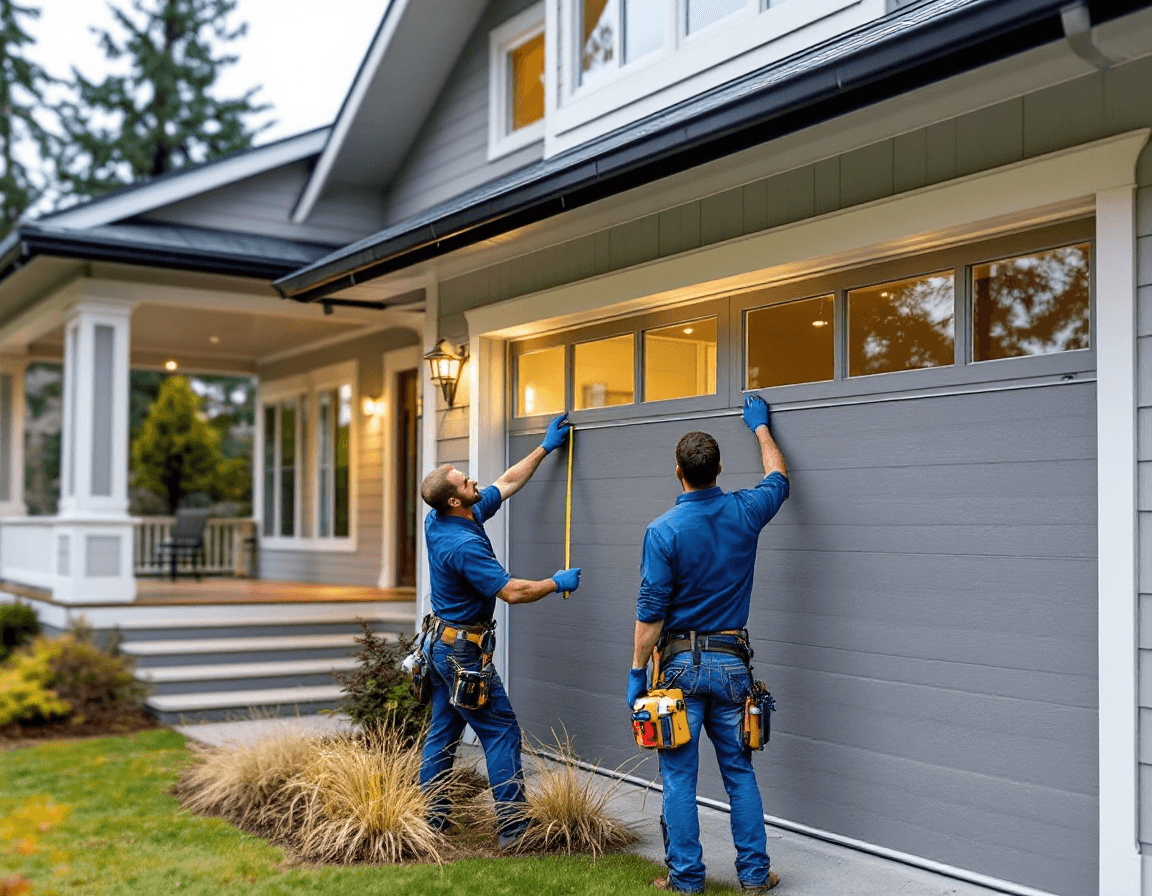
Garage Door Installation & Replacement in Tukwila, WA is a bigger decision than most homeowners expect, because a garage door is the largest moving object on the house and it carries real weight, real tension, and real safety risk. When a door is cracked, bent, or simply worn out, the choice in front of you is rarely just about looks. It affects how warm the garage stays in January, how quietly the house sounds on a windy night off the Green River valley, and how secure your vehicles and tools are when you leave for work from Southcenter or down toward the airport.
Tukwila homes come in a wide mix of styles. You will find older ranch houses near Allentown with single-car garages that were never built for today's wider SUVs, split-level homes with double bays and modest headroom, and newer infill houses where a compact garage has to fit a full-size door without eating the driveway. Each of those situations changes which door will work, how much structural prep is needed, and what the final result will look and feel like. This page walks through how we think about replacement from the first call to the final test cycle, so you can plan with realistic expectations.
Pricing for a new door installed in this area generally falls between $950 and $3,800 or more, depending on the door type, materials, size, insulation, hardware, and any repairs to the surrounding opening. A basic steel single door sits at the lower end, while a custom wood carriage-style double with glass panels and upgraded tracks sits at the higher end. The sections below explain what drives those differences, what to watch for in a quote, and how to decide whether replacement is the right move for your particular door.
Reading the Signs That an Old Door Has Reached the End
Some garage door problems can be patched, and others are a sign that the entire assembly has run out of useful life. Repeated breakdowns on an aging door are one of the clearest indicators. If you have had the opener replaced, the cables reset, and the rollers swapped more than once in a few years, the cost of those repairs starts adding up toward the price of a new door. Panels that have dented, cracked, or delaminated from the frame will not regain their original strength, and the stress often transfers to hinges and track brackets.
Water damage is especially common in the Pacific Northwest. Wet winters soak into wood panels, causing swelling, soft spots near the bottom rail, and rot that can spread up the stiles. Steel doors can develop rust at panel seams, around hinge fasteners, and along the bottom edge where road spray and damp concrete do their work. Storm damage from wind-driven debris or a fallen branch can also bend sections out of alignment in ways that are difficult to correct without replacing the damaged parts. A door that no longer closes evenly against the weatherstripping is letting air and moisture into the garage every day.
Look also at the door's energy performance and general appearance. An older single-pane or uninsulated steel door can make the garage feel like an unheated extension of the outdoors, which matters if the garage is connected to a living space or holds a workshop or freezer. If the door looks dated compared to the rest of your home's exterior, a replacement can refresh curb appeal considerably. Sometimes the decision comes down to a combination of these factors rather than one dramatic failure.
Matching a New Door to the Style of a Tukwila Home
The door you choose should feel like it belongs on the house, not like an afterthought stuck on the front of the garage. For mid-century ranch homes, a clean-lined flush steel door in a neutral tone often reads as the most natural choice, and a subtle woodgrain-look finish can soften the look without introducing expensive maintenance. Split-level and newer craftsman-inspired homes frequently pair well with carriage-style doors that use decorative hardware and recessed panels, giving the front of the house a sense of warmth.
Color and trim matter more than many homeowners realize. A deep charcoal or bronze door can make a light-colored siding look crisp, while a warm cream or sage tone may blend better with cedar-toned exteriors common on older Tukwila lots. Consider the entry door, the house trim, and the roofline together so the garage does not stand out as the odd element. If your neighborhood has a particular mix of styles, driving the street and looking at a few nearby garages is a quick way to narrow your choices before you talk to a technician.
Window placement and glass panels deserve careful thought too. Glass sections bring daylight into the garage and can look wonderful on a modern home, but they also reduce the insulating value of the door and show more of what is stored inside. Frosted or tinted glass can help with privacy, and carefully placed windows can add character without making the door feel busy. We usually suggest a sample look on a similar house if you are unsure, because a door that looks great in a showroom can feel very different once it is installed against your own siding.
Insulated Steel, Wood, Glass, and Aluminum Compared for Rainy Winters
Each material behaves differently in the wet, mild climate that defines Western Washington. Insulated steel is the most common choice for good reason: a steel skin bonded to an insulating core, often polyurethane foam, resists dents and offers solid thermal performance for the cost. Insulated steel also holds up well to humidity and can be finished in a wide range of colors and textures. Its main limitation is that the look is more utilitarian unless you choose a designer finish or carriage-style pattern.
Wood doors deliver the most natural beauty and a classic appearance, especially in cedar or fir. They are heavier, need regular sealing and painting, and can move with moisture if they are not properly finished. In our area, wood doors work best when they are sealed thoroughly on all sides, including the top and bottom edges, and when the garage has reasonable ventilation to limit condensation. Homeowners who love the look often accept the maintenance schedule as part of the appeal.
Aluminum and glass doors suit homes that want a contemporary or light-filled garage, and they are typically the choice for a more modern facade. Aluminum frames resist corrosion, but the glass panels need to be specified carefully for insulation and for privacy. Consider these points before committing to a material:
- Insulated steel offers a strong balance of durability, insulation, and price, and it is often the best fit for daily-use garages.
- Wood provides unmatched warmth and character but requires a maintenance routine, especially in damp seasons.
- Aluminum with glass delivers a modern look and natural light, though insulation and privacy need closer attention.
- Composite and polymer skins can mimic wood grain with less upkeep, which may suit homeowners who want the appearance without the upkeep.
What Drives the Price From $950 to $3,800 and Beyond
A quote can look confusing when two doors that seem similar differ by thousands of dollars. The most significant factor is usually the door material and construction. A basic insulated steel single door is at the affordable end, while a custom wood or glass-and-aluminum design can climb well above the middle of the range. Size also matters, since a wide double door requires heavier panels, larger tracks, and often a more robust opener to lift the weight smoothly.
Insulation level and hardware quality influence the total as well. A door with a higher-performance insulating core costs more than a basic model, but it can reduce heat loss from an attached garage. Tracks, rollers, hinges, and springs vary in grade, and a quieter, longer-lasting roller system will raise the price slightly. Decorative hardware for carriage-style doors, such as faux handles and hinge straps, adds to the bill, as do windows and custom paint or stain finishes.
Installation labor and site conditions can add cost too. If the opening needs framing repairs, a new header, or a corrected header height, that work is part of the job and should appear on the quote in clear terms. Removing and hauling away the old door is usually included, but confirm it, since disposal of heavy steel and wood panels is not always automatic. We recommend asking for an itemized estimate so you can see what you are paying for and compare options fairly.
Wind Ratings, Sealing, and Weather Protection for Western Washington
Weather protection in the Puget Sound region is about more than rain. Wind gusts from winter storms can put significant pressure on a large door face, particularly for wide double doors that are not fully supported at the top. Many manufacturers publish wind load ratings for their products, and it is reasonable to ask which rating applies to the door you are considering and how it was tested. A knowledgeable installer will explain how the bracing, track supports, and anchoring points perform under those loads.
Sealing is where many homeowners notice the biggest day-to-day difference. Bottom seals, side jamb seals, and top weatherstripping need to meet the door snugly along its full perimeter, or wind-driven rain will find its way into the garage. Pay attention to the threshold, too. If the concrete slab slopes toward the house or the door sits low, water may pool against the seal, so a proper slope and a quality threshold seal help keep the interior dry.
Thermal performance and air sealing work together. An insulated door reduces heat transfer through the panels, but gaps around the door can undo much of that benefit. When the new door is installed, the installer should check the header, tracks, and jamb alignment and make adjustments so the seals compress evenly. A well-installed door that closes square and fits its opening will feel more solid, operate more quietly, and hold heat far better than one that was rushed into place.
Preparing the Opening, Measurements, and Site Conditions
A successful installation starts long before the new door arrives. Accurate measurements of the rough opening are essential, including width, height, header clearance, and the depth needed for the track system. Many older Tukwila garages have settled slightly over the decades, so an out-of-square opening is common. Measuring carefully and noting any irregularities allows the installer to order the right size and plan any adjustments before work begins.
Next, the existing door must be removed safely. This involves releasing the spring tension, which is a task that should only be performed by a licensed professional with the right tools and training. Torsion springs store large amounts of energy, and improper handling can cause serious injury. Once the old door and its hardware are off the opening, the installer inspects the framing, the header, the wall condition, and the floor, and then addresses any repairs needed before the new door goes in.
Site preparation also includes protecting the driveway, clearing storage from the bay, and planning for opener placement. If you have a ceiling-mounted opener, check that its rail and mounting points will still work with the new door height. Some homeowners upgrade to a belt-drive or a quieter model during replacement, which is a good moment to make that change because the door and opener are being matched together.
The Installation Day Sequence From Tear-Out to Test Cycle
On installation day, the crew typically begins by setting the bottom panel and building the door up section by section. Tracks are mounted to the framing with the correct clearances, and the header brackets and support points are secured. The springs, cables, and drums are installed by a licensed technician, since this is high-tension work that should never be attempted by a homeowner. Once the panels are connected and the tracks are aligned, the door is lifted and balanced to check its movement.
After the door is assembled and the springs are set, the installer adjusts the balance so the door stays put when released halfway open. An unbalanced door can strain the opener and shorten the life of the hardware. The opener is then programmed, safety reversal sensors are aligned at the bottom of the track, and the auto-reverse feature is tested with an object in the path. These safety checks are not optional, and they should be completed before the crew leaves your property.
A final walkthrough should cover the controls, the remote transmitters, the lock, and the weatherstripping. You should watch the door complete several full open and close cycles to confirm smooth movement, listen for unusual noises, and see that the seals meet evenly. Ask the technician to show you how to operate the emergency release cord and how to use the door manually in a power outage. Knowing those basics makes the new door safer and easier to live with from the first day.
Planning a Replacement Alongside a Remodel or Garage Addition
Many replacement projects in Tukwila happen alongside a larger remodel, such as converting part of a garage into a bedroom suite, adding a mudroom, or extending the footprint of the house. In those cases, the new door should be selected with the finished space in mind. A door that matches the future exterior, a wall that will be insulated and finished, and a header height that suits the planned design all need coordination. Bringing the garage door contractor into the planning conversation early can prevent expensive revisions later.
Additions also raise questions about structural support and permit requirements. Changes to load-bearing walls, headers, or the structure around the garage opening may need review through the City of Tukwila, and the scope of work should be confirmed with the appropriate office before construction begins. Permit timelines and inspection requirements can affect your schedule, so it is wise to build in some buffer. A reputable installer will help you understand what is typically required for a door replacement and when a remodel may trigger additional review.
If you are adding a new door as part of a bigger build, think about the entry from the garage into the house as well. A solid-core interior door, proper fire separation where applicable, and weatherstripping at the entry can make a big difference in comfort and safety. Coordinating these details with the garage door install keeps the project efficient and avoids having to disturb finished work later.
Warranties, Paperwork, and Questions Worth Asking
Before you sign anything, ask what is covered and for how long. Door panels often carry a manufacturer's warranty, while the springs, opener, labor, and workmanship may have separate terms. Clarify whether the warranty applies from the installation date or from the manufacture date, and ask what the process is if a part fails. A clear written summary of coverage helps you avoid surprises years later.
Ask the installer about licensing, bonding, and insurance. A licensed, bonded, and insured company protects you if something goes wrong on the job, and you should be able to see proof of coverage on request. Confirm that the crew will handle the spring and cable work themselves rather than leaving it to an unlicensed helper. Good documentation also includes a written estimate, a description of the materials, the scope of removal and disposal, and the expected timeline.
Finally, ask practical questions about the day itself. How long will the installation take? Will the garage be usable during the work? What do you need to clear? Will the crew test the safety features before leaving? Asking these questions up front creates a shared understanding and helps the project run smoothly.
Caring for a New Door in the Duwamish Valley Climate
A new door performs best when it is maintained on a simple schedule that fits the local climate. Every few months, wipe down the panels and check the finish for scratches or chips, especially on the bottom edge where dirt and moisture collect. Look at the weatherstripping for cracks or flattening, and clean the tracks and rollers so grit does not build up and cause noisy movement. Keeping the door's moving parts lightly lubricated, using a product recommended for garage door hardware, extends the life of the rollers and hinges.
Wood doors need the most attention. Re-sealing or repainting on the manufacturer's schedule keeps moisture from working into the grain, and the top and bottom edges deserve special care since they absorb water most readily. Steel doors benefit from periodic rinsing to remove road grime and salt residue, and any scratches down to bare metal should be touched up promptly to prevent rust from starting. Glass and aluminum doors need gentle cleaning with non-abrasive products to keep the panels clear.
Watch for changes in how the door moves or sounds. A grinding noise, a jerky start, or a door that no longer stops level can signal worn rollers, a loose bracket, or an unbalanced spring. These issues are safest to address with a licensed technician, and catching them early often prevents a larger repair. Regular checks give you a clear view of how the door is aging and help you plan ahead if another replacement is ever needed.
Garage Door Installation & Replacement in Tukwila, WA is ultimately about choosing a door that suits your home, your budget, and the wet, changeable weather of the Puget Sound region, then having it installed safely and correctly. If you are weighing a replacement or want a clear, itemized quote for a new single or double door, call Seattle Garage Door Fix at (888) 799-3819. Our team serves Tukwila and surrounding King County communities, and we are glad to walk through material options, insulation levels, and the steps involved so you can make a confident decision.