
Garage Door Installation & Replacement in Burien, WA is often the right answer when a door has moved past the point of sensible repair. Many Burien homeowners reach that point gradually: a spring replaced here, a track realigned there, a panel that has begun to bow after another wet winter. Eventually the repair bills add up to more than a new door would cost, and the old door still rattles, leaks air, and looks tired from the street. This page explains how we think through that decision, what affects pricing, and what to expect from start to finish.
Burien sits in a damp, temperate corner of King County, where the air rarely gets truly dry and the rain can persist for weeks at a time. Homes near the Puget Sound shoreline, including those around Three Tree Point, also deal with salt-laden breezes that speed up corrosion on hardware and metal panels. Older houses in Olde Burien and the hillside streets of Gregory Heights often have garages that were built before modern insulation and weatherstripping were common. Whatever the age of your house, a garage door takes more abuse here than most people realize, and choosing the right replacement is worth careful thought.
Our team serves homeowners across Burien and the surrounding communities, including the 98146, 98148, 98166, and 98168 ZIP codes. We are a licensed, bonded, and insured garage door company, and we handle both single and double doors in every common style. If you are weighing a replacement right now, the sections below will help you sort through the options. You can call us at (888) 799-3819 at any point for a straightforward conversation about your door.
Knowing When Repair Has Run Its Course
Not every squeaky or sluggish door needs replacing, and a good technician should tell you when a repair is still the smarter spend. A worn roller, a misaligned sensor, or a single damaged section can often be fixed for far less than a new door. The trouble begins when the same problems keep returning or when the door's core structure is compromised. If you have called for service three or four times in a few years, the pattern itself tells you something important.
Watch for signs that the panels, frame, or tracks are no longer holding their shape. A door that has been hit by a backing car, damaged by a fallen branch during a windstorm, or weakened by long-term water exposure may be bent in ways that cannot be fully corrected. Steel panels that have creased or delaminated, wood sections that have gone soft at the bottom, and aluminum frames that have cracked at the joints are all examples where replacement usually beats patching. We can inspect the door and give you a candid assessment of whether repair or replacement makes more financial sense.
Keep in mind that the age of the opener matters too. Some homeowners replace the door but keep an opener that is nearing the end of its service life, while others buy a new opener only to find the door itself is the real problem. When we evaluate a door, we look at the whole system so you are not paying twice for the same issue.
How Pacific Northwest Weather Wears Down a Garage Door
The Burien climate is mild compared with much of the country, but it is hard on garage doors in its own ways. Long stretches of drizzle and fog keep bottom panels and door seals damp, and that moisture slowly works into wood grain, seams, and the hinge points where steel panels meet. Wood doors are especially vulnerable here, since constant dampness encourages rot at the lower rails and along the edges of raised panels. Even steel doors can rust from the inside out if the galvanizing or paint has been chipped and water sits in the panel cavity.
Coastal exposure adds a further layer of wear. Homes closer to the water, including parts of Three Tree Point, see salt spray and humid air that accelerate corrosion on hinges, rollers, springs, and fasteners. Hardware that looks fine from the outside may be quietly seizing up, which makes the opener work harder and shortens the life of the whole system. When we recommend a replacement door for these locations, we pay close attention to finish quality, hardware coatings, and the type of bottom seal used.
Wind is the third factor. Storms that roll across the Sound can drive gusts against large garage doors, particularly double doors on wide openings. A door that is not properly reinforced or wind-rated may flex, pop out of its tracks, or suffer panel damage in a strong blow. For homeowners with exposed driveways or open lots, the structural details of a new door deserve as much attention as its appearance.
Choosing Between Steel, Wood, Glass, and Aluminum
Each door material offers a different balance of cost, durability, insulation, and appearance, and the right choice depends on how you use the garage and how the house is built. Insulated steel is the workhorse of modern garages. It resists dents reasonably well, comes in many colors and textures, and can be filled with foam insulation that improves the room's temperature stability. Quality steel doors with well-sealed panels hold up nicely in our climate when they are properly maintained.
Wood doors bring warmth and character, especially on homes with traditional or craftsman-inspired exteriors. They do require more care in a wet region, including regular sealing and periodic inspection of the bottom rail and panel joints. A wood door installed with appropriate finishes and good drainage can last many years, but it is a poor fit for a garage that stays damp or sees direct weather without overhangs.
Glass and aluminum doors suit homeowners who want natural light or a sleek, contemporary look. Aluminum framing resists rust, which is a genuine advantage near the water, and glass panels can be tinted or frosted for privacy. The tradeoff is that glass sections generally provide less insulation than solid insulated panels, so these doors work best when the garage is used primarily for storage or a workshop where full climate control is not a priority. We are happy to talk through which material fits your goals and budget.
Understanding What Shapes Your Installed Price
Our installed pricing for new single and double garage doors generally falls between $950 and $3,800-plus, and the spread reflects several real variables rather than a single fixed rate. Door size is the first factor, since a standard single opening requires fewer panels and less hardware than a wide double. Material and panel construction come next, followed by insulation level, glass or decorative options, and the color and finish you select. A plain insulated steel door costs considerably less than a custom wood carriage-style door with glass inserts and hand-applied stain.
Installation conditions also matter. A straightforward swap on a standard opening is simpler than a job that requires modifying the header, reframing the opening to fit a new dimension, or addressing rot in the surrounding jamb. Older Burien homes sometimes have out-of-square openings that need shimming and adjustment for the door to operate smoothly. Those details are part of the honest cost picture, and we would rather explain them upfront than surprise you midway through the project.
If you are comparing quotes, ask each company what is included. Look for details on panel thickness, insulation type, track and hardware grade, spring system, weatherstripping, removal and disposal of the old door, and whether the opener is being reused or replaced. A lower number on paper can become a higher number once the missing items are added.
Carriage-Style and Traditional Looks for Burien Homes
Carriage-style doors have become popular across the Seattle area because they make a utilitarian garage look like an intentional part of the home's architecture. In Burien, we see them on everything from older bungalows to newer two-story homes, and they can soften a large wall of garage facade with the appearance of paired swing doors. The style works especially well when paired with a covered entry, matching trim, and landscape lighting that highlights the door at dusk.
Modern carriage-style doors are typically built from insulated steel with embossed woodgrain textures, or from engineered materials that mimic real wood without the same maintenance demands. Real wood versions remain available for homeowners who want the authentic look and are willing to commit to regular finishing. Hardware choices, such as decorative strap hinges and handles, add character without changing the door's operation. Color selection matters too: deep greens, warm browns, and muted grays tend to blend well with the wooded lots common in the area.
Modernizing an outdated door does not always mean chasing a trend. Sometimes the right move is to choose a simpler panel pattern and a fresh color that makes the house look cared for. We can bring samples to your home so you can see how a finish looks under the soft, diffused light that is typical of our region.
Improving Insulation and Comfort in the Garage
Garage doors are one of the largest openings in a home's exterior envelope, so their insulation and sealing have a noticeable effect on comfort. If the garage shares a wall with living space, a poorly insulated door can make adjacent rooms colder in winter and harder to keep cool in the handful of warm days we get each summer. An insulated door also helps keep the garage more stable, which protects stored items and makes the space more usable year-round.
When evaluating insulation, ask for documented ratings from the manufacturer rather than relying on general claims. Insulation performance depends on panel construction, the insulation core, and how well the door seals at the edges. A door with good insulation but poor weatherstripping will still leak air and let in drafts. We pay particular attention to the bottom seal, top and side weatherstripping, and the contact between panels, because those details often determine whether the door feels truly tight.
- Ask about the insulation core type and thickness in each panel.
- Confirm the bottom seal style matches the floor condition, including any slope or uneven concrete.
- Check whether side and top weatherstripping is included or sold separately.
- Consider whether the garage is heated or conditioned, since that changes how much insulation makes sense.
- Look for documented ratings from the manufacturer for the specific model you are considering.
Fitting a New Door Into a Remodel or Addition
Many of our installation calls come from homeowners who are finishing a remodel, converting a space, or building an addition that changes how the garage is used. A new door may be part of a larger plan to add a bonus room above the garage, create a workshop with better daylight, or open the garage to a new driveway layout. In these situations, the door should be selected with the entire project in mind, not just the opening it fills today.
Coordinating with your contractor early saves time and money. Dimensions, header height, and framing details must align with the door you choose, and last-minute changes can delay the project. If the addition alters the roofline or changes how water runs off the driveway, the new door's threshold and seals should account for that. We are glad to work alongside general contractors and designers, and we can provide dimensional guidance before framing is finalized.
Think about future use as well. A door that opens directly into a finished living area may call for better insulation and quieter operation than one that serves only as a vehicle entrance. An opener with a belt drive can reduce noise near bedrooms, while a home office above the garage may benefit from additional sound dampening. These small decisions make a big difference once the remodel is complete.
Our Installation Process From Measurement to Final Test
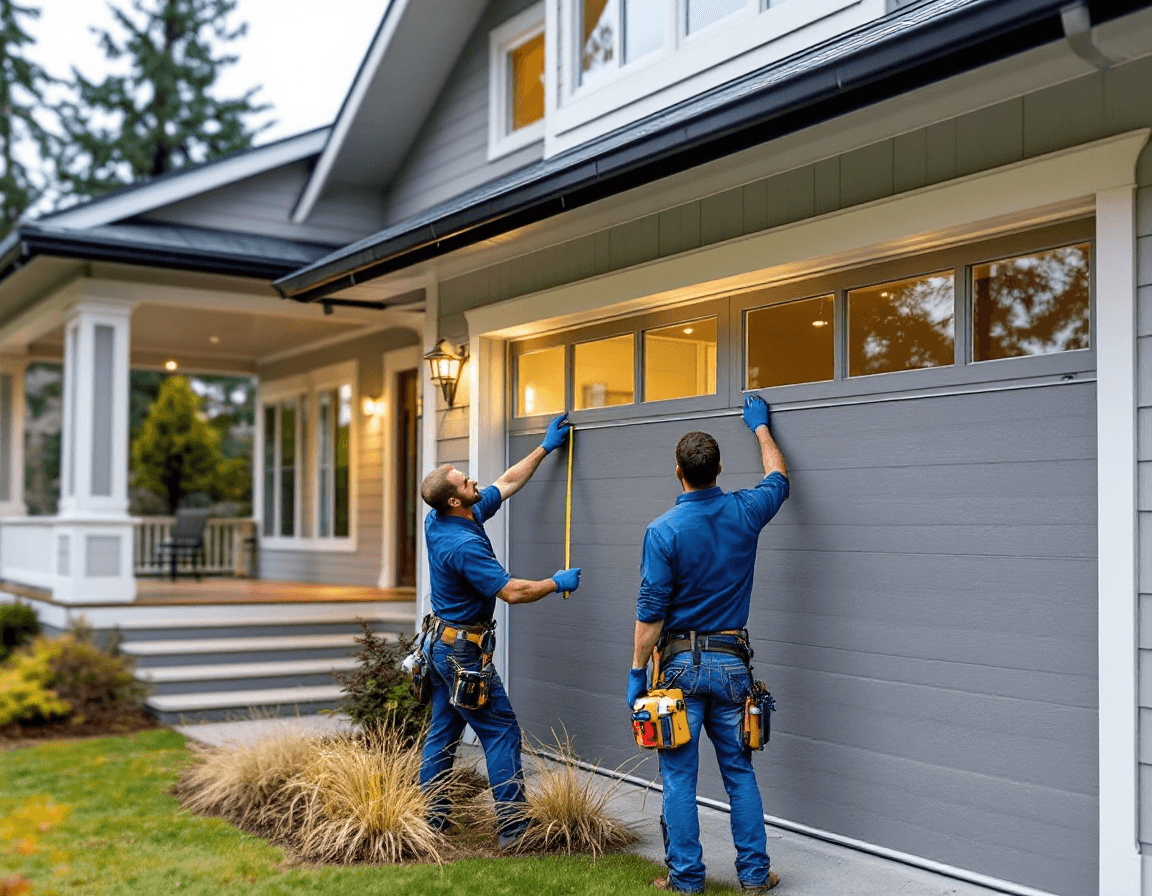
A well-run installation starts long before the old door comes down. We measure the opening carefully, checking width, height, depth, headroom, and sidewall space, and we inspect the framing for rot, sag, or damage that could affect the new door. We also confirm the door type and track configuration so the hardware matches the opening. This step prevents the frustrating situation where a door arrives and simply does not fit.
Once the measurements are verified and the materials are on site, the installation moves through a clear sequence. Each stage has its own checkpoints, and we test the system before leaving your home. We know that a door can look perfect on installation day and still have small problems that show up after a few weeks of use, so we pay attention to alignment and balance during the final walkthrough.
- Site measurement and inspection of the opening, framing, and floor
- Removal and responsible disposal of the existing door and components
- Installation of tracks, brackets, and the new door panels with careful alignment
- Balancing and tensioning of the spring system by trained technicians
- Adjustment of the opener, safety reversal sensors, and remote controls
- Final testing of weatherstripping, lock operation, and smooth travel
- A walkthrough with you covering care, maintenance, and warranty details
Permits, HOA Rules, and Neighborhood Considerations
Before installing a new door, it is worth checking whether your project needs a permit or falls under an HOA or community covenant. Requirements vary depending on the scope of work. A like-for-like replacement may proceed without a permit in many cases, while changes to the size of an opening, structural modifications, or work tied to a larger addition can trigger review. We recommend confirming current requirements with the City of Burien and your HOA, if applicable, before ordering materials.
Some Burien neighborhoods have architectural guidelines that influence color, style, or visible trim, and homeowners in those areas may need approval before making exterior changes. Even where rules are relaxed, many people appreciate a door that complements the street. We can help you narrow choices so the result fits both your taste and any guidelines that apply to your property.
If your driveway is shared or your garage sits close to a property line, plan for access and staging. We will coordinate delivery and installation timing so your neighbors are not blocked longer than necessary, and we keep the work area tidy and safe.
Why Spring and Cable Work Belongs With a Licensed Professional
Replacing a garage door involves some of the most hazardous components in a home. Torsion springs and extension springs store enormous amounts of energy, and cables, drums, and brackets can cause serious injury if they are handled incorrectly. Many fatalities and serious injuries in this trade come from attempts to remove or adjust springs without proper tools and training. For this reason, we strongly recommend that homeowners leave spring removal, winding, and cable work to licensed professionals.
Our technicians are licensed, bonded, and insured, and they use the correct tools and procedures for each spring type. Replacing springs is not a task to attempt with a wrench and a YouTube video, even if you are comfortable with general home repair. Improper tension can damage the door, strain the opener, and create a dangerous situation for anyone standing nearby. If your door has a broken spring, keep the door closed, keep children and pets away from it, and call for service rather than trying to force it open.
Safety also applies to the new installation. A properly balanced door should lift smoothly and stay put when released halfway, and the opener's safety reversal system should stop and reverse the door when it senses an obstruction. We test these features before we finish, and we explain what to watch for over time.
Planning Your Replacement Around the Seasons
The best time to replace a garage door is whenever your project and budget are ready, but timing can still make a difference. Scheduling outside the heaviest rain periods can make the work more comfortable for everyone, especially if the old door is being removed from an open garage. Spring and early fall often offer a good balance of mild weather and manageable schedules, though we install doors throughout the year.
If the existing door has already been damaged by a storm or water intrusion, avoid delaying too long. Water that gets into a garage can affect stored items, the opener, and the surrounding framing, and a temporary tarp or emergency board-up is only a short-term fix. Calling promptly after storm damage helps limit secondary problems and gives you more options for scheduling.
Whatever season you choose, plan to have a clear path for delivery and a place to store the old door if you want it hauled away. We will walk you through lead times for your chosen style and finish so you know what to expect before we begin.
Ready to talk through a new garage door for your Burien home? Call Seattle Garage Door Fix at (888) 799-3819 for a clear, no-pressure conversation about your door, your budget, and the best replacement path for your property.