
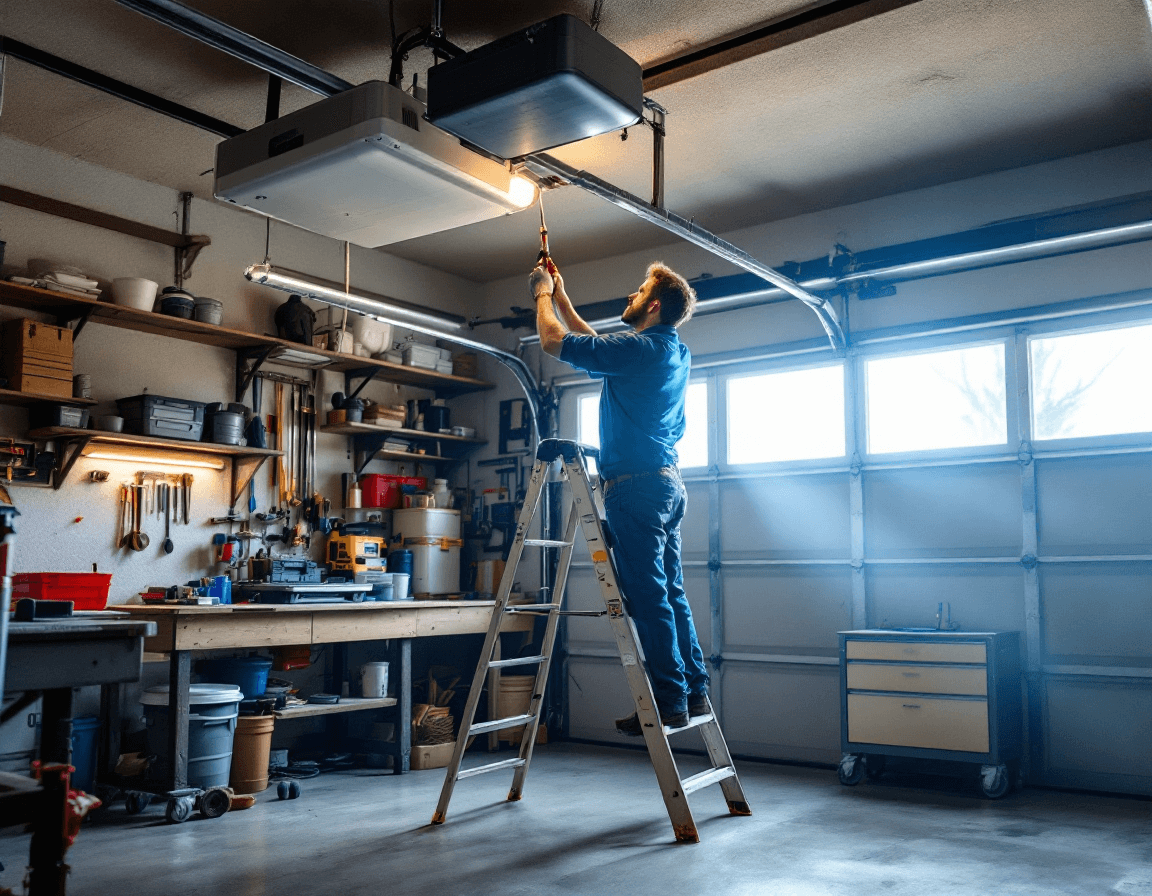
Garage Door Opener Repair in Burien, WA is one of the most common calls we take, and it's also one of the most fixable. A garage door opener is a small system of motor, logic board, safety sensors, radio receiver, and drive mechanism, and when any one of those parts drifts out of step, the door either refuses to move or behaves in ways that look mysterious from the driveway. Homeowners across Burien, from the older blocks near Olde Burien to the newer streets in Gregory Heights and the homes out toward Three Tree Point, tend to notice the problem the same way: a remote that worked last month now does nothing, or a door that used to close smoothly suddenly stops halfway and reverses. Those symptoms feel urgent, and they often are, but the cause is frequently something a trained technician can isolate in a single visit.
Our work covers the full range of major opener brands, including chain drives, belt drives, and screw-drive models, and we troubleshoot motors, gear assemblies, circuit boards, radio receivers, and travel-limit settings. Most opener repairs we perform fall in the range of $95 to $375, depending on the parts involved and how much diagnosis the system requires. We serve homeowners and property managers throughout Burien and nearby communities, including the 98146, 98148, 98166, and 98168 ZIP codes, and we are licensed, bonded, and insured. If your opener is acting up, the rest of this page explains what the most common symptoms mean, what we check, and what you can safely do before the technician arrives.
Why a Silent Opener Often Starts With the Power Path
When an opener does nothing at all, the first thing a technician checks is the power path, because it is the simplest place for a failure to hide. The opener plugs into a dedicated outlet on the garage ceiling or wall, and that outlet may be controlled by a switch, a GFCI breaker, or an outlet that shares a circuit with a freezer or a shop tool. Here in Western Washington, winter windstorms and heavy rain sometimes cause brief outages that trip breakers or leave a GFCI outlet in the tripped state, and the opener simply appears dead. Checking that outlet and the panel before anything else can save a lot of time.
Power problems can also come from the opener's own cord, a loose plug, or a fuse on the logic board that has blown after a surge. Lightning and utility fluctuations are a real concern in this region during storm season, and a surge that takes out a board is not unusual for an opener that has no surge protection. If the light on the opener head is off and the outlet tests fine, the board or transformer may be the culprit. We check continuity and voltage at each point along the path so we are not guessing.
Homeowners can safely do a few things before calling. Confirm the outlet has power by plugging in a lamp, reset any GFCI button on the outlet or in the garage, and look for a tripped breaker. Avoid opening the opener housing while it is plugged in, and do not attempt to bypass a fuse with a higher-rated one. If the opener still does nothing after those checks, that is useful information to share with the technician.
Reading the Motor Hum: When the Head Runs but the Door Stays Put
A motor that hums, strains, or clicks but does not move the door points to a different set of problems than a dead opener. When you press the button and hear the motor engage, the signal is reaching the drive, which means the control circuit is working. The question then becomes whether the drive is turning and transferring that motion to the door. A stripped drive gear, a disconnected trolley, a broken chain or belt, or a release mechanism that has been pulled can all produce this symptom. In some cases the door is also frozen to the floor by ice or a seal that has bonded in cold weather, which is common in the damp mornings we see across Burien.
Motor-run-no-movement calls often involve the trolley. The trolley is the carriage that rides the rail and connects the drive to the door arm. If the emergency release cord has been pulled, the trolley disconnects, and the door can be moved by hand while the motor spins uselessly. Many homeowners pull that cord without realizing it, especially when a child or a guest plays with it. The fix is usually simple, but a technician should confirm the trolley is reengaged properly and that the door balances correctly before running it again.
If the motor hums and the door shakes or moves a fraction of an inch, stop using the opener. Continued operation can strip gears or damage the motor. Look at the rail and the door arm from a safe position, without standing under the door, and note whether anything is visibly loose. Tell the technician exactly what you heard and saw, since that detail narrows the diagnosis considerably.
Remotes, Wall Buttons, and the Radio Handshake That Goes Quiet
Many Burien homeowners first notice a problem when the remote stops working while the wall button still responds. That pattern usually points to the remote or its radio link rather than the motor or board. Remote batteries are the most obvious suspect, but a remote can also lose its programming after a power surge, or the receiver on the opener can become less sensitive as electronics age. Nearby metal structures, new Wi-Fi equipment, and even a neighbor's garage remote operating on a similar frequency can introduce interference in dense neighborhoods.
When the wall button also fails, the problem is more likely in the wiring between the button and the opener, the button itself, or the logic board. Wall button wires can be pinched, corroded, or cut during drywall work or when shelving is installed. Moisture is a real factor in this region. Wall stations mounted on exterior-facing walls or near garage doors that see frequent wind-driven rain can accumulate condensation inside the housing, and that condensation slowly degrades the contacts. A technician can test the button circuit separately from the remote to isolate the fault.
Before calling, try replacing the remote battery and clearing any objects that might block the receiver antenna. Check whether the opener's lights blink when you press the remote, since that tells you the signal is at least reaching the head. Do not attempt to rewire a wall button while the opener is energized. If you have recently changed your Wi-Fi router or added a smart home device, mention it, because some homeowners find that new hardware sits close enough to interfere with older openers.
Stripped Gears and the Grind That Follows Them
A grinding or clunking sound from the opener head is one of the more serious symptoms, and it deserves prompt attention. Most residential openers use a plastic or nylon drive gear that meshes with a metal worm gear or drive shaft. Over time, the teeth wear, or a sudden jam can strip them completely. Once stripped, the gear may still turn the motor freely while doing little to move the door. The grinding often gets louder, and continuing to run the opener can damage the motor, the drive shaft, and the bearings.
Gear wear is not random. Doors that have become heavier because of added insulation, a new window, or a replaced panel place more load on the opener. Doors that are out of balance make the opener work harder every time it lifts. Cold mornings can make grease thicken, and a lack of lubrication accelerates wear on the drive mechanism. A technician will check door balance and the drive assembly together, because replacing a gear without addressing the underlying strain often leads to a second failure within months.
If you hear grinding, press the button once to confirm the sound, then stop. Do not keep cycling the door to see if it clears. Note whether the sound happens on the way up, on the way down, or both, and whether it occurs at a specific point in travel. That detail helps the technician determine whether the problem is in the gear, the trolley, or the door itself.
Travel Limits and the Reverse That Happens Too Soon
A door that closes partway and then reverses immediately, or one that refuses to fully close, usually involves either travel-limit settings or a safety reversal triggered by the sensors. Modern openers include photo-eye sensors near the floor, and if those sensors are misaligned, obstructed, or dirty, the opener assumes something is in the path and reverses. Spider webs, spilled paint, and the constant dust of a garage can all block the beam. Sensors mounted near the floor also take a beating from pressure washing, sweeping, and vehicle tires.
Travel limits control where the door stops when opening and closing. If those limits are set incorrectly, or if the opener's memory has been reset by a power interruption, the door may stop short or attempt to travel beyond the floor. Some openers also use force settings that determine how much resistance the door can encounter before reversing. A door that has settled, a worn bottom seal that now drags, or a track that has shifted slightly can trigger a force reversal even when nothing is in the way.
Start by checking the photo-eyes. Clean the lenses with a soft cloth and confirm the indicator lights on each sensor are steady. Make sure the sensors face each other and are mounted at the same height, usually within a few inches of the floor. Do not adjust force or limit settings if you are unsure, because improper settings can prevent the safety reversal from working as intended.
Blinking Lights Are a Message, Not a Malfunction
Many openers flash lights in a repeating pattern to signal a fault, and the pattern is meaningful. Manufacturers use different blink counts for different conditions, such as a sensor obstruction, a limit problem, or an error in the logic board. The lights are essentially the opener's way of reporting a diagnostic code, and reading them correctly is one of the fastest ways to narrow down the cause. Unfortunately, the codes vary by brand and model, and many owners lose the manual years ago.
Our technicians carry the knowledge needed to interpret the most common flash patterns across major brands, and we use that information to guide the diagnosis. A repeated flash often points to the photo-eyes, while a different sequence can indicate a limit or memory issue. Some patterns signal that the opener has detected excessive force, which may be a sign of a binding door or a drive problem. Reading the code is a starting point, not a final answer, and we confirm each finding before replacing parts.
Before calling, count the flashes and note how many times the pattern repeats before a pause. Take a photo of the opener head if you can do so safely, since a clear picture helps identify the model. Avoid pressing the button repeatedly while the lights are blinking, because that can compound the fault. You can also check whether the blinking changes after you clean the sensors, which can give you a clue on your own.
Chains, Belts, and the Slack That Slips Off the Rail
A loose or derailed chain or belt is a common issue on chain-drive and belt-drive openers. Chains stretch over years of use, and once they sag enough, they can jump off the sprocket or rub against the rail. Belt-drive openers, which are popular for quieter operation in attached garages, can also loosen or slip if tension drifts. When the chain or belt comes off, the motor may run freely, the door may not move, or the opener may produce a rattling noise that is hard to ignore.
The repair itself involves more than simply putting the chain back on. The technician must confirm the sprocket, the rail, and the trolley are aligned, check for worn or damaged links, and adjust tension to manufacturer specifications. Overtightening a chain or belt can strain the motor and bearings, while leaving it too loose invites the same problem again. Belt openers in particular require careful tension checks because they are less forgiving of misalignment.
If you notice slack or a chain lying on the rail, do not try to force the door open or closed. Press the release cord only if you know how to reengage the trolley later, and avoid working on the rail with the power connected. Keep children and pets away from the area, and take a moment to look at whether any links appear bent or broken. Those observations help the technician decide whether a simple adjustment will suffice or whether a replacement part is necessary.
Damp Air, Salt Drift, and Intermittent Behavior Across the Peninsula
Intermittent operation is one of the trickiest symptoms to diagnose, and Western Washington's climate makes it more common than many homeowners expect. Burien sits in a damp, mild environment where rain can persist for days, humidity lingers in attached garages, and temperatures swing enough to cause condensation inside electrical boxes. Homes closer to Three Tree Point and the Puget Sound shoreline also face salt-laden air that can accelerate corrosion on metal contacts, terminal screws, and exposed brackets. When an opener works one day and refuses the next, moisture and corrosion are often part of the story.
Intermittent faults can come from a loose connection that expands and contracts with temperature, a sensor wire that has partially broken, a worn relay on the logic board, or a remote receiver that picks up signals inconsistently. Because the symptom comes and goes, a technician may need to observe the system through several cycles, check connections under load, and test wiring while the fault is present. Rushing this step tends to produce a repair that holds for a few days and then returns.
Homeowners can help by noting when the problem occurs. Record the weather, the time of day, and whether the garage was recently used for laundry, a car wash, or heavy tool work, since humidity from those activities can affect the opener. Keep the garage door seal and weatherstripping in good condition, and make sure the garage ventilates properly. These habits will not replace a professional diagnosis, but they give the technician valuable information and may reduce the frequency of problems.
Olde Burien Homes, Gregory Heights Garages, and What Age Tells Us
Garage configurations in Burien vary widely, and that variety shapes how openers are installed and how they fail. Homes in older parts of town, including the blocks around Olde Burien, often have detached or single-car garages with older door systems, and the openers may have been added or replaced at different times. Newer neighborhoods such as Gregory Heights tend to include larger attached garages with newer doors, sometimes with heavier insulated panels and more complex sensor and wiring layouts. Both situations present different troubleshooting paths.
An opener's age and install history matter. An older unit may use a board that is no longer manufactured, which can mean the repair is best handled by replacing the entire operator. A newer unit with a heavier door may have been sized correctly for the original panel but may struggle after a later upgrade. Wiring routed through attic spaces, along exterior walls, or through unfinished garage ceilings can also be damaged by pests, rodents, or the simple wear of decades.
When you call, tell the technician roughly how old the opener is, whether anything has changed on the door, and whether a previous repair was done. Those details help us decide between a targeted repair and a replacement recommendation, and they let us bring the right parts on the first visit. If you are not sure of the brand or model, check the label on the motor housing or inside the cover, and note any numbers you can read.
What a Burien Repair Visit Typically Covers and What It Costs
A typical opener repair visit begins with a conversation about the symptoms, followed by a walk through the system. The technician checks power, the logic board, the wall control, the remote receiver, the photo-eyes, the travel limits, the drive mechanism, the trolley, the chain or belt, and the door balance. That complete check is important, because a symptom in one component often has a cause elsewhere. We explain what we find before recommending any work, and we provide a clear estimate so you can make an informed decision.
Most opener repairs we perform fall in the range of $95 to $375. The final price depends on the brand and model, whether the needed part is in stock, how much labor is involved, and whether the door itself requires adjustment. Some repairs are very quick, such as resetting a limit or replacing a sensor, while others involve a gear, a logic board, or a motor. We will tell you when a repair is likely to cost more than the opener is worth, and we will explain the tradeoffs honestly rather than pushing you toward a replacement.
It helps to understand that the price range reflects common repairs, not every possible situation. Specialty openers, unusual installations, or repairs that uncover additional problems may fall outside that range, and we will discuss those possibilities before proceeding. Ask questions at any point. A knowledgeable technician should be able to explain what is failing, why, and what the options are.
Safety First: Why Spring and Cable Work Belongs to a Licensed Professional
Before you attempt any garage door work, understand the risks. Garage door springs are under very high tension, and a spring can release with enough force to cause serious injury. Torsion springs and extension springs both store significant energy, and cables can snap under load. For that reason, spring replacement, cable repair, and any work on the door's counterbalance system should be handled only by a licensed professional with the right tools and training. Opener repair itself is usually safer, but the same caution applies whenever the door is heavy, unbalanced, or partially disconnected.
Homeowners can take sensible precautions while waiting for a technician. Disconnect power to the opener at the outlet or breaker before touching the drive, and never stand beneath a door that is open or partially lifted, especially if you suspect a spring or cable problem. Do not attempt to pry the door open or force it down by hand, since doing so can stress the springs and the opener at the same time. If the door drops suddenly or sags unevenly, keep people away and call for service right away.
Here is a short checklist of safe habits to follow:
- Keep children and pets clear of the door and tracks while troubleshooting.
- Unplug or switch off the opener before cleaning sensors or inspecting the rail.
- Avoid pulling the emergency release while the door is partly open or the car is in the path.
- Do not adjust springs, cables, or track brackets yourself.
- Call a licensed technician if you see frayed cables, bent tracks, or a door that moves unevenly.
Calling for Help in Burien: What to Have Ready
When you contact us about garage door opener repair in Burien, having a few details ready will speed up the process. Note the symptoms in your own words, including what the opener is doing, what it is not doing, and whether any sounds or lights accompany the problem. Mention the brand and model if you know them, the approximate age of the opener, and whether any recent work has been done on the door, the garage, or the electrical system. If the problem started after a storm or power outage, say so, since that detail can point to a surge or a reset issue.
It also helps to describe your access. Let us know if the garage is detached, whether there is a side door, and whether the opener is mounted on a ceiling that is difficult to reach. If you have pets, mention whether they will need to be secured during the visit. Our team can schedule service across the 98146, 98148, 98166, and 98168 ZIP codes and throughout the Burien area, and we will confirm details before arriving.
Whether your opener has stopped completely, is grinding, is reversing for no reason, or simply works some days and not others, a licensed technician can help you sort out the cause. Call (888) 799-3819 to schedule Burien garage door opener repair and get a clear diagnosis before a small problem becomes a larger one.