
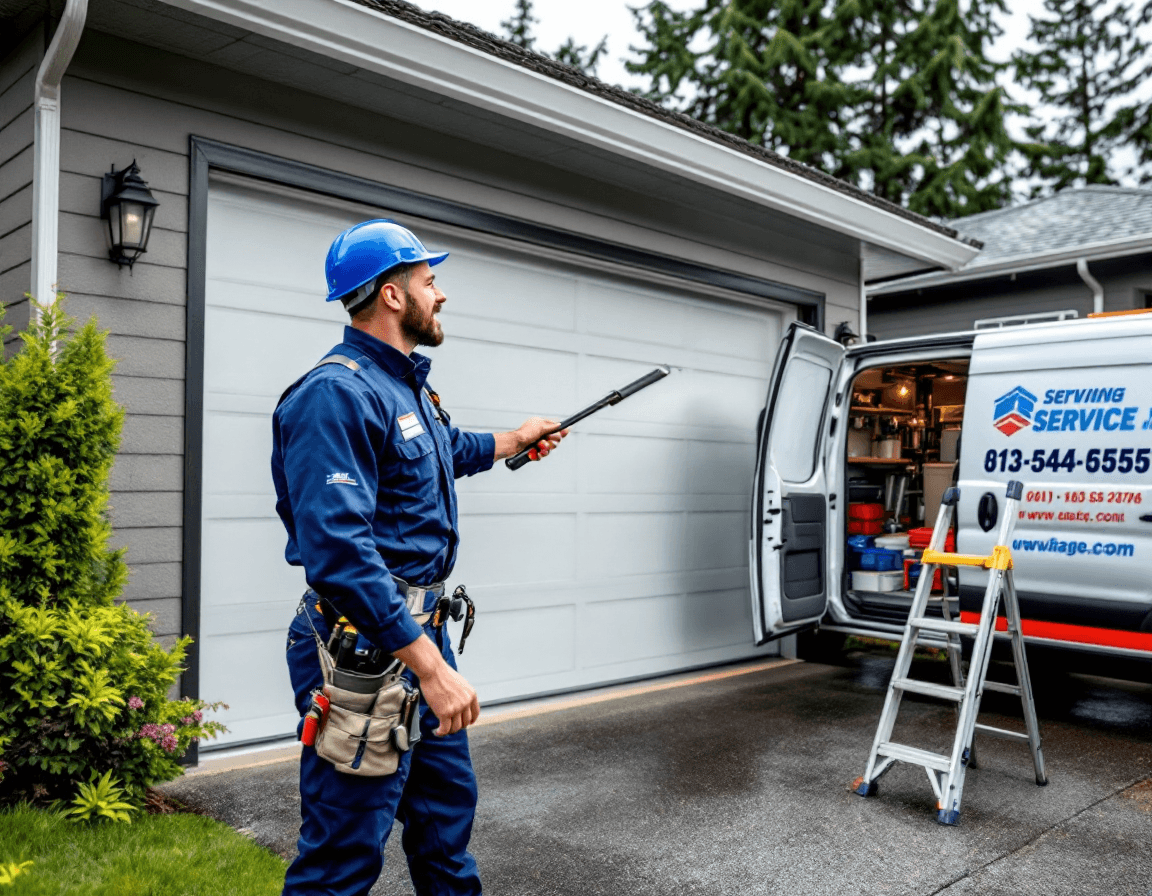
Garage Door Repair in Burien, WA is one of the most common calls we take from homeowners on the south end of King County, and the causes are usually more predictable than people expect. A door that stops halfway, reverses for no clear reason, or refuses to answer the remote is almost always giving a warning first. Seattle Garage Door Fix sends licensed, bonded, and insured technicians to Burien homes to diagnose the problem, explain it in plain language, and repair it with parts that match the door.
Burien sits in a climate that is hard on mechanical systems. Winters bring long stretches of rain, damp air, and temperature swings, and homes near Puget Sound or the Three Tree Point shoreline also contend with salt-laden air that accelerates corrosion. Whether you live in an older home near Olde Burien or a newer build in Gregory Heights, your garage door is working against moisture every day. This page explains what typically goes wrong, how to recognize the early signs, and when it is time to pick up the phone.
Our service covers residential garage door repair for doors that won't open, won't close, or no longer move smoothly. Most residential repairs fall within a range of $95 to $450, depending on the part involved, the door's size and style, and what the technician finds once the door is open and inspected. We would rather explain the cause and the options before any work begins than hand you a number that changes on arrival. Read on for the symptoms we see most often in Burien and what they usually mean.
Why Burien Garage Doors Wear Faster Than You Might Expect
Western Washington's wet season does more than make driveways slick. Moisture gets into the hinges, roller bearings, and track joints, and it sits there through long gray months, so metal parts that look fine in September can be starting to rust by February. Steel tracks and springs are especially vulnerable, and once surface rust forms on a track, rollers can start to bind or wobble. Wood doors, which remain popular on many Burien homes, can swell, warp, or soften at the bottom panel if sealing has worn thin.
Homes closer to the water face an added challenge. Salt carried in the air settles on exposed hardware, including bottom brackets, hinge hardware, and the opener's mounting bolts, and it speeds up corrosion considerably. Over a few seasons this can turn a smooth-running door into one that grinds or sticks at the same spot every time it passes. A quick rinse of exposed hardware and a fresh coat of lubricant made for garage doors can slow this process, but it cannot undo damage that has already set in.
Temperature changes add another layer of stress. Cold snaps, which do occur in the Puget Sound lowlands even when they are brief, make lubricants thicken and make metal contract, and a door that moves freely on a mild afternoon may feel sluggish on a frosty morning. Many Burien homeowners first notice a problem during the first cold week of the year, and it is worth remembering that a sudden change in performance often reflects a problem that was already developing. Paying attention to seasonal changes gives you a head start.
Reading the Early Warning Signs Before a Door Fails
Garage doors rarely die without notice. Most failures are preceded by a series of smaller changes that homeowners tend to dismiss: a new squeak, a slightly longer travel time, or a faint scrape along one side of the track. These are the moments when a repair is typically straightforward and inexpensive. Waiting until the door stops entirely usually means a more involved visit and sometimes an emergency call on a rainy evening when you need the car out of the garage.
Pay attention to changes in sound first. A healthy door makes a steady, moderate hum from the opener and a quiet rolling sound from the rollers. Squealing often points to dry hinges or rollers that need lubrication, while a rhythmic clicking may suggest a loose bracket or a worn roller. Grinding, popping, or a deep bang usually means something is out of alignment or a component has failed, and those sounds deserve prompt attention rather than a wait-and-see approach.
Visual clues matter just as much. Look for gaps between the bottom seal and the floor, sections of the door that appear lower than their neighbors, or a panel that has pulled away from the track. Check the bottom weather seal too, since a cracked or flattened seal lets in water and cold air and can make the door seem to drag. If you see daylight around the edges of the door when it is closed, the door is no longer seating correctly and the opener is working harder than it should.
Here is a short list of signs that justify a call sooner rather than later:
- The door pauses or jerks at the same point in every cycle.
- The opener runs longer than usual before the door moves.
- One side of the door sits visibly lower or higher than the other.
- A loud bang happens each time the door reaches the top or bottom of its travel.
- The door has started to shift off the track or the rollers have popped out.
When the Door Reverses Before It Reaches the Floor
A garage door that starts closing and then reverses a few inches above the ground is one of the most frequent complaints we hear from Burien homeowners. This behavior is a safety feature. Modern openers are designed to detect an obstruction and reverse the door so it does not crush a child, a pet, or a vehicle. When the reversal happens with nothing in the way, the sensors or the door's force settings are usually the cause, not a true obstruction.
The first thing to check is the photo-eye sensors mounted near the bottom of each track. These two small units should face each other across the opening, and their indicator lights should be steady. If one has been bumped, shifted, or coated with dust, it may be misreading the path. Spider webs and dirt are common in garages, and a cloudy lens can cause repeated reversals. Gently wiping the lenses and confirming the alignment often resolves the issue without any parts at all.
If the sensors look correct, the next suspect is the door's balance or the opener's force setting. A door that is heavier than it should be will not stop cleanly, and the opener may read the extra resistance as an obstruction. Balance problems frequently trace back to springs that have lost tension or hardware that has worn out, and those components are under high stress. This is a job for a licensed technician, not a homeowner with a ladder and a socket set, because spring work can cause serious injury.
Doors Stuck Halfway or Jammed in the Track
A door that stops partway open or closed and refuses to move is alarming, especially when you have a car inside or a schedule to keep. In many Burien cases the jam is caused by something mundane, such as a roller that has slipped out of the track, a broken cable, or debris lodged in the path. Before you do anything else, make sure the door is fully disconnected from the opener if you need to move it by hand, and keep everyone clear of the door while you look.
Rollers are a common point of failure. Over time, the nylon or steel wheels can crack, flatten, or lose their bearings, and when that happens the door can bind as it passes a joint in the track. Cables are another frequent cause. If a cable frays or slips off its drum, one side of the door can lift unevenly, which often shows up as a door that sits crooked or stops with one corner higher than the other. Never attempt to re-tension a cable yourself, and avoid pulling hard on a door that is jammed.
Do not force a stuck door. Forcing it can bend tracks, strip the opener's drive, or turn a simple roller replacement into a panel replacement. A technician will check the track alignment, roller condition, cable routing, and spring tension before making a repair. In many cases the fix is a targeted replacement of worn parts followed by a careful adjustment, and that approach keeps the cost well within the typical range we quote for residential work.
Crooked, Uneven, or Off-Track Doors
Sometimes a garage door is not technically broken but still does not look or act right. Maybe it closes with a visible lean, or the bottom edge runs at an angle to the floor. Maybe one side of the door reached the top of the track a moment before the other. These symptoms point to uneven cable tension, a bent track section, a damaged bottom bracket, or a spring that has lost its balance. Left alone, the stress carries over to the opener, the hinges, and the panels themselves.
Burien has a mix of housing styles, and garage doors vary accordingly. Older houses sometimes have single-car doors with lighter-duty hardware, and in those cases a bent track can be a sign that the original installation was never fully square. Newer builds often use heavier insulated doors that place more demand on the springs and the opener. Either way, a door that is off its tracks should be realigned by someone who understands how the track geometry and the cable system interact.
The good news is that many off-track problems are easy to catch early. Once a month, close the door and look at the gap at both ends of the bottom seal. Open the door partway and check that the top roller tracks sit evenly. If the gap is larger on one side or the door seems to tilt, schedule a visit before the misalignment becomes a jammed door. Early adjustment is far cheaper than replacing a damaged panel or a torsion assembly.
Remote and Wall Button Failures
When the remote or wall button does nothing, many homeowners assume the opener has died. More often the cause is a simpler issue. Remote batteries are a common culprit, particularly in damp conditions where the battery contacts corrode. The opener's wall control may have a loose wire, a tripped safety circuit, or a faulty switch. The receiver on the opener can also lose synchronization with the remote after a power outage or a lightning strike, which happens from time to time in our region.
Start with the basics. Replace the remote battery, then test the remote from a few different spots in the garage and outside it. If it works in one place and not another, the signal may be obstructed or the remote may be too far from the receiver. Check the wall button's wiring if the button feels loose or has no light response. If the opener's lights blink, that can indicate a specific fault code that the manual will explain, and noting the pattern helps a technician diagnose the problem quickly.
Keep in mind that a remote that stops working can also be a symptom of a larger issue. If the opener itself will not respond at all, the problem may be the power supply, a tripped breaker, or a failed logic board. Replacing a whole opener is a bigger investment, and a technician can usually tell you whether the existing unit is worth repairing. We always aim to explain whether the fix is a simple reprogramming, a component swap, or a recommendation to replace the unit, so you can decide without pressure.
Doors That Slam Shut or Move Too Fast
A door that drops quickly and slams at the bottom is unsettling, and it is also a sign of a real problem. The most likely cause is a spring that has lost tension, which means the door no longer has the balance it needs to move at a controlled speed. Another possibility is a worn or damaged cable that allows the door to free-fall when it reaches a certain point. Both situations put stress on the opener and the door's bottom section, and both can injure someone standing nearby.
Speed problems can also come from the opener's settings. Many openers allow you to adjust the closing force and the travel speed, and an incorrectly set limit can make the door move more aggressively than intended. Those settings should be checked during a service visit, along with the auto-close timer and the reversal sensitivity. Adjusting them without understanding the balance of the door can make things worse, so it is best to have the opener and the door evaluated together.
If your door has started to slam, avoid standing under it and keep children and pets away from the opening. Do not attempt to repair the springs or cables yourself, because they store large amounts of energy even when they appear to be at rest. Schedule a service call promptly, and mention exactly how the door behaves so the technician can check the right components on the first visit.
What Happens During a Typical Burien Repair Visit
Knowing what to expect can take some of the stress out of a service call. When a technician arrives, the first step is usually a conversation about what you have noticed, when it started, and whether anything changed recently, such as a storm, a power outage, or a new car in the garage. From there, the technician will test the door through a full cycle, inspect the tracks, rollers, hinges, cables, springs, and opener, and check the photo-eye sensors and safety reversal. This methodical approach helps identify the root cause rather than just the most obvious symptom.
Once the diagnosis is complete, the technician will explain the findings and present your options. Many visits involve replacing a small number of worn components, such as rollers, hinge brackets, a cable, or a pair of sensors, and those repairs typically fall within our $95 to $450 range for most residential jobs. Larger repairs, such as replacing torsion springs or a damaged panel, may cost more and will be quoted before work begins. You are never obligated to approve work you do not understand or want.
Here are common repairs that Burien homeowners ask about most often:
- Roller replacement, including nylon or steel wheels and their bearings
- Photo-eye sensor realignment or replacement
- Track straightening and bracket tightening
- Cable replacement and drum inspection
- Remote reprogramming or battery and receiver service
- Bottom seal replacement to block water and drafts
Why Spring and Cable Work Belongs With a Licensed Professional
Garage door springs and cables are some of the most dangerous components in a residential system, and this is the one area where we always recommend a licensed professional without exception. Torsion springs are wound under very high tension and can release that energy with enough force to cause serious injury. Extension springs and cables can also snap or unwind unpredictably. Even experienced homeowners underestimate the force involved, and the consequences of a mistake can be permanent.
Homeowners in Burien sometimes ask whether they can save money by replacing a spring themselves. We understand the impulse, but we strongly advise against it. Proper spring replacement requires specialized winding bars, correct measurements, and an understanding of how the door's weight and size affect the required tension. A technician arriving with the right tools and training can complete the job safely and ensure the door is balanced afterward. Our crews are licensed, bonded, and insured, which matters when a job involves stored energy.
Please do not attempt any of the following on your own. Do not wind, unwind, or adjust torsion springs. Do not loosen or remove cable drums or cable tension. Do not attempt to force a door that is under tension or jammed. If you have any doubt about whether a component is under stress, leave it alone and call a professional.
Simple Habits That Keep Burien Garage Doors Running Well
Not every garage door problem can be prevented, but a few consistent habits go a long way in our climate. Once or twice a year, wipe the tracks and rollers with a dry cloth to remove grit and moisture, and apply a silicone-based or manufacturer-recommended lubricant to hinges, rollers, and springs, avoiding grease or oil that attracts dirt. Avoid spraying lubricant onto the photo-eye sensors or the opener's motor housing. Check the weather seal for cracks in the autumn so it can do its job during the rainy months.
Keep the opener's manual handy and test the safety reversal every few months by placing a flat object, such as a piece of wood, on the floor in the door's path and confirming that the door reverses when it touches the obstruction. Look at the cables and springs from a safe distance for obvious fraying, rust, or gaps in the coils, and make a note if anything looks different from last time. A quick visual check takes only a few minutes and can flag a problem while it is still small.
Finally, be realistic about when to call. Burien homes that are near the water, sit under heavy tree cover, or have older doors benefit from an annual inspection, since small wear patterns are easier to address before they cause a jam. If your door has started to make new noises, behave differently in the cold, or show uneven movement, it is time for a professional look. Early attention is almost always less costly and less disruptive than waiting for a breakdown.
Garage door problems rarely fix themselves, and the sooner a worn component is addressed, the less likely it is to damage something else along the way. If your door in Burien, including homes in Olde Burien, Three Tree Point, Gregory Heights, or any address in ZIP codes 98146, 98148, 98166, or 98168, won't open, won't close, reverses early, sticks halfway, or is making new noises, call Seattle Garage Door Fix at (888) 799-3819. Our licensed, bonded, and insured technicians will diagnose the cause, explain your options in plain terms, and keep you informed before any work begins.