
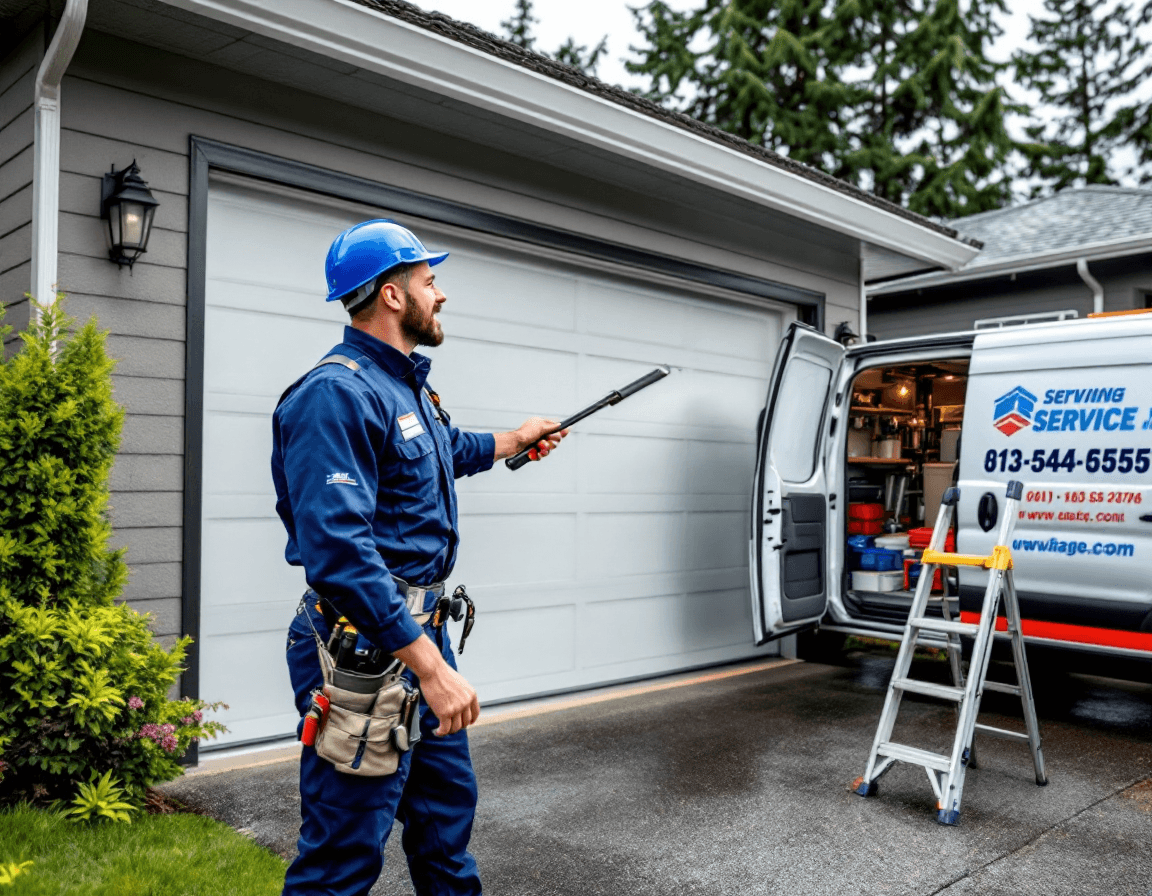
Garage Door Repair in SeaTac, WA is often the difference between a smooth morning commute and a car stuck inside the garage. Homes across SeaTac range from older ranch-style houses to split-levels, townhomes, and newer builds, and each one brings its own mix of door hardware, opener models, and wear patterns. Whether your door refuses to budge, reverses for no clear reason, or sags a little more every month, the underlying causes tend to follow familiar patterns. This page walks through those patterns so you can tell a simple adjustment from a repair that needs a technician's hands and tools.
Our team at Seattle Garage Door Fix works on residential doors throughout South King County, including homes near Angle Lake, the McMicken Heights area, and the neighborhoods surrounding Bow Lake. We see the same problems again and again: sensors knocked out of line, rollers that have worn flat, openers that have lost their grip on the rail, and doors that have simply been pushed past their balance point. Most calls come after a door has been acting up for a while, so the goal here is to help you catch problems earlier and understand what you are looking at when you do call. Where a task is dangerous for a homeowner to attempt, we say so plainly.
Why SeaTac Garage Doors Face a Particular Kind of Wear
The Pacific Northwest climate has a quiet but steady effect on garage doors. Long stretches of damp weather, the drizzle that can linger for days in late fall and winter, and the humidity that builds up in attached garages all encourage surface rust on hinges, bearing plates, and spring hardware. Moisture also finds its way into wooden doors, causing panels to swell in wet months and shrink during drier spells, which can throw off how the door sits in its tracks. Over a few seasons, those small shifts add friction that the opener was never meant to fight.
SeaTac has its own local factors as well. The area sits in a dense corridor of commercial traffic, airport-related activity, and busy arterials, so many homeowners park vehicles near the door and rely on the garage daily for security and convenience. Doors that open and close several times each day accumulate cycles quickly, and parts that might last a decade in a quiet rural garage can show fatigue much sooner. Temperature swings between cool, damp nights and milder afternoons also cause metal components to expand and contract, which loosens fasteners over time.
Understanding this background helps explain why a door that worked perfectly two years ago may now need attention. The climate is not a reason to panic, but it is a reason to treat routine inspections as part of normal home care. A door that gets a quick check each season is far less likely to surprise you on a rainy weekday when you are already running late.
Reading the Warning Signs Before a Door Quits Mid-Drive
Garage doors rarely fail without warning. Most of the time, a door gives several small signals over days or weeks before it refuses to move at all. Learning to notice these early signs can save you from a stranded car and often keeps a repair simple and affordable. Pay attention to changes in how the door sounds, how it feels when you push the button, and how it looks when it is fully open or closed.
Several symptoms deserve attention even when the door still technically works. Ask yourself whether any of the following have started happening recently:
- The door hesitates or stops briefly before fully opening or closing.
- The opener runs longer than usual before the door begins to move.
- One side of the door sits lower than the other when closed.
- Gaps appear along the bottom seal or between panels that were tight before.
- The door makes a new noise, or an old noise has grown louder.
If you notice one or more of these, it is wise to schedule a diagnostic visit before the problem becomes a full failure. Many issues that begin as small irregularities, such as a slightly bent track or a worn roller, are straightforward to correct when caught early. Waiting until the door is jammed halfway often means more labor and more parts, and it can put extra strain on the opener motor and other components.
When the Door Reverses Before It Reaches the Floor
A door that starts to close and then reverses before reaching the ground is one of the most common complaints we hear. This behavior is a safety feature, and it is designed to protect people, pets, and vehicles from being trapped under a closing door. The system relies on photo-eye sensors mounted near the bottom of each track, one on each side, that send an invisible beam across the opening. If that beam is interrupted, or if the opener does not detect a clear path, the door reverses.
Many reversal problems turn out to be simple. Dirt, cobwebs, spider nests, dust, or even sun glare can block or confuse the sensor lenses, especially in a garage where debris collects along the floor. Sensors can also get knocked slightly out of alignment when someone bumps them with a broom, a bicycle, or a trash bin. Look for a small indicator light on each sensor; a steady light on one side and a blinking or off light on the other usually points to a misalignment. Wiping the lenses with a dry cloth and gently adjusting the brackets until both lights glow steadily often resolves the issue.
If the sensors look clean and aligned but the door still reverses, the problem may lie in the force settings or in a mechanical binding point. Openers have adjustable close-force limits, and a door that has become heavier or stiffer over time may trigger the reversal even when nothing is physically blocking it. Replacing a failed sensor or rewiring a damaged cable is a job for a qualified technician, because it involves the opener's low-voltage control circuit and the safety logic that protects your household.
Grinding, Squealing, and Banging: What Each Noise Usually Means
Sound is one of the best diagnostic clues a garage door can give you. A high-pitched squeal usually points to dry or worn rollers, hinges, or bearings. Rollers with steel or nylon wheels can flatten or crack with age, and the friction they create as they travel along the track produces a noticeable squeak. Lubrication can help temporarily, but if the rollers look worn, cracked, or wobbly, replacement is the more durable fix.
A grinding noise, particularly one that seems to come from the ceiling or the back of the opener, often suggests a problem with the drive mechanism. Chain-drive openers can develop slack or stretched chains, and belt-drive models can wear their belts. Gear-driven units may show stripped teeth or a worn trolley. Grinding can also signal that the door is struggling against an uneven load, which places stress on the entire system. Stop using the door if the grinding is severe and call for service.
A loud bang or thud usually means something has come loose, shifted, or failed suddenly. Common culprits include a snapped spring, a loose track bracket, a dislodged roller stem, or a panel that has come unhinged. Any sudden bang that happens alongside the door dropping, tilting, or failing to close deserves immediate attention. Keep people and vehicles clear of the opening until a technician has inspected the door, because a loose or broken component can move unpredictably under tension.
Uneven Movement, Crooked Panels, and Doors Knocked Off Track
A door that rises unevenly, sits crooked, or appears to lean is usually telling you that one side is carrying more load than the other. The two lift cables, the spring system, the track alignment, and the bottom roller positions all need to work together. When one of these gets out of balance, the door can bind on one side while the other moves freely. Over time, that imbalance can bend tracks, stress hinges, and damage the opener.
Visible gaps, sagging sections, or a door that has jumped off its track are more serious. A door that has come off its track may still look intact, but the panels are no longer seated in their guides and the weight is shifting in unpredictable ways. If you see the door hanging at an angle, pull away from the opening and do not attempt to force it back into place. Pulling or lifting the door manually can cause sudden movement, and the springs and cables are under significant tension even when the door appears to be at rest.
Track alignment is a common repair that technicians perform frequently. Tracks can be knocked out of square by a bumped vehicle, a shifted bracket, or years of gradual settling in the mounting surfaces. Correcting track alignment requires loosening fasteners, measuring carefully, and re-securing the track so the rollers run cleanly from bottom to top. A misaligned track is not a DIY project for most homeowners, because it often involves working near tensioned hardware.
Remote and Wall Button Troubleshooting Before You Call
Not every "broken" door is actually broken. When your remote or wall button seems to do nothing, a few simple checks can reveal whether the problem lies with the controls rather than the door. Start with the easiest possibilities so you do not spend time on something that takes thirty seconds to fix. Many of these checks are safe for any homeowner to perform, provided the door is fully closed and no one is standing in the path of the door.
Work through the following checks in order:
- Replace the battery in the remote, and try a fresh battery even if the old one still shows some charge.
- Confirm the wall button is receiving power and is not stuck, cracked, or wired loosely behind the wall plate.
- Check whether the opener's light and motor respond when you press the wall button, which tells you whether the opener itself has power.
- Look at the breaker or outlet that feeds the opener, and reset it if it has tripped.
- Make sure the remote has not been reprogrammed or cleared, and that it still matches the opener's learn button.
If the wall button works but the remote does not, the remote may have lost its programming or the receiver may need attention. If nothing responds at all, check the power supply first, and remember that a power outage can also leave the door in a state that needs manual attention. Most openers have a red emergency release cord that disconnects the door from the trolley so it can be moved by hand. Use that release only when the door is fully closed, and avoid pulling it while the door is open, because the door can drop suddenly.
Springs, Cables, and Why They Belong to a Licensed Technician
Torsion springs and extension springs store enormous amounts of energy, and they are the most dangerous part of a garage door system. A torsion spring mounted above the door can hold enough tension to cause serious injury if it is released improperly, and extension springs can recoil with force when they fail. Homeowners are often tempted to adjust or replace these parts to save money, but the risk is not worth it. Spring and cable work must be done by a licensed professional who has the proper tools and training.
Cables are also under tension and can snap or come off their drums when the system is out of balance. A frayed or broken lift cable can cause the door to drop unevenly, and attempting to repair it without proper equipment can result in a sudden release. If you see a broken spring, a cable hanging loose, or a door that sags in the middle, keep the door closed if possible and call for service. Do not attempt to brace the door with wood or straps as a temporary fix, because that can put more pressure on the remaining components.
Our technicians treat spring and cable work with the caution it demands. Repairs typically involve securing the door, relieving tension in a controlled manner, and installing matched replacement parts. This is one of the clearest examples of a task where paying for professional service is the safe and responsible choice, and it is the reason we always recommend a licensed professional for any work involving springs or cables.
Doors That Slam Shut or Stall Halfway
A door that closes too quickly and slams into place can be unsettling, and it often indicates a problem with the opener's force settings or with the door's balance. Some openers have adjustable down-force and travel-limit controls, and these can drift out of their intended range over time, especially after component wear. A door that has lost tension in its springs may also drop faster than designed, creating a hard landing that stresses hinges and panels.
A door that stops halfway through its travel is frequently a sign of binding, obstruction, or a safety stop triggered by excessive resistance. Check the path of the door for stray items, debris, or a shifted bracket. Look at the rollers and tracks for signs of damage or misalignment. If the door stops and reverses at the same point every time, that location often reveals where the binding occurs, and a technician can correct it by adjusting the track, replacing a worn roller, or rebalancing the system.
Neither of these symptoms should be ignored, even if the door eventually completes its travel. Repeated hard closings can loosen panel connections and damage the opener's gears, while repeated stalls can burn out the motor over time. Early attention keeps the repair focused on a single part rather than a cascade of related failures.
Keeping Your Door Running Through Wet Winters Near Angle Lake and Bow Lake
Routine care makes a noticeable difference in how a garage door performs through the wet months. Start with a seasonal walkthrough. Look at the weatherstripping along the bottom and sides, check the threshold for cracks or sagging, and inspect the tracks for debris or corrosion. Gently wipe away dirt from the rollers and track surfaces, and apply a silicone-based or white lithium lubricant to hinges, rollers, and the moving parts of the opener as recommended by the manufacturer. Avoid heavy grease on tracks, because it attracts dirt that can build into a gummy layer.
Homes in lower-lying or damp pockets of the area can see more moisture in the garage, particularly during prolonged rain. Good ventilation helps reduce humidity, and keeping the garage door sealed against drafts can limit the moisture that enters from outside. If you notice mold, mildew, or peeling paint on the door panels, address the moisture source and let the surfaces dry before refinishing. Wooden doors need extra attention, because they can warp when repeatedly soaked and dried.
Regular maintenance also gives you the chance to catch small problems before they grow. A loose bolt tightened during a seasonal check costs nothing, while a loose bracket left unattended can allow a track to shift and create a much larger repair. If you are unsure about any step, a professional inspection provides a clear picture of the door's condition and a prioritized list of what needs attention.
What a Residential Repair Visit Typically Covers and What It Costs
Most residential garage door repairs in our service area fall within a range of $95 to $450, depending on the nature of the problem, the parts involved, and the time required to complete the work. Simple adjustments such as sensor realignment, minor track tightening, or a remote reprogramming usually sit at the lower end of that range. Replacing rollers, hinges, or an opener component often falls in the middle, while more involved work such as spring or cable replacement and track rebuilds can reach the higher end. Every door is different, so the final figure depends on what the technician finds during the visit.
A typical service visit begins with a diagnostic inspection. The technician checks the opener, sensors, controls, springs, cables, rollers, tracks, hinges, and panels, then explains what is working, what needs attention, and why. You receive a clear picture of the repair options before any work begins. This approach lets you decide how to proceed without pressure, and it helps you understand whether a quick fix will hold or whether a more comprehensive repair makes better long-term sense.
We believe homeowners deserve straightforward information. If a repair can wait a few weeks without risk, we will say so. If a problem is urgent because the door is unsafe or stuck in an open position that exposes the home, we will prioritize it and explain the reasons. Price transparency and honest recommendations are central to how we approach every job.
Scheduling Service Across SeaTac and Nearby ZIP Codes
We provide garage door repair throughout SeaTac and the surrounding South King County communities, including properties within the 98188 and 98198 ZIP codes. Whether your home sits near the Angle Lake area, in the McMicken Heights neighborhood, or closer to Bow Lake, our technicians can arrange a visit that fits your schedule. When you call, have a few details ready: the make and model of your opener if you know it, the type of door, and a description of the symptoms you are seeing. Photos or a short video of the problem can also help us prepare.
Our office works with homeowners who need same-day attention as well as those who prefer to plan ahead. If the door is stuck, unsafe, or preventing you from leaving home, let the scheduler know right away so we can prioritize the call. For less urgent issues, such as a noisy roller or a remote that needs reprogramming, a scheduled appointment is often the most convenient choice.
Please call (888) 799-3819 to speak with a member of our team about your garage door in SeaTac. We are licensed, bonded, and insured, and we will walk you through the diagnosis, the repair options, and the expected cost before any work begins. Reach out today so your door can move smoothly again, and so you can stop worrying about the next time it stalls.