
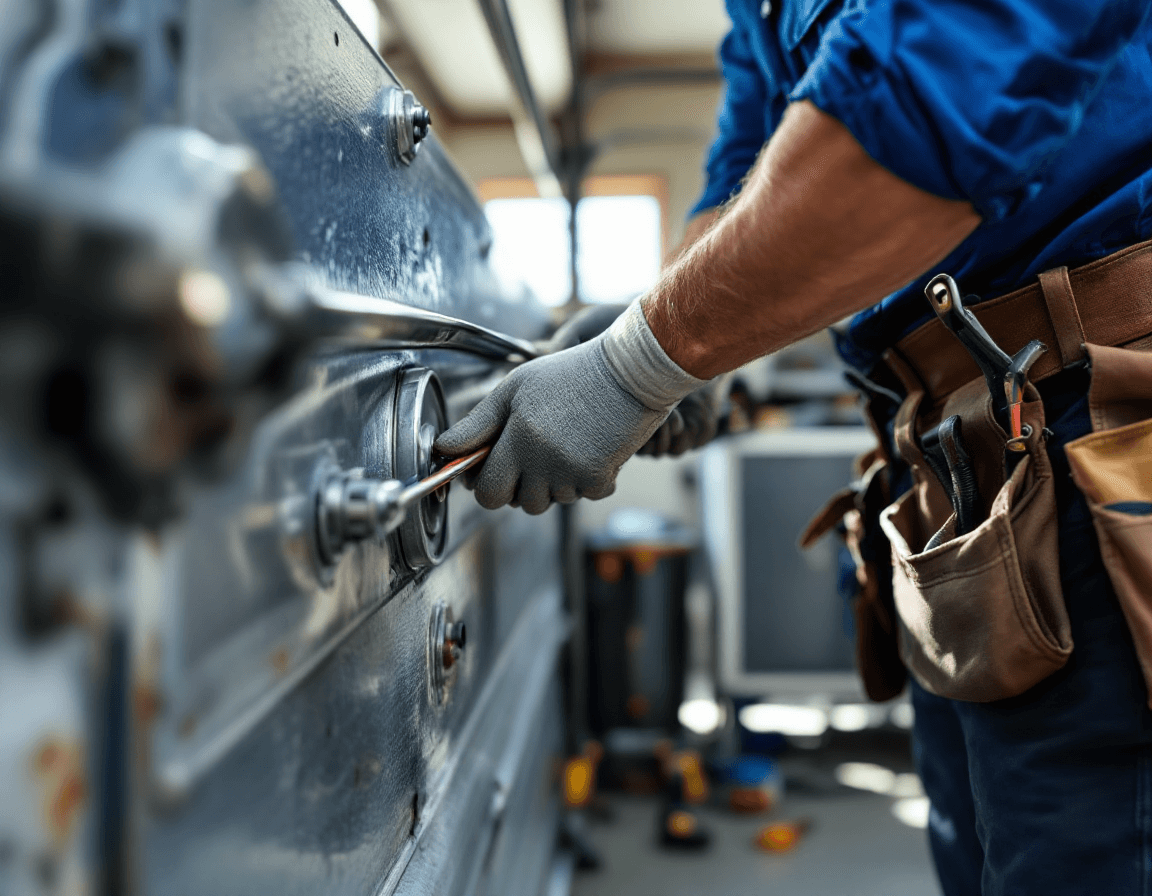
Garage Door Cable Replacement in SeaTac, WA is one of the repairs we see most often, and it usually begins with a sound homeowners don't forget: a sharp bang from the garage, then a door that sits crooked or won't move at all. Lift cables are thin steel ropes that wind onto a drum at each side of the door, and they carry the real weight of the panels while the springs do their work. When one cable fails, the door loses its balance, and the whole system starts fighting itself. Homes throughout SeaTac, from older tract houses near Angle Lake to newer builds closer to the main arterials, run into this problem regularly.
The Pacific Northwest adds its own pressure to a garage door system. Our winters bring long stretches of damp air, and the cool, wet months can leave the steel in cables and drums with surface rust that you won't notice from the driveway. Sudden cold snaps stiffen the metal and the lubricant, which makes the cable grip and release less smoothly. This page explains what usually goes wrong, what you can safely check yourself, and why cable work belongs in the hands of a licensed technician, along with what a typical job involves and what it generally costs.
Seattle Garage Door Fix is a licensed, bonded, and insured garage door company that serves more than 60 cities across the greater Seattle and Western Washington area, including SeaTac and the surrounding communities. We handle broken and frayed lift cables, cables that have jumped off the drum, and drum service as part of a single visit. The information below is written from a technician's point of view, so you can make an informed decision about your own door.
Why Lift Cables Wear Out Sooner in Damp Weather
A lift cable is made from many small steel strands twisted together, and every time the door opens and closes, those strands bend around the drum and the pulley. Over years, that bending fatigues the wire. Moisture speeds up the process because water gets trapped between the strands, where it can cause corrosion that you cannot see from the outside. A cable can look perfectly fine on its surface and still have a core of rust that gives way under load.
Cold weather compounds the problem in a subtle way. When temperatures drop quickly, the lubricant on the cable and the drum gets thick, and the door can feel heavier or noisier in the morning than it did the evening before. That extra resistance transfers stress onto the cable at the moment it is working hardest. Many homeowners in SeaTac notice their doors acting differently in late fall and early winter, and that seasonal change is often a sign that the cable is already weakened.
Garages in older neighborhoods also tend to sit on slab floors that hold moisture, and the humidity in an attached garage can run higher than people expect. Door hardware that spends years in that environment develops corrosion at contact points, including the cable ends that anchor to the bottom bracket. A tired cable under those conditions has less margin for error, and a failure can come with little warning.
Warning Signs That Your Cables Need Attention
Most cable problems announce themselves before the cable actually breaks, if you know what to look for. The door may rise unevenly, with one side climbing faster than the other, or it may stop partway up and need a push to finish. Some homeowners hear a grinding or popping noise at the top of the travel, which often comes from a drum that is no longer spooling the cable neatly. These symptoms do not always mean a cable is broken, but they are reasons to schedule an inspection before the situation gets worse.
Visual checks can reveal early damage. Look along the length of each cable for fraying, flattened spots, or small loose wire ends sticking out. Rust that shows up as orange or brown staining on the cable or drum is worth noting, especially if it appears near the bottom bracket. Keep in mind that you should only look at the cables while the door is closed and disconnected from the opener, and never while anyone is standing underneath the door.
- The door hangs crooked, lower on one side, or sits at an angle when closed.
- The door closes unevenly or binds on one side as it reaches the floor.
- Cables show visible fraying, flattened strands, or rust near the ends or drum.
- You hear a loud snap, followed by a door that will not lift or lower smoothly.
- The cable appears loose, bunched, or wrapped unevenly around the drum.
Reading the Drum: What a Cable Coming Off Looks Like
The drum is the grooved cylinder at the top corner of each side of the door, and it is designed to receive the cable in a tight, orderly spiral. When a cable slips off the drum, it usually does so because the door has been moved while the cable was loose, or because the drum itself has worn or been damaged. In many cases the cable will sit on the track or bunch up behind the drum rather than snapping outright. That situation can still be dangerous, because the door may suddenly drop or pull unevenly once the cable catches again.
A tangled cable is a different kind of problem. If the cable wraps over itself on the drum, the tension can kink individual strands, and the door will often refuse to lift past that point. Homeowners sometimes try to pull the cable back into place by hand, which is exactly the kind of attempt that leads to injury. A correctly seated drum and cable should look smooth and layered without any loops or crossovers.
Drum service is often part of the same visit because a worn drum can destroy a new cable in short order. Our technicians inspect the groove for wear, check the set screws or fasteners that hold the drum to the shaft, and look for any cracking in the drum body. A drum that spins unevenly or wobbles on the shaft will put uneven pressure on the cable. Addressing it during the same appointment prevents a repeat failure a few months later.
What to Do When a Cable Snaps
A snapped cable is one of the more alarming things a homeowner can experience, and the first priority is simply to keep everyone clear of the door. Do not stand under the door, and keep children and pets away from the area. If the door is partly open, do not attempt to lift it by hand or push it down with force, because the balance of the system has changed and the door can move unpredictably. Disconnect the opener by pulling the emergency release cord only if you can do so safely from a position outside the door's path, and then leave the door where it is.
Once the door is secured, avoid any temptation to splice the cable, tie it off, or stretch a replacement from memory. Garage door cables are rated for specific loads and must be matched to the door's weight, the drum size, and the spring system. A cable that is the wrong length or diameter will fail again, and a poorly seated cable can let the door drop. Call a licensed professional, describe what you heard and what you see, and let them determine whether the cable, drum, or spring assembly is responsible.
The most important point is that the springs are under extreme tension even when a cable has failed. Torsion springs in particular store enough energy to cause serious injury if they are released improperly. This is why cable replacement is never a do-it-yourself project for the average homeowner, no matter how handy you are with tools.
Torsion Versus Extension Springs and Why They Matter
Your garage door's cable job depends heavily on which spring system it uses. Torsion springs mount on a steel shaft above the door opening and wind up to counterbalance the door's weight. The cables run from the bottom bracket up to the drums, which are attached to the shaft at either end. Extension springs run along the horizontal tracks on each side, and the cables route through pulleys to hold the door in balance. Each system has its own geometry, and a cable repair must respect the way the springs and cables interact.
On many homes in the SeaTac area, you will find torsion systems on newer doors and extension systems on some older ones, though mixed setups are not unusual after a previous repair. Identifying the system matters because the technician must know how the tension is released and how the cable will be routed afterward. A cable replacement on an extension-spring door involves different safety steps than the same job on a torsion-spring door, and a qualified technician will know the difference immediately.
Homeowners sometimes ask whether they can replace just the cable and leave the springs alone. In many cases, a technician will recommend inspecting the springs at the same time, since a worn or fatigued spring can strain a new cable. Cable and spring work are connected, and treating them as separate problems can lead to a second visit. Your technician should explain the condition of both before doing any work.
How a Professional Replaces Lift Cables
A proper cable replacement follows a sequence that protects both the technician and the door. The first step is to secure the door and release the spring tension using the correct tools and procedures for that spring type. Only after the system is safe does the technician remove the old cable from the drum and the bottom bracket. Each step is performed in a specific order because the wrong sequence can cause the spring to unwind unexpectedly.
Once the old cable is off, the technician inspects the drum, pulleys, and bearings for wear, and looks at the track for bends or debris. The new cable is measured and cut to match the original length, and it is seated onto the drum carefully so that it winds evenly from the first turn. The cable is anchored at the bottom bracket and routed correctly through any pulleys. The system is then re-tensioned, and the door is tested through several full cycles.
Balance and alignment checks come last, because a new cable will only perform well if the door is tracking properly. The technician confirms that the door lifts evenly from both sides, that it stops at the correct height, and that the opener is not straining. Any loose hardware is tightened, and the homeowner is shown how the door should behave going forward. A well-done repair should leave the door moving quietly and level, without any binding or lean.
Typical Costs for Cable Work in SeaTac
For most cable replacements, our pricing falls in the range of $110 to $300. The final figure depends on the condition of the system and the scope of work that is needed to restore safe operation. A single cable on a straightforward door is typically at the lower end of that range, while a job that includes drum service, bottom bracket replacement, or a second cable can move the price higher. We will always explain what is included before any work begins, so you know what you are paying for.
Several factors shape the final cost. The size and weight of the door matter because heavier doors use heavier cables and stronger hardware. The type of spring system matters because it determines the procedures and tools needed. Access and the condition of the drum and bearings also affect the time required. If you have an older door with worn hardware, a technician may recommend replacing more than the cable to avoid a repeat visit.
Keep in mind that a low quote for a cable job is only useful if it reflects a complete and safe repair. Cheap cable work that skips drum inspection, spring checks, or proper balancing often fails within a short time and leads to additional expense. Ask what the quote includes, whether the drum is being inspected, and whether the door will be tested after the work is complete. A reputable company will answer those questions without hesitation.
Service Area Notes for SeaTac, Angle Lake, McMicken Heights, and Bow Lake
We regularly provide garage door cable service throughout SeaTac and the neighborhoods that surround it, including homes near Angle Lake, the McMicken Heights area, and properties close to Bow Lake. Homes in these areas reflect a mix of construction eras, from older single-story and split-level houses to newer homes with larger two-car garages. The condition of a door often depends on how long it has been in service and how much moisture its garage has been exposed to over the years. Our technicians are familiar with the common door layouts and hardware found in these neighborhoods.
Our service coverage includes the ZIP codes 98188 and 98198, along with other nearby communities in King County. Because SeaTac sits close to major transportation corridors and the airport, many residents work irregular schedules, and we work to fit appointments around those commitments where possible. Homes in the area also see frequent temperature changes and seasonal damp, which makes cable inspection a useful part of routine home maintenance. If you are unsure whether your neighborhood is within our service area, call us and we will confirm.
Whether your home is near the lake, tucked into a quieter residential street, or closer to the commercial corridors, the same principles apply to cable safety. A cable that has frayed, rusted, or slipped is a cable that needs professional attention. Our goal is to restore your door to safe and balanced operation, using the right parts and procedures for your specific system.
Simple Habits That Extend Cable Life
Although cables are a wear item, you can extend their life by keeping the rest of the door system in good condition. Schedule a yearly inspection with a licensed technician who can check the cables, drums, rollers, hinges, and springs together. Regular attention lets problems get caught while they are still minor, and it prevents the uneven loading that quietly stresses cables over time. Many homeowners find that an annual visit costs far less than a single emergency call.
At home, you can take a few reasonable steps. Keep the tracks clear of debris and make sure the rollers move freely, since binding rollers force extra strain onto the cables. Avoid using the opener to force a stuck door, and do not hang heavy items from the door or its hardware. If you notice a change in how the door sounds or moves, write it down and mention it at your next appointment, because a pattern is often more useful to a technician than a single observation.
Be careful about lubrication, since the right product matters. Lubricate the rollers, hinges, and track as recommended, but avoid spraying heavy oils or grease directly onto the cables, which can attract grit and accelerate wear. Your technician can recommend a product suited to your door and to the damp conditions common in the Puget Sound region. A little preventive attention goes a long way toward keeping the system balanced.
When a Cable Job Reveals Bigger Issues
Sometimes a cable replacement uncovers problems that were not part of the original complaint. A worn bottom bracket, a cracked drum, a bent track section, or a failing bearing can all show up once the door is opened up for service. These parts are connected to the cable system, and ignoring them can cause a new cable to fail prematurely. A good technician will tell you what they found and explain the options clearly, without pressure.
Repairs of this kind are typically prioritized by safety first, then by function, then by cosmetic concerns. A cracked drum or damaged bracket is a safety item and should be addressed promptly. A noisy roller or a slightly worn hinge may be something you can schedule for later. Your technician should separate what must be fixed now from what can wait, and give you a realistic sense of how each item affects the door.
If your door is aging and needs multiple repairs, it may also be worth discussing whether replacement parts or a broader upgrade makes sense. That decision depends on the door's condition, your budget, and how long you plan to stay in the home. Whatever you decide, insist on a clear written explanation of the work, and make sure the door is tested fully before you accept the repair.
Garage door cable work is a job for a licensed professional, not a weekend project, because the springs and cables store enough energy to cause serious harm. If your door has snapped a cable, slipped off its drum, hangs crooked, or binds as it closes, call Seattle Garage Door Fix at (888) 799-3819 to schedule an inspection. We serve SeaTac, Angle Lake, McMicken Heights, Bow Lake, and communities across King County, and we will walk you through what we find and what it will cost before any work begins.