
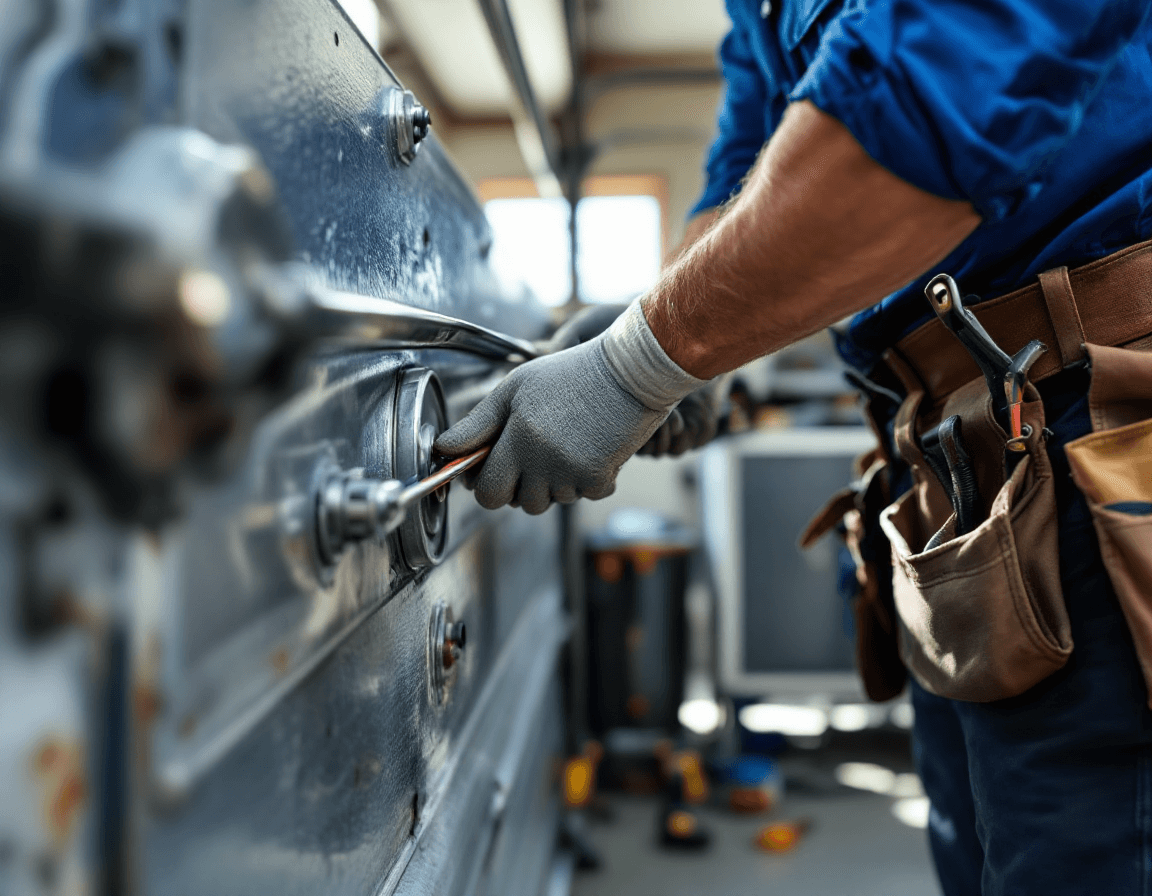
Garage door cable trouble in Normandy Park usually announces itself with a sharp crack from inside the garage, followed by a door that sits crooked or refuses to budge. Lift cables are thin steel ropes, but they carry a heavy share of the door's weight, and they work in a damp, salty environment that wears them down over time. Homes near Normandy Park Cove and along the Marine View corridor get plenty of marine air blowing in from Puget Sound, especially during west-wind storms. That combination makes cables one of the most predictable failure points on a local garage door.
This guide explains what a failed cable looks like, why it happens so often on the south end of King County, and what a proper replacement involves. Our crews serve Normandy Park and the surrounding communities, and our aim here is to help you decide whether a cable problem needs same-day attention or can safely wait a few days. Some symptoms look minor but signal a door that is one cycle away from dropping. Others are obvious from across the room. We will cover both so you know what to describe when you call.
Treat any cable problem as a safety issue first. A garage door is heavy, and when a cable lets go, the door can fall without warning. Keep vehicles, children, and pets clear of the opening, and do not stand beneath a door that is hanging unevenly. Never try to pull, tension, or unwind the springs yourself. The rest of this page is meant to help you understand the repair, not to turn you into your own repair crew.
What a Snapped Lift Cable Looks Like at Your Door
Most homeowners first notice a cable failure by sound. The snap is often described as a gunshot or a heavy metal clang, and it usually comes from the top corner of the door where the cable connects to the drum and the bottom bracket. Once a cable breaks, the door loses its balance and tends to drop on the broken side, which is why the panel may look tilted when you open the garage. In many cases the door will stop partway up or stay firmly shut because the remaining cable cannot carry the load on its own.
Look closely at the drum on the side where the snap occurred. A cable that has parted will often hang loose, sometimes coiled on the floor or caught in the track rollers. You may see a frayed end with separated strands, which is a sign of long-term wear rather than a single bad event. Some cables break cleanly at a point where they have been bent over a pulley or drum for years. Others come apart at the crimped sleeve where the cable is secured to the bottom bracket.
It is also important to know that a snapped cable rarely fails alone. Lift cables are installed in pairs and carry load together, so when one parts, the companion cable has been working much harder and may be close to its own end. Our technicians typically inspect both sides and the drum assembly before recommending a repair, because replacing only the broken cable can leave the other one in a similar condition.
Why Salt Air and Wet Winters Shorten Cable Life Near the Cove
Western Washington winters bring long stretches of rain, cool temperatures, and high humidity, and those conditions are hard on steel. Moisture settles into the twisted strands of a lift cable and begins a slow process of surface rust. Rust does not look dramatic at first, but it reduces the cross-section of each strand and creates tiny pits where fatigue cracks can start. Over a few seasons, a cable that looked fine in October can show orange staining and stiffness by spring.
Normandy Park's proximity to saltwater adds another layer of concern. Salt-laden air carries chloride particles inland, and those particles accelerate corrosion on exposed hardware, cable ends, and bottom brackets. Homes with garages that face the water or sit in the path of prevailing winds may see corrosion appear sooner than homes a few miles inland. Garages with minimal ventilation are especially vulnerable, since trapped moisture lingers on metal long after the rain stops.
Temperature swings matter too. A garage door that opens cold in the morning and warms up in the afternoon expands and contracts slightly, which puts repeated stress on cable fittings and drum grooves. Over years of these cycles, a cable that is already corroded may reach its breaking point during a routine cold snap. We often find that cable failures cluster after the first hard freeze or a long run of wet, gray weather, because the metal has been quietly weakening all season.
Reading the Warning Signs: Crooked Doors and Uneven Closing
Not every cable problem produces a loud noise. Many begin as small changes in how the door behaves, and catching them early can prevent a more serious failure. A door that once rose and fell smoothly may start to lean, stick on one side, or close with a noticeable bump. Homeowners often write these off as track alignment problems, but cable wear is a frequent cause, especially when the door seems to favor one side.
Here are the signs our technicians most often hear described when a cable is wearing out or has already partially failed:
- The door hangs visibly lower on one side when it is partway open
- The panels appear tilted or the top section sits unevenly against the header
- The door closes unevenly, touches the floor on one edge first, or binds in the tracks
- One bottom corner lifts higher than the other when the door is fully closed
- You see fraying, bird-caged strands, or orange rust on the cable itself
- The cable appears loose on the drum or has crossed over itself
If you notice any of these, avoid running the opener repeatedly to "test" the door. Continued use can pull a weakened cable off the drum or cause the other side to fail under the uneven load. Shut the door, leave it closed, and schedule an inspection. A short call now is far cheaper than a bent track, a damaged opener, or a door that drops while a car is parked beneath it.
The Sudden Stop: When the Door Won't Move After a Crack
One of the most common calls we hear begins with a loud snap, a jolt through the house, and then a garage door that sits halfway open and will not respond. This is usually the lift system doing exactly what it was designed to do under a failure condition. When a cable breaks, the door loses its lifting path, and the opener cannot safely move a door that has become unbalanced. Many openers have built-in protections that stop motion when they detect strain, which is why you may hear the motor hum without the door moving at all.
Do not force the door. Pushing, pulling, or using the emergency release to lift a door with a broken cable can cause it to drop unexpectedly or damage the remaining hardware. If the door is partially open and stuck, keep people and cars away from the opening and avoid reaching into the track. If you need to get a vehicle out, most families use a side entry door or wait for a technician rather than attempting a makeshift lift.
A stuck door also means the cable may have come off the drum rather than snapped outright. In that situation the cable is still intact but has jumped out of its groove, creating a tangled or misaligned condition. Our crews can usually identify the difference within a few minutes of inspection. A cable that has come off the drum often needs both reseating and a closer look at the drum itself, since the grooves may have been damaged by the slip.
How the Cable, Drum, and Spring System Works Together
A garage door is balanced by a set of springs, and the lift cables are the link between those springs and the door panels. As the door lowers, the cable wraps around a drum, and the spring tension is transferred through the drum to lift the door back up. The drums are tapered at one end, and the cable spirals across the drum surface in a precise pattern. That design lets the springs provide more lift when the door is closed and less when it is open, matching the weight of the door at every point in its travel.
Because the cable and drum work as a pair, a problem in one affects the other. A worn drum with damaged grooves can chew through a new cable quickly, and a frayed cable can wear grooves into a drum over time. Cables and drums are also tied to the spring system, so any repair involving cable tension or spring adjustment must be handled with care. This is the part of the job that carries the most risk, and it is why we insist on licensed professionals for any work that involves tension.
Understanding this relationship helps explain why a cable replacement is not always a simple swap. A technician may need to check the drum for wear, confirm that the cable seats properly on each groove, verify that the bottom bracket is secure, and evaluate whether the torsion or extension springs are balanced. Those checks take time, but they prevent a repeat failure a few months later.
What a Professional Cable Replacement Visit Typically Covers
A proper cable replacement follows a clear sequence, and homeowners benefit from knowing what to expect. The technician starts with a safety assessment, confirming that the door is secured and the spring system is under control before any hardware is touched. Next, the technician inspects both cables, both drums, the bottom brackets, the track alignment, and the rollers. If the door is out of balance, the technician will document the condition and explain how it affects the repair.
Once the inspection is complete, the old cable is removed, and a new cable of the correct gauge and length is installed. The new cable must match the original specification so that it seats properly in the drum grooves and carries the load evenly with its partner. The technician then verifies that both cables are seated, that the door tracks evenly, and that the door opens and closes without binding. The final step is a test cycle, observed closely, to make sure the door behaves normally from closed to fully open.
Replacement work is also a good time to ask about related wear. Rollers, hinges, and bottom brackets often show the same environmental stress as cables, and addressing them during the same visit can save a return trip. A thorough technician will tell you what was replaced, what was inspected but left in good condition, and what might need attention down the road. That kind of straightforward reporting is what you should expect from any licensed company.
Cost Expectations: Where the $110–$300 Range Fits
For most cable replacements, our pricing falls in the range of $110 to $300. Where a specific job lands within that range depends on several factors, including the number of cables that need replacing, the condition of the drum, the door's size and weight, and whether additional hardware is involved. A straightforward single-cable replacement on a standard residential door will typically sit toward the lower end, while a job that requires drum replacement, bracket repair, or work on a heavier door can move toward the upper end.
It helps to understand what the range does and does not include. A repair that addresses only the cable is often less costly than one that also corrects drum damage or replaces a cable pair on a door that has been running unevenly for a long time. If a technician finds a condition that changes the scope of the job, you should hear about it before work proceeds, along with a clear explanation of the reason. Our goal is to give you a realistic picture before anyone picks up a tool.
We recommend asking for a written estimate that lists each component and labor item. That way you can compare options and understand exactly what you are paying for. If you have an older door with mismatched hardware or a previous repair that used non-matching parts, mention it when you call, since those details can affect the time and materials required.
Cable Drum Service: Tangles, Grooves, and Slipped Cable
The cable drum is one of the most overlooked parts of the system, and it is also one of the most important. Drums are designed with precise spiral grooves that guide the cable as the door moves. When a cable comes off the drum, it can land between grooves, cross over itself, or wedge against the drum face. Left alone, that tangle can damage both the cable and the drum, and the repeated rubbing can wear grooves until the drum no longer holds the cable in place.
Drum service often includes cleaning out debris, checking for flattened or chipped grooves, confirming the set screws or fasteners are tight, and ensuring the drum sits square on the shaft. A worn drum may need replacement, especially if the grooves have been damaged by a previous slip. Our technicians examine the drum closely during every cable visit, because a new cable on a damaged drum is a repair that will not last. Catching drum wear early is one of the best ways to extend the life of the entire lift system.
Tangled cable is also a warning sign that the door was operating under uneven load. If you find a cable wrapped around the drum in a loose, overlapping pattern, do not try to untangle it by pulling or unwinding. The cable can snap back under tension and cause injury. Leave the tangle as it is and call a technician, who can safely relieve the load and reset the cable correctly.
Why Spring-Related Work Belongs in Licensed Hands
Cable replacement is closely tied to spring tension, and that connection is the reason we always recommend a licensed, bonded, and insured professional for this work. Garage door springs store a large amount of energy, and when they are released or adjusted incorrectly, they can cause serious injury. Even experienced homeowners who understand the basics can be hurt when a spring slips, a winding bar kicks, or a cable under tension is disturbed. There is no safe shortcut for this kind of repair.
Professional technicians use specialized tools, proper winding procedures, and safety restraints that homeowners rarely have. They confirm spring condition, check for signs of fatigue or rust, and set tension according to the door's weight and specifications. They also understand how cable and spring work together, so they can tell whether a broken cable is a symptom of a larger imbalance. Those checks are part of what you are paying for, and they protect your household as much as they protect the door.
If someone suggests a quick do-it-yourself cable fix, take that as a reason to slow down. A cable repair that looks simple on the surface can involve energy that is easy to underestimate. Calling a licensed company costs a little more upfront than a hardware-store attempt, but it avoids the much larger costs of injury, property damage, and a repeat failure caused by improper installation.
Protecting Cables Through Marine View Drive Weather
While cable failures cannot always be prevented, there are practical steps that help extend their life in a damp coastal climate. Keeping the garage as dry as possible is the first priority. Ventilation, a working weather seal along the bottom of the door, and prompt cleanup of any water tracked in from the driveway all reduce the moisture that reaches the hardware. In salt-influenced areas, periodic rinsing of exposed metal with fresh water can slow corrosion, though care should be taken to avoid spraying the opener or electrical components directly.
Regular visual checks make a real difference. Once or twice a year, look at the lift cables from a safe distance and note any orange staining, fraying, or stiffness. Watch the door's movement for changes in balance or noise, and pay attention to how it closes against the threshold. Small changes caught early are much easier to address than a cable that has already parted. If you notice something unusual, call for an inspection rather than waiting for the next weather event to make the decision for you.
- Keep the garage dry and ventilated, especially during wet months
- Check the bottom weather seal and replace it if it is cracked or flattened
- Wipe down exposed metal hardware after storms with salt spray or heavy rain
- Look at lift cables twice a year for rust, fraying, or loose fittings
- Watch for uneven movement, new noises, or a door that binds on one side
- Schedule a professional inspection after hard freezes or long wet stretches
Homeowners in Normandy Park who follow these habits often find their cables last longer and their doors run more quietly. Good maintenance does not replace professional service, but it helps you spot trouble sooner and gives your technician a clearer picture of the door's condition.
Garage door cable problems can escalate quickly, but most are manageable when addressed promptly by a licensed team. If your door has snapped a cable, is hanging crooked, closes unevenly, or has a cable tangled around the drum, stop using it and keep everyone clear of the opening. Call Seattle Garage Door Fix at (888) 799-3819 to schedule a safe inspection and a cable replacement that covers the full lift system, not just the broken part. Our team serves Normandy Park and the surrounding area, and we will walk you through the scope and pricing before any work begins.