
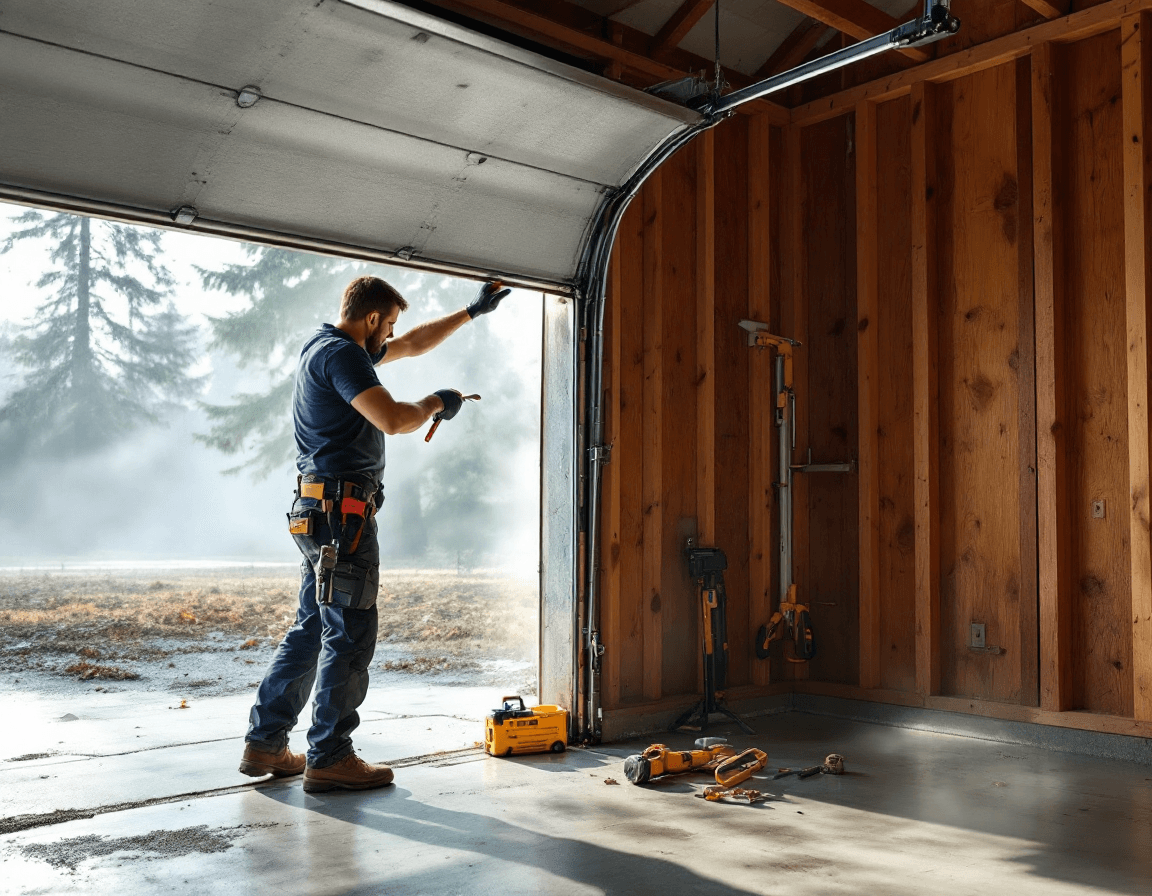
Off-track garage door repair in Normandy Park, WA is one of the most common calls we take from homeowners on the south end of King County, and it is rarely a sign that the door is finished. When a door jumps a track, rollers pop loose, or a panel starts leaning like it's trying to lie down, the cause is usually a single component that has shifted out of its path. Most of the time, a skilled technician can realign the door, re-seat the rollers, and straighten the track in a single visit. Our crews handle these calls throughout Normandy Park and the surrounding neighborhoods, and the goal is always to get your door moving safely again without replacing parts you don't need.
Living here means your garage door works harder than it might in drier parts of the country. Our rainy seasons bring long stretches of damp air, and the nearby Puget Sound shoreline adds a salty, humid film that settles on hardware over time. Add the occasional windstorm that rattles a door in its frame and the daily cycle of cold mornings and warm afternoons, and you get a set of conditions that slowly loosens fasteners and nudges track sections out of plumb. A door that ran smoothly through the summer can start binding by November without any single dramatic event.
This page explains what off-track problems look like, what you can safely do in the first few minutes, how a technician realigns a door, and what drives the cost. It also covers the local factors that make Normandy Park doors behave differently from those in other parts of the region. If your door is currently stuck or hanging crooked, read the safety section first, then call us at (888) 799-3819 so we can schedule someone to take a look.
How Normandy Park's Damp Winters Pull Doors Out of Line
Our winters tend to be long and wet rather than bitterly cold, and that difference matters for garage doors. Moisture soaks into wooden sections, causing them to swell and add weight, and it encourages steel track to surface rust at the joints and mounting brackets. Repeated wetting and drying cycles can also wear the nylon or steel rollers unevenly, so one roller may start to wobble while its neighbor still spins cleanly. Over several seasons, these small changes shift the door's path just enough that a roller eventually misses the track curve.
Wind is the second local factor. Homes near open water and in exposed stretches of the city can take strong gusts that push against a large door panel, especially when it's partly raised or sitting at the top of its travel. That lateral pressure can bend a track section or pull a bracket away from the wall, and once a track is out of plumb, every trip up and down places stress on the rollers. We often find that what looked like a sudden derailment was really weeks of slow drift accelerated by one hard storm.
Finally, the mild temperature swings common in western Washington can cause the metal in tracks and mounting hardware to expand and contract by small amounts. Individually these movements are tiny, but over time they can loosen lag bolts in drywall, sheathing, or masonry. If your garage wall is older or has been patched, the anchors may have less grip than they once did, and the track may start to lean outward under load.
Spotting the Early Warnings Before the Door Leaves the Track
Off-track failures almost never happen without notice. Usually, the door has been sending small signals for days or weeks, and recognizing them lets you avoid a stuck door during a rainstorm or a late-night emergency. The most obvious early sign is a noise change: a door that once made a steady rumble may start to chatter, squeal, or produce a sharp clack at one side of its travel. Pay attention to whether the sound comes from one corner or both, because a one-sided noise often points to a single roller or bracket.
Visual cues matter just as much. Look along the top edge of each door section and check whether the gap between the door and the vertical track is consistent from top to bottom. If one side is noticeably wider, or if the top panel seems to sit farther from the header on one end, the door is likely starting to shift. A small gap on the inside of the track is a common precursor, and if you notice a bright metal scrape on the track or a line of dust on the floor under one roller, that indicates the wheel is rubbing where it should roll.
Operational changes are also worth noting. A door that stops halfway, reverses for no clear reason, or needs a push to get past a particular spot may have a roller hanging on a seam or a track joint that has moved. Your opener may respond by straining, which can burn out the motor over time. If you see any of these patterns, stop using the opener and schedule a service visit before the problem worsens.
Immediate Steps That Keep You and Your Door Safe
When a door has come off the track, your first priority is keeping everyone clear of it. A door that is partly off its path can drop suddenly, and the springs that counterbalance its weight store far more energy than most people expect. Never stand beneath the door, never try to lift it by hand to force it back into place, and keep children and pets well away from the opening until a technician has confirmed it is stable. If the door is hanging crooked, treat it as unstable even if it appears to be holding.
Disconnecting the opener is the next step, but it needs to be done carefully. Pull the emergency release cord once to separate the trolley from the door, then lower the door manually only if it moves freely and evenly. If it resists or tilts, leave it where it is and do not pull harder. Many of the worst injuries we hear about involve homeowners who kept working on a door after it had already started to fail.
Here are the steps we recommend while you wait for service:
- Keep vehicles and people out of the garage bay and away from the door's path.
- Pull the emergency release only once, and only if you can do so without leaning under the door.
- Avoid using the opener until the door has been inspected, since a forced cycle can bend the track further.
- Take clear photos of the track, rollers, and gap so the technician knows what you saw.
- Note whether the problem started after a storm, a vehicle impact, or a noticeable noise.
How a Technician Realigns a Door Without Forcing It
Realigning a door is a methodical process, and the best technicians resist the urge to hammer or pry a track back into place. We start by checking whether the spring system is intact, because a broken spring can make a door look like it's off track when the real issue is a sudden loss of counterbalance. Spring and cable work is dangerous and must be performed by a licensed professional with proper tools, which is why we never recommend homeowners attempt it. Once the springs are confirmed safe, the technician evaluates the tracks, rollers, hinges, and brackets in sequence.
The door is then lifted or supported in a controlled way so that the rollers can be guided back onto the track without binding. Each vertical and horizontal track section is checked against a level and a plumb line, and the technician notes any section that is out of tolerance. Gentle adjustments to the track brackets bring the path back into alignment, and the bolts are re-tightened to hold the position under normal operating loads. A door that was pushed sideways by wind or impact often needs several small corrections rather than one large one.
Once the door is tracking straight by hand, the technician tests it through a full open and close cycle. We watch for rubbing, uneven movement, and any sign that a roller is riding on a seam. Only after the manual test passes do we reconnect the opener and check the limit settings. A door that looks aligned but is still stressing the opener needs another look, because the opener is often the first casualty of a misaligned path.
Re-Seating Popped Rollers and Replacing Worn Wheels
Rollers are the small wheels that ride inside the track, and when one pops out, the door will often lean toward that side or stop completely. In many cases the roller simply needs to be re-seated, which means guiding the wheel and its stem back into the track channel and confirming that it turns freely. A roller that pops out repeatedly is usually telling you something else: the track may be bent at that point, the bracket may be loose, or the roller itself may be worn or cracked. Simply forcing it back in without addressing the cause tends to produce a repeat call within weeks.
Roller type matters. Many homes in our area have steel rollers with sealed bearings, while others use nylon wheels that run more quietly but can deform under heat or heavy use. Both can develop flat spots or wobble after years of cycling, and a worn roller can pull a door sideways even when the track is straight. During service, we inspect the bearings, check for cracks, and look at the stem for bending. If a roller is damaged, replacing it is usually faster and more reliable than trying to repair it.
Homeowners sometimes ask whether they should lubricate rollers before a service visit. A light, appropriate lubricant applied to the bearings can help a roller turn smoothly, but spraying heavy grease into the track or onto the rollers can attract dust and grit that makes the problem worse. Ask your technician what they recommend for your door type, and avoid petroleum-based products that can degrade nylon wheels over time.
Bent, Dented, and Separated Track Sections Along the Shoreline Corridor
Track damage is the most stubborn part of an off-track repair, and it is also the most common in areas with exposed weather. A track section that has been bent by a strong wind, a fallen branch, or a bumped vehicle can hold a permanent kink even after the door appears to be running. Dents in the track curve are especially problematic because the rollers follow the curve closely, and even a small flaw can create a catch point that throws the door off its path. Our technicians measure the track at several points to determine whether it can be straightened or needs to be replaced.
Separated track sections are a different issue. These occur when a joint between two pieces of track pulls apart, often because the fasteners have loosened or the wall anchors have failed. Separation leaves a gap that rollers can catch on, and it can also allow the door to sag or twist when it reaches that point. Repairing a separated section usually involves re-fastening the joint with appropriate hardware, checking the wall structure for rot or damage, and verifying that the track is level across its full length.
Salt air and humidity near the water can accelerate corrosion on track brackets and hardware, particularly on older galvanized parts that have lost their coating. If you notice flaking, pitting, or a reddish-brown bloom on the track or brackets, mention it when you schedule service. Replacing corroded parts with better-protected hardware is often a smart investment in a coastal-influenced garage, and it can prevent a repeat derailment the following season.
When a Vehicle or Yard Equipment Has Hit the Door
Impact damage is one of the most dramatic causes of off-track doors, and it deserves careful attention. A car backing out too quickly, a delivery vehicle clipping the frame, or a lawn tractor striking a lower panel can all shift a door out of its path in an instant. Even when the visible damage looks minor, the force can bend the track, crack a roller bracket, or twist a section enough to cause binding. Many homeowners are surprised to learn that a door that seems fine after an impact can fail a day or two later as the stressed components settle.
After any impact, check the door from both inside and outside the garage. Look for dents or cracks in the panels, gaps around the top seal, and any bowing along the bottom edge. Also check the header and the wall around the track mounting points, since an impact can loosen anchors that are not visibly damaged. If the opener has been running against the damaged door, inspect the trolley and arm for signs of strain or misalignment.
If a vehicle has hit the door, it is worth taking photos and documenting the damage before any repairs begin. This record can help if you need to talk with an insurance provider, and it gives the technician a clear starting point. Do not attempt to straighten a heavily damaged section yourself, since a bent track or panel can store tension that releases suddenly when you disturb it.
What an Off-Track Visit Typically Costs Here
Most off-track repairs in our service area fall between $125 and $400, depending on what the technician finds. A simple re-seat of one or two rollers on a door that is otherwise in good condition sits at the lower end of that range. Straightening a bent track section, replacing several rollers, or correcting damage that involved a separated joint and wall anchors generally lands higher. Final pricing is based on the actual work needed, and our technicians will explain the options before any repair begins.
Several factors influence where a job falls within that range. The number of tracks affected, the type of rollers installed, the condition of the mounting hardware, and whether the door is a standard or specialty style all matter. A two-car door with heavy insulated panels takes more time to support and align than a single-car door of lighter construction, and that difference shows up in the final invoice. Access also matters: a cramped garage or a door that is difficult to reach can extend the visit.
Here are the common elements that shape the total cost of an off-track repair:
- The number of rollers that need re-seating or replacement.
- Whether one or both tracks require straightening or new sections.
- The condition of wall anchors, brackets, and fasteners at the track mounts.
- Any spring, cable, or drum concerns discovered during the inspection, which require separate licensed work.
- The size, weight, and insulation of the door panels.
If your technician finds a problem that falls outside the off-track scope, such as a broken spring, they will stop and explain the safety risk before quoting any additional work. We do not recommend homeowners attempt spring or cable repairs, and any work in those areas should be handled by a licensed professional.
Keeping Tracks Aligned Through Wind, Rain, and Salt Air
Preventive care is the most effective way to avoid repeat derailments, especially in a climate that shifts hardware gradually. Start by inspecting the tracks at least twice a year, ideally once before the wet season and once in late spring. Look for loose bolts, bent sections, rust blooms, and any gap that appears between the door and the track. Tightening visible fasteners is a reasonable homeowner task, but if you find a bent track or a loose anchor in the wall, call for service rather than trying to correct it yourself.
Keep the area around the tracks clear of debris, leaves, and standing water. Wet leaves can collect in the track channel and interfere with roller movement, and standing water can speed corrosion. Sweep the garage floor near the door threshold regularly, and make sure the weatherstripping along the bottom seal is intact so that wind-driven rain does not pool under the panels. Good drainage around the garage slab helps as well, since moisture that reaches the door base can work its way up into the hardware.
Consider the timing of your inspections, too. Many homeowners notice problems only after a storm, but a quick look a few days after a windy night can catch shifting before it becomes an off-track call. If you have a door that has been noisy or slightly crooked for a while, scheduling a tune-up before the next heavy rain can prevent a stuck door when you need it most.
Questions to Ask Before Hiring a Technician for Off-Track Work
Choosing the right technician is important because off-track repairs involve safety-critical components. Ask whether the company is licensed, bonded, and insured, and request proof if you are unsure. A reputable provider should be willing to explain what they plan to check, what the work will involve, and what might change the price. Be cautious of anyone who promises a fixed cost without seeing the door or who insists that a full replacement is required before inspecting the tracks and rollers.
Ask how the technician handles springs and cables. Because these components store significant energy, any work on them should be performed by a licensed professional with the right tools and training. A good technician will tell you clearly if a spring needs replacement, explain why, and avoid pressuring you into unnecessary work. You should also ask whether the technician will test the door through a full cycle and reconnect the opener before leaving.
Finally, ask about warranties and follow-up. A realignment or roller replacement should come with a clear statement of what is covered and for how long. If the technician found track damage that could not be fully corrected during the visit, ask for a written explanation of the remaining risk and any recommended next steps. Clear communication is one of the best indicators of a trustworthy service provider.
Off-track garage doors are stressful, but most can be safely returned to smooth operation with careful, methodical work. If your door in Normandy Park has come off the track, is hanging crooked, or has rollers that keep popping out, do not wait for the problem to worsen. Keep people and vehicles clear, avoid forcing the door, and call Seattle Garage Door Fix at (888) 799-3819 to schedule a licensed technician who can inspect, realign, and advise you on the safest path forward.