
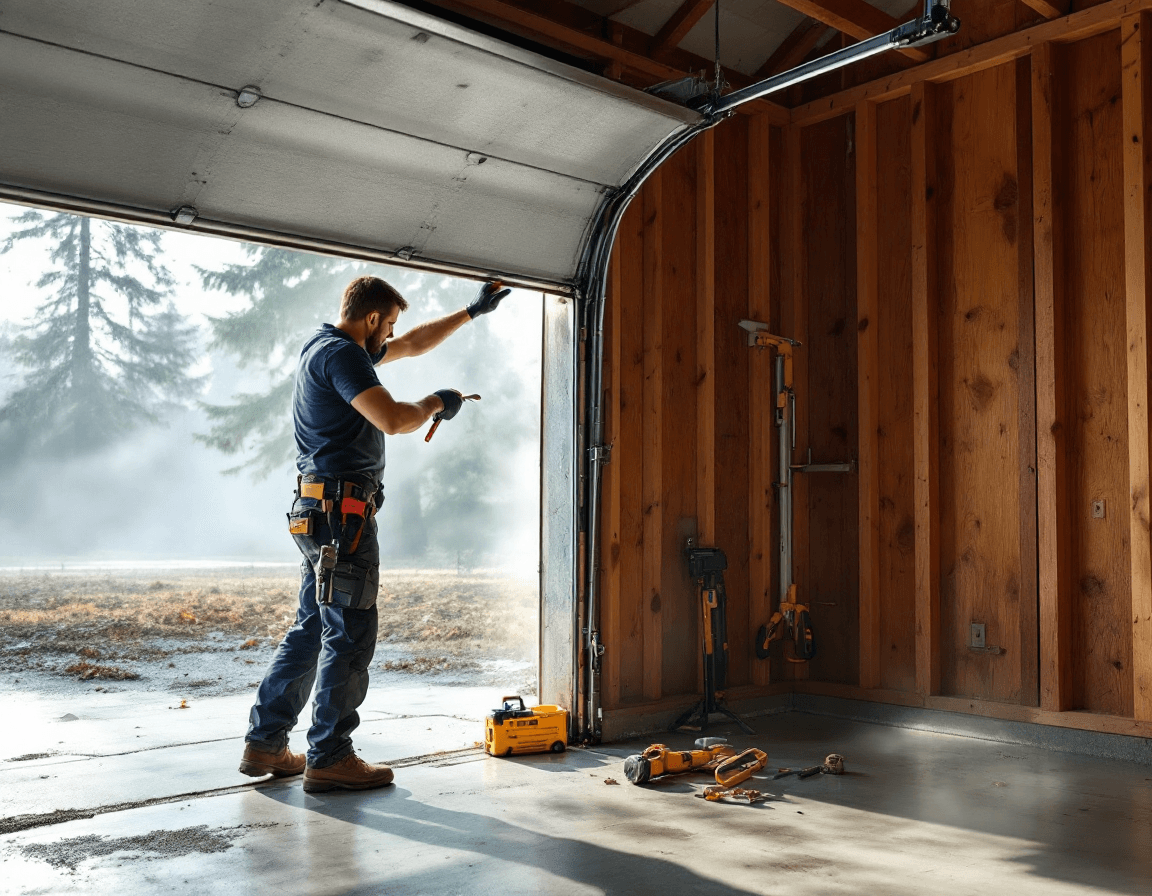
Off-track garage door repair in Des Moines, WA is one of the more urgent calls we take, because a door that has left its tracks can stop working altogether and may be unsafe to touch. Homes from Woodmont up the bluff to the streets near Redondo see this problem regularly, whether the door came off after a hard winter wind, a rolling vehicle bump, or simply years of wear. The good news is that many off-track doors can be returned to their tracks in a single visit, and the repair is often far less involved than homeowners fear. This page explains what causes doors to jump their tracks in our part of King County, how to recognize the warning signs, and what a proper repair looks like from start to finish.
Our technicians work throughout Des Moines and the wider South King County area, including the 98198 ZIP code, and we know that conditions here are not the same as in a dry inland town. Salt air drifting in from Puget Sound, long stretches of rain, and frequent gusts off the water all put extra stress on hardware that already moves through a lot of cycles every year. When a door comes off track, the cause is usually a combination of those factors rather than a single failure. Understanding that combination helps you decide whether to call for help right away or to keep the door closed until someone can come out.
If your door is currently off track, stop using it and keep everyone clear of the opening. Do not try to lift or push the door back into place by hand, because the springs and cables may still be carrying a lot of tension. The rest of this page walks through the details so you know what to expect, what you can safely check on your own, and when to call (888) 799-3819.
Why Doors Jump Their Tracks More Often Along the Sound
Garage doors are engineered to ride smoothly in a vertical track, guided by rollers that sit inside channels on each side. In Des Moines, the coastal environment gradually works against that precision. Moisture and salt residue collect on steel tracks and hinges, which can slow rollers and cause uneven movement from one side of the door to the other. When one side drags even slightly more than the other, the door begins to skew, and a skewed door is much more likely to pop a roller free at the top of its travel.
Wind is the second factor that shows up again and again. Open-water exposure near the marina and along the higher ground above the shoreline means storms can push against a large, flat panel with real force. A door that is already a little out of square can be nudged further off line during a gust, especially if the door is partially open or the bottom weatherseal has been pushed out of its channel. Once a roller slips out of the track even an inch, the weight of the door can pull it further out during the next cycle.
Finally, Des Moines homes tend to have a mix of older and newer garage doors, and the age of the hardware matters. Older track sections may have slightly loosened brackets or bolts that have worked themselves out over many seasons of expansion and contraction. Rollers with worn or cracked nylon tires are more likely to jump when the door hits a rough spot in the track. None of this is unusual, but it means that a door which seemed fine last year can become vulnerable to derailment after a particularly wet or windy winter.
Reading the Warning Signs Before the Door Leaves the Track
Most off-track failures do not happen all at once. The door usually gives you hints first, and noticing them early can save you from a more complicated repair. Watching how your door behaves when you operate it manually, or simply listening to the opener, will tell you a lot about what is going on inside the track.
Common early warning signs include:
- A grinding or scraping noise on one side of the door only, especially near the bottom of the track
- The door appearing higher on one side than the other when it is closed
- A visible gap between the top or side weatherseal and the track, wider on one edge
- Rollers that look like they are sitting at an angle instead of flat against the track
- The door pausing, jerking, or reversing partway through its travel
If you see any of these, avoid running the opener repeatedly to test the door. Repeated attempts can drive a roller further out of its channel or bend a track section that was only slightly misaligned. A short, careful visual inspection from inside the garage with the door closed and the power off is usually enough to decide whether a technician should be called the same day or within the next few days.
Woodmont and Redondo: Slope, Sand, and Salt Working Together
Several neighborhoods in and around Des Moines have driveways and garage approaches that sit on sloped grades, and that slope has a direct effect on how garage doors wear. Steeper driveways can cause a door to be installed with a slight lean or with tracks that are not perfectly plumb relative to the floor, especially where the slab has settled over time. Over the years, that small difference grows into uneven roller loading and a door that wants to drift to one side. Technicians often notice this pattern in homes near the Woodmont and Redondo areas, where the land drops toward the water.
Blowing sand and grit from beach access points and roadway shoulders can also work its way into the bottom of a track. A small pile of grit at the base of a track channel can cause a roller to bind, and the resulting jolt can push the door off line. Homeowners who keep their garage door open for long periods, or who have a lower garage threshold that collects debris, are particularly likely to see this. Sweeping the threshold and keeping the track channels free of grit is a simple habit that makes a noticeable difference.
Salt air is the quieter contributor. It accelerates corrosion on exposed steel brackets, bolts, and track fasteners, and corroded fasteners can loosen or fail under the stress of a door that is already slightly unbalanced. A technician who sees rust streaks around track mounting points is usually looking at a home where the door has been fighting the environment for a long time, and the repair will often include replacing hardware rather than simply reseating a roller.
What Happens When a Roller Pops Out of the Track
A roller is a small wheel, usually nylon or steel, mounted on a stem that rides inside the track. Its job is to carry the door smoothly up and down while the track holds the door in its vertical path. When a roller pops out, the door loses one of its guide points, and the weight of the panel shifts onto the remaining rollers and the track sections nearby. That extra load can bend the track, damage the roller stem, or pull the door further out of line.
In many cases, the roller can be re-seated by a technician who lifts the door in a controlled way, supports it properly, and guides the roller back into the track channel. The work requires an understanding of how the springs are holding the door's weight, because those springs must be treated with care. A roller that has been popped out repeatedly may have a worn stem or a cracked wheel, and those parts are usually replaced rather than reused. The technician checks the roller's condition, the track's alignment, and the condition of the hinge that connects the panels on that side.
It is important not to attempt a roller repair on your own if the door is still partially supported by springs or cables under tension. Even a seemingly simple reseating job can become dangerous if the door drops unexpectedly or if a spring releases during handling. Professional technicians use proper lifting and support methods to keep the door steady, and that is the main reason this kind of repair belongs in the hands of a trained crew.
Vehicle Strikes and Bent Track Sections
Backing a vehicle into a garage door, or having a delivery truck or car clip the bottom panel during a tight turn, is a common cause of derailment in busy residential areas. Impacts like these can bend the vertical track, separate a joint between track sections, or dent the door panel so that it no longer moves smoothly in its channels. The damage is not always visible from the outside, because a bent track may only look slightly off until you check it against a level or a straight edge.
After a vehicle strike, the first priority is safety. Keep people and pets away from the door, do not attempt to force it open or closed, and avoid using the opener until a technician has looked at it. If the impact also affected a wall, a light fixture, or the garage frame, the door may be resting against damaged structure, and that adds another reason to wait for professional assessment. Take photos of the damage for your records and for any insurance claim, because the documentation helps the technician and your insurer understand what happened.
A technician looking at impact damage will typically measure the track gaps, check the roller path, and inspect the panels for dents that interfere with movement. Sometimes a section can be straightened and re-secured. If the track is cracked, badly kinked, or separated at a joint that cannot be properly aligned, the affected section is replaced. Panel damage is evaluated separately, since a dented panel may still roll smoothly while also needing cosmetic or structural attention.
Safe First Steps Before a Technician Arrives
There are a few things you can safely do while you wait for help, and they can make the visit faster and less costly. The goal is to stabilize the situation, not to attempt the repair yourself. Think of these steps as a way to protect the door, the opener, and the people around it until a professional can take over.
- Keep the door closed if possible, and do not run the opener to test it.
- Pull the emergency release cord only if the door is closed, and understand that doing so disconnects the door from the opener, which makes the door heavier to handle manually.
- Keep children, pets, and vehicles clear of the garage opening and the area beneath the door.
- Take clear photos of the track, rollers, and any visible damage from a safe distance.
- Write down when the problem started and whether it followed a storm, a vehicle strike, or a noise you heard.
- Sweep the threshold and track channels of loose sand or debris, but do not force anything into the track.
Those steps are meant to reduce risk, not to substitute for expert work. If the door is leaning, if a spring looks loose or damaged, or if you can see cable fraying, step back and wait for a licensed technician. Lifting the door manually after an off-track event is one of the more common ways homeowners get hurt, and it is entirely avoidable.
How a Technician Realigns and Re-Seats a Door
A typical off-track service begins with a full inspection rather than an immediate lift. The technician checks both tracks for straightness, looks at the rollers and their stems, reviews the hinges and brackets, and confirms that the springs and cables are intact. That initial look helps determine whether the cause was a simple roller pop, a loosened bracket, or damage that requires parts.
Once the assessment is complete, the technician secures the door and begins guiding it back into the track. Rollers are re-seated one at a time, and the door is checked for square at several points along its travel. The goal is to make sure the door rides evenly on both sides without any binding, rubbing, or unusual sound. A door that moves smoothly by hand and then runs well under opener power is generally a sign that the realignment has held.
The repair is then tested through several full cycles, including open, close, and partial stops. The technician also checks the safety reversal system, because a door that has been off track sometimes has sensors or auto-reverse settings that need to be verified. Finally, the homeowner receives a clear explanation of what was done, what was replaced if anything, and what to watch for in the coming weeks.
Straightening Track Sections Without Replacing Everything
Many off-track calls involve a track that is only slightly bent, and in those cases a skilled technician can often straighten the affected section rather than replacing the whole assembly. Straightening involves gently correcting the bend, re-securing the mounting brackets, and confirming with a level that the track is plumb and parallel to its partner. The work needs patience and proper tools, because forcing a track too far can crack the steel or cause a new kink.
Track sections that are cracked, split at a seam, or badly deformed usually need replacement. A cracked section will not hold its alignment, and a deformed one can cause rollers to bind or jump repeatedly. Replacing a section is more involved than straightening, but it is often the more reliable fix when the damage is significant. The technician will explain which option applies to your door based on what they measure and see.
Track alignment also depends on the mounting points on the wall and ceiling. If those anchors have loosened, a track may look bent when it is actually being pulled out of position by a worn bracket. Tightening or replacing those anchors is a common part of a thorough realignment, and it helps prevent the same problem from returning after the next storm.
What the $125–$400 Range Usually Covers
Most off-track repairs we perform fall within a range of about $125 to $400, depending on what the technician finds during the visit. Simple cases, such as a single roller that popped out and was re-seated without damage, tend to sit at the lower end of that range. Jobs that involve straightening a track section, replacing a few rollers, or tightening and replacing mounting brackets usually fall in the middle. Repairs that require replacing a bent or cracked track section, or several components on the same side of the door, may reach the higher end.
Several factors influence where a particular repair lands. The door's size and weight matter, as do the type of track and the number of rollers involved. Damage from a vehicle strike may require more labor than a simple derailment caused by wear. The technician should always explain the findings before proceeding with any additional parts, so you know what you are approving and why.
These figures describe what most off-track repairs cost, but every door is different, and an accurate quote depends on an in-person inspection. If you call (888) 799-3819, the team can help you understand what to expect for your specific situation and schedule a visit that fits your timing.
Why Spring and Cable Work Belongs to a Licensed Professional
It is worth stressing that springs and cables are the most dangerous components of any garage door system. Torsion springs and extension springs store a large amount of energy, and cables carry the door's tension as it moves. When a door comes off track, these parts may be under load even though the door looks stationary. Attempting to adjust, loosen, or replace them without proper training and equipment can result in serious injury.
For that reason, we recommend that any spring work, cable work, or tension adjustment be handled by a licensed and insured professional. Our technicians are licensed, bonded, and insured, and they follow established safety procedures whenever a door is supported, lifted, or serviced near its springs. If a technician tells you that a spring or cable needs attention, that is a signal to let them do the work rather than attempting it yourself.
Homeowners sometimes ask whether they can tighten a spring on their own to save money. Our advice is firm: do not attempt it. The savings are rarely worth the risk, and an improperly adjusted spring can cause the door to fail again soon after the repair. A proper inspection by a licensed professional protects both your door and your household.
Keeping a Realigned Door Square Through Puget Sound Weather
Once a door has been returned to its track, the best way to keep it there is consistent maintenance, especially during the wet months that define much of the year in Des Moines. Moisture and salt do most of their damage slowly, so a simple seasonal routine can prevent many repeat calls. Cleaning the track channels, checking the rollers, and looking at the hardware for early signs of rust all help the door stay balanced.
A practical maintenance rhythm for coastal homes includes a few regular habits:
- Wipe down the tracks and rollers with a dry cloth every few months to remove salt and grit
- Apply a garage-door-safe lubricant to the hinges and roller stems, not to the track surface
- Check that all track brackets and mounting bolts are snug, but do not overtighten them
- Look at the weatherseal along the bottom of the door and replace it if it is torn or pulled out of its channel
- Watch the door's movement during the first few cycles each season and note any new sounds or pauses
If you notice that the door has started to drift again after a storm or a windy stretch, schedule an inspection before the problem worsens. Early attention is almost always less expensive and less stressful than waiting for a full derailment. A technician can check whether the cause is a worn roller, a loosened bracket, or a track that has shifted slightly over time.
Keeping your door square also protects the opener. When a door binds or rides unevenly, the opener works harder, and that extra strain can shorten its life. A balanced door is quieter, safer, and easier on every component connected to it.
If your garage door has come off track or is grinding, binding, or sitting crooked in its frame, do not wait for it to fail completely. Call Seattle Garage Door Fix at (888) 799-3819 to schedule an off-track repair in Des Moines, WA, and let a licensed, insured technician inspect the door, realign the rollers, and check the track so you can use your garage safely again.