
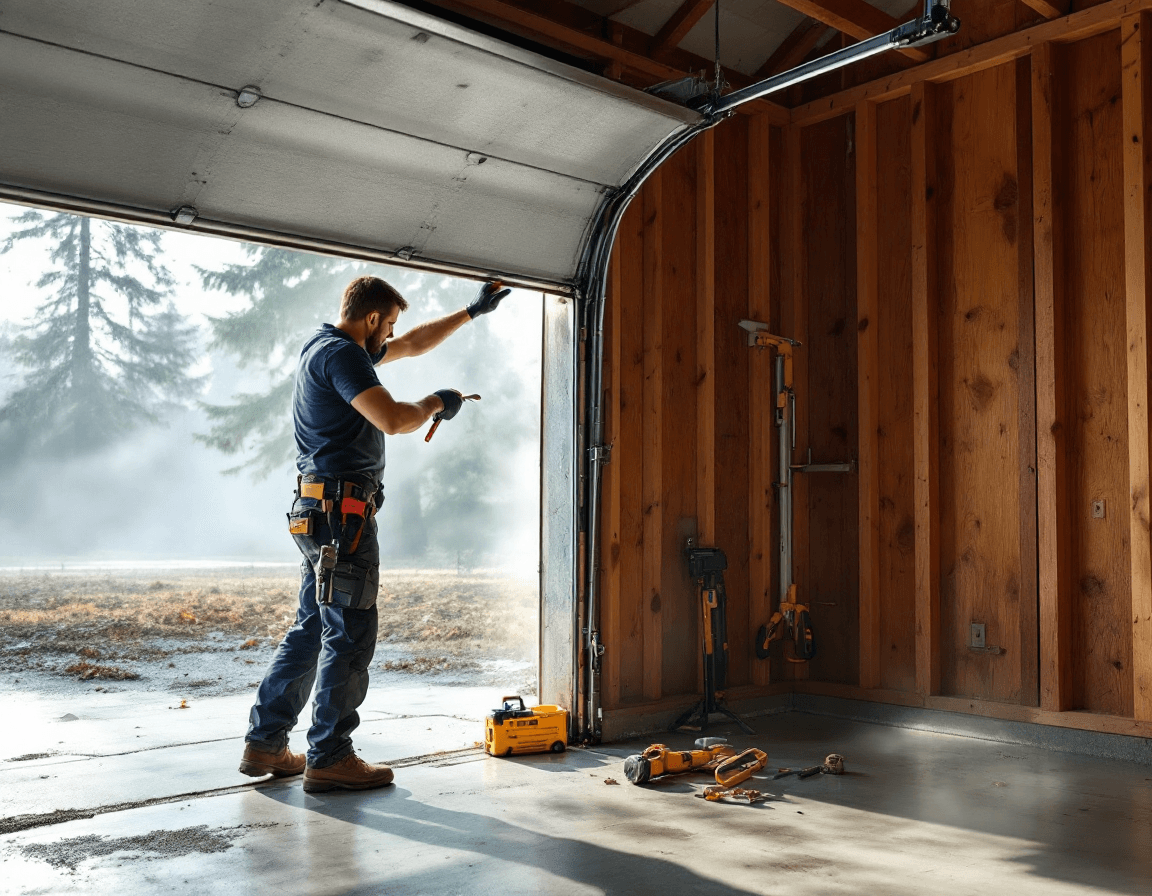
Off-Track Garage Door Repair in Kent, WA is one of the most frequent reasons homeowners call us, and it often starts with a sound that seems harmless: a dull bump, a grinding pause partway up, or a door that suddenly sits a little crooked. A garage door that has come off its track, or is close to doing so, is not something to ignore. The panels are heavy, the springs store a lot of energy, and a door that is binding or hanging unevenly can fail completely without much warning. Understanding what is happening mechanically will help you decide whether you can safely take a first look yourself or whether you should call a licensed technician right away.
Kent homes sit in a part of King County where wet winters, humid spring mornings, and occasional hard freezes all work against a garage door's moving parts. Over time, those conditions loosen fasteners, dry out lubricant, and stress the hardware that keeps each roller riding in its channel. Many homes around Kent Station, the East Hill neighborhoods, and the streets near Panther Lake have driveways that slope, garages that get used as workshops, and daily traffic that includes kids on bikes and delivery vans. All of that adds up to a door that gets more wear than the manufacturer's brochure might suggest. This page explains the common signs, the reasons doors leave their tracks, the steps a professional takes, and how to keep your door tracking true for years.
Spotting a Door That Has Quietly Slipped Out of Line
Most off-track problems do not begin with a dramatic failure. Instead, a door often gives small hints for days or weeks before a roller jumps free. You might notice that one side seems to lag behind the other when the door opens, or that the bottom seal is pressing harder against the floor on one end than the other. Some homeowners see a thin dark gap between the top of the door and the header, or a panel that no longer lines up cleanly with its neighbor. These are signs that the door is no longer traveling straight along both tracks.
Listen as well as look. A squeal or scrape that changes pitch as the door climbs usually means a roller is riding against the edge of the track instead of rolling inside it. A repeated thump near the top or bottom of the travel can point to a roller that is partly seated or a track section that has shifted slightly. When these sounds appear alongside a visible gap or a crooked panel, the door is probably close to coming off altogether. Catching the problem at this stage often means a straightforward realignment rather than a more involved repair.
Pay attention to how the door behaves when you operate it manually, but only after the opener is disconnected and only if the door is closed and you are standing clear. A door that feels heavy on one side, catches at the same spot every time, or refuses to move in either direction is telling you that something is binding. Write down what you observed, including the time of day and recent weather, because that information helps a technician narrow down the cause quickly.
What Actually Happens When a Roller Pops Free
To understand off-track repair, it helps to picture how a sectional door travels. Each panel is connected to the next by hinges, and each side of the door is supported by rollers that move inside a vertical track, curve through a radius at the top, and continue along a horizontal track near the ceiling. The rollers are small but carry a lot of load. When one slips out of its channel, the panel it supports can no longer move freely, and the weight shifts to the other rollers and to the track itself.
A roller can leave the track for several reasons. A worn or cracked roller stem may deform under load. A track section that has been bent slightly outward creates a gap wide enough for the roller to escape. Loose mounting brackets can let the track drift away from the door's path, and a missing or damaged bracket can allow the whole assembly to flex. Once a roller pops out, it often hits the track edge and deforms it further, which is why a single off-track event can turn into a larger repair if the door keeps running.
The good news is that many off-track situations are fixable without replacing major parts. A skilled technician typically inspects every roller, checks each track bracket, and confirms the header and vertical runs are plumb and level. If the rollers and brackets are sound, the work may involve re-seating the roller, tightening hardware, and carefully bringing the track back to its proper profile. Where a roller stem or track section is damaged, the technician will replace only what is needed to restore smooth travel.
Kent's Damp Winters and the Hidden Stress on Tracks
Western Washington's weather is kind to lawns and hard on hardware. Kent's winters bring long stretches of rain, and that moisture finds its way into door hinges, roller bearings, and the metal of the tracks themselves. Steel tracks can develop surface rust in the spots where water pools or where the protective finish has been scratched. Rust does not just look bad; it roughens the surface a roller must roll across, which increases friction and can slowly push a roller toward the track edge.
Temperature swings add another layer of stress. A cold snap can stiffen old grease and make the rollers drag, while a warm afternoon can soften the lubricant and leave it dripping onto the floor. Metal expands and contracts with temperature, so a track that was perfectly aligned in August may sit a fraction of an inch differently in January. Those small movements, repeated over many seasons, can loosen fasteners and allow the track to shift.
Humidity matters too, particularly in garages that are not well ventilated. Wood trim, door frames, and some older header boards can swell during wet months and then shrink again in drier weather. When the structure around the door moves, the track brackets that are anchored to it can move as well. If you notice that your door tracks well in summer but binds during the rainy season, the cause may be environmental rather than mechanical, and a technician can check whether the mounting surfaces need reinforcement or a different bracket layout.
Vehicle Strikes, Backing Accidents, and Bent Track Sections
Not every off-track problem comes from wear. Garage doors in busy driveways and on shared lots are sometimes struck by vehicles, from a bumped bumper while backing out to a more serious collision with a delivery truck. Even a glancing impact can bend a track section, dent a panel, or knock a roller out of its channel. The damage is not always visible at first, because a track can be bent just enough to bind without looking obviously crooked.
If your door has been hit, look for a bulge or ripple in the track's vertical run, a gap where two track sections meet, or a horizontal section that no longer sits level with the other side. Check the header bracket and the hardware connecting the track to the wall, because these often take the force of an impact and can work loose. Panels may show creases or a shifted hinge, and the weatherstripping may have pulled away from the bottom edge. Photograph what you see before anything is moved, since this documentation can be useful for insurance or for a property manager.
Do not attempt to straighten a bent track yourself with a hammer or pry bar. Track steel is thinner than most people expect, and forcing it can crack the metal or throw the door further out of alignment. A licensed technician has the right tools to assess how far the track has moved, whether the damage is confined to one section, and whether the springs or cables have been affected. If the impact also disturbed the spring system or cable drums, that is a more serious situation that should be handled only by a professional.
Safety Rules for the First Ten Minutes
When a garage door comes off its track, the first priority is keeping people and pets safe. The springs on a residential door are under high tension even when the door appears still, and the panels can shift or drop unexpectedly. Before you do anything else, keep everyone out of the garage and away from the door's path, including the area directly beneath the bottom panel and the spaces near the side tracks. Children should be kept well clear, and vehicles should not be parked in a way that forces anyone to stand under a loose door.
If the opener is still connected, disengage it using the emergency release cord, which is usually a red handle hanging from the trolley. Once disengaged, the door should be operated only by hand and only if it is closed and stable. Do not try to lift a door that is hanging crooked or partly off its track, because the uneven load can cause panels to pull away or the cable to slip. If the door is open and off track, leave it in place and call for help rather than attempting to guide it back in.
Keep these basic safety habits in mind while you wait for a technician:
- Do not stand or walk under a door that is off track, binding, or hanging unevenly.
- Do not attempt to adjust springs, cables, or spring-tensioning hardware, even if you have seen it done on video.
- Do not use a hammer, pry bar, or clamp to force a track back into shape.
- Keep the opener disconnected until a professional confirms the door is safe to operate.
- Take photos of the track, rollers, and cables so the technician knows exactly what you are seeing.
These precautions are not overly cautious. Garage door springs and cables are among the most hazardous components in an ordinary home, and an error during an off-track repair can injure someone quickly.
How a Technician Realigns a Door Step by Step
A professional off-track repair starts with a full inspection rather than an immediate fix. The technician will confirm that the springs and cables are intact and that the drums are holding the cable correctly, because a door cannot be safely realigned if its lifting system has failed. Next, the rollers are checked one by one for flat spots, cracked stems, or ball bearings that have seized. The track is then examined from top to bottom, including the radius curve at the top corner, the vertical run, the horizontal section, and every bracket that anchors it to the wall and ceiling.
Once the inspection is complete, the technician typically starts by seating each roller fully in its channel and tightening the hardware that holds the track in place. If the track has a small bend, it may be carefully brought back into profile with specialized tools that apply controlled pressure rather than brute force. Panels are then checked for squareness, the door's top and sides are measured for level, and the travel is tested slowly through its full range. The technician will watch for any binding, listen for scraping, and confirm that the door returns to the same position each time it closes.
Finally, a good technician will explain what was done and what, if anything, still needs attention. Some doors need lubrication on the rollers and hinges, while others need a bracket replaced or a section of track swapped out. The goal is a door that tracks smoothly, closes evenly against the weatherstripping, and operates without the opener straining. A brief test cycle with the opener reconnected confirms the repair under real operating conditions.
Typical Costs and What Shapes the Final Bill
Most off-track repairs fall within a range of $125 to $400, depending on what the inspection reveals. A straightforward re-seating of one or two rollers and a bracket tightening typically sits at the lower end, while a door with multiple damaged rollers, a bent track section, or a loosened header bracket will usually cost more. The final price depends on the number of components involved, how accessible the door is, and whether replacement parts are required. Because every door is different, the most accurate estimate comes from an on-site assessment.
Several factors tend to push the cost up. A track that has been bent or separated may require replacement of a full section rather than a simple adjustment. Rollers that have worn through their nylon or steel wheels usually need to be replaced in sets, since mismatched rollers can cause the door to track unevenly. If a vehicle impact has damaged a panel or hinge, the repair scope expands. Doors with heavier insulated panels or unusual track configurations may also require more time to realign safely.
When you request a quote, ask the technician to explain each line item and to identify which parts are worn and which are simply out of position. A reputable service provider should be able to tell you what needs to be done now, what can wait, and what signs to watch for going forward. Be cautious of any estimate that promises a dramatic price for an unclear problem without an inspection, because off-track conditions can mask underlying spring or cable issues that require a different level of work.
When Off-Track Trouble Points to Cable or Spring Work
Sometimes a door that appears to be off track is actually signaling a problem in its lifting system. A cable that has frayed, slipped off its drum, or stretched unevenly will pull one side of the door higher than the other, which can drag rollers out of the track. Similarly, a spring that has broken or lost tension can leave the door heavy and unbalanced, causing it to jerk, tilt, or fall suddenly when the opener engages. If the door tilts when opened, or if one side seems to rise faster than the other, the cable and spring system should be examined before the track is adjusted.
These components carry real danger. Torsion springs and extension springs are stored under enough tension to cause serious injury if released improperly, and cable drums can unwind violently when a cable fails. Spring replacement, cable replacement, and any adjustment to spring tension should be performed only by a licensed, trained professional who has the tools and procedures to do it safely. Homeowners should never attempt to wind a torsion spring, remove a spring from its shaft, or work on a cable that is under load.
If your technician finds that the off-track event was caused by a broken spring or a damaged cable, they will explain the repair scope and the associated costs clearly before proceeding. Replacing a spring or cable is a separate service from realigning rollers, and it is important to understand which one your door needs. A complete inspection protects both your household and the long-term reliability of your door.
Neighborhood Notes: Kent Station, East Hill, and Panther Lake Homes
Kent's neighborhoods vary in age, lot size, and garage configuration, and those differences shape the kinds of off-track problems we see. Homes near Kent Station and the downtown core often include attached garages in older subdivisions, where the header space above the door may be tighter and the track runs closer to nearby walls or ceiling joists. In these layouts, a track that has shifted even slightly can rub against framing and create binding that homeowners mistake for a worn roller. Careful measurement of the header and side clearances is often the key to a lasting fix.
East Hill residents may notice that their driveways and garage approaches have a noticeable grade. A sloped driveway can make a door feel heavier on one side as it travels, particularly when the garage floor is not perfectly level with the surrounding pavement. Over time, that uneven loading can stress the rollers on the lower side and pull the track slightly out of plumb. Technicians working in these areas pay close attention to floor level and to the vertical alignment of both tracks, since a door can appear straight from the outside while still running unevenly inside.
Homes near Panther Lake often sit on lots with mature trees and more shade, which can keep garage surfaces damp for longer stretches in the wet months. Moisture trapped near the bottom of the door can speed up corrosion on the track's lower brackets and on the floor anchors. Regular wiping of the lower track and checking the bracket hardware during seasonal changes helps reduce the chance of an off-track event caused by loosening or rust. Wherever you live in Kent, your garage's microclimate, sun exposure, and driveway setup all influence how your door behaves.
Keeping Doors Tracking True Through Western Washington Seasons
Preventing off-track problems is much easier than repairing them after a roller has jumped the rail. A simple seasonal routine can catch small issues before they become binding or derailment. Start by visually inspecting the tracks every few months, looking for dents, gaps, loose bolts, or rust spots. Check that the bracket fasteners are snug, but avoid overtightening them, since that can distort the track. Keep the area around the bottom track clear of debris, which can get caught in the rollers and cause uneven travel.
Lubrication matters, but the right product matters more. Use a silicone-based or lithium-based lubricant on the rollers, hinges, and track surfaces, and avoid heavy grease that attracts dirt and stiffens in cold weather. Wipe away excess lubricant so it does not drip onto the floor or collect grit. Lubricating the track itself is generally discouraged, because it can attract dirt that gums up the rollers, so focus on the moving parts and the hinge points instead.
Pay attention to the weather as well. Before the heavy rain season, make sure the weatherstripping along the bottom and sides is intact so water does not seep into the track area and pool against the brackets. During drier months, check that the door still closes evenly and that the gaps around the perimeter look consistent. If you notice a change in how the door sounds or moves, schedule an inspection rather than waiting for a full failure. Early attention is the most reliable way to keep your door tracking true year after year.
Service Coverage Across Kent and Nearby ZIP Codes
We provide off-track garage door repair across Kent and the surrounding communities, including neighborhoods served by ZIP codes 98030, 98031, 98032, and 98042. Whether your home is near the commercial corridors, on a quieter residential street, or in one of the hillside areas with steeper driveways, the same inspection and realignment process applies. Our technicians are licensed, bonded, and insured, and they bring the tools needed to assess track, roller, and bracket conditions on site. Every repair begins with a careful look at the full door system, because an off-track symptom can have more than one cause.
If your door is currently off its track, the most important step is to call for help before attempting any repair yourself. A technician can usually confirm within a single visit whether the problem is limited to rollers and track alignment or whether cable, spring, or panel damage is also involved. We will explain what we find in plain terms and give you a clear picture of your options. Our goal is to restore smooth, quiet operation while keeping your household safe throughout the process.
Off-track trouble rarely fixes itself, and a door that is partly derailed can get worse with every cycle. If your garage door is binding, crooked, jammed, or showing a gap along the track, contact Seattle Garage Door Fix today at (888) 799-3819. Our team serves Kent and the surrounding area, and we can schedule a licensed technician to inspect your door, realign the track, and get your garage working safely again.