
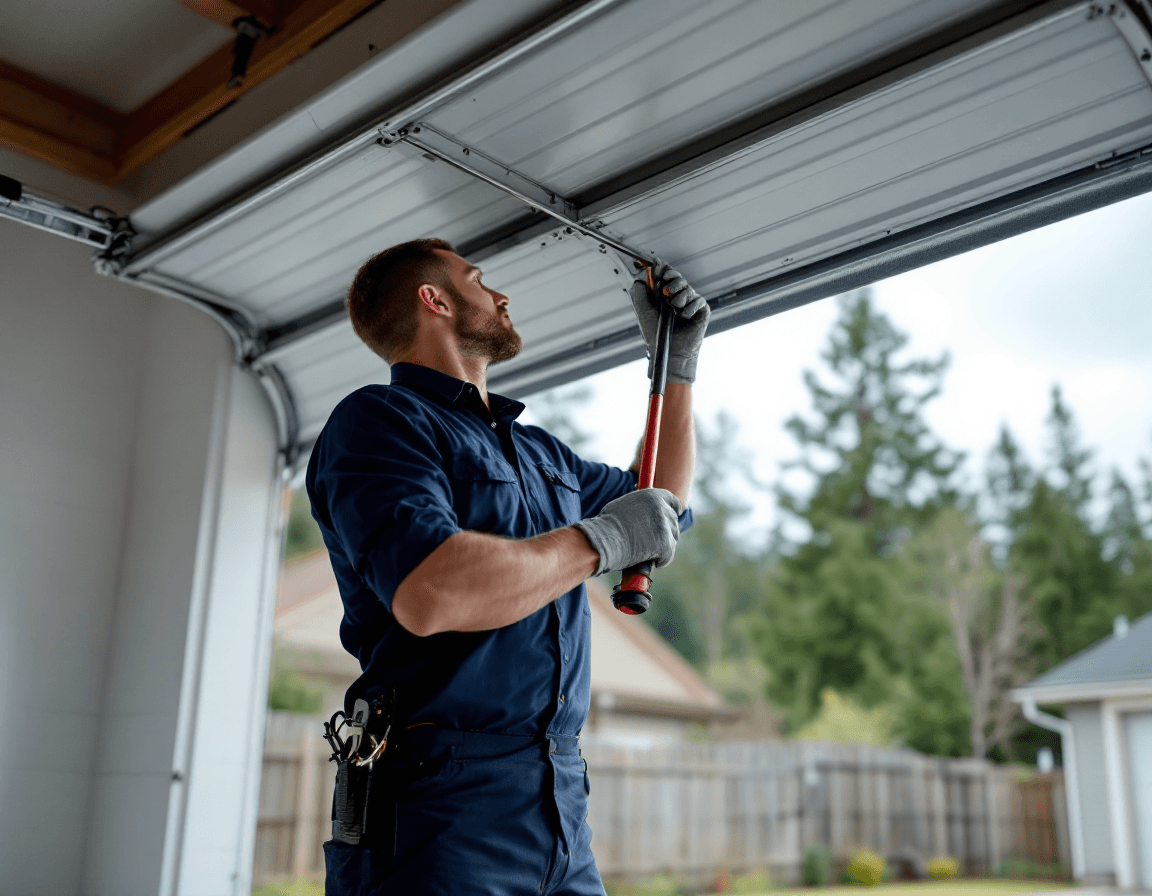
Garage Door Spring Replacement in Kent, WA is one of the most common repairs we handle across the Green River Valley, and for good reason. The springs above your garage door carry most of its weight, and they work under constant tension every time the door opens and closes. When one fails, the door often stops working altogether, and it can happen without much warning. This page explains what a spring does, how to recognize trouble in Kent homes, what a proper replacement involves, and why this job belongs in the hands of a licensed technician.
Kent sits in a low, damp corner of King County, and that environment is hard on garage hardware. Winter rain soaks into driveways and seeps into garages through the bottom seal, while cold snaps can make metal contract overnight. Those temperature swings shift the tension in a spring by small amounts that add up over a season. Many homeowners around Kent Station, East Hill, and the neighborhoods near Panther Lake first notice a problem on a cold morning when the door suddenly feels heavier than it did the week before.
This guide is written to help you make good decisions. You will find plain explanations of the symptoms we see most, a clear look at torsion and extension springs, notes on high-cycle options, and an honest description of what a balancing visit includes. We also cover the price range we typically see for most spring replacements, which runs from $180 to $450 depending on the specifics of the door. If anything here sounds urgent, call us at (888) 799-3819 and we will talk through what you are seeing.
Why Kent Garages Put Springs Under Extra Strain
Springs age because they are wound and unwound thousands of times over their working life. Each open and close cycle asks the steel to store and release energy, and the metal slowly fatigues. In most Kent households, the garage door is the largest moving object in the home, and it may cycle several times a day when people leave for work, return from errands, or head out on weekends. That repetition adds up faster than many owners expect.
The local climate adds a second layer of wear. Western Washington winters bring long stretches of moisture, and that moisture encourages surface rust on unpainted or lightly coated steel. Rust does not always break a spring immediately, but it creates pits that concentrate stress and make the coil more likely to fail under load. Salt and road grime carried in on tires can also accelerate corrosion on the hardware near the floor. Garages in the valley also tend to stay damp, so moisture lingers in corners and along the track.
Temperature changes matter too. A spring that is perfectly balanced in July may feel tight in January, because metal responds to cold by becoming slightly stiffer and changing how the door's weight is distributed. Homeowners often blame the opener when the real issue is a spring that has lost some of its ability to hold the door. Understanding this seasonal pattern helps explain why a door that worked fine all summer suddenly struggles in the first cold weeks of winter.
- Frequent daily cycling from commuters and busy households
- Surface rust and pitting from damp winter air and road moisture
- Temperature swings that change spring tension from season to season
- Older springs that were installed before the current door was added to the garage
Reading the Warning Signs Before a Spring Fails Completely
Most spring failures do not happen out of nowhere. Springs usually give a few clues before they break, and recognizing those clues can save you from a stuck door or a damaged opener. The first thing many owners notice is a door that feels heavier when lifted by hand, or one that seems to rise unevenly. You may also see the door pause partway through its travel, as though something is holding it back.
Visual checks are useful too. Look at the torsion spring mounted on the metal shaft above the door opening, and check for any visible gap in the coil, rust-colored flaking, or coils that appear loose or shifted. On extension springs running along the horizontal tracks, look for stretched sections, kinks, or spring sets that no longer line up evenly. If the door is closed, a spring that has lost tension may let the bottom panel sag slightly away from the floor seal.
Pay attention to sound as well. A clicking or ticking noise while the door moves can point to a spring that is wearing or to a loose component near the drum. A groaning or straining noise from the opener often means the motor is working much harder than it should. Do not assume the opener is the culprit until a technician has checked the spring, because a weak spring forces the opener to carry weight it was never designed to handle.
The Loud Bang: What Happens When a Spring Snaps
A broken spring usually announces itself with a sharp, loud bang that sounds like a gunshot or a heavy metal object dropped on the floor. Many Kent homeowners hear it from inside the house, and some think a car has hit the garage. The noise is the sudden release of stored energy as the coil separates. The door itself may drop a few inches or stop completely, and it often lands unevenly if one spring breaks while the other remains intact.
After a snap, the door is no longer balanced, so it can be dangerous to operate. Do not try to lift the door by hand, and do not run the opener to force it through the track. Forcing a door with a broken spring can bend the track, tear cables loose, or damage the opener gear. Keep people and pets away from the door area until a technician has secured it, and if the door is partly open, avoid walking beneath it.
Once a spring breaks, the job becomes more than a simple part swap. The technician must check the cables, drums, lift bracket, bearing plates, and track alignment before installing a new spring. A broken spring often indicates that the system has been under stress for a long time, so a thorough inspection helps prevent a second failure within weeks. Replacing only the broken component without checking the rest of the system is one of the most common reasons a second spring breaks soon after.
Torsion Versus Extension Springs in Kent Homes
Most garage doors in Kent use one of two spring systems, and it helps to know which one you have before any work begins. Torsion springs are mounted on a metal shaft above the door opening. They twist to store energy and typically provide smooth, balanced lifting for larger or heavier doors. Extension springs run parallel to the horizontal tracks on each side of the door and stretch as the door moves. Many older Kent homes still have extension springs, especially on lighter single-car doors.
Each system has strengths. Torsion springs tend to be quieter and more durable for regular use, and they keep the door's weight centered over the shaft. Extension springs are generally less expensive to install and fit certain door designs and garage layouts that have limited headroom. Because the two systems behave differently, the replacement technician needs to confirm the exact type before ordering parts, since using the wrong spring can leave the door unbalanced or unsafe.
Here is a quick way to think about the difference when you talk with a technician:
- Torsion systems: spring mounted above the door, twists to lift, usually paired with cables and drums
- Extension systems: springs run along the tracks, stretch to lift, often include safety cables inside each spring
- Both types can break, and both require balancing after replacement
- The system type affects which parts, safety devices, and labor steps apply to your job
High-Cycle Springs and When They Make Sense
Standard springs are designed for typical residential use, but many Kent families open and close their garage door far more often than the average household. A home with teenage drivers, a shared garage, a home business, or a daily work commute may benefit from a high-cycle spring. These springs use stronger or more carefully processed steel, and they are designed to handle a greater number of cycles before fatigue sets in. They can be a practical upgrade when the door sees heavy daily use.
High-cycle options are not always necessary, though. A quieter household that uses the garage occasionally may do perfectly well with a standard spring, especially if the door is well maintained and properly balanced. The right choice depends on how often the door opens, whether the door is heavy, and whether the homeowner plans to stay in the house for many years. A technician can talk through your household's pattern and recommend whether the upgrade is worth the added cost.
It is worth knowing that a high-cycle spring does not replace good maintenance. Even the best spring will wear out faster if the rollers, hinges, and track are dry, misaligned, or dirty. Keep the moving parts lubricated with a lightweight garage door lubricant, avoid greasy products that collect dirt, and have the door inspected periodically. Pairing a high-cycle spring with a healthy overall system gives the best long-term result.
Why Precise Balancing Matters as Much as the Spring
A new spring installed without proper balancing can cause nearly as many problems as an old spring that has failed. Balance refers to how evenly the door's weight is supported as it moves. A well-balanced door should stay in place when you lift it partway and let go, and it should move smoothly without hanging, rising too fast, or drifting down. Poor balance strains the opener, wears cables unevenly, and can cause the door to slam shut or sit crooked.
Precise balancing involves adjusting the spring tension so it matches the door's weight, including any added insulation, decorative hardware, or windows that have changed the door's mass over time. Technicians check the door at several points in its travel and make small tension adjustments until the door holds steady and moves evenly. This step is often overlooked by do-it-yourself attempts, and it is one reason professional installation remains the safest and most reliable approach.
Balancing also protects the rest of the hardware. When a door is correctly balanced, the opener motor does not have to lift the bulk of the weight, which reduces wear on gears and the drive system. Cables and drums stay under even tension, and the door closes gently instead of slamming. If your door has recently been replaced with a heavier model or fitted with an insulated panel, ask the technician to recheck the balance as part of the spring work.
Cables, Drums, and the Hidden Damage After a Break
When a torsion spring breaks, the cables that connect the bottom panel to the drums often loosen or unwind. Sometimes the cable slips off the drum entirely, and sometimes it frays where it contacted a rough edge. A cable that has come loose is not just an inconvenience, because it can leave the door hanging unevenly or cause one side to lift faster than the other. Catching this early keeps the repair simple and prevents further damage.
Drums themselves can crack or slip on the shaft after a sudden release of tension. A damaged drum may look fine at first glance, but a technician will inspect it for hairline cracks, stripped set screws, and proper alignment on the shaft. Bearing plates and the center bracket may also need tightening or replacement if the force of a snap has bent or loosened them. A thorough post-break inspection checks all of these parts before the new spring goes in.
Homeowners sometimes ask whether a broken cable can be ignored if the spring is replaced. The answer is no. A frayed or stretched cable can fail under the new spring's tension, and that can cause a second and potentially more dangerous incident. Technicians replace cables as needed during the spring service, and they check the drum and shaft for signs of wear so the entire lift system works together.
What a Typical Spring Replacement Visit Looks Like
A professional spring replacement begins with a careful assessment rather than an immediate part swap. The technician will confirm the door type, the spring system, the door's weight and size, and the condition of the cables, drums, hinges, rollers, and track. They will also note whether the opener is working correctly and whether any safety reversal features need attention. This assessment helps identify the right spring and reveals any hidden issues that could affect the outcome.
Once the assessment is complete, the technician secures the door and removes the damaged spring using proper tools and safety procedures. The new spring is installed, the tension is set, and the door is tested through several full cycles. The technician then checks the balance, confirms that the cables run smoothly, tightens all hardware, and verifies that the opener's safety features respond correctly. Each step is designed to bring the door back to safe, even operation.
Before leaving, a good technician will explain what was done and what you should watch for in the coming weeks. They may suggest lubrication, point out minor wear on other components, or recommend a follow-up if the door shows signs of trouble. A visit that ends with a balanced, quiet door and a clear explanation is what most Kent homeowners should expect from a licensed professional.
Understanding the $180 to $450 Price Range
Most garage door spring replacements we perform fall between $180 and $450, though the final figure depends on several factors. The type of spring, whether it is torsion or extension, plays a major role. The door's size and weight, the number of springs involved, and whether a high-cycle option has been chosen also affect the total. Some jobs require additional parts such as cables, drums, or bearing plates, and those are priced according to what the inspection reveals.
Accessibility can also influence the cost. A garage with limited headroom, an unusual track layout, or a door that has been modified may require extra time and care. Homes around East Hill or near Kent Station may have older garages with unique configurations, and a technician needs time to work around them safely. The price should always reflect the real work required, not a guess made over the phone.
When you request an estimate, ask for a clear breakdown of parts, labor, and any optional upgrades. A reputable company will explain why each item is needed and what it costs before the work begins. Be cautious of any quote that seems far below the typical range without explanation, because it may leave out balancing, cable inspection, or safety testing. Transparent pricing is one sign of a trustworthy service provider.
Safety Rules Every Kent Homeowner Should Follow
Garage door springs store a great deal of energy, and that is why spring work should always be handled by a licensed, bonded, and insured technician. Torsion springs in particular can cause serious injury if they are adjusted or removed without the proper tools and training. Even a spring that appears to have only a small gap can release its tension unexpectedly. For this reason, homeowners should never attempt to wind, unwind, or remove a spring themselves.
Simple safety habits help reduce risk in the meantime. Keep children and pets away from the door when it is moving or when a spring is visibly damaged. Do not stand under a door that appears unbalanced or partially open. If you notice a loud bang, a gap in the coil, or a door that will not lift, use the manual release only if the door is closed and you can do so safely, then keep the door shut until a professional arrives. Do not use the opener to force the door past a problem.
Maintenance can also improve safety over time. Schedule periodic inspections, especially after the cold months when springs may have lost some tension. Keep the track clean and aligned, lubricate moving parts as recommended, and check the opener's auto-reverse feature every few months by placing an object in the door's path and confirming that it reverses. Small habits like these make a real difference in how your door performs through the seasons.
Garage Door Spring Replacement in Kent, WA is a job that rewards careful attention and professional skill, and the sooner a worn or broken spring is addressed, the less likely it is to cause collateral damage. If your door is making a loud noise, sitting unevenly, or refusing to lift, call Seattle Garage Door Fix at (888) 799-3819 to schedule an inspection. Our licensed technicians serve Kent and surrounding Western Washington communities, and we will explain your options clearly before any work begins.