
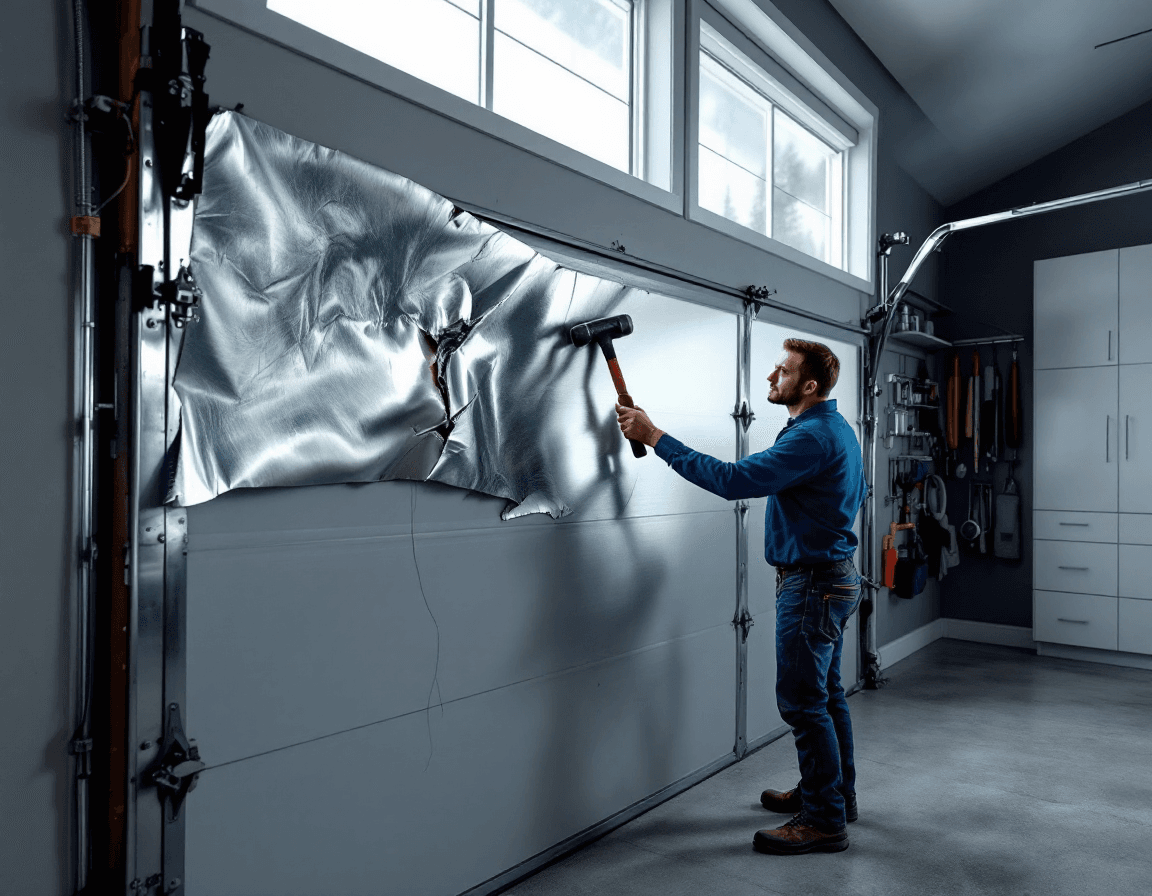
Garage door panel replacement in Kent, WA is often the most practical fix when one section of your door is badly damaged but the rest of the system still runs smoothly. Kent homeowners deal with a mix of situations, from a dented bottom panel after a delivery truck clipped the driveway to a section softened by years of moisture. Replacing only the affected panel can save you from the cost of a complete door while restoring the look and weather resistance you expect from your home. Our technicians serve homes across Kent, including the 98030, 98031, 98032, and 98042 ZIP codes, and we handle these jobs regularly.
The region's weather plays a real role in how panels age here. The Green River valley holds moisture, and winter stretches of drizzle and low cloud keep garage doors damp for long periods, even when the rain itself is light. Many Kent garages sit on slabs that stay cool and humid, which encourages rust at panel seams and along the lower edges. A damaged section that goes unaddressed can let that moisture reach internal insulation, hardware, and the wood framing of older doors. Catching the problem early keeps a single-panel repair from turning into a larger project.
Whether you live near the shops at Kent Station, up on East Hill, or in the quieter streets around Panther Lake, your door faces its own set of conditions. Driveway layouts vary widely across the city, and tight garages on older lots leave less room to maneuver a vehicle. This guide walks through how to read the damage, when replacement makes more sense than repair, what the work involves, and how to budget for it. It also explains where to draw the line between do-it-yourself checks and tasks that belong to a licensed professional.
Reading the Damage on a Kent Garage Door
Start by looking at the damaged section in good daylight and then again at dusk with a flashlight held at a low angle. Shallow dents often disappear from a straight-on view, but a raking light reveals the ridges and creases that signal stressed metal. Run your fingers along the surface to feel for sharp edges, which can indicate a tear or a crack that may continue into the next section. Pay attention to the bottom panel, since it takes the brunt of curb strikes, tire contact, and water splashing from the driveway.
Next, check whether the damage has spread beyond the visible dent. Look for paint that has blistered, chalky white residue on aluminum, or orange-brown streaks on steel, all of which point to corrosion underneath the finish. Press gently on the panel near the seams; if it feels soft or spongy, the core material may be compromised, particularly on wood-skinned or composite doors. A panel that rattles loosely in its track or sits at a different height than its neighbors may also have damaged hinges or roller brackets nearby.
Finally, open and close the door slowly through a full cycle while you watch the damaged area. Note whether the panel bows, catches, or rubs against the header or the floor seal. Light scraping that you can see from the outside often reflects a problem with the edge of the panel rather than a failure of the whole door. Write down what you observe, take a few photos from several angles, and keep the notes handy when you call for an assessment, because they help a technician estimate the scope before arriving.
When a Single Section Is Enough: Repair Versus Replacement
Replacing a single panel makes sense when the rest of the door is structurally sound and the damage is confined to one section. If the springs are intact, the tracks are straight, and the remaining panels line up evenly, a targeted swap usually restores function without pulling the entire door apart. Many Kent homeowners find that a dented or cracked panel accounts for most of the visual problem, while the operating system still performs well. In those cases, panel replacement is typically the most economical path.
Repair rather than replacement may be the better option when the damage is cosmetic and the metal is still intact. Minor dings on steel doors can sometimes be smoothed, and small surface scratches can be touched up with a matching primer and paint. However, a panel that has cracked through, separated from its frame, or lost structural integrity should be replaced rather than patched, because a patch will not restore the strength or insulation value of the original section. Be cautious with any repair that involves hammering or heating a panel while it is still attached, since the stress can transfer to hardware you cannot easily see.
Consider replacing the full door when several sections are compromised, when the frame or header is warped, or when the door is more than a couple of decades old and its insulation has lost effectiveness. A useful rule of thumb is to ask whether the repair cost will approach the price of a new door once you account for labor, matching, and the likelihood of future failures. A knowledgeable technician can walk you through these numbers honestly, including cases where it makes sense to hold off on work until other components are addressed.
How Valley Damp and Winter Rain Wear Down Panels
Western Washington winters bring long stretches of moisture, and those conditions have a steady effect on garage door panels. Steel doors are often galvanized and painted, but once the coating is scratched or chipped, water can sit against bare metal and begin to rust from the inside out. Aluminum resists rust well yet can oxidize into a powdery surface that dulls the finish and weakens the edges. Wood and composite skins absorb water more readily, which is why swelling, cupping, and soft spots show up so often on older doors in damp garages.
Panels closest to the floor take the most abuse. Splashing from wet tires, road grime carried in on boots and bikes, and pooled water along the threshold all concentrate at the bottom section. Over time, this lower edge can separate from the bottom seal and let water wick upward into the panel's core. A bottom panel that looks fine from across the driveway may already be deteriorating at its seam, which is why we always recommend inspecting the lowest section during any seasonal checkup.
Summer brings a different challenge. Strong afternoon sun heats the exterior face of the door, and that heat expands the metal and can stress the paint film, especially on darker colors. When a damp, cool morning follows a hot afternoon, the temperature swing can accelerate chalking and micro-cracking in the finish. Reapplying protective coatings or touching up exposed metal before the wet season starts gives you a much better chance of keeping a replacement panel looking as good as the rest of the door for years to come.
Matching a Panel That Has Been Discontinued
One of the most common frustrations with panel replacement is finding a section that matches the existing door. Garage door manufacturers update their designs, change panel profiles, adjust window styles, and sometimes discontinue colors entirely. A panel that was ordered years ago may no longer have a direct equivalent, and even a close match can show a visible difference in texture, gauge, or finish once it is installed beside older sections.
Matching starts with identifying the door. Look for a manufacturer label or a stamped model number on the inside of a panel or along the door's top or side track bracket. If the label has worn away, measure the panel width and height, count the ribs or grooves, note the thickness of the steel or insulation, and photograph the profile from the side. Bring that information to the technician, who can compare it against current catalogs and identify the nearest available option.
When an exact match is unavailable, there are practical alternatives. Some homeowners choose to replace the damaged panel and a neighboring section so that the new pieces blend across a wider area, which can look more uniform than a single contrasting panel. Others opt for a matching-color finish on a close-profile replacement and accept a slight difference in texture. Be honest with yourself about how much visual consistency matters for the house, because that answer will shape which option makes the most sense.
Dents From Backing Mishaps Along Busy Kent Corridors
Backing accidents are among the most frequent causes of single-panel damage we see in Kent. Driveways on tight residential lots, shared parking areas near busy commercial corridors, and garages with limited turnaround space all make it easy to clip the door with a bumper, a side mirror, or a cargo hitch. A single impact can crease the panel, pop a seam loose, or crack the thin skin of an insulated section, sometimes without leaving an obvious mark on the outside surface.
After any collision, resist the urge to pry the dent out immediately. Forcing a bent section can crack the coating and spread the damage to adjacent panels or to the track alignment. Instead, document the impact, check the door through a slow full cycle, and watch for rubbing, popping, or uneven movement. If the door binds, sits crooked, or stops partway, disconnect nothing and keep people and vehicles clear until a professional has evaluated it, because the spring and cable system stores considerable energy.
Insurance questions sometimes come up after backing incidents, particularly when a vehicle caused the damage. Keep photos, note the date and time, and save any receipts for temporary measures. Some homeowners find it helpful to keep a simple file for the garage door with its model information, installation records, and past service invoices, since these details speed up both the repair and any claim that follows.
What a Typical Section Swap Involves
A panel swap begins with securing the door so it cannot move unexpectedly. Technicians use clamps and bracing to hold the door in place and relieve tension from the affected area, then carefully remove the hinges, rollers, and fasteners connecting the damaged section to its neighbors. Each panel is handled with care, because the edges of steel and aluminum sections are sharp and the adjoining sections must stay square during reassembly.
Once the damaged section is out, the technician checks the replacement for fit and compares its profile, thickness, and insulation layer against the remaining panels. The new section is set in place, hinges and rollers are reattached, and the hardware is tightened to manufacturer specifications. The door is then cycled slowly to confirm the new section tracks smoothly, sits level with the others, and clears the header and floor seal without binding.
A typical job also includes checking the weatherstripping along the bottom and sides, inspecting the track alignment, and testing the balance of the door. Many homeowners are surprised by how much attention goes into these small steps, yet they make the difference between a repair that looks finished and one that quietly causes problems later. Expect the job to take a few hours in most cases, depending on the door's age, the number of sections involved, and whether parts need to be ordered.
Insulated Doors, Windows, and Hidden Hardware
Many modern garage doors include insulated panels with a foam core sandwiched between steel skins, and replacing one of these sections requires more than matching the outer surface. The insulation layer must line up with its neighbors so that thermal performance stays consistent across the door. A mismatched or poorly sealed panel can create a cold spot that makes the garage harder to heat and can allow condensation to form on the inside face during cold snaps.
Panels with window inserts add another layer of complexity. Glass or acrylic glazing may need to be replaced along with the panel, and the frame gaskets must seat correctly to keep rain and drafts out. Glazing sections are sometimes sold separately from the panel, so confirm whether the damage is to the frame, the glazing, or both before ordering parts. Scratched or clouded windows should also be evaluated for safety, since loose glazing can fall into the garage.
Hidden hardware often deserves attention during panel work. Hinges, rollers, and brackets that sit between panels can bend or wear when a section is damaged, and replacing a panel without checking them may leave the new section fighting the same misalignment. Lubricate moving parts that are in good shape, but avoid spraying lubricant onto the springs or cable drums, where it can attract grit and does not solve the underlying tension problem.
Budgeting for a Panel Job: The $250 to $800 Range
Panel replacement pricing generally falls between $250 and $800 per section, depending on the door. Several factors shape where a particular job lands within that range. The size and weight of the panel matter, as do its construction, insulation, and whether it includes windows or decorative hardware. Doors with unusual profiles, custom finishes, or discontinued parts often cost more because the replacement takes extra time to source and fit.
Labor and access also influence the final number. A straightforward swap on a single-car door with an accessible panel tends to cost less than a job that requires disassembling several sections to reach the damaged one. Older doors can have rusted fasteners or worn hinges that need attention during the same visit, and those components add to the scope. A clear estimate should break down the panel, labor, and any associated parts so you know exactly what you are paying for.
When you compare quotes, look beyond the lowest price. Ask whether the estimate includes a balance check, weatherstripping inspection, and a full operational test, and whether the technician will confirm the panel match before installing it. Ask how the replacement is warranted and what happens if the finish or fit shows a problem. A fair quote should answer these questions plainly, without pressure to add services you do not need.
Keeping Springs and Cables Out of Your Hands
Panel work is generally a reasonable task for a capable technician, but the spring and cable system is not something homeowners should attempt on their own. Torsion springs and extension springs store enough energy to cause serious injury, even when the door appears to be at rest. Winding or unwinding a spring without the proper tools and training can lead to sudden release, and damaged cables can snap under tension and cause harm.
If a panel replacement reveals a broken spring, a frayed cable, a bent shaft, or a drum that has slipped, stop working and call a licensed professional. Those components should be inspected and serviced only by trained people who work with them routinely. Even if you are comfortable with basic tasks like tightening a loose bracket, keep your hands away from the spring assembly and the cable drums while the door is connected to its tension system.
It is also wise to avoid relying on the door's opener to hold a damaged door in position. An opener is designed to move the door, not to act as a safety brake, and a compromised panel or track can shift unexpectedly. Keep children and pets clear of the door, and treat any sign of imbalance, popping, or uneven lifting as a reason to schedule service promptly rather than waiting for the problem to get worse.
Protecting Your Replacement Panel Through Kent Seasons
A new panel will last longer when it receives a little attention throughout the year. Wash the exterior with a mild soap and water every few months, paying particular attention to the lower section where road grime and splashed moisture collect. Rinse thoroughly and dry the surface with a soft cloth, because trapped residue can dull the finish and hold moisture against the metal. Avoid abrasive pads and harsh solvents, which can strip the coating and expose bare metal.
Inspect the bottom seal and side weatherstripping at the start of the wet season and again in late spring. Replacing worn seals keeps water from reaching the seam where a new panel meets the floor, and it helps the garage stay drier overall. Look for gaps where light shows around the perimeter of the door when it is closed, and address them before winter rains set in, because a small gap can admit a surprising amount of moisture over several months.
Touch up any new chips or scratches promptly with a matching primer and paint designed for garage door metal or the specific surface material. Small exposed spots are much easier to address early than after rust has spread beneath the coating. Keeping a little touch-up kit on the shelf is a simple habit that protects your investment and helps the replacement panel blend in with the rest of the door.
Scheduling Service Around East Hill, Panther Lake, and Kent Station
Kent is a city of distinct neighborhoods, and scheduling a panel repair can be easier when you plan around local traffic and access. Homes on East Hill often sit on slopes with steeper driveways and tighter turnarounds, which can affect how the technician positions equipment and how the door is supported during the work. Properties near Panther Lake may have longer driveways or detached garages set back from the street, so it helps to clear a path and note any gate codes or parking restrictions when you book.
Homes near Kent Station and the nearby commercial core may face different constraints, such as limited street parking, shared driveways, or businesses that rely on clear access. If your garage opens onto a busy frontage, consider scheduling service during quieter hours so the technician has room to work safely. Letting us know about these details ahead of time helps us arrive prepared with the right panel size, hardware, and tools.
Whatever part of Kent you call home, the first step is a clear assessment of the damage. Share your door's make or model if you know it, describe the damaged section, and send a few photos if possible. This information helps us estimate the job, confirm whether a matching panel is available, and recommend repair or replacement based on what we find. Our team is glad to explain your options in plain language and help you decide what makes the most sense for your home.
Ready to get your Kent garage door looking and performing its best? Call Seattle Garage Door Fix at (888) 799-3819 to schedule a panel inspection and receive a straightforward estimate. Our licensed, bonded, and insured technicians will look at the damaged section, check the rest of the door, and walk you through your replacement options before any work begins. Let us help you restore the function and appearance of your garage door with a repair built for Kent's climate and your home.