
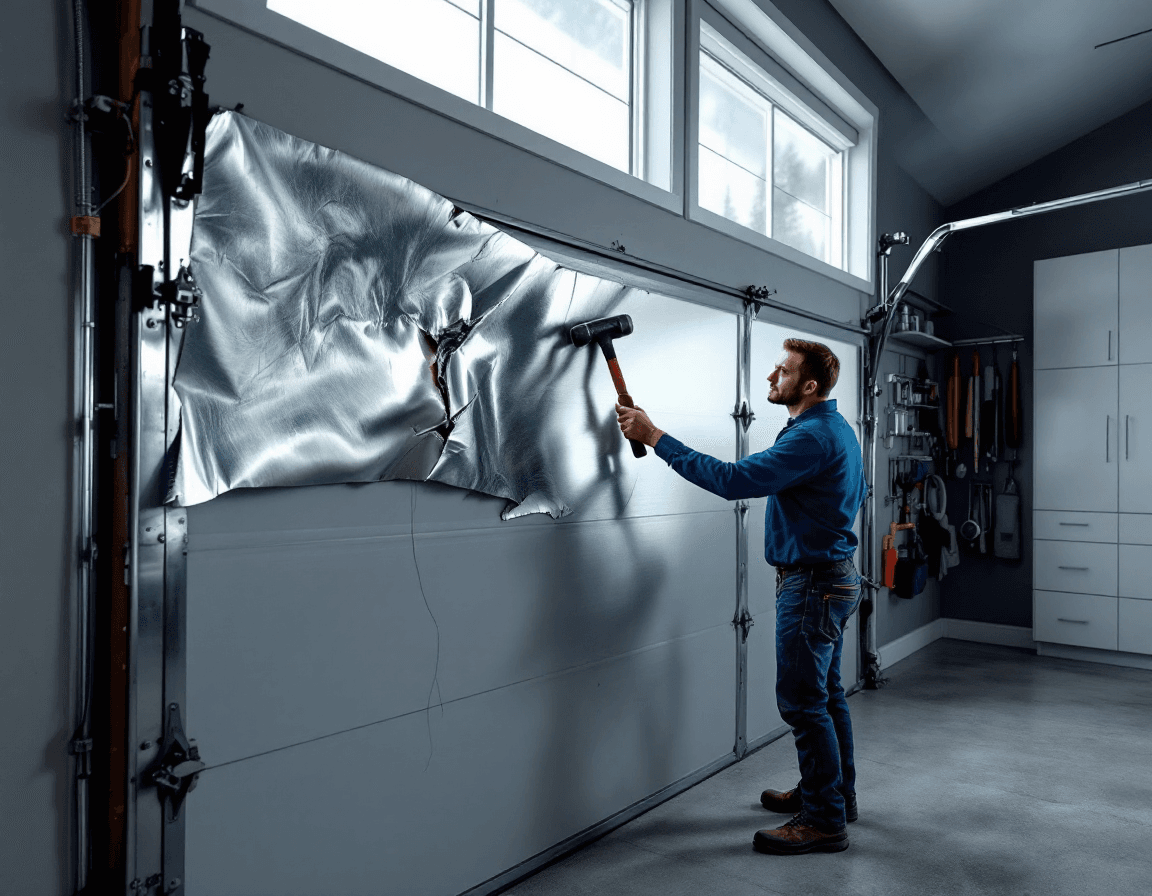
Garage door panel replacement in Covington, WA is often the most cost-effective fix when one section of an otherwise sound door has been dented, cracked, or worn through. Many Covington homeowners assume a damaged panel means buying a whole new door, but the springs, tracks, opener, and remaining panels may be in good shape. Replacing just the affected section can restore the door's appearance and weather protection without the expense of a full replacement. Our technicians serve the 98042 area and the surrounding Covington neighborhoods, and we see these repairs regularly.
Panel damage here usually has a few common causes: a bumped car, a misdirected snowball or branch, a wet winter that sits against the bottom edge, or simply years of exposure. The good news is that a single panel is a contained problem. With the right assessment, you can know within one visit whether that panel is a candidate for replacement, a repair, or a larger conversation about the whole door. This page walks through how we think about those decisions, what drives the cost, and what to expect when we come out to work on your door.
Before you schedule anything, it helps to understand what a panel actually is and why replacing one is different from replacing a whole door. A sectional garage door is built from several horizontal panels joined by hinges and rollers that travel along the tracks. Each panel is a separate piece, and in many modern doors, they are sized and designed to match a particular manufacturer's line. That is the reason matching becomes the main challenge in most panel jobs.
Why Covington Garages Take the Hits They Do
Covington sits in the foothills southeast of Seattle, and the terrain and climate around the city shape how garage doors age. Long stretches of gray, damp weather mean moisture is a near-constant presence on the lower edges of doors, especially on driveways that do not drain as quickly as homeowners would like. Many homes in the area have been built with attached garages set close to the street or with driveways that slope toward the door, so runoff and splash-back are common. Over time, that repeated wetting can soften the bottom panel and weaken its seams.
Traffic patterns add another layer. Covington's residential streets carry a steady mix of commuters, delivery vehicles, and school traffic, and many families back out of driveways quickly in the morning. A bumper that drifts a few inches too far, a child's bicycle leaned against the door, or a stray yard tool can leave a dent that looks minor but changes how the panel flexes. Hail is uncommon but not unheard of in King County, and windblown debris from the tall conifers that line many lots can scrape or crack older panels.
Sunlight also matters more than people expect. Doors that face south or west get more UV exposure, which fades pigment and makes painted steel or vinyl-clad surfaces chalky over time. When a single panel is damaged, the neighboring panels may look noticeably different in color, which is why we spend real time on color matching rather than treating every replacement as a simple swap.
Reading a Dent: When a Panel Can Be Saved
Not every dent requires a new panel. Shallow dents in steel panels, particularly those that have not creased or broken the paint, can sometimes be pushed back into shape or smoothed enough to be acceptable. The key question is whether the metal has been stretched beyond recovery. A dent with a sharp fold line or a split in the coating usually means the metal has been work-hardened, and attempting to flatten it often leads to cracking.
Insulated steel panels are more complicated. Many doors in Covington use an insulated sandwich construction in which the outer skin is bonded to a foam core. A deep impact can crush that core or separate the skin from the foam, and the damage may not be fully visible from the outside. When we inspect a panel like this, we press gently around the dented area and look for soft spots, gaps along the edge, or any sign that the foam has shifted. If the core is compromised, a cosmetic fix will not restore the panel's thermal performance or its structural integrity, so replacement becomes the sensible choice.
Wood and composite panels follow different rules. A split or cracked wood panel may be repairable with epoxy or structural filler, but once the wood has absorbed moisture and begun to swell or rot, we generally recommend replacement. Composite panels can often be replaced individually, and they tend to hold color better than painted steel, though matching them still requires checking the exact profile and rib spacing.
Water, Rot, and the Bottom Section Problem
The bottom panel is the most vulnerable panel on the door, and in Covington it is often the first to show problems. It sits closest to the driveway, absorbs splash from rain, and takes the brunt of any water that pools near the threshold. Homeowners frequently notice rust bleeding through the paint along the lower edge, a swollen wood bottom rail, or a musty smell that seems to come from the garage floor. These are signs that moisture has been working on the panel for a long time.
Rust on steel panels is particularly tricky. Surface rust that is caught early can sometimes be cleaned, treated, and primed. Rust that has eaten through the metal, or that has spread under the paint along a seam, usually means the panel has lost too much material to hold its shape. In those cases, replacing the bottom section is more durable than patching it, and it prevents the rust from migrating into the adjacent panel or the hinge hardware.
Water damage can also reach beyond the panel itself. If the bottom section has been sitting in standing water, the weatherstrip may have hardened or pulled away, and the floor seal may be compromised. We check the bottom seal and the threshold whenever we replace a bottom panel, because a new panel will not perform well if the seal around it is failing. Addressing those small components at the same visit is usually far less disruptive than returning later for a second trip.
- Look for rust bleeding through paint along the lower edge, especially at the seams between sections.
- Press the bottom rail or lower panel; soft or spongy spots in wood usually indicate rot.
- Check for daylight or water staining along the inside of the bottom panel after a heavy rain.
- Notice whether the weatherstrip is cracked, flattened, or pulling away from the door.
Matching a Faded or Mismatched Panel
Matching is where many panel replacements succeed or disappoint. If your door is more than a few years old, the original color has likely shifted under sun exposure, and a brand-new panel can look like a visible patch. We begin by identifying the door manufacturer, the model series, the panel height, and the number of ribs or grooves. Those details determine whether a direct replacement is available or whether we need to source a close alternative.
Color matching depends on the finish. Painted steel with a factory baked-on coat may be difficult to reproduce exactly once the original has faded, so we compare the new panel to the existing ones under natural light, not just in a shop or a garage with artificial bulbs. In some cases, a slightly different shade on a single panel is acceptable, particularly if the door has already weathered unevenly. In other cases, it makes sense to talk about refinishing the surrounding panels so the whole door looks consistent.
Mismatched profiles are a different problem. Some older doors have been repaired with panels from a different line, and the grooves or insulation thickness do not line up. A panel that is slightly off in height or profile can prevent the door from rolling smoothly and can put uneven stress on the hinges. Before ordering anything, we measure the existing panels carefully and confirm that the replacement will seat correctly within the door's track and hinge geometry.
Backing Accidents and the Single-Panel Fix
A single panel damaged after a backing accident is one of the most common reasons homeowners call us, and it is often the cleanest job to complete. The impact tends to concentrate on one section, and the rest of the door remains sound. Because the damage is localized, the repair can usually be completed in one visit once the replacement panel is on hand.
After an accident, the first step is a careful look at the surrounding hardware. A strong impact can bend a track, pull a hinge out of alignment, or loosen a roller, and these issues must be corrected before a new panel is installed. If the panel is hitting the track or the door binds as it moves, the new section will be stressed from the start. We check the track alignment, the hinges on either side of the damaged panel, and the rollers that ride in the track.
Insurance questions sometimes come up in these situations. We can document the damage, describe the work performed, and provide an itemized estimate for your records, but coverage decisions belong to your insurer. If you are pursuing a claim, photographs of the damage taken before any repair are very helpful, and you should keep the removed panel if the adjuster asks to see it.
What a Panel Replacement Typically Costs
Our panel replacement pricing in Covington generally falls in the range of $250 to $800 per section, depending on the door. Several factors move a job toward the lower or higher end of that range. The size and construction of the panel matter most. A standard steel panel from a common door line costs less than an insulated panel with a specialty finish or a wood section that must be custom made. Panels that must be sourced from a manufacturer rather than stocked locally can also take longer and cost more.
Labor and access play a role as well. A panel that can be removed and replaced with the door in a standard position is usually quicker than one that requires disassembly of nearby hardware or work on a door that has been out of balance. If the replacement also requires correcting track alignment or replacing a worn roller set, the total job will reflect that additional work. We always explain what is included before we begin, so you know what the number covers.
It is worth comparing the panel cost against the cost of a full door. A complete door replacement involves considerably more material and labor, and it is only the right choice when the door is structurally failing, when multiple panels are compromised, or when the existing door is no longer supported by its manufacturer. For a door that is otherwise in good condition, replacing one or two sections is often the more responsible use of your budget.
Repair or Replace: A Practical Decision Path
Deciding between repairing a panel and replacing it comes down to a few honest questions. First, is the damage limited to the surface, or has it reached the structural core? A surface dent or scrape on a steel panel may be a candidate for smoothing or cosmetic repair, while a cracked core or separated skin usually calls for replacement. Second, is the panel still holding its shape? A panel that bows, twists, or no longer seats properly in the track should be replaced, even if the visible damage seems modest.
Third, how many panels are affected? One damaged section on an otherwise solid door is a straightforward replacement candidate. When two or three panels show damage, or when the damage is spread across the lower half of the door, it may be wiser to step back and evaluate the entire door, including the springs, cables, and opener. Fourth, how old is the door? A newer door with a healthy finish and sound hardware is a good candidate for a single panel swap, while an older door with widespread wear may warrant a broader conversation about replacement.
We are happy to give you an honest recommendation even when it means a smaller job than you expected. Sometimes the right answer is a single panel and a new bottom seal. Other times it is a full door. Our goal is to make sure the repair you pay for will last.
Working Near Jenkins Creek and Covington Town Center Driveways
Many Covington homes sit in neighborhoods close to natural drainage features like Jenkins Creek, and properties in those areas can have wetter soils and seasonal drainage issues. Groundwater and runoff that moves across a lot can keep the base of a garage door damp for long periods. If your home is in a low-lying spot or near the creek corridor, we pay particular attention to the bottom panel, the threshold, and any signs of moisture wicking up from the slab.
Homes closer to Covington Town Center often have driveways that see steady neighborhood traffic, and garages there may be more exposed to bumps from vehicles, delivery carts, and landscaping equipment. We see more backing-related panel damage in some of these areas simply because the driveways are busy and space is tight. If you have noticed recurring impacts on the same panel, a small change in parking habits or a visible bumper guide can help prevent a repeat repair.
Local conditions also influence how we plan a visit. Wet weather can slow exterior work, so we often recommend scheduling panel replacement during drier stretches when the new panel can be fitted and sealed under good conditions. A replacement completed on a dry day is less likely to trap moisture behind the new section, and the sealant and weatherstrip have time to cure properly.
What Happens During a Panel Replacement Visit
When a technician arrives, the first task is a complete inspection of the door, not just the damaged panel. We check the springs, cables, drums, rollers, hinges, tracks, and opener, and we note anything that needs attention. Because springs and cables are under high tension, we handle them with care and recommend that only a licensed professional perform any spring or cable work. If your door needs spring service, we will explain the findings and the options before anything is changed.
Once the inspection is complete, we confirm the panel details against the replacement we have ordered or brought with us. We remove the damaged section, which usually involves releasing the hinges and rollers on either side and carefully separating the panel from the adjacent sections. The new panel is then installed, the hinges and rollers are reattached, and the door is cycled several times to confirm smooth travel. We look for uneven gaps, rubbing, or any sign that the new section is sitting differently than the rest of the door.
Finally, we review the work with you. We walk you through the new panel, the bottom seal if it was replaced, and any maintenance you should watch for in the coming months. We also tell you honestly if we see other wear that will need attention later, so you can plan for it rather than being surprised.
Protecting Your New Panel Through Western Washington Winters
A new panel will last longer if you take a few simple steps to protect it from the damp conditions common in Covington. Keep the driveway clear of standing water where possible, and make sure gutters and downspouts direct runoff away from the garage entry. Trim back vegetation that drops debris or holds moisture against the door, and rinse the lower panels occasionally to remove grit and road salt that may collect during colder months.
Lubrication and hardware checks matter too. Hinges, rollers, and tracks that are kept clean and lightly lubricated put less strain on the panels, which helps prevent the flexing and binding that can crack a section over time. Check the weatherstrip and bottom seal at least once a year, and replace them when they flatten, crack, or separate from the door. A small seal replacement costs far less than the water damage it prevents.
Finally, pay attention to small changes. A new dent, a hairline crack in the paint, or a bottom edge that looks darker than it did last season are all signals worth investigating early. Catching a problem when it is still a single panel usually means a simpler, more affordable repair.
If a panel on your Covington garage door is dented, cracked, rotted, faded, or damaged from a backing accident, we can help you sort out whether it needs a simple replacement or a broader look at the door. Call Seattle Garage Door Fix at (888) 799-3819 to schedule an inspection. We are licensed, bonded, and insured, and we will give you a clear explanation and an honest recommendation before any work begins.