
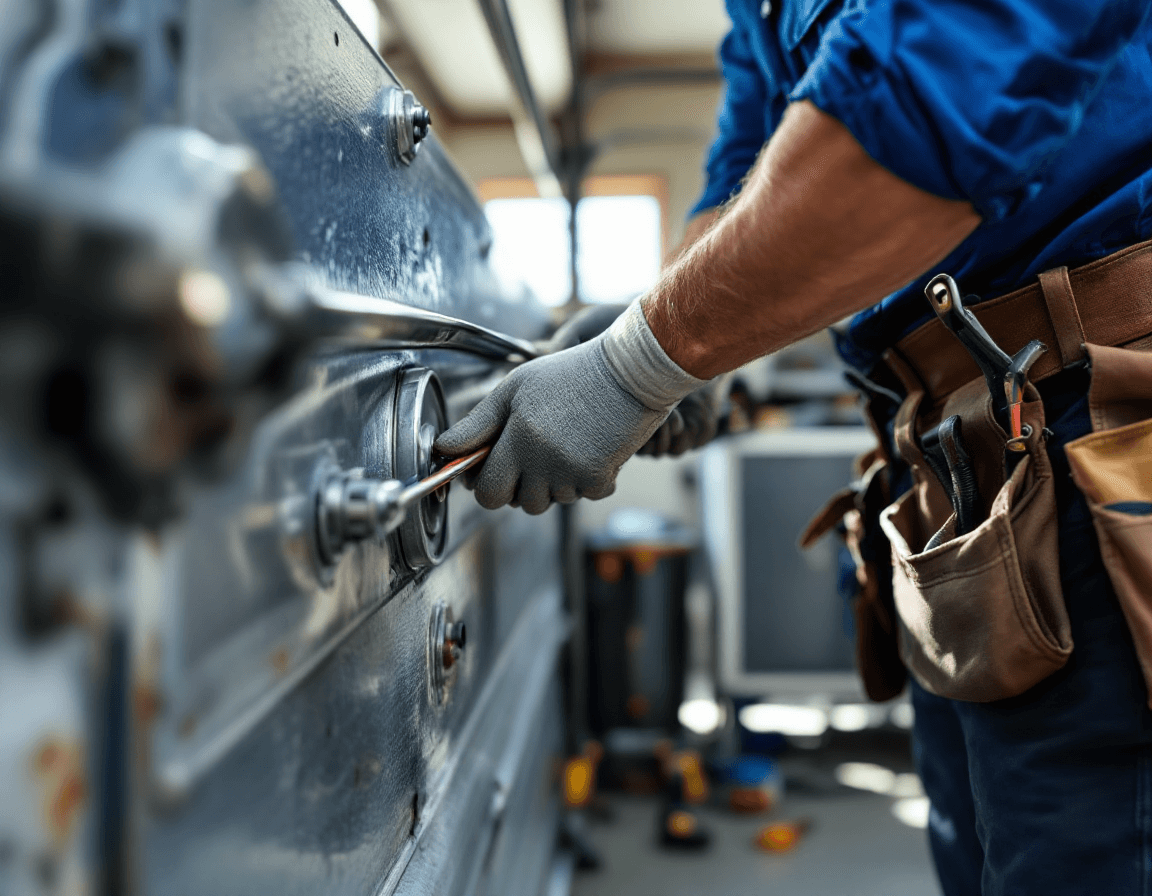
Garage door cable replacement in Covington, WA is one of the most common repairs we handle for homeowners across the 98042 area, and it is also one of the most urgent. The lift cables are under heavy tension, and when one frays, rusts through, or slips off its drum, the door can drop unevenly, jam halfway up, or come down with a loud bang. Covington's mix of older subdivisions and newer builds means most garages here hold steel sectional doors that rely on paired lift cables, so a single worn cable can throw off the whole system. Catching the problem early usually means a simpler repair and a lower bill.
If you live near the Covington Town Center or along the streets close to Jenkins Creek, you already know how much the weather shapes daily life. Our wet, mild winters and long stretches of damp air do more to garage door hardware than most homeowners realize, and that moisture works quietly on the steel cables that lift your door every day. Many of the calls we answer start with a homeowner who noticed a small change, like a door that looked slightly tilted or a faint scraping sound, and ignored it for a few weeks. This page explains what those cables do, how to spot trouble, what a professional repair involves, and what you can safely do in the meantime.
Every repair described here should be handled by a licensed, insured technician. Lift cables work together with torsion springs, and both carry serious stored energy. Please treat this page as a guide to understanding the problem and talking intelligently with your technician, not as a set of instructions for doing the work yourself.
What the Lift Cable Actually Does Behind Your Door
Most sectional garage doors in Covington use a pair of steel lift cables, one on each side of the door, running from the bottom bracket up to a drum mounted on the end of a torsion shaft above the opening. As the spring winds and unwinds, the drum rotates and wraps or unwraps the cable, pulling the door up in a controlled, level motion. The two drums are linked by the torsion tube, so both sides should move in step. The cable is essentially the rope that connects the spring's power to the door panels.
That arrangement explains why a cable problem rarely stays isolated. If one cable breaks or slips, the other side of the door can still try to lift at full strength, which twists the panels and bends the tracks. Homeowners often notice a door that rises at a slant, stops on one side, or closes with a noticeable lean. The cable, the drum, the track, and the spring are all designed to share the load, so when one component fails, the others take stress they were never built to handle for long.
Cables are also designed with a finite lifespan. They are wound tightly in thin strands, and every open and close cycle flexes those strands a little more. Over years of use, the wire gradually fatigues, and that fatigue is what eventually leads to fraying and breakage. Understanding this helps explain why cable replacement is considered routine maintenance rather than an unexpected failure in many cases.
Reading the Warning Signs Before the Cable Lets Go
Cables rarely fail without warning, although the warnings can be easy to miss. The most useful thing you can do as a homeowner is to watch how your door behaves over time and notice changes. A door that used to rise smoothly and now seems to hesitate, shudder, or lean is often telling you that a cable is wearing unevenly. Pay attention to both sides of the door, since a difference between them is one of the clearest signals of cable trouble.
Here are the symptoms our technicians hear about most often from Covington homeowners:
- The door hangs crooked or sits lower on one side when closed.
- Visible fraying, kinked strands, or rust streaks along the cable.
- The door closes unevenly, binds on one track, or pauses partway down.
- A sharp snapping sound, followed by a door that will not move in either direction.
- Cable wrapped unevenly or bunched on the drum instead of lying in neat coils.
- The cable has visibly slipped off the edge of the drum groove.
If you see any of these, avoid operating the door repeatedly to test it. Every extra cycle on a damaged cable increases the chance it will fail completely, possibly when someone is standing near the door or when a vehicle is parked underneath. Keep people and pets clear of the opening, and call for service sooner rather than later.
Why Western Washington Winters Shorten Cable Life
The Pacific Northwest has a distinctive climate for garage hardware. Covington sees long stretches of gray, damp weather, with frequent rain and high humidity that rarely dries out completely between storms. Moisture is the enemy of steel, and it reaches cables through the small gaps around most garage doors, especially in driveways that slope or collect runoff near the threshold. Over time, that moisture encourages surface rust, and rust is abrasive. It roughens the strands and makes the cable less flexible, so the stress of each cycle concentrates on a smaller number of weakened wires.
Temperature swings add another layer of stress. Cold mornings can make metal stiffer, and the door hardware has to work harder to lift the panels smoothly. Lubrication also breaks down differently in cool, wet conditions, so a cable that looked fine in late summer may show signs of fatigue by January. Homes near the lower areas of the Jenkins Creek corridor can experience more persistent dampness during wet seasons, which is one reason we recommend a periodic check of the cables for rust in those neighborhoods.
Dust, pollen, and debris also play a role, particularly for garages that are used as workshops or storage areas. Grit that settles on the cable and drum can work into the grooves and accelerate wear. A simple wipe-down and a light, appropriate lubricant applied to the moving parts (not the cable itself, in most cases) can help, but a visual inspection by a professional is the only reliable way to judge how much life remains.
The Snap, the Slack, and the Door That Won't Move
When a cable snaps, the sound is usually unmistakable: a sharp crack or bang, sometimes followed by a rattle as the loose end whips inside the door channel. Many homeowners describe the moment as the door dropping a few inches all at once. In some cases the door falls to the ground, and in others it stops partway and refuses to move up or down. Either way, the door should be treated as unsafe until a technician has inspected it.
A cable that comes off the drum is a different situation but can be just as disruptive. The cable may still be intact, yet it has slipped out of its groove and is no longer wrapping evenly. You may see slack on one side, a bunched coil, or a cable hanging loosely near the drum. This often happens after a sudden stop, an impact, or a cable that has stretched unevenly over years of use. Because the drum and the cable are both under tension, forcing the door open or closed in this state can cause additional damage.
A door that binds on one side or jams partway is sometimes caused by a cable that is tangled around the drum rather than broken. Tangles happen when a cable loosens and drops into the wrong position. Once tangled, the cable may not feed correctly, and the door can rise crooked or stick entirely. In every scenario above, the safe answer is the same: stop operating the door, keep people clear, and schedule a professional inspection.
Cables Off the Drum: How It Happens in Covington Driveways
Cables come off the drum for a handful of practical reasons, many of which are tied to how our garages are used. Covington homes often have two-car garages with frequent comings and goings, and a door that is opened and closed several times a day gets far more mechanical stress than one used once a week. Over time, small misalignments in the tracks or a slightly bent bottom bracket can push the cable toward the edge of the drum, where it gradually walks off the groove.
Impact is another common cause. A vehicle bumping the door, a bicycle or yard tool knocked into the track, or even a child's ball striking a panel can jolt the cable loose. Once a cable has slipped, the door often continues to operate for a while, which is why many homeowners do not realize there is a problem until the cable is badly kinked or frayed. Inspecting the drums during routine maintenance helps catch the issue before the cable wears through at the edge.
Drum wear deserves attention as well. The grooves on a cable drum are shaped to guide the cable, and years of use can wear them smooth or uneven. A worn drum will not hold the cable properly, so even a brand-new cable may slip off if it is installed on a damaged drum. This is why a skilled technician checks the drum, the cable path, and the alignment as one system rather than swapping a cable in isolation.
Drum Problems That Look Like Cable Problems
Not every symptom that appears to be a cable issue actually starts with the cable. A door that rises unevenly might be caused by a worn drum, a loose set screw, a bent track, or a spring that has lost tension on one side. Because these components interact, the symptoms overlap in ways that can confuse homeowners and even some less experienced installers. A thorough inspection looks at everything before recommending a repair.
For example, a drum that has shifted on the torsion shaft can cause the cable to pull at an angle, creating a lopsided lift that resembles a broken cable. A bent track can make the door bind near the top of its travel, which may feel like a frayed cable catching in the wrong place. Similarly, a torsion spring that has weakened unevenly can force one side of the door to work harder, leading to the same crooked appearance. Identifying the true source saves time and money and prevents the frustration of replacing a cable only to have the same symptom return.
We also see cases where a cable replacement was attempted without addressing the underlying cause. If the drum was worn, or the track was out of alignment, the new cable can wear quickly or come off the drum again. A good technician will tell you what they found, explain whether the drum or track needs attention, and give you a clear picture before any work begins.
What a Covington Cable Replacement Visit Usually Involves
A professional cable replacement typically begins with a safety assessment. The technician will confirm the door's condition, check whether the spring is under tension, and determine whether it is safe to proceed. Because torsion springs store significant energy, this step is critical, and it is one reason we insist on licensed professionals for any spring or cable work. Once the area is secured, the technician removes the damaged cable, inspects the drum and the bottom bracket, and checks the track for alignment.
Next, the technician installs a new cable sized and rated for the door's weight and spring setup. The cable is routed through the drum groove, seated correctly, and tensioned so the door lifts evenly. Many technicians will also check the lubrication on the moving parts, confirm the door balances properly, and test the operation through several full cycles. A well-done repair should leave the door moving smoothly on both sides, without binding, sagging, or unusual noise.
For a typical Covington residence, a cable replacement is often completed in a single visit, though timing depends on the door's size, the number of components that need attention, and whether a spring or drum must also be serviced. Ask your technician to walk you through what they found and what they replaced. A reputable company will be happy to explain the work and answer your questions.
Price Ranges and What Shapes the Final Quote
Most cable replacements we perform fall within a range of $110 to $300, depending on the specifics of the job. That range reflects the cable itself, the labor involved, and whether related components need attention at the same time. A straightforward replacement on a standard single-car door is generally at the lower end, while a larger door, a damaged drum, or a situation requiring additional parts can move the estimate higher. We always aim to explain the reasons behind the quote before any work begins.
Several factors influence the final number. The size and weight of the door matter, because heavier panels place greater load on the cable and spring system. The condition of the drum and the bottom bracket can add time if they need replacement or realignment. If the torsion spring is also worn or the track is bent, the technician may recommend additional repairs, and those will be discussed separately so you can decide how to proceed.
Because every door is different, the best way to get an accurate figure is a site visit. A technician can see the components, test the balance, and give you a clear breakdown. Be cautious of any quote that seems unusually low without an inspection, since a cable replacement done without checking the drum, track, and spring can lead to repeat visits.
Doing Something Safely Until the Technician Arrives
If your door has failed or shows clear signs of cable trouble, there are a few steps you can take to stay safe while you wait for service. First, keep everyone away from the door, including children, pets, and anyone parking nearby. A door with a broken cable can drop without warning, and the risk is highest when someone is underneath or close to the tracks. If possible, close the door gently by hand only if the door is fully functional and you can see both sides moving evenly. Otherwise, leave it where it is.
Second, avoid pulling on the cable, tugging on the drum, or attempting to reattach a loose cable yourself. These components are under tension, and a mistake can lead to injury or additional damage. Do not try to unwind or rewind the spring either, since that requires specialized tools and training. If you need to use the garage, use the side entry door and leave the main door alone until a technician has inspected it.
Third, document what you see. Take a few photos of the cable, the drum, and any gaps or misalignment you notice. Note when the problem started and whether it came on suddenly or gradually. This information helps the technician arrive prepared and can speed up the diagnosis. If you have a remote or wall control, stop using it on the damaged door to prevent any further strain on the cable.
Keeping Cables Healthy Through Our Long Grey Seasons
Preventive care is the best way to extend cable life, and it does not require specialized skills. A simple visual check once or twice a year can reveal fraying, rust, or drum wear before a cable fails. Look at the cable from the bottom bracket up to the drum, paying close attention to the areas where the cable bends or passes near the track. Also check that the door opens and closes smoothly and that both sides move together without pausing or leaning.
Keeping the garage clean and dry helps as well. Sweep the threshold, clear away leaves and debris from the track, and make sure the door seals are intact so less moisture reaches the hardware. In wet months, wiping down visible metal parts and applying a lubricant recommended for garage door components (usually to the rollers, hinges, and track rather than the cable) can slow corrosion. Avoid heavy greases on cables, as they can attract grit and hold moisture against the steel.
Finally, schedule a professional maintenance inspection every year or so, especially if your door is more than a decade old or sees heavy daily use. A technician can measure cable wear, check drum condition, verify spring tension, and confirm that the track is aligned. Catching a small problem during a routine visit is far less stressful than dealing with a snapped cable at the start of a busy week.
Garage door cable replacement is a job that rewards prompt attention, and the sooner a worn or damaged cable is inspected, the better your chances of a straightforward, affordable repair. If your door is hanging crooked, binding on one side, or showing any of the warning signs described above, do not wait for a bigger failure. Call Seattle Garage Door Fix at (888) 799-3819 to schedule a licensed technician to inspect your Covington door, explain what they find, and restore smooth, safe operation.