
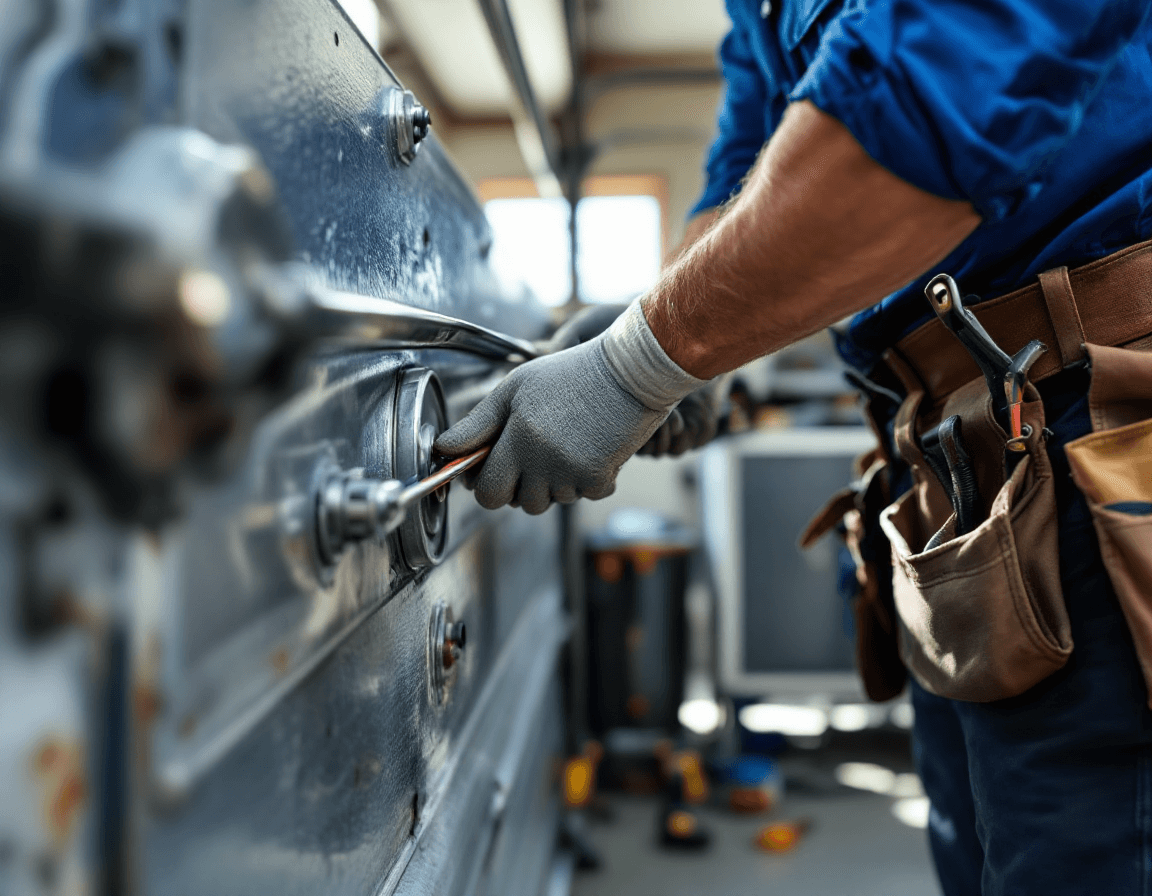
Garage door cable replacement in Auburn, WA is one of the most common repairs we handle, and it is also one of the most important to get right. The lift cables on a torsion or extension spring door carry the full weight of the door, so when one snaps or slips off its drum, the door can drop, twist, or stop moving altogether. Homeowners across Auburn's older neighborhoods and newer subdivisions call us after a loud bang in the garage, or after they notice the door sitting crooked on its tracks. Most of these problems are fixable in a single visit, and we replace cables for a wide range of door sizes and brands.
Auburn's mix of housing shapes how these repairs go. Homes near Auburn Downtown often have older single-car garages with smaller door openings and original hardware, while many homes in Lakeland Hills and on Lea Hill were built with double-wide doors and heavier insulated panels. Each setup puts different loads on the cables, springs, and drums. Understanding what the cable does, what causes it to fail, and what a proper repair involves will help you decide when to call a professional and what to expect when the technician arrives.
Whether your door is in the 98001, 98002, or 98092 ZIP codes, the goal is the same: a balanced, safe door that opens and closes smoothly without putting you or your vehicle at risk. Below, we walk through how cables work, what the warning signs look like, why Western Washington weather is tough on them, and how a typical repair is handled. We also explain what affects the cost and where the safety lines are that you should never cross on your own.
What a Lift Cable Actually Does Inside Your Garage
A lift cable is a braided steel cable that runs from the bottom bracket on each side of the door up to a drum mounted on the horizontal shaft above the door opening. When the spring system rotates that shaft, the drum winds the cable, pulling the door upward in a controlled arc. The cable is not just a rope that lifts the door; it is one half of a counterbalance system that is designed to make a heavy door feel almost weightless when it moves.
Because the cable works in tension, it is always under load. Even when the door is fully closed, the cable is holding part of the weight, and the springs are storing energy that the cable transfers to the door during each opening cycle. This is why a cable failure is rarely a quiet event. When one gives way, the stored energy releases suddenly, which is often what homeowners describe as a loud bang or crack.
Most residential doors use two lift cables, one on each side, and they must be the same length and tension to keep the door level. Cable length is set during installation based on the door's height and the drum's diameter. That is why replacing only one cable without checking the other, the drum, and the spring system can leave the door unbalanced even after the repair looks finished.
Warning Signs That a Cable Is Near Failure
Cables rarely fail without warning, though the signs are easy to overlook if you use the door only once or twice a day. The most reliable early indicator is visible fraying. Look for broken wire strands, usually near the drum or where the cable wraps around the bottom bracket. A single broken strand is a caution sign, while several clustered strands mean the cable is nearing the end of its service life.
Rust is another common issue. Cables that sit near the floor or along the track can develop surface rust that weakens the steel over time. In a humid garage, rust can also collect on the drum and make the cable grip unevenly. If you notice orange or brown staining on the cable or a gritty feel when you run your fingers along it, plan for a replacement soon.
- A cable that looks slack or loose on one side while the other side is taut
- Strands sticking out, kinks, or flattened sections on the cable
- Door sitting higher or lower on one side after being closed for a while
- A grinding, popping, or clicking noise during opening or closing
- The door jerking or hesitating at a particular point in its travel
- Visible gaps or wobble where the cable enters the drum
If you spot any of these signs, avoid operating the door heavily until it has been inspected. Continuing to run a worn cable increases the chance that it will snap while the door is halfway up, which is when the spring energy can cause the most damage to tracks, panels, and nearby objects.
Why Auburn's Wet Winters Are Hard on Garage Cables
The Pacific Northwest climate is kind to lawns and tough on steel, and Auburn's wet winters are a real factor in cable wear. Moisture that enters a garage through door seals, cracked slabs, or a garage that is not well ventilated can settle on the cable and drum, and it does not always evaporate quickly during the cool months. Over several seasons, that moisture encourages rust and can also trap grit that grinds into the braided strands every time the door moves.
Many Auburn homes sit on lots where garages collect runoff during heavy rain, and the nearby soil can stay damp for long stretches. When garage humidity stays high, the lubricant on the drum and cable dries out or washes away, leaving bare metal exposed. We often see cables on homes in lower-lying areas that look fine from the outside but show surface corrosion once the door is opened for inspection.
Temperature swings also matter. Cold mornings can make the springs and cables stiffer, and a sudden thaw can change how the door balances. Over time, these changes add up, especially on doors that open and close several times a day. Keeping the garage as dry as possible and scheduling periodic checks gives cables the best chance of reaching their full service life.
How the Drum, the Cable, and the Spring Work Together
Think of the lift cable, the drum, and the spring as three parts of one system. The spring stores the energy that carries the door's weight, the drum converts that energy into controlled rotation, and the cable transfers the motion to the door itself. If any one part is worn or out of step with the others, the entire system pulls unevenly and can put extra strain on the remaining components.
The drum is usually made of cast aluminum or steel and has grooves or a spiral channel that guides the cable as it winds. Over time, the cable can wear grooves into the drum, or the drum can develop cracks or lose its grip, especially if the cable has been slipping. When a drum is damaged, a new cable alone will not restore smooth operation, which is why we inspect the drum every time we replace a cable.
Because the cable is attached to the drum on one end and the bottom bracket on the other, the attachment points also deserve attention. Worn cable ends, loose set screws, and corroded brackets can all cause the cable to lose tension and come off the drum. A complete repair means checking every connection point, not just the cable itself.
Diagnosing a Door That Hangs Crooked or Closes Unevenly
A door that hangs crooked or closes on one side first is one of the most common symptoms we see in Auburn homes. It often shows up as a gap at the bottom of the door on one side, a door that binds in one track, or a panel that sits visibly higher than its neighbor. Homeowners sometimes assume the tracks are at fault, but the cause is usually an imbalance in the cable and spring system.
When one cable is looser than the other, the door drops on that side and tilts. A cable that has partially come off its drum can produce the same effect, sometimes without an obvious break. In some cases the door looks level when closed but binds when opened, which points to uneven winding or a drum that has slipped on the shaft.
A careful diagnosis checks the door at several points in its travel. The technician will look at the cable tension, the drum seating, the bottom brackets, and the track alignment. Fixing only the visible symptom, such as adjusting a track or lubricating a roller, rarely solves the underlying problem. A full inspection ensures the replacement restores balance rather than covering up the issue for a few weeks.
When a Cable Comes Off the Drum or Snaps Under Load
A cable that comes off the drum usually does so because it has loosened, frayed, or jumped its groove during an opening cycle. The door may stop abruptly, sag on one side, or make a scraping noise as the cable rubs against the drum flange. Trying to force the door open after this happens can damage the drum, the shaft, or the bottom bracket, so it is best to leave the door in place and call for service.
A snapped cable is more dramatic. The door can drop several inches with a sharp bang, and the spring energy releases quickly. Because the spring is still under tension, the door may be unsafe to operate, and the cable ends can whip around if they are still connected. Keep people, pets, and vehicles clear of the door area until a technician arrives.
Once a cable has snapped or come off, the remaining cable is also suspect. It has been carrying the full load alone for a short time, and it may have been stretched or damaged. For that reason, we almost always recommend replacing both cables at the same time, along with inspecting the drums and brackets. Doing only one side can leave the door unbalanced and set up another failure soon after.
What a Professional Cable Replacement Involves
A professional cable replacement starts with a safety check and a visual inspection of the door, springs, drums, brackets, and tracks. The technician confirms the door's weight, size, and spring type, then selects cables that match the original specifications. Using the wrong length or diameter can cause the door to bind or run unevenly, so precise measurements matter.
The actual replacement requires releasing the spring tension in a controlled way, removing the old cable from the drum and bracket, and threading the new cable through the same path. The cable is then secured, tension is restored, and the door is tested through several full cycles. The technician checks that the door opens and closes level, that the drum seats correctly, and that the safety reversal system responds properly when the door meets resistance.
Many repairs also include drum service, which may involve cleaning the drum, replacing a damaged drum, tightening set screws, or lubricating moving parts. Bottom brackets and cable ends are inspected and replaced as needed. Once everything is adjusted, the door is balanced and tested again before the job is considered complete.
Understanding the $110–$300 Price Range
Most garage door cable replacements we perform fall between $110 and $300, though the final cost depends on several factors. The size and weight of the door, the type of cable required, and whether the drum or brackets also need service all affect the total. A standard single-car door with routine cable work typically lands near the lower end of the range, while larger doors, heavier insulated panels, or jobs that involve drum replacement may land higher.
It helps to understand what is included in a professional quote. A legitimate estimate should cover the cable parts, the labor to release tension and install the new cables safely, a balance and operation test, and a check of related components such as drums and brackets. Be cautious of any quote that seems unusually low, since it may leave out necessary inspection steps or use parts that do not match your door.
When you call for service, describe the symptoms you have noticed, such as a snapped cable, a door that hangs crooked, or a cable that has come off the drum. A technician can often give you a more accurate estimate once they know the door size and the condition of the hardware. Whatever the final number, the most important factor is that the repair restores safe, balanced operation.
Neighborhood Notes for Downtown, Lakeland Hills, and Lea Hill Homes
Auburn is a city of varied housing, and garage setups change noticeably from one area to another. Around Auburn Downtown, many homes have older detached garages or attached single bays with smaller openings and original springs that may have been adjusted several times over the years. These doors often respond well to careful cable replacement combined with a full spring and drum check, since older hardware is more likely to show wear at multiple points at once.
In Lakeland Hills, many homes have newer double-wide garage doors with heavier insulated panels. The added weight and longer cable runs mean the balance between the two cables is especially important. When one side is replaced, the technician needs to match tension precisely so the door does not rack or drift during operation. Owners of larger doors should be particularly alert to uneven closing or a door that stops partway.
On Lea Hill, the hillside terrain and mix of older and newer homes can mean garages that sit at different grades or receive more runoff during heavy rain. Moisture and grit can accumulate in the lower bracket area and along the track, which accelerates cable wear. Checking drainage around the garage and keeping the door's lower seal in good condition can help protect the cable system between service visits.
Safety Lines You Should Never Cross Yourself
Cable replacement involves springs that store a large amount of energy, and that is why it should always be handled by a licensed professional. Attempting the repair yourself can lead to serious injury, including cuts, crushed fingers, or being struck by a released spring or cable. Even experienced DIYers can misjudge the tension, and once the spring is released, the energy cannot be reversed.
Some tasks should never be attempted by homeowners under any circumstances. These include winding or unwinding torsion springs, removing spring anchors or set screws under tension, and adjusting the drum while the cable is loaded. If you are unsure whether your door uses a torsion or extension spring, assume it is under tension and call a technician. Never stand directly beneath a door that is partially open or hanging.
- Do not attempt to release spring tension or remove spring hardware yourself
- Do not force a door that is hanging crooked or stuck, since this can worsen drum or track damage
- Disconnect the opener and use the emergency release only after the door is confirmed to be stable
- Keep children, pets, and vehicles clear of the door area until service is complete
- Do not replace a single cable without inspecting the other side, the drum, and the brackets
If you are not sure whether a situation is safe, treat the door as unsafe and call for help. A short service call is far less costly than an injury or a damaged door, and a licensed technician can explain the repair in plain terms once they arrive.
Keeping New Cables Healthy Through Auburn's Wet Seasons
Once a cable is replaced, a few simple habits can extend its life. Keep the garage as dry as practical by checking door seals, clearing debris from the threshold, and making sure any garage vents or ventilation openings are not blocked. Dry conditions slow rust and help the drum maintain a good grip on the cable. If your garage often feels damp, a dehumidifier can make a noticeable difference during Auburn's wetter months.
Lubrication is another important habit. Use a lubricant recommended for garage door hardware on the moving parts you can reach safely, such as rollers, hinges, and track surfaces. Avoid spraying lubricant directly onto the cable in a way that attracts dirt or dust, and never apply it to spring coils, since that work belongs to a professional. A light wipe to remove grit from the cable's exposed sections can help prevent it from grinding into the strands.
Finally, schedule periodic inspections, especially if your door is heavily used or has already had cable or spring repairs. A technician can catch early fraying, drum wear, and bracket corrosion before they cause a sudden failure. For homes across Auburn, from the downtown core to the neighborhoods on Lea Hill and in Lakeland Hills, a yearly check is a practical way to protect the door, the vehicles inside, and the people who walk past it every day.
Garage door cable problems rarely fix themselves, and the longer a worn cable stays in service, the more likely it is to take the drum, brackets, or tracks down with it. If your door has snapped a cable, come off its drum, or started hanging crooked, call Seattle Garage Door Fix at (888) 799-3819 for a licensed technician who can inspect the full system, explain your options clearly, and restore safe, balanced operation. We serve Auburn and the surrounding communities, including the 98001, 98002, and 98092 ZIP codes, and we are happy to answer your questions before we ever set foot in your garage.