
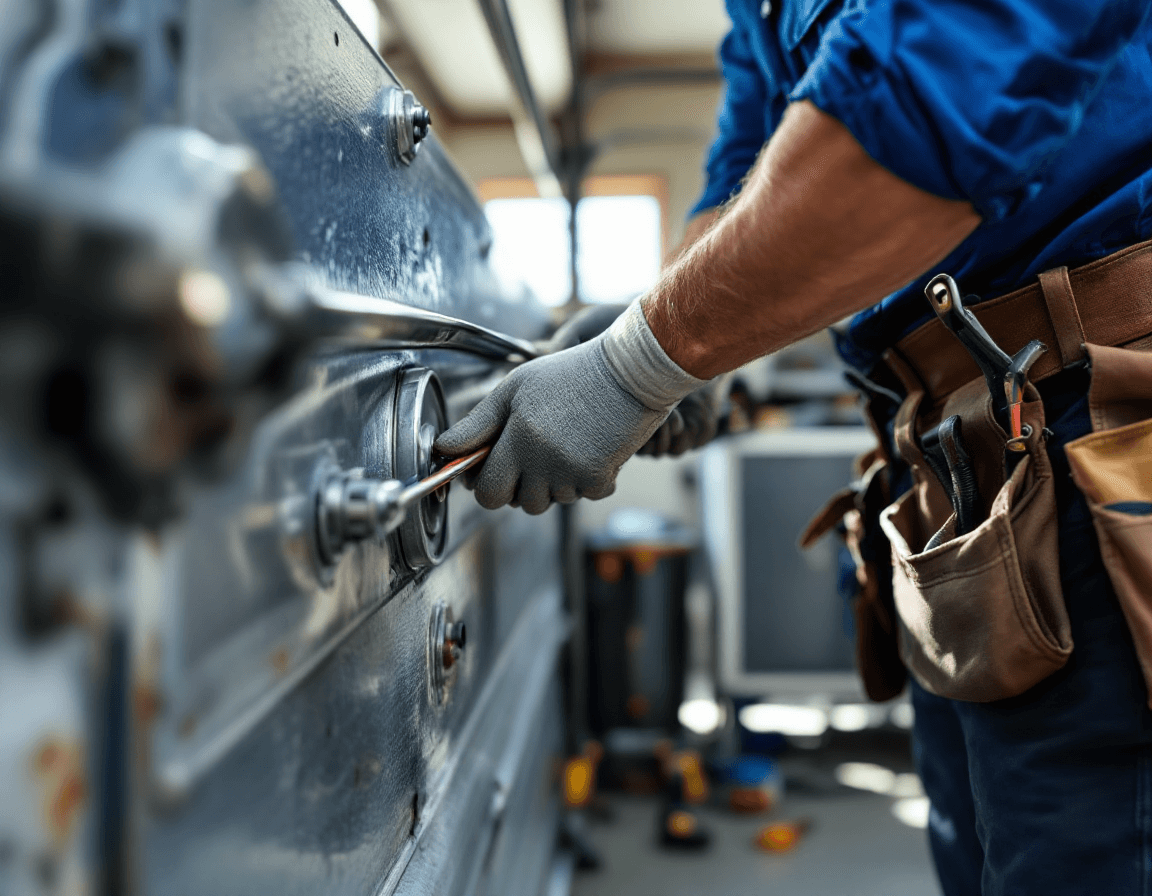
Garage Door Cable Replacement in Pacific, WA is one of the more common repairs we handle for homeowners in the 98047 area, and it is also one of the most important to get right. The lift cables are what carry your door's weight as it rises and falls, so when one frays, snaps, or slips off its drum, the door can drop unevenly, stop mid-travel, or bind in the tracks. Many households first notice the problem with a sharp bang from the garage followed by a door that will not budge. Others notice a slow tilt, a door that sits lower on one side, or a faint rattle that grows louder each week.
This page explains how lift cables and cable drums work together, what the warning signs look like, and why Pacific's wet winters and humid shoulder seasons so often lead to cable failure. It also covers what a typical repair involves, what it generally costs, and how to decide whether a cable can wait or needs attention now. We write from the perspective of technicians who spend their days inside garages across King County, so the advice reflects real repair work rather than theory.
Our goal is to help you understand the problem well enough to make a confident decision. Cable work involves high-tension components, and some of the safest choices you can make are the ones that keep you away from the springs and drums entirely. Read on for the details, and call us whenever you want a licensed technician to take a look.
Reading the Warning Signs Before a Cable Gives Way
Lift cables rarely fail without warning, even though the final moment often feels sudden. In the weeks or months before a cable snaps, most doors show subtle changes that are easy to overlook if you only use the garage a few times a day. Paying attention to these signs can turn an emergency service call into a planned repair that you schedule at your convenience. The most useful habit is to watch the door closely whenever you open or close it, and to notice how it moves from start to finish.
The following symptoms are the ones our technicians see most often in Pacific homes, and any of them deserves a closer look:
- Visible fraying, kinked strands, or a cable that looks shiny and stretched in one spot
- Rust or white powdery corrosion along the cable, especially near the bottom bracket or where it wraps the drum
- A door that hangs crooked, sits lower on one side, or appears to tilt when it is halfway open
- A door that closes unevenly, catches on one track, or seems to bind before it reaches the floor
- A loud snap or bang from the garage, followed by a door that will not lift or will only move a short distance
It helps to keep a simple mental log. If the door has begun to stick at the same height each time, or if one side seems to drag, write that down along with the date. Those patterns tell a technician a great deal about which cable is weakened and whether the drum on that side has also been affected. Catching a problem while the door still opens, even slowly, usually makes the repair simpler and less stressful.
Why Pacific's Damp Winters Take a Toll on Lift Cables
The Pacific Northwest climate is gentle in many ways, but its long stretches of rain, cloud, and humidity are hard on steel. Pacific sits within the broader King County lowlands, where winters bring frequent moisture and summers often stay cool and damp rather than dry. Water that finds its way into the garage, condensation that forms on cold concrete overnight, and the general dampness of a wet season all encourage surface rust on exposed steel. Lift cables are made of galvanized steel wire, but the coating is only a barrier, and once it is scratched or worn through, moisture can work into the strands.
Corrosion matters because it weakens the cable from the inside out. A cable can look almost normal from a distance while the outer strands have pitted and lost their strength. Under the constant load of a heavy door, those weakened strands eventually break, often one at a time at first and then all at once. Homes with attached garages that share a wall with a cold, damp room, or garages where vehicles are parked wet for long periods, tend to see more of this wear than homes with dry, climate-controlled storage.
Temperature swings add another layer of stress. A cold morning followed by a mild afternoon causes the metal to expand and contract, and over years that movement loosens the coating and fatigues the wire. Doors that are opened and closed many times a day, such as those used for daily commuting, accumulate that stress faster than doors used only for occasional storage. None of this means your cables are doomed, but it does mean that a cable that has reached the age of several years in our climate deserves a periodic inspection, even when it still appears to work well.
Understanding How Cables, Drums, and Springs Share the Load
To understand a cable problem, it helps to know how the parts of a typical torsion or extension spring system fit together. The lift cables attach to the bottom corners of the door at one end and wrap around a cable drum at the other, usually mounted on the same shaft as the springs above the door. When the springs unwind, they turn the shaft, and the drums pull the cables upward so the door rises smoothly. Because the drums are sized to match the door's height and weight, each cable must wind and unwind in precise, even layers.
The drum is not a passive wheel. It has a grooved, tapered profile on most residential systems, and the cable is designed to sit in a specific groove at each point of travel. When a cable comes off the drum or winds unevenly, the two sides of the door no longer lift in step, which is why a damaged cable often causes one side of the door to climb faster or sag lower than the other. A worn or misaligned drum can damage a new cable quickly, so a responsible repair considers the drum as well as the cable.
Springs deserve special mention because they store a great deal of energy under tension. Some cable repairs are straightforward, while others reveal that the springs have also weakened or that the shaft has shifted. A licensed technician will evaluate the entire assembly before deciding how to proceed, and will explain any additional work in plain terms before starting. Cable work and spring work are closely connected, and the safest approach is always to treat the system as a whole.
When the Cable Snaps and the Door Refuses to Move
A snapped cable is one of the most startling garage door problems a homeowner can experience. Many people describe a loud crack or a bang that seems to come from the ceiling, followed by a door that drops or sits stuck partway open. The door may look normal from the outside, yet it will not respond to the opener. In some cases the opener continues to run and strain, which can wear out its motor or gears if you keep pressing the button.
The first thing to do is stop operating the door. Do not try to lift it by hand, and do not stand under it or allow children and pets nearby. If the door is partly open, it may be held by the opener or by the other cable, and either one can shift without warning. Pull the emergency release cord only if the door is closed, and keep your hands and body clear of the tracks and the springs. If the door is open and you are unsure of its condition, the safest option is to secure the area and contact a technician.
Once the snap has occurred, the damaged cable usually needs full replacement rather than a splice or patch. Lift cables are designed to carry load across their entire length, and a repair that joins two pieces is not a reliable substitute. A technician will typically inspect the drum on the broken side, check the opposite cable for similar wear, and confirm that the door is balanced before restoring normal operation. Because the cables were likely weakened by age and moisture, replacing both cables at the same time is often the more durable choice.
Crooked, Lopsided, or Binding Doors: Reading the Clues
A door that hangs crooked, closes unevenly, or binds on one side is often trying to tell you that the cables are no longer sharing the load equally. You may notice a gap at the top corner that wasn't there before, a bottom seal that rubs harder on one side, or a track that seems to catch the roller every time the door closes. Some homeowners assume the problem is the rollers or the tracks, and those parts can contribute, but a lopsided door frequently begins at the cable level.
Pay attention to where the imbalance appears. If the door drifts low on the left side during the first few feet of travel, the cable or drum on that side may be slipping or stretched. If the problem only appears near the top of travel, the cable may be catching on the drum groove as it winds. Either way, continuing to run a door that is out of balance can damage rollers, tracks, bottom brackets, and the opener, so a prompt inspection is a practical way to limit the total cost of repair.
Be careful with the door's balance mechanism when you investigate. Do not loosen any bolts on the bottom brackets or drums, and do not attempt to adjust tension in the springs. Those adjustments can cause serious injury even when the door appears to be stable. A licensed technician can measure how the door tracks, confirm which cable is at fault, and restore even lift on both sides with the correct components.
Tangled Cable on the Drum: Why Untangling It Yourself Is Risky
A cable tangled around the drum is one of the more confusing problems a homeowner can see. Instead of wrapping in neat, parallel layers, the cable bunches, crosses over itself, or wraps on top of another turn. This often happens after a cable has slipped off the drum groove, after the door has been forced open by hand, or after a worn cable has begun to fray and bind. Tangles can also form when the drum has been damaged or when the cable has been pulled sideways by a misaligned bracket.
The temptation is to pull the cable free and rewind it by hand. That approach is hazardous for two reasons. First, the cable and drum are under tension from the springs, and a sudden release can whip the cable or cause the drum to turn violently. Second, a tangled cable is often already compromised, and forcing it back into place can kink the strands or weaken the wire further. Even a brief attempt can lead to a cable snapping under load, which can cause injury.
If you notice a tangle, the safest thing to do is leave it alone and keep the door closed. Use the garage door only through a pedestrian door until the problem is resolved, and keep vehicles and people clear of the area below the drums. A licensed technician can relieve the spring tension safely, inspect the drum and cable, replace damaged parts, and reset the cable so that it winds correctly. In many cases the tangle is a symptom of an underlying issue that needs attention, and fixing that root cause prevents the problem from returning.
What a Cable Replacement Usually Costs in Pacific
Cost is one of the first questions homeowners ask, and we want to be clear and honest about it. For most garage door cable replacements, our pricing falls between $110 and $300. Where a job lands within that range depends on several factors, including the size and weight of the door, whether one or both cables need replacement, the condition of the drum, and how much time the technician spends diagnosing the balance problem. A straightforward single-cable replacement on a common residential door typically sits near the lower end of the range, while a double-cable job on a heavier or older door may move toward the upper end.
It is also important to know what the quoted range does not necessarily cover. If the inspection reveals worn springs, a damaged shaft, bent tracks, or a failing opener, those repairs are separate from the cable work and will be priced individually. We would rather explain the full picture before any work begins, so that you can decide what fits your budget and timeline. Ask the technician to walk you through the findings and the options, and make sure you understand the price before approving the job.
When you compare quotes, look for a clear description of what is included. A proper cable replacement should include the new cable or cables, correct installation on the drum, a check of the opposite side for wear, and a test of the door's balance and travel. Be cautious of unusually low estimates that do not mention the drum or the balance check, because those omissions often lead to repeat visits. A fair price for a complete, safe repair is worth more than a cheap fix that leaves the underlying problem in place.
Inside a Typical Cable Visit: What Our Technicians Check
When a licensed technician arrives for a cable repair, the visit usually starts with a conversation and a careful look at the door. We ask when the problem began, how the door has been behaving, and whether there was a loud noise or a tangle. The technician then checks the cables on both sides, the drums, the bottom brackets, the rollers, the tracks, and the springs. Each part can tell a piece of the story, and the pattern of wear often reveals whether the cable failed on its own or whether another component pushed it past its limit.
Once the diagnosis is clear, the technician will explain the plan. If the cable must be replaced, the old cable is removed only after the spring tension has been safely relieved according to the proper procedure. The new cable is then routed through the drum and bracket, set into the correct groove, and tensioned so that the door lifts evenly. The technician tests the door through several full cycles, watching the tracks and the opposite side to confirm that the balance is correct.
Finally, we review the work with you before leaving. That includes what was replaced, what was inspected but left in good condition, and any recommendations for future maintenance. Our aim is for you to understand exactly what happened and why, so that you can spot early signs of trouble next time. A good visit should leave the door operating smoothly, the garage secure, and you with a clear picture of the system's health.
Choosing Replacement Cables and Drums That Fit Your Door
Not every cable is interchangeable, and choosing the right replacement is an important part of a lasting repair. Cables are sized by length, diameter, and fitting type, and they must match the door's height, weight, and drum design. Using a cable that is too long or too short can leave the door unbalanced or cause the cable to bunch on the drum. Likewise, a drum that is worn, cracked, or mismatched to the cable may need replacement to keep the system working safely.
Quality matters as well. Galvanized cables with a durable coating resist moisture better than uncoated alternatives, which is a meaningful advantage in a climate with long wet seasons. Fittings and crimps should be secure, and the cable should be routed so that it does not rub against brackets or the door's edge. A technician who considers these details is more likely to deliver a repair that holds up through many seasons rather than one that needs revisiting after the next rainy winter.
If the existing drum shows grooves that are worn smooth, cracks near the mounting hub, or signs of slipping, replacing the drum along with the cable is often the better choice. It costs a little more up front, but it prevents the new cable from wearing out prematurely. Ask your technician to show you the drum and explain its condition, and do not hesitate to request a second opinion if something seems unclear. Clear communication about parts is part of a responsible, professional repair.
Simple Habits That Extend Cable Life in Pacific Homes
Although cables eventually wear out, a few habits can extend their life and catch problems early. The most helpful is a regular visual check, ideally every few months. Stand inside the garage with the door closed and look up at the cables, the drums, and the brackets. Watch for fraying, rust, loose fittings, or any strand that looks out of place. Keep the view clear of stored items that could brush against the cables or block your sight line.
Moisture management is equally valuable in our part of the region. Keep the garage ventilated when possible, and avoid leaving wet vehicles or wet gear in the space for long periods. If water tends to pool near the door or along the floor, address drainage and weather sealing so that moisture does not reach the lower brackets and cable anchors. A dry, well-ventilated garage protects not only the cables but also the springs, rollers, and opener.
Finally, operate the door with attention. If you notice a new noise, a slight tilt, or a pause during travel, stop using the door and call for service before the problem grows. Avoid forcing the door by hand, and never attempt to adjust the springs or cables yourself. For any work on cables, drums, or springs, rely on a licensed professional. A short inspection now can prevent a much more disruptive failure later.
Scheduling Your Cable Repair with Seattle Garage Door Fix
If your door is showing any of the signs described on this page, the right time to act is now rather than after the next failure. A licensed technician can inspect the cables, drums, and springs, explain what is happening, and restore safe, even operation. We serve Pacific and surrounding communities across King County, including homes close to Pacific City Park, and we are happy to talk through your symptoms before you commit to a visit. Please call (888) 799-3819 to schedule a cable inspection or replacement, or to ask any questions about your garage door.