
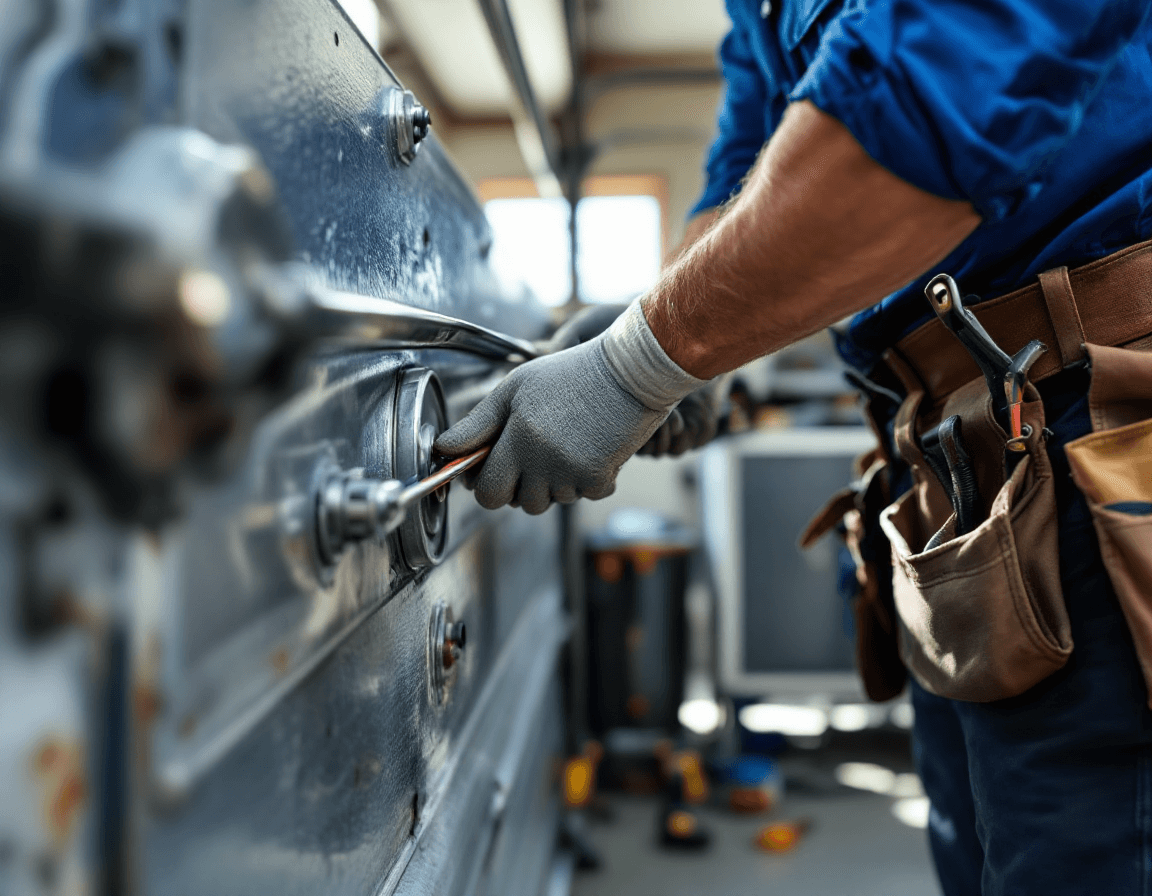
Garage door cable replacement in Sumner, WA is one of the more urgent repairs a homeowner can face, because a cable that has snapped or jumped off its drum leaves a heavy door hanging in an unbalanced, unsafe state. Many Sumner households discover the problem when they press the remote and hear a sharp bang, followed by a door that rises a few inches, sags, or refuses to move at all. The repair itself is straightforward for a trained technician, but the stakes are high, and the best outcome comes from catching the early warning signs before the cable fails completely.
Sumner sits in the Puyallup River valley, where the air stays damp for much of the year and winter rain tends to linger for days at a time. Garages here often hold more than cars. Many contain bicycles, lawn equipment, stored paint, and seasonal décor, so the door gets opened and closed frequently while the rest of the house is busy with routines. That combination of moisture, temperature swings, and daily use puts steady stress on the lift cables, drums, and springs that carry the door's weight. This guide explains what those components do, why they wear out in our part of Pierce County, and what to expect when you call a licensed professional.
If you are reading this because your door is already hanging crooked or stuck, you can skip ahead to the sections on immediate safety and scheduling. If you are simply trying to understand what a cable repair involves before a problem appears, the sections below walk through the signs, the mechanics, the costs, and the maintenance habits that help a door last longer. Seattle Garage Door Fix serves Sumner and the surrounding communities, and the information here reflects the kinds of calls our technicians see across the region.
Why Garage Door Cables in Sumner Wear Out on Their Own Schedule
Every standard residential garage door depends on a pair of lift cables, one on each side, that wrap around a cable drum at the top corner of the door track. As the door opens, the drum turns and the cable winds onto it, while the torsion or extension springs store and release the energy that actually lifts the door. The cables are braided steel, and they are designed to carry enormous loads over thousands of cycles. They are not designed to sit exposed to repeated moisture, road grime, and occasional impacts without any wear at all.
In Sumner, several local factors combine to shorten that working life. Homes near downtown often have older detached garages or attached garages that were built before modern door hardware became standard, and some of those doors still run on original cables that have spent decades flexing in a damp space. Newer subdivisions, including parts of Lakeland Hills, tend to use heavier insulated doors with more weight to carry, which means the cables and drums work harder with each cycle. Neither situation is a defect. It simply means that the cable system deserves regular attention rather than being forgotten until it breaks.
Wear is rarely dramatic at first. A single strand in the braided cable may fray where it passes over a roller or bends around the drum, and the cable still looks mostly intact from a few feet away. Over time, those broken strands multiply, the cable loses its tension evenly, and the door begins to pull harder on one side. By the time a cable finally parts, it has usually been giving warning signs for weeks or months. Recognizing those signs is the most practical thing a Sumner homeowner can do to avoid a sudden failure.
Reading the Warning Signs Before the Door Quits
The most common early symptom is a door that no longer rises or lowers in a level line. If one corner appears higher than the other when the door is halfway open, or if the bottom seal lifts unevenly off the floor, the cable on the high side may be stretched, slipping, or partially unwound. Homeowners sometimes assume the track has shifted, but the track is often fine and the cable is the real issue. Stopping to check the door's level position after every cycle for a few days can reveal a pattern before the problem becomes serious.
Another warning sign is a door that closes unevenly or seems to bind on one side. You may notice it catching near the bottom of the track, rubbing against a weatherstrip in an odd spot, or pausing briefly before finishing its descent. These behaviors suggest the cable is no longer distributing load evenly, and the door is forcing itself through the track on the weaker side. Pressing harder on a binding door or repeatedly retrying the opener only accelerates the damage, so it is better to stop operating the door and schedule an inspection.
The most alarming symptom is a loud snap or bang, usually from the top corners of the garage, followed by a door that sits partly open or will not move. That sound is typically a cable parting under tension, and it often comes with a visible loop of cable hanging near the drum or a section of cable lying on the floor. A door in this condition should not be forced open or closed. Keep people and pets clear of the area, avoid standing under the door, and use the manual release only with caution, understanding that a door with a broken cable may drop suddenly once it is released.
What the Spring and Cable System Actually Does
It helps to understand how the parts of the system work together, because a cable problem is almost never an isolated event. Torsion springs are mounted on a steel shaft above the door opening, and they wind up as the door closes and release their stored energy to lift it. Lift cables connect the bottom brackets of the door to the cable drums, which are fixed to the ends of that same shaft. When the springs unwind, the drums rotate and the cables wind upward, raising the door in a controlled motion.
Because the drums and springs share a shaft, a problem on one side can affect the other. If one cable has broken, the remaining spring tension can become unbalanced, and the door may twist or shift in its tracks. In some cases a broken cable also indicates that the spring is worn or that the drum has lost its grip, so a responsible technician checks the whole assembly rather than simply swapping a cable and leaving. That is why a complete inspection is part of any reputable cable repair.
Extension springs, which run along the sides of the track on some older or lighter doors, work differently and are often paired with safety cables that run through the center of each spring. A cable replacement on those systems involves attention to the safety cable as well, since its job is to catch the spring if it breaks. Identifying which system your door uses is one of the first things a technician will do, and it shapes both the parts needed and the time the job takes.
Cable Drum Trouble That Looks Like a Cable Problem
Homeowners often blame the cable when the real culprit is the drum. A cable drum is a grooved cone-shaped component that the cable winds around, and its grooves are designed to keep each wrap of cable in a precise position. When a drum wears, cracks, or loosens on its shaft, the cable can slip out of its groove, bunch up, or wind unevenly, creating the tangled or jumbled look that many people describe after a failure. Simply replacing the cable onto a damaged drum can lead to a second failure within a short period.
Set screws and set collars can also loosen over time as the shaft rotates under load. A drum that shifts sideways or rotates slightly out of alignment will push the cable against the track or bracket, creating friction that frays the strands. Technicians check that the drums are seated firmly, that the set screws are tight, and that the cable enters and exits the drum cleanly. This kind of attention can prevent a cable from being damaged the moment it is installed.
A cable that has come off the drum is a different scenario, and it is usually caused by slack, misalignment, or a drum that has lost its groove definition. Once a cable has jumped the drum, it must be carefully rewound with the door in a fully closed and safely supported position, and the spring tension must be managed correctly during the process. Attempting this without proper training is one of the most common ways people get hurt, which is why we always recommend leaving drum service to a licensed professional.
Moisture, Rust, and the Pacific Northwest Effect
Western Washington's climate deserves its own explanation, because it is one of the strongest forces working against garage door cables in Sumner. Our damp winters, frequent overcast days, and humid spring weather create conditions where steel slowly oxidizes, especially at the points where the cable bends. Surface rust may look harmless, but it creates microscopic pits that weaken individual wires, and once a few wires in a braided cable are compromised, the rest carry more load than they were designed to handle.
Temperature swings add another layer of stress. A cold morning can make cables stiff and springs tight, while a warm afternoon softens lubricants and changes how the components move. Many Sumner homeowners notice their doors behaving differently between seasons, and that is often a sign that the cable system is working harder than it should. Lubricating the hinges and rollers helps, but the cables themselves need periodic inspection for fraying, discoloration, or dry spots that indicate the protective coating has worn away.
Garages in the valley can also collect dust, leaf debris, and road spray that migrates in under the door. Grit that settles on the drum or cable accelerates wear, because every cycle drags those particles across the metal surface. Keeping the garage floor reasonably clean and rinsing the door's lower track area during dry spells can reduce that abrasion. These are small habits, but they add up over several years of daily use.
Safety Comes First: Why Spring and Cable Work Needs a Licensed Technician
Cable and spring work is among the most hazardous tasks in residential garage door service. Torsion springs store a tremendous amount of energy, and when they are tensioned or released incorrectly, they can cause severe injuries. Cable failures can also release sudden force, and a door that drops unexpectedly can crush hands, fingers, or worse. For these reasons, we treat every cable repair as a job for trained, licensed, insured professionals, and we encourage every homeowner to do the same.
Many people try to save money by ordering a cable online and installing it themselves, but a replacement cable is only one part of a safe repair. The correct length, the correct diameter, and the correct end fitting all matter, and the door must be properly balanced before work begins. Without the right tools and training, it is easy to misjudge spring tension, lose control of a winding bar, or install a cable that will fail again within days. A technician brings the equipment and experience to handle these variables safely.
If your door has already failed, please avoid any temptation to fix it yourself. Do not attempt to adjust spring tension, unwind a drum, or pry the door off its track. Disconnect the opener if you can do so safely, keep children and pets away from the door, and contact a licensed service provider. Most of the hazards involved come from the stored energy in the spring system, and that energy is not something a homeowner should attempt to manage without training.
What a Typical Cable Repair Looks Like in Sumner Homes
A professional cable repair usually begins with a visual inspection of the door, springs, drums, cables, tracks, and brackets. The technician checks whether the door is level, whether the springs appear worn or stretched, and whether the cable has slipped, frayed, or broken at the drum or bottom bracket. Photographs and notes are often shared with the homeowner, so the decision about what to replace is clear and documented.
Once the scope is confirmed, the technician secures the door, releases tension in a controlled way, and replaces the affected cable or cables. The new cable is routed correctly through the track and attached to the drum and bottom bracket. The drum is then seated, set screws are tightened, and the spring tension is restored to the correct level. The door is tested through several full cycles to confirm that it rises and lowers evenly, with no binding, twisting, or unusual noise.
Finally, the technician reviews the results with you and explains any additional maintenance the system needs. In many cases, this includes lubricating the rollers and hinges, tightening hardware that has loosened, or scheduling a separate spring inspection if the existing springs show wear. Clear communication at this stage helps homeowners understand what was done and what to watch for in the coming months.
Typical signs that a cable repair has been done well include:
- The door rises and lowers in a level, even line without leaning to either side
- Both cables sit neatly in their drum grooves with no visible gaps or loose wraps
- The door stops at the correct open and closed positions without hesitation
- No grinding, popping, or rubbing sounds occur during several full cycles
- The bottom seal meets the floor evenly along the full width of the door
Pricing Expectations for Cable Work in the Sumner Area
For most standard residential cable replacements, our pricing falls in the range of $110 to $300. Where a job lands in that range depends on several factors, including the size and weight of the door, whether one or both cables need replacing, the condition of the drums and brackets, and whether additional components such as springs or rollers are also worn. Doors with heavier insulation or unusual dimensions may require more parts and more time, which can move the final figure.
It is reasonable to ask for a clear explanation of what is included before approving any work. A quote should state which cables are being replaced, whether drum inspection and set-screw tightening are part of the job, and whether a post-repair test cycle is included. Homeowners who understand the scope of the work are better able to compare options and avoid surprises, especially when a repair uncovers related issues that need attention.
Keep in mind that the least expensive option is not always the most cost-effective. A cheap cable installed on a worn drum may need to be replaced again within months, while a complete inspection that addresses the root cause can extend the life of the entire system. When you call for service, ask the technician to explain what they found and why each recommended part is needed, so you can make an informed choice about your Sumner garage door.
Local Door Types in Lakeland Hills and Downtown Sumner
Sumner's housing mix gives us a useful range of garage door types to consider. Older homes near Downtown Sumner, with its historic storefronts and tree-lined residential streets, frequently have single-car or narrow double-car doors, some of which are paneled wood or early steel designs. These doors may use lighter hardware and older spring configurations, and their cables often have decades of exposure to damp air. Careful inspection of the drums and brackets is especially important on these homes.
Newer neighborhoods in and around Lakeland Hills tend to feature wider two-car and three-car doors, often insulated steel with multiple panels and reinforced tracks. These heavier doors place more demand on the cable and spring system, so routine checks matter even if the door seems to work well. Homeowners in these areas sometimes notice a subtle change in sound or motion before a cable fails, and paying attention to those small shifts can prevent a larger repair later.
Detached garages, which are common on many Sumner lots, bring their own considerations. These structures may have less insulation and more temperature fluctuation, and the doors may see varied use as workshops or storage spaces. A cable problem on a detached garage can be harder to notice because the door is opened less often, so a periodic visual check of the cables and drums is a sensible habit for anyone who uses the space only occasionally.
Preventing the Next Cable Failure Between Service Visits
Preventive care does not need to be complicated. Monthly, take a few minutes to open and close the door slowly while watching the cables and drums. Look for fraying, rust spots, loose wraps, or any section of cable that appears to sit off its groove. Listen for scraping, popping, or unusual vibration, and note whether the door's level line changes from one cycle to the next. Small observations like these are often the first clues that a cable needs attention.
Lubrication is another useful habit, but it must be done carefully. Apply a silicone-based or garage-door-specific lubricant to the rollers, hinges, and track surfaces, and avoid spraying oil directly onto the lift cables, which can attract dust and grit. Wipe away any excess so it does not drip onto the floor or collect debris. Keep in mind that the springs and drums themselves should be handled only by a technician, so routine maintenance should stay focused on the components homeowners can safely reach.
Several other practical steps help protect the system over time:
- Keep the garage floor and track area free of debris, leaves, and loose gravel
- Check that the bottom weatherstrip is intact so moisture does not reach the lower bracket
- Schedule a professional inspection every year, or sooner if the door is heavy or heavily used
- Replace worn rollers when they show cracks or flat spots, since rollers affect cable stress
- Avoid hanging heavy items from the door or its tracks, which adds load to the cables
Scheduling Cable Service in Sumner and Nearby ZIP Codes
We provide garage door cable replacement and drum service throughout Sumner, including ZIP codes 98390 and 98391, along with nearby communities in Pierce County and across the greater Seattle and Western Washington region. When you call, a team member can help you describe the symptoms you are seeing, whether the door is stuck, leaning, or making unusual noises, and can advise you on whether the repair should be treated as urgent. Clear details at the start of the call make it easier to plan a visit that fits your schedule.
If your door has a broken or jumped cable, it is best to leave it closed or partially closed and avoid operating it until a technician arrives. Keep the area clear, prevent children and pets from approaching, and avoid attempting any spring or drum work on your own. If the door is simply uneven or binding, you can usually wait for a scheduled appointment, but continuing to run the opener can cause additional damage, so a prompt inspection is still the wisest choice.
Every Seattle Garage Door Fix technician is licensed, bonded, and insured, and every cable job follows safety-first procedures from the first inspection through final testing. Whether your home is near Downtown Sumner, in the Lakeland Hills area, or elsewhere in the Sumner community, we are ready to restore your door to safe, level operation. Call (888) 799-3819 today to schedule your garage door cable replacement in Sumner, WA, and let a licensed professional take the risk out of the repair.