
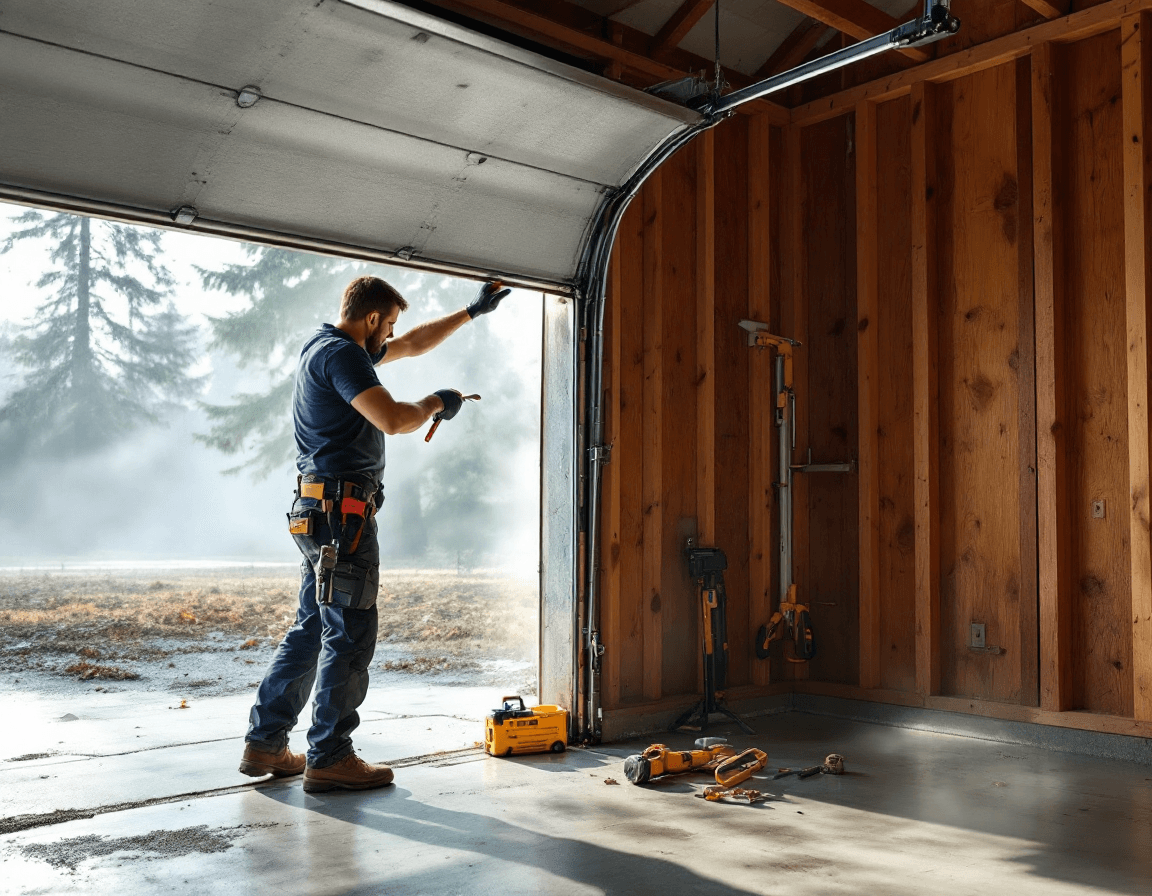
Off-track garage door repair in Sumner, WA is one of the more urgent calls we take, because a door that has left its track can't be safely opened, closed, or secured. Homes in Sumner, from the older blocks near downtown to newer streets in Lakeland Hills, deal with the same problem: a roller pops out, a panel binds, and suddenly the family car is stuck inside or the garage is wide open overnight. This page explains what off-track problems look like, why they happen so often in our part of Pierce County, and what a realignment visit usually involves.
Most people discover an off-track door in the middle of an ordinary morning, when the opener strains, the door shudders, or the panels sit at a visible angle. The door may still look fine from the driveway while one side has dropped out of its channel. Because the springs, cables, and drums all share the load, a derailed door should be treated as a safety issue rather than a cosmetic one. This guide is meant to help you recognize the warning signs, understand what a technician will check, and decide when to stop and call a licensed professional.
If you are reading this with a door stuck halfway up or sitting crooked on its tracks right now, the most important advice is simple: do not force it, and keep people and pets away from the opening. The sections below walk through the common causes and realistic repair options, and they point out the specific tasks that belong only to trained technicians.
What an Off-Track Door Looks Like on a Sumner Driveway
An off-track door rarely fails all at once. Usually one side of the door lifts higher than the other, a roller slips partly out of the vertical track, and the panels lean into the gap until the whole assembly binds. On many Sumner homes, you will see a visible gap between the top section and the header, or a sliver of daylight along the edge where the door should sit snug against the weatherstripping. Some doors make a grinding or popping noise as the rollers ride over a lip in the track instead of rolling smoothly through it.
The symptoms vary depending on which part has failed. If a single roller has jumped out, the door may still open a few inches before jamming, and the track will often show a bright scrape where the metal wheel was dragged along. If both sides have come loose, the door can sag or tilt, and the bottom edge may sit at an angle that makes the automatic opener reverse direction. In either case, the door is no longer traveling on a straight path, and continuing to run the opener can bend track sections or damage the opener's trolley.
Homeowners sometimes assume an off-track door is just a stuck door and try to pry it free. That instinct is understandable, but it often turns a simple roller reseat into a bent track replacement. Watching carefully for uneven movement, rubbing marks, or a door that stops partway can tell you a great deal before a technician arrives.
Why Wet Winters in the Puyallup Valley Pull Doors Out of Line
Western Washington's long, damp winters create conditions that quietly work against garage door hardware. Moisture gets into the track channels, rust starts on the steel, and dirt and grit build up on the rollers until the wheels no longer turn freely. The Puyallup River valley around Sumner tends to hold moisture in the air for long stretches, and that humidity can make tracks and bearings drag more than they would in a drier climate. Over time, sluggish rollers put uneven stress on one side of the door, and that imbalance can push a roller out of its track entirely.
Ground movement also plays a role. Many homes in and around Sumner sit on soils that expand when saturated and contract when they dry, and a settling slab can shift the garage floor just enough to change how the door sits in its opening. When the floor is no longer level, the tracks may no longer run parallel to the door, and the rollers start to ride against one edge. Even a small change in alignment can make a door that worked fine for years suddenly start popping off.
Wind and storm events are another factor. Gusts can push a lightweight door against its tracks while it is partially open, and heavy rain can soften wood door frames or header boards that help hold the track in position. Homeowners who notice their door behaving differently after a windy week or a long rainy stretch are often seeing the early signs of a alignment problem that is easier to correct before it becomes a bent track.
Warning Signs to Catch Before a Door Derails
Early detection is the best way to avoid a full off-track event. Many of the warning signs are easy to notice if you pay attention to how the door sounds and moves during normal use. Taking a minute each month to watch the door cycle open and closed can reveal problems while they are still small and inexpensive to fix.
- A grinding, scraping, or squealing sound during travel, especially in one spot along the track
- A door that rides higher on one side or leaves a visible gap at the top corner
- Rollers that look bent, flattened, or sitting noticeably off-center in the track
- Shiny wear marks or scratches along the inside of the track where metal has been rubbing
- A door that stops, reverses, or hesitates while the opener is running normally
If you see any of these signs, avoid running the opener repeatedly to test the door. Each cycle adds stress to the rollers, hinges, and track joints. A quick visual check from a safe distance, with the power to the opener disconnected, can tell you whether the problem is limited to a roller or whether the track itself has been bent.
Rollers, Hinges, and Track Sections: What Actually Gets Realigned
When a technician arrives for an off-track call, the first job is to figure out exactly what moved. The rollers ride inside the vertical and horizontal track, and each one is attached to a hinge or bracket between door panels. A worn or damaged roller can jump out of a track that is otherwise straight, while a bent track can trap a roller that was working fine a week earlier. Sorting out which component failed determines whether the repair is a quick reseating or a longer job involving track sections.
Re-seating a roller usually means lifting the door carefully, aligning the wheel with the track opening, and confirming that the roller sits fully in the channel before the door is lowered again. Straightening a track involves loosening the mounting bolts, gently coaxing the metal back into shape, and checking for even spacing along the full run. Separated track sections, meaning joints where the metal has pulled apart, require new bracket hardware and careful measurement to keep the door square. Technicians also check the track's mounting to the wall and ceiling, because a loose bracket can allow the entire track to drift even after the door is repositioned.
Most off-track repairs in the Sumner area fall in a price range of about $125 to $400, depending on how much track or hardware is involved and how difficult the door is to access. A simple roller reseat with minor adjustment usually lands at the lower end, while straightening multiple track sections or replacing bent brackets moves the cost upward. A written estimate before work begins helps you understand exactly what is being repaired.
Safe Steps a Homeowner Can Take Before the Technician Arrives
There are a few things a homeowner can do safely while waiting for service. The goal is to protect the door, the opener, and everyone nearby without attempting repairs that belong to a professional. Keeping the situation stable can prevent additional damage and may make the technician's job faster.
- Disconnect the opener by pulling the emergency release cord so the door cannot be run electrically while it is off track.
- Keep children, pets, and vehicles clear of the door opening and the area underneath it.
- Take clear photos of the track, rollers, and any gaps so you can describe the problem accurately on the phone.
- Do not hang weight on the bottom of the door, pry it with tools, or try to lift it into alignment by hand.
- Note whether the door was struck, moved by wind, or failed on its own, since that information helps with diagnosis.
Those steps are about stabilizing the situation, not fixing it. Pulling the emergency release is generally safe, but the door itself may be heavier than it looks, and the springs are under substantial tension. Any work involving the spring system, cables, or drums should wait for a licensed technician with the proper tools.
When a Vehicle Strikes the Door
Vehicle impacts are a common cause of off-track doors in driveways across Pierce County, and they can be deceptive. A backing car or a delivery truck clipping the bottom panel can bend the track, twist the header, or shove one side of the door out of its channel even when the damage looks minor from the outside. Sometimes the first sign is a door that no longer closes all the way, or a new gap that appeared overnight.
After an impact, check whether any track sections are dented, kinked, or pulled away from the wall. Look at the rollers for flattened spots or cracks, and inspect the hinges for bent metal. A door that has been struck may also have a damaged panel or a warped section that needs more than a simple realignment. Those details matter because a bent track left in place can keep pulling new rollers out of line.
If your insurance covers vehicle damage, documenting the impact with photos before any repair is helpful. Bring that documentation to the technician so they can note exactly what was damaged. A thorough inspection after a collision protects both the door's function and your ability to prove what happened.
Why Spring and Cable Work Always Goes to a Licensed Pro
Off-track repairs can sometimes involve the spring system, especially when a door has been forced or a cable has slipped off its drum. This is where safety becomes the top priority. Torsion and extension springs store large amounts of energy, and a mistake during adjustment can cause serious injury. For that reason, we recommend a licensed professional for all spring and cable work, without exception.
Cables can unspool or fray when a door derails, and that damage is easy to miss until the door is partly lifted. A technician will check each cable's seating on its drum, confirm that the tension is balanced, and inspect the drum for wear. If the springs show fatigue or the cable is damaged, replacing those parts is safer than trying to patch them. Attempting to rewind a cable or adjust spring tension without the right equipment is one of the most common ways homeowners get hurt during garage door problems.
Licensed and insured technicians also carry the training and tools to handle these components correctly. If a company offers to do spring work without proper credentials or insurance, that is a serious red flag. Asking for proof of licensing and insurance before work begins is a reasonable step for any homeowner.
Neighborhood Notes for Downtown Sumner and Lakeland Hills
Garage doors in Sumner vary quite a bit depending on the age and style of the home. Around downtown Sumner, many houses have older garages with lighter framing, original openers, and tracks that have been mounted and remounted over decades. Those doors often benefit from a careful check of the header and wall brackets, since aging wood can shift and change the track's position. Small adjustments made during an off-track visit can keep an older door running smoothly for years afterward.
In Lakeland Hills, many homes have larger two-car garages with heavier insulated doors. Those doors carry more weight, which means the rollers and hinges see more stress when they are out of alignment. A single derailed panel on a heavier door can bind quickly, and the technician will usually want to inspect the full set of rollers and track runs rather than fixing only the visible problem. Homeowners in these neighborhoods often appreciate a thorough look at the whole system, since replacing one component without checking the rest can lead to repeat calls.
Our crews serve these areas across ZIP codes 98390 and 98391, and we are familiar with the way Sumner's older and newer housing stock differs. Whether your home sits near the historic core or in a newer development, the basic principles of alignment are the same, but the approach may shift slightly depending on the garage's construction.
Keeping Tracks Aligned Through Western Washington Seasons
Preventive care is one of the most effective ways to avoid off-track problems. A few simple habits can reduce the wear that leads to derailment, especially during the damp months when moisture and grime build up. Regular attention to the tracks and rollers is much easier than reacting to a stuck door on a cold morning.
Start by wiping the inside of each track with a dry cloth every few months to remove grit and debris. Avoid heavy grease or oil on the tracks, since it can attract dirt; a light lubricant meant for rollers and hinges is usually enough. Check that the track brackets are tight and that the track is still parallel to the door, because a slight shift can grow into a larger problem over time. During the wet season, look for rust spots on the track and address them early, before corrosion weakens the metal.
Seasonal checks also help catch changes in the door's balance. If the door feels heavier or lighter than usual, or if one side seems to lag, that may indicate a developing issue with springs or rollers. Scheduling a professional inspection every year or two can identify alignment drift before it causes a full off-track event, and it gives you a clear picture of the system's condition.
Scheduling a Visit and Knowing What to Expect
When you call for off-track garage door repair in Sumner, a clear description of the problem helps us prepare. Let the scheduler know whether the door is fully off track, partly open, or sitting crooked, and mention any sounds, impacts, or recent weather events. Photos sent ahead of time can also help identify the likely cause, although the technician will still need to inspect the system in person.
During the visit, the technician will typically start by disconnecting power to the opener, then examine the rollers, tracks, hinges, cables, and springs. They will explain what they found, what can be repaired on the spot, and whether any parts need replacement. Before any work begins, you should receive a clear estimate. For most off-track repairs in the Sumner area, pricing usually falls between $125 and $400, depending on the scope of the work.
Seattle Garage Door Fix is licensed, bonded, and insured, and our technicians follow safety procedures for every off-track job. If your door is stuck, crooked, or has come off its tracks, do not wait for the problem to get worse. Call (888) 799-3819 to schedule a visit, and we will help you get your Sumner garage door moving safely again.