
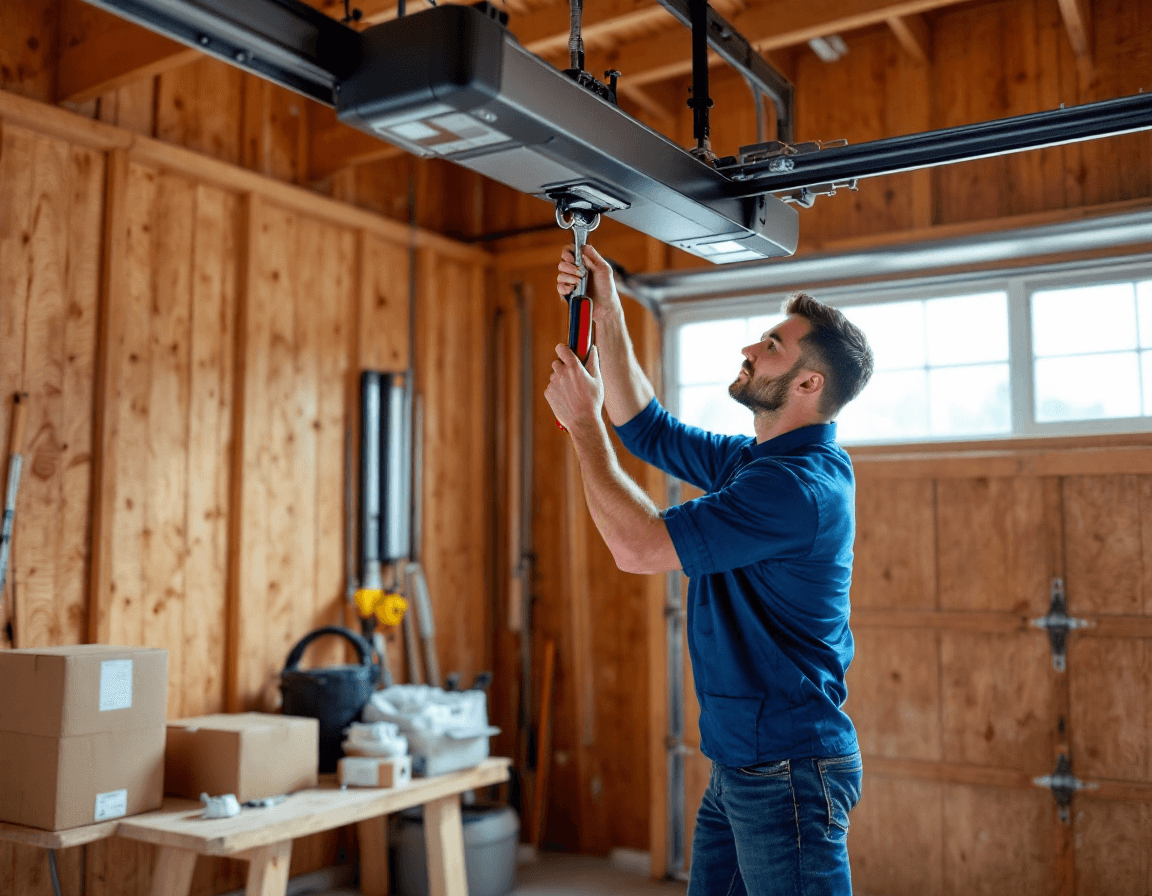
Garage Door Opener Installation & Replacement in Sumner, WA is one of the most practical upgrades a homeowner can make, and it often delivers more daily benefit than almost any other repair. If your garage door has started grinding on the way up, stopping halfway, or ignoring your remote on rainy mornings, the opener is usually the first component to examine. Homes in Sumner, from the older blocks near the historic downtown core to newer houses in the Lakeland Hills area, tend to put their openers through steady use, damp weather, and the occasional winter power outage. Replacing a tired unit with a modern one can restore reliable operation, quieter nights, and better security in a single afternoon.
Sumner sits in the Puyallup River valley of Pierce County, where the air stays cool and humid for much of the year. Garage door hardware does not care whether the moisture comes from fog off the river or from a long run of drizzle, because metal parts, wiring, and circuit boards all respond to it over time. The same climate that keeps lawns green also means openers spend years cycling in temperatures that swing from chilly mornings to mild afternoons, and that steady stress shows up in motor wear and sensor problems. Our technicians serve homeowners across the area, and this page explains how we approach opener installation and replacement so you can decide whether it is time for a change.
Our service covers belt-drive, chain-drive, and wall-mount smart openers, along with battery backup options that keep your door working when the lights go out. Installed pricing typically runs from $275 to $650, depending on the model you choose and the specifics of your door and ceiling. The sections below walk through the signs that point toward replacement, how to choose a drive style, what security and smart features actually mean for your household, and what to expect on installation day. Every project we perform follows the same principle: the opener should match the way you really use your garage.
Why Sumner Garages Often Ask More From Their Openers
Many garages in Sumner were built to hold a vehicle, a few bicycles, and seasonal storage, but today they often serve as a daily entry point, a workshop, a laundry room, or a second living area. When a garage becomes the main way in and out of the house, the opener cycles several times a day, sometimes more during school runs and weekend errands. That kind of frequent use wears out motors, gear assemblies, and trolley mechanisms much faster than the occasional trip the original builder may have imagined. A unit that handled light duty well for a decade may struggle once it is asked to do the work of a primary entrance.
Local conditions add another layer of demand. Winter storms in western Washington bring wind-driven rain, and water can find its way into exposed wiring and sensor connections if seals or weatherstripping have gaps. Early mornings can be damp enough that door tracks and rollers feel sluggish, which forces the motor to work harder to lift the door. Over time, that extra effort generates heat and strain that shortens the life of a budget opener.
Homes in newer neighborhoods such as Lakeland Hills frequently have larger or taller doors than older houses, along with insulated panels that add weight. A standard opener sized for a lightweight single-car door may be overwhelmed by a heavier double door, especially when the spring system has been adjusted over the years. Matching the opener's horsepower and rail configuration to the actual door is one of the first things we check before recommending a replacement.
Reading the Signs Your Current Opener Has Reached Its Limit
Most failing openers give warning signs long before they quit completely. A unit that is loud enough to wake the neighbors, one that hesitates or jerks at the start of its travel, or one that stops and reverses for no apparent reason is telling you something important. Chain-drive openers in particular tend to develop a metallic rattle as the chain stretches and the sprocket teeth wear unevenly. Sluggish response to the remote, or the need to press the button twice before anything happens, often points to aging receivers or weak signal reception.
Some signs are less obvious but just as meaningful. If the door opens fine but the light fixture flickers or the motor gets unusually warm to the touch after a few cycles, the internal components may be overheating. A remote that works only when you stand in one spot in the driveway suggests the receiver is failing or the antenna wire has been damaged. Repeated error codes on the wall panel or a unit that will not learn new remotes are also signals that the control board is nearing the end of its useful life.
The cost question is where many homeowners get stuck. Repairing a single part on an old opener can make sense if the rest of the system is sound and the parts are available. However, when the motor, control board, and drive system all show wear at once, paying for multiple repairs can quickly approach the price of a new installed unit. We will give you an honest comparison so you can make a sensible decision rather than pouring money into an aging machine.
- Loud grinding, rattling, or squealing during normal operation
- Door stops partway, reverses without an obvious obstruction, or moves unevenly
- Remote range has shrunk, or only works from a single spot
- The opener is more than about ten years old and has needed multiple repairs
- The motor feels hot after a few cycles or the lights flicker during operation
- The unit will not accept new remotes or keypads
Belt, Chain, or Wall-Mount: Choosing the Drive That Fits Your Space
Choosing the right drive style is less about picking the most advanced option and more about matching the opener to how your household uses the garage. Chain-drive openers are the traditional workhorse. They are typically the most affordable choice, and they handle heavy doors well, but they run noticeably louder because metal links move over metal sprockets. Many homeowners find that chain-drive units are perfectly acceptable in a detached garage or a workshop far from bedrooms, yet they can become a nuisance when the garage shares a wall with a living room or bedroom.
Belt-drive openers use a reinforced rubber belt in place of a chain, and the difference in sound is substantial. Operation is smoother and quieter, which makes belt-drive a popular choice for attached garages in tight neighborhoods and for homes where people work or sleep close to the door. The belt also tends to be more forgiving of minor misalignment, though it still requires regular tension checks. Belt-drive units usually cost more upfront than chain-drive models, and the price difference is often worth it for quiet nights.
Wall-mount openers attach to the side of the garage rather than hanging from the ceiling, which frees up overhead space. This matters in garages with storage racks, bicycle hoists, or a ceiling that is partly obstructed by a loft or heating ductwork. Wall-mount designs can also work well with high-lift doors or sectional doors that have limited headroom. Because the motor is mounted differently, a wall-mount installation depends on a solid, properly framed wall, and we confirm that before ordering any hardware.
Rolling-Code Security and Why Older Remotes Put You at Risk
Older garage openers often used fixed-code remotes, meaning the signal sent from the transmitter stayed the same every time you pressed the button. Anyone with a simple scanning device could capture that code and reuse it to open the door. While this kind of attack requires some technical knowledge, it is a real vulnerability, and it is one of the main reasons we recommend replacing very old openers that lack modern encryption. A fixed code offers almost no protection against someone who is determined to get into a garage.
Rolling-code technology changes the signal each time the remote is used, so a captured code cannot be replayed to open the door later. Current openers from major manufacturers use advanced versions of this approach, and many also support newer encryption standards. When you shop for a replacement, ask whether the unit supports rolling code and whether it is compatible with the security standards used by your existing accessories. A modern opener also makes it easier to delete lost remotes and to add new ones without relying on a complicated programming sequence.
Security is not only about the remote. A well-installed opener should include a working photo-eye safety sensor, a locking mechanism for the manual release, and clear instructions for keeping the emergency release protected from reach through an open window. We also suggest reviewing whether the garage door to the house is locked and whether the opener's exterior keypad uses a unique code instead of a factory default. These small habits matter as much as the hardware itself.
Smart Wi-Fi and myQ Control Without the Gimmicks
Smart openers connect to your home network and allow you to open, close, and check the status of your garage door from a smartphone. Many homeowners appreciate being able to confirm that the door closed after a family member left, or to let a delivery driver or trusted contact in for a short window. Compatible ecosystems such as myQ allow you to set up notifications, review activity history, and manage shared access, which can be a practical convenience for busy households. Voice assistants can also integrate with some models, though setup requirements vary by brand.
A smart opener is only as good as the connection it relies on. Garages are often at the far corner of a house from the main Wi-Fi router, and the steel of a garage door can interfere with signal strength. Before we install a Wi-Fi-enabled unit, we check the connection at the garage location and recommend a mesh node or extender if the signal is weak. We would rather tell you that your signal needs help than leave you with an opener that drops offline every time the weather changes.
Smart features also come with a responsibility to keep your account secure. Use a strong, unique password for the app, enable two-factor authentication where it is offered, and remove access for anyone who no longer needs it. If you sell or move from your home, transfer or remove the device from your account so the next owner starts fresh. These steps take only a few minutes, and they make the convenience of remote control far safer.
Battery Backup for Winter Outages in the Puyallup Valley
Power interruptions are a fact of life during windstorms and heavy rain, and they can strike at the worst possible moment. When the electricity goes out, a standard opener cannot lift the door, which leaves you stuck inside or outside the garage until power returns. A battery backup accessory stores enough energy to run the opener for several cycles, so you can get your car in or out during a short outage. For households that rely on the garage as their main entrance, that capability can be surprisingly valuable.
Battery backup options vary by manufacturer and by opener model. Some units offer a basic battery pack that keeps the door moving for a limited number of operations, while others include charging systems that maintain readiness and alert you when the battery needs replacement. Battery life depends on how often the backup is used, the age of the cells, and the temperature of the space where it is installed. Because Pacific Northwest winters can be damp and cool rather than severely cold, a well-sealed garage typically offers a stable environment, but we still recommend checking the battery each season.
Battery backup is not a substitute for a manual release plan. Make sure everyone in the household knows where the emergency release cord is and how to use it safely. Keep the rope or handle accessible and visible, and avoid tying it to a hook where it could be pulled accidentally by a child or pet. If you plan to add a standby generator at some point, talk with a licensed electrician first, because generator connections must be installed correctly to protect both the equipment and the utility lines.
What a Typical Installation Visit Looks Like, Step by Step
A well-run opener installation begins before any tools come out. We start by inspecting the door, the tracks, the springs, the header and wall structure, and the electrical outlet that will power the new unit. This evaluation tells us whether the door is balanced and whether the existing hardware is strong enough to work with a new opener. If we find problems with the door itself, we explain them clearly so you can decide how to proceed before we install anything.
Once the plan is set, the technician mounts the rail, attaches the drive unit, and connects the door arm to the door in a way that matches the door's construction and travel. The opener is then wired to the power source, and the safety reversing system is installed and aligned. Photo-eye sensors are mounted low on each side of the door opening, and their alignment is tested with a simple check that confirms the door reverses when the beam is interrupted. Limits are programmed so the door stops at the correct open and closed positions.
The final steps involve programming remotes, setting up wall controls, and configuring any smart features you requested. We walk through the force settings, explain how to use the manual release safely, and show you how to add or delete remotes. Before we leave, we run the door through several complete cycles to confirm smooth, quiet operation. If you chose a battery backup, we confirm it charges and performs as expected during a test cycle.
Pricing From $275 to $650 and What Influences the Final Number
Installed opener pricing in our service area generally ranges from $275 to $650, and the final figure depends primarily on the model you select and the complexity of the installation. A basic chain-drive unit for a standard single-car door sits near the lower end of that range, while a premium belt-drive or wall-mount smart opener with battery backup often falls toward the upper end. Your specific door size, existing wiring, and ceiling layout also play a role in the total.
Several details can shift the price up or down. A garage that needs a new outlet installed, or one where the existing wiring must be modified to meet current requirements, adds labor. Heavier doors may call for a more robust opener, and wall-mount installations require solid framing that may need reinforcement. Accessories such as additional remotes, keypads, or a mesh Wi-Fi extender are priced separately, so ask for a clear breakdown before you agree to the work.
We believe homeowners should understand exactly what they are paying for. Our quote will identify the opener model, the drive style, any battery backup included, the labor involved, and any optional extras. If a less expensive model meets your needs better than the premium option, we will say so. The goal is a reliable opener that fits your garage and your budget, not the most expensive product on the shelf.
Where Our Work Ends and Spring and Cable Repairs Begin
Garage door openers and garage door springs are very different systems, and it is important to keep them separate in your mind. The opener is the motor and control system that moves the door. The springs, cables, and drums are under extreme tension and store enough energy to cause serious injury if handled improperly. Torsion springs in particular can release violently when they fail or when someone attempts a repair without the correct tools and training. For that reason, spring and cable work should always be performed by a licensed, trained professional.
Homeowners sometimes try to replace springs themselves after watching a video or reading a forum post. We strongly discourage this approach. Even a seemingly simple job can go wrong when winding bars slip or when a spring has been under tension for years. If your door is unbalanced, sticks partway up, or shows a broken spring, call a licensed technician rather than attempting the repair yourself. Your safety, and the safety of anyone nearby, depends on it.
When we replace an opener and find a spring or cable problem, we will stop, explain what we see, and recommend the appropriate repair. We do not hide safety concerns or push unnecessary work. A properly balanced door also helps the new opener perform well, because the motor does not have to fight a heavy or uneven load, so addressing spring issues often extends the life of the new equipment.
Caring for Your New Opener Through Damp Pacific Northwest Seasons
Once your new opener is in place, a few simple habits will keep it running smoothly for years. Lubricate the rails, rollers, and hinges using a lubricant recommended for garage door hardware, and avoid heavy grease that can attract dust. Keep the door tracks clean and free of debris, since leaves and grit blown in by winter wind can cause binding. A quick visual check each season takes only a few minutes and can catch small problems before they grow.
Moisture management is especially important in the Puyallup Valley. Make sure the weatherstripping along the bottom of the door seals properly, and check the seals along the sides and top for cracks or gaps. Keep sensor lenses clean and confirm that their alignment has not shifted after a bump or a storm. If your garage has any signs of water intrusion, address the source before it reaches the opener's electrical components, because corrosion can shorten the life of control boards and wiring.
Test your safety features every month. Place a board or box in the doorway and confirm that the door reverses when it contacts the object. Check that the photo-eyes stop and reverse the door when the beam is broken. If the door fails either test, stop using it and call a technician. These checks take only a moment and provide one of the most important safeguards your opener offers.
Serving Sumner, Lakeland Hills, and Nearby Communities in Pierce County
Our technicians provide opener installation and replacement throughout Sumner and the surrounding Pierce County communities, including neighborhoods within the 98390 and 98391 ZIP codes. Homeowners near Downtown Sumner often have older garages with narrower openings or lower ceilings, and we plan around those constraints with careful measurement and the right drive style. In Lakeland Hills, where many homes are newer and some feature larger two-car doors, we focus on sizing the opener correctly and aligning smart features with the home's network.
We understand that a garage opener is a daily-use item, so scheduling and clear communication matter. We will explain the options, provide an honest estimate in the $275 to $650 range based on your model choice, and answer questions before any work begins. Whether you are replacing a noisy chain-drive unit that has finally given up or upgrading to a quiet belt-drive with battery backup, we aim to make the process straightforward and dependable.
If your garage door is acting up or your current opener no longer meets your needs, call Seattle Garage Door Fix at (888) 799-3819 to schedule an evaluation. Our licensed, bonded, and insured team will help you choose the right opener, explain the installation plan, and get your door moving quietly and reliably again.