
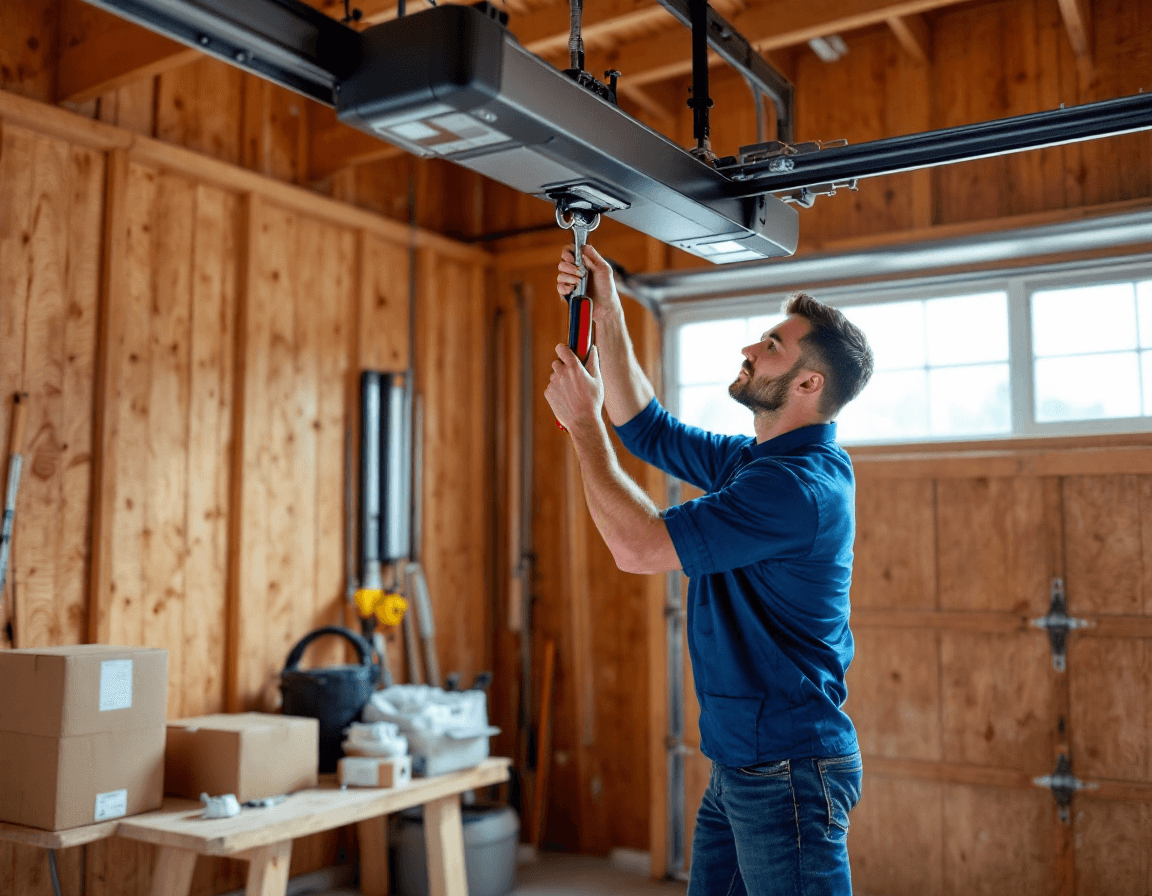
Garage Door Opener Installation & Replacement in Pacific, WA is one of the most practical upgrades a homeowner can make, and it often delivers more daily benefit than people expect. The opener is the quiet workhorse behind your garage door, lifting and lowering several hundred pounds of steel or wood thousands of times over its life. When it starts grinding, stalling, or refusing to respond to your remote, the whole household feels it, from the morning commute to the late-night return home.
Pacific sits in the lowland corridor of King County, where the air stays damp for much of the year and winter storms roll in off the Sound with regular regularity. Those conditions are hard on mechanical and electronic equipment alike. Moisture finds its way into wall-switch wiring, rail brackets corrode slowly, and wind-driven outages can leave a household stuck inside or outside the garage without warning. A reliable opener matched to your door and your habits is therefore less a luxury here than a sensible piece of home maintenance.
This page walks through the decisions that matter most when you replace or install an opener: how to recognize a failing unit, which drive style suits your setup, what security and smart-home features actually do, how battery backup works during outages, and what a professional visit involves. We also explain what drives the typical installed price, which runs from $275 to $650 depending on the model you choose. If you would rather talk through your specific door before deciding, call (888) 799-3819 and a licensed technician can walk you through the options.
Why Pacific Garages Work Harder Than You Might Think
Many homes in Pacific were built with a single-car or two-car garage that doubles as a workshop, storage room, and the primary entrance to the house. That means the opener gets used several times a day, often by multiple people with different schedules and remotes. A unit that might last a long time in a rarely used garage can wear out much sooner when it is cycling constantly. Understanding your actual usage is the first step toward choosing equipment that will hold up.
Damp Puget Sound weather adds another layer of stress. Humidity can slowly affect the metal rails, the trolley, and the mounting brackets, which changes how smoothly the door travels and how hard the motor has to pull. Temperature swings between seasons also shift the tension on your door's springs, and an opener that was sized for a lighter, drier setup may start to labor. Good installation accounts for these realities rather than simply bolting a new box to the ceiling.
Wind events deserve attention too. Pacific residents experience storms that can knock out power for hours at a time, and during those periods your opener's manual release cord becomes the only way to move the door. Knowing how that release works, and whether your new unit includes a battery backup, can make an outage far less stressful. We will return to this point in the battery backup section because it is one of the most overlooked parts of an opener upgrade.
Reading the Signs That Your Current Opener Is Giving Up
Most failing openers announce themselves well before they quit completely. A unit that has become noticeably louder, especially with a sharp metallic clatter or a harsh chain rattle, is often telling you that gears, bearings, or the drive mechanism are worn. Slow or hesitant travel is another common warning, particularly when the door stops partway, reverses without cause, or takes much longer to close than it used to. These symptoms may look minor, but they frequently point to a motor or logic board that is nearing the end of its service life.
Unreliable response is perhaps the most frustrating symptom. If the remote works only when you stand in one spot, or if the wall button responds on some days and not others, the problem may be in the receiver, the antenna wiring, or the safety sensor alignment. A technician can often isolate the cause in a single visit, but if the control board is aging and repairs would cost nearly as much as a new opener, replacement usually makes more sense. Frequent resets, flickering indicator lights, and random reversals fall into the same category.
Sometimes the decision is simpler than a list of symptoms. When a repair estimate approaches the cost of a new installed unit, and the existing opener is more than a decade old, replacement typically delivers better value and a fresh warranty. Keep in mind that a new opener also gives you current safety features, which are designed to meet modern expectations for auto-reverse and obstruction detection. Replacing an aging unit is not only about convenience; it is about making sure the door responds predictably when someone or something is in its path.
- Loud grinding, clattering, or chain rattle that was not present before
- Door stopping midway, reversing unexpectedly, or moving noticeably slower
- Remote or wall control that works only intermittently or from certain spots
- Repeated resets, blinking error lights, or a control board that feels unreliable
- A repair quote that approaches the cost of a new installed opener
Choosing Between Belt-Drive, Chain-Drive, and Wall-Mount Designs
Choosing the right drive style is one of the most important decisions in any opener replacement, and it depends on how the garage is used and where the unit will sit. Chain-drive openers are generally the most affordable and remain a sturdy choice for detached garages and workspaces where noise is less of a concern. They use a metal chain running along a rail, which makes them robust but also louder during operation. For a garage that is not connected to living space, a chain-drive unit can be a practical and dependable upgrade.
Belt-drive openers use a reinforced rubber belt instead of a chain, and the difference in sound is substantial. The belt runs more quietly and smoothly, which is why many homeowners in Pacific choose it when the garage shares a wall with a bedroom, home office, or family room. Belt-drive units usually cost more than chain models, but the reduced vibration and noise can make daily life noticeably more pleasant. Belts also tend to hold up well in the damp conditions common in this region when the unit is properly installed and maintained.
Wall-mount openers attach to the side wall rather than the ceiling, which solves a problem that comes up often in garages with limited headroom or with high-track door configurations. If your ceiling joists are shallow, or if you have a storage platform that occupies the space where a ceiling-mounted motor would normally sit, a wall-mount design may be the right answer. Our technicians evaluate headroom, track radius, and the condition of the wall framing before recommending a configuration, since each option has its own mounting requirements.
Rolling-Code Security and Why Older Openers Fall Short
Older openers often used fixed-code remotes, meaning the signal sent from the transmitter to the receiver never changed. That made the system vulnerable, because a determined person with the right equipment could capture the code and reuse it to open the door. Modern openers use rolling-code technology, in which each transmission produces a new code that the receiver recognizes but a copied signal cannot reproduce. For a home that relies on the garage door as a major point of entry, this is a meaningful improvement.
Replacing an older unit is therefore not only a mechanical decision but a security decision. If your opener predates rolling-code technology, it may still function well mechanically while leaving your garage more exposed than it should be. A new installation brings the receiver, remotes, and keypad into a current standard, and we can program the system so that only the transmitters you authorize will work. It is also a good moment to delete old remotes that belonged to former tenants, relatives, or contractors you no longer trust.
Security is strongest when the entire system is updated together. Pairing a rolling-code opener with a well-aligned photo-eye safety sensor, a sealed weatherstrip at the bottom of the door, and a sensible habit of not leaving remotes visible in parked cars creates layered protection. Our technicians can review those elements during the visit and point out simple changes that improve the overall picture. The goal is not fear but steady, practical confidence that the door responds only to the people you intend.
Adding Wi-Fi and myQ Control Without the Guesswork
Smart openers have become a popular upgrade because they let you check the door's status and operate it from a phone, even when you are away from home. Many models support myQ connectivity, which links the opener to a companion app so you can receive alerts when the door opens or stays open longer than expected. For households in Pacific with teenagers coming and going, frequent travelers, or anyone who sometimes forgets whether the garage was closed, that visibility can be genuinely useful. It also lets you grant temporary access to a dog walker or delivery driver without handing over a physical remote.
Connectivity does depend on a stable Wi-Fi signal in the garage, and this is a detail that is easy to overlook. Garages are often at the far edge of a home's network, and thick walls or distance from the router can make the connection unreliable. During installation we test the signal strength where the opener will mount, and if coverage is weak we can discuss options such as relocating the mounting position or adding a network extender. Setting this up correctly from the start saves frustration later, when a dropped connection might otherwise look like a faulty opener.
Smart features should be set up with the same care as the mechanical components. Account security, strong passwords, and two-factor authentication on the app are worth enabling, and we walk homeowners through those steps before leaving the house. We also recommend reviewing which people have shared access and removing anyone who no longer needs it. Smart control is convenient, but it works best when the system is configured thoughtfully, with the door's safety sensors and auto-reverse features still functioning as the first line of protection.
Battery Backup for Pacific Windstorms and Power Outages
Battery backup is one of the most valuable options for Western Washington homes, precisely because outages from wind and storm damage can last longer than many people expect. A battery backup kit allows the opener to operate for a limited number of cycles when household power is lost, so you can open or close the door without wrestling with the manual release. For a family that relies on the garage for daily access, or for anyone who needs to pull a vehicle out during an emergency, this capability brings real peace of mind. It also protects the opener itself, since the release cord does not need to be pulled repeatedly during stressful conditions.
It helps to understand what a battery backup does and does not provide. The battery typically supports only a set number of door cycles on a charge, and the exact count depends on the model and the door's weight and balance. The battery also needs periodic checking and eventual replacement, usually every few years, and the unit should be tested occasionally so you know it will work when you need it. A technician can explain the expected cycle count for your specific installation rather than leaving you to guess.
Battery backup is not a substitute for a properly functioning manual release. Every opener should have a clearly labeled release cord that you can reach from the driver's seat, and everyone in the household should know how to use it. We recommend showing family members the release during installation, because a backup battery that has run out or a release that has been painted over can leave a family stranded at the worst possible moment. Keeping the release accessible and understandable is a simple habit that pays off during any outage.
What a Typical Installation Visit Looks Like in Pacific
A professional opener installation begins well before the old unit comes off the ceiling. The technician inspects the door, the tracks, the springs, and the rollers to confirm that the door is balanced and moves freely by hand. This matters because an opener can only do its job well when the door itself is in good condition. If the door is binding, the new opener will be asked to compensate for a mechanical problem it was never designed to solve, which shortens its life and wears out components faster.
Once the door has been evaluated, the technician confirms the opener's power requirements, mounting location, and headroom. The old unit is removed, the new rail or wall bracket is installed, and the motor is secured to the structure with the hardware appropriate for the garage framing. Wiring is connected, the wall control and remotes are paired, and the photo-eye safety sensors are aligned and tested. The travel limits are set so the door stops fully open and fully closed, and the auto-reverse function is verified with a test against a safe obstruction.
The visit concludes with a walkthrough. We show you how to use the remotes, how the smart features work if your model includes them, how the battery backup operates if you chose it, and how to use the manual release safely. Before we leave, we also check that the door operates smoothly in both directions and that the indicator lights are behaving as expected. A clear explanation at the end of the job is part of what makes an installation trustworthy, because you should feel confident about how your new system works from the first day.
Understanding the $275 to $650 Installed Price Range
The installed price for an opener replacement generally falls between $275 and $650, and the spread reflects real differences in equipment and work. Lower-end installs typically involve a standard chain-drive unit with basic controls and no advanced connectivity. Mid-range installs often include belt-drive models, enhanced safety features, and remote control packages. Higher-end installations may involve a wall-mount design, a smart-enabled model with full app integration, or a battery backup kit, all of which add components and setup time.
The opener itself is the largest factor, but it is not the only one. Mounting hardware, rail length, electrical adjustments, and the number of remotes or keypads you want all influence the final figure. A door that requires extra work to meet current safety standards, or a garage where the wiring needs modest correction, can also change the estimate. We prefer to give you a clear breakdown before work begins so you can see what you are paying for and choose the features that matter most to your household.
Price should be weighed alongside long-term value. A quieter belt-drive unit may cost more upfront but make daily life considerably more comfortable if the garage shares a wall with living space. A battery backup adds cost, but it can prevent the frustration and risk of being stranded during a windstorm. Our goal is to help you match the opener to the way you actually use your garage, so you are not paying for features you will never touch or going without ones you will rely on every week.
Quieter Operation for Garages Attached to Living Spaces
Noise is one of the most common complaints about garage openers, and it becomes especially noticeable in attached garages where a bedroom or family room sits on the other side of a shared wall. Chain-drive openers can produce a noticeable rattle as the chain moves along the rail, and that sound carries through framing more easily than many homeowners expect. Belt-drive designs address this directly, operating with a smoother, lower-frequency hum that is far less intrusive at night. For households with children who sleep early or with someone working from home, this difference can be significant.
Beyond the drive style, several installation details influence how loud the system sounds. Rail vibration can be reduced with proper bracing and secure fasteners, and rubber isolators at the mounting points help prevent the motor from transferring vibration into the ceiling joists. The door itself also plays a role, since worn rollers, dry hinges, and unbalanced springs can make even a quiet opener sound harsh. We often recommend lubricating the rollers and checking the balance during the visit, because a well-tuned door is quieter overall and easier on the motor.
Quiet operation is worth discussing before you choose a model. If the garage is detached or used mainly for storage, a less expensive chain unit may be perfectly adequate. If the garage is attached and the household values peace and quiet, a belt-drive opener with proper installation is often the better investment. Either way, the technician can demonstrate the difference between models during the visit, so you can hear the options for yourself rather than relying on product descriptions alone.
Non-Negotiable Safety Lines: Why Spring and Cable Work Belongs to Licensed Pros
Opener replacement is a manageable project for a licensed technician, but it is important to draw a clear line around work that carries serious risk. Garage door springs store enormous amounts of tension, and a spring that releases unexpectedly can cause severe injury. Lift cables can also fail under load, and the drums and torsion systems that control them require specialized tools and training. These components should never be adjusted, replaced, or tensioned by an untrained homeowner, and any spring or cable concern should be handled by a licensed professional.
We recommend that homeowners in Pacific treat springs, cables, and drums as off-limits for do-it-yourself work, even when the rest of the opener upgrade feels approachable. If your door is noticeably heavy, sits unevenly, or shows fraying cables or gaps in the spring coils, stop using the opener and call for an inspection. Continuing to run a door with a damaged spring or cable can cause additional damage to the opener and the door, and it can create a dangerous situation for anyone standing nearby. A short service call is far safer than an emergency repair.
Safety is also why the opener's own protective features should be tested during every installation and periodically afterward. Photo-eye sensors should stop and reverse the door when the beam is broken, and the auto-reverse should respond to resistance at the bottom of the travel path. Our technicians test these functions before leaving the job, and we encourage homeowners to repeat a simple check every few months. If the door fails to reverse as expected, unplug the opener if it is safe to do so and call for service right away.
Next Steps for Your Pacific Garage Door Opener Upgrade
Replacing a garage door opener is one of the most meaningful improvements you can make to daily convenience, security, and peace of mind. Whether your current unit is loud, slow, unreliable, or simply too old to trust, a properly selected and professionally installed opener can restore smooth operation and bring modern safety and control features into your home. The right choice depends on your garage layout, how often you use the door, whether the space shares a wall with living areas, and how much you value battery backup and smart connectivity.
If you are in Pacific or nearby, our licensed and insured team is ready to evaluate your door, recommend the drive style and features that fit your household, and explain the installed price before any work begins. Ask about belt-drive options if noise is a concern, battery backup if you want protection during windstorm outages, and rolling-code security if your current system predates it. We will also let you know honestly if a repair makes more sense than replacement, because a good installer should earn your trust by giving you straightforward advice.
Call (888) 799-3819 today to schedule your opener installation or replacement in Pacific, WA. A technician will help you compare options, confirm pricing, and set up a visit that fits your schedule.