
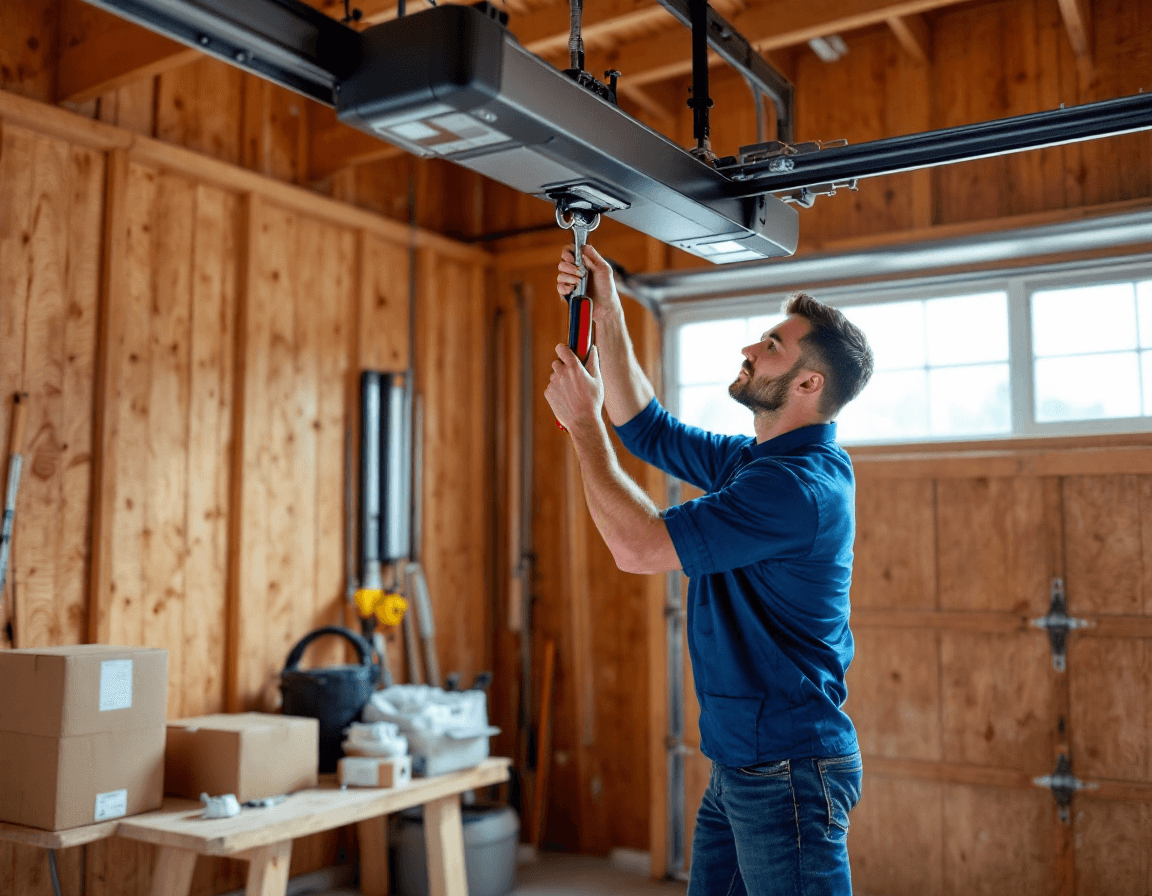
Garage Door Opener Installation & Replacement in Algona, WA is one of the most practical upgrades a homeowner can make, and it often delivers more daily value than people expect. Algona sits in the Green River valley south of Auburn, where wet winters, damp air, and frequent power flickers during storm season all put extra stress on the equipment that moves your garage door. An opener that worked fine a decade ago may now be loud, sluggish, or unpredictable, and those problems tend to show up at the worst times, like early morning departures or late nights after a long shift. Replacing it is usually a straightforward job, but choosing the right drive style, control system, and backup option takes some local judgment.
Many of the homes we see around Algona were built with an opener that was considered good enough at the time, and the garage door itself may have been upgraded or replaced since then. That mismatch can cause strain, because a weak or mismatched opener forces the motor to work harder than it should. Our technicians spend a lot of time evaluating the whole system, including the door weight, track alignment, and safety sensors, before recommending a new unit. This page walks through the decisions that matter most so you can make a confident choice, whether you live near the Algona Blvd shops, along the Pacific Algona corridor, or on one of the quieter residential streets in between.
If you have been putting up with a noisy or unreliable opener, you already know it is more than an inconvenience. A failing unit can leave you stuck outside in the rain, expose your home to security risks, or leave the door unusable during a power outage. The good news is that modern openers offer quieter operation, stronger security, smart-home connectivity, and backup power at a range of price points. Below, you will find a practical guide to what those options mean for your Algona garage.
Why Algona Homes Are Outgrowing Their Original Openers
Western Washington weather is hard on garage hardware, and Algona's damp, cool climate is no exception. Moisture settles into metal tracks, pulleys, and electrical connections, and over several wet seasons it can slow the travel of the door and make the opener work harder on every cycle. Winter temperatures also thicken lubricants that were not formulated for repeated cold starts, which means the motor may groan or hesitate on the first open of a chilly morning. Those small changes add up, and what begins as a minor hitch can become a full failure once the motor overheats or the logic board starts to fail.
Local housing stock adds another layer to the picture. Many garages in the area were originally fitted with a basic chain-drive opener sized for a lighter door, and later the household may have added a heavier insulated door, a window panel, or a decorative style that changed the balance. When the door weight increases but the opener stays the same, the motor runs at its limit and wears out prematurely. A replacement lets us match the opener's lifting capacity to the actual door, which is one of the most valuable things a proper installation accomplishes.
Power conditions in the region also matter. Windstorms and heavy rain can cause brief outages or voltage dips, and an older opener may respond to these events by stalling, resetting, or losing its programmed settings. A newer unit typically handles these disturbances more gracefully and can be paired with battery backup so the door keeps working through a short outage. For many Algona households, that single feature alone justifies the upgrade.
Belt Drive, Chain Drive, or Wall Mount: Matching the Drive to Your Garage
The drive style is the first decision most homeowners face, and it affects noise, maintenance, and cost more than almost anything else. A chain-drive opener uses a metal chain running along a rail, which is durable and generally the most affordable option. The trade-off is noise, since metal-on-metal contact transmits vibration into the framing and can be loud enough to disturb a bedroom that shares a wall with the garage. Chain drives are a sensible choice for detached garages or workshop spaces where sound is less of a concern and budget is the priority.
Belt-drive openers use a reinforced rubber belt in place of the chain, and the difference in operation is immediately noticeable. The belt runs much more quietly, which is why it is the go-to recommendation for attached garages in homes with bedrooms or living areas nearby. Belt drives also tend to produce less vibration, which helps protect the door hardware over time. If your household values a calm evening and you park close to living space, a belt-drive unit is usually worth the modest premium.
Wall-mount openers attach to the wall beside the door instead of the ceiling, using a arm that connects to the door. This layout is useful when ceiling clearance is limited, such as in garages with a low overhead header, a room built above the garage, or a ceiling that has been finished with storage shelving. Wall-mount systems can also free up ceiling space for storage or lighting. Our technicians will check your header height, door type, and track configuration before recommending one of these three styles, because the wrong choice can make the install fail or make the door run poorly.
Reading the Warning Signs Your Opener Is Done
Not every opener problem means replacement, and part of our job is telling you honestly when a repair makes sense. A remote that stops working may only need new batteries or reprogramming, and a wall button that flickers may simply have a loose connection. However, certain symptoms point toward a unit that has reached the end of its useful life. If the opener repeatedly reverses for no clear reason, struggles to lift the door, or makes grinding and clicking sounds that get worse each month, the internal components are likely wearing out.
Pay attention to how the door behaves across the seasons. An opener that performs well in summer but slows noticeably during the cold, wet months of late fall and winter may be losing power reserve, and that pattern tends to accelerate. Frequent resets, a motor that runs hot to the touch after normal use, or a light that flickers during operation are also signs of electrical strain. When repair costs begin to approach the price of a new installed unit, replacement becomes the more economical path.
A few quick checks can help you decide before calling. Here are common indicators that the opener itself, not just a single accessory, needs attention:
- The door reverses or stops partway through its travel without an obstruction present
- Operation is noticeably louder or rougher than it was a year or two ago
- The opener does not respond to any remote, keypad, or wall button after a power cycle
- The motor hums without lifting the door, or the door moves only after several attempts
- Parts such as the logic board, gear assembly, or trolley have been replaced more than once
If several of these apply, scheduling an evaluation is a smart move. We can test the door balance, check the travel limits, and compare the repair estimate against a new installation so you have clear numbers to weigh.
Rolling Code Security and Why Old Remotes Are a Liability
Security is one of the strongest reasons to replace an older opener, and it is easy to overlook until a problem arises. Early garage door openers used fixed codes, meaning the same signal was sent each time you pressed the remote. That signal could be captured and replayed by someone with the right inexpensive equipment, giving them a way to open the door without a key. Rolling-code technology changes the transmitted code with every use, which makes replaying an intercepted signal far less effective.
If your opener is more than a decade old, there is a reasonable chance it lacks rolling-code protection or uses an outdated version of it. Many households in Algona are unaware of this, because the remote still seems to work normally. Replacing the opener resolves the issue, and it also lets us reprogram all your remotes, keypads, and wall stations to the new system, which means you can retire any old transmitters that might still be floating around in a drawer or a car. Changing the access points as part of the upgrade is one of the simplest ways to tighten up your home's security.
Rolling code is only one layer. A good installation also includes correctly placed and aligned safety sensors, which stop the door if something breaks the beam, and a manual release that is tested so you know it works during an emergency. We also recommend reviewing where your keypad is mounted, how your smartphone access is configured, and whether anyone other than household members has been given access. These details take a little time during installation, but they make a noticeable difference in day-to-day peace of mind.
Smart Wi-Fi and myQ Control Without the Guesswork
Smart control has become one of the most requested features for garage openers, and for good reason. Being able to check whether the door is closed from the couch, open it for a delivery driver, or grant a temporary code to a family member can save real trouble. Many current openers support myQ and similar platforms, which connect through a home Wi-Fi network and a companion app. The convenience is real, but it works best when the setup is handled carefully from the start.
Wi-Fi reliability depends heavily on where the opener sits. Garages are often the farthest point from the router, and wall construction, metal shelving, and stored items can weaken the signal considerably. Before installation, we check the signal strength in the garage and recommend a mesh node or extender if needed. We also help you connect the opener to your account, set up notifications, and confirm the app works before we leave, so you are not left troubleshooting alone later.
Smart features do require ongoing attention, and that is worth knowing upfront. Account credentials should be strong and unique, and you should review which devices and people are authorized to operate the door. Firmware updates from the manufacturer occasionally add features or security fixes, and keeping the app current helps. If you prefer a non-connected unit, that is a completely reasonable choice, and a simple keypad with rolling-code remotes still provides solid protection for many households.
Battery Backup: Keeping the Door Working When the Power Drops
Power outages are an ordinary part of life during Pacific Northwest storm season, and a garage door that will not open during an outage can be more than a nuisance. It can keep you from reaching the car in an emergency or leave the house exposed when you need to leave quickly. Battery backup units are designed to provide a limited number of door cycles when grid power fails, which covers most short outages. They are a practical addition for homes that rely on the garage as their main entrance or that frequently experience winter storm disruptions.
Backup systems vary in capacity and in how they recharge. Some provide only a handful of operations, which is enough to get the car out or the door closed during a brief blackout, while others offer more cycles and faster recharging. Battery life is affected by temperature, so the placement and the battery's rating for cold conditions both matter in this climate. We size the backup unit to your household's typical use and explain how the battery is monitored, so you are not surprised when it needs replacing.
It is also important to know what backup does not do. A battery backup keeps the opener running, but it does not fix a door that is out of balance or binding, and it cannot compensate for a failing motor. We therefore evaluate the door's condition as part of the installation, since a properly balanced door places less demand on any opener, backup-equipped or not. If you want to keep the door usable during outages and you have a manual release you can reach easily, you will be well prepared for whatever the weather brings.
What a Typical Installation Visit Looks Like on the Pacific Algona Corridor
Our installation visits follow a consistent sequence so that nothing important gets skipped. The technician begins by inspecting the door, the tracks, the springs, and the existing opener, noting the door's weight and the overhead clearance. We confirm the electrical supply, check the outlet location, and discuss whether the new opener should be ceiling-mounted, wall-mounted, or fitted with a particular drive. Good preparation at this stage keeps the actual install efficient and prevents surprises once the old unit is removed.
Homes along the Pacific Algona corridor and near Algona Blvd present a mix of conditions. Some garages are detached or tucked behind a driveway with limited turning room, which affects where the technician can stage materials and how the new opener's rail is supported. Others are attached to older residences where the header and framing may need careful measurement. Our crew plans around these realities, because the layout of each property influences the mounting hardware, the rail length, and the safest route for running power to the new unit.
Once the new opener is mounted, the technician programs the travel limits, force settings, and safety reversal, then tests the door through several full cycles. We verify that the photo eyes are aligned and that the door reverses correctly when an obstruction is placed in its path. Your remotes, keypad, and any smart features are set up before we leave, and we walk you through how to use the emergency release and how to operate the backup battery. The goal is a system you understand and trust, not just one that works on installation day.
Understanding the $275 to $650 Price Range
Installed pricing for garage door openers in our service area generally falls between $275 and $650, and the spread reflects real differences in the equipment. The lower end typically covers a basic chain-drive or entry-level unit, while the higher end usually reflects a belt-drive model, a wall-mount system, a stronger motor for a heavier door, or a unit with smart connectivity and battery backup. The opener model you select is the largest single factor, which is why we ask about your priorities before quoting.
Several other things can influence the final figure. A garage that needs a new outlet or a dedicated circuit will add labor, and a door that requires adjustment or new hardware for proper balance may need additional parts. Removing and disposing of the old opener is typically part of the process, but unusual mounting conditions or a very high ceiling can change the work involved. Every quote is based on your specific equipment and garage, so we recommend discussing the details directly rather than relying on a general estimate.
Because the price depends on the model, it helps to think about what you will actually use. A household that rarely closes the door remotely may not need the smart platform, while a family that often parks near the house may value the belt-drive quiet and the backup battery. We aim to present options clearly so you can match the features to your daily routine and budget, without paying for capabilities you will never touch.
Quiet Operation, Lighting, and Daily Use Details
Daily comfort is where many homeowners notice the biggest improvement after an upgrade. A quieter opener means you can leave early without waking the household, and a smoother lift reduces the jolt that older units can transmit through the door and into the house. Many current openers also include built-in LED lighting that turns on automatically when the door moves, which is useful on the dark, rainy evenings that are common in this part of King County. Lighting placement and brightness can be adjusted during installation to suit your garage layout.
Think about how you use the space day to day. If you carry groceries, load bikes, or store tools near the door, the position of the lift arm, the height of the header, and the travel speed all affect the experience. Some households prefer a slower, gentler start, while others want a faster close for convenience. Our technicians adjust these settings with you so the door behaves the way you expect, rather than leaving you with factory defaults that may not suit your habits.
Keeping the system running well takes only a little attention. Testing the auto-reverse feature and the photo eyes every few months helps catch misalignment early, and wiping the sensor lenses keeps them reliable during muddy winter months. Lubricating the moving parts as recommended by the manufacturer, and watching for loose hardware, will extend the life of the new opener. A simple seasonal check goes a long way in a climate where moisture and grit are constant companions.
Safety Boundaries: What Stays With a Licensed Technician
Garage door work carries real risk, and certain tasks should never be attempted by homeowners. Torsion springs and extension springs store enormous amounts of energy, and a failed or improperly adjusted spring can cause serious injury. Cable repairs, drum work, and any task that requires loosening or tensioning the spring system belong exclusively to trained, licensed professionals. Even when the opener itself is the focus of the job, a responsible installer will check the spring system and the door's balance before finishing.
Some boundaries are simple to remember. Do not stand under a door that is being raised or lowered while the opener is being tested, keep children and pets clear of the travel path, and disconnect power before opening the motor housing. If you notice a frayed cable, a cracked spring, or a door that drops suddenly, stop using it and call for service rather than attempting a fix yourself. Our technicians are licensed, bonded, and insured, and they carry the tools and training required for the spring and cable work that accompanies many opener replacements.
Safety also means knowing when a job is bigger than it appears. If the door is severely out of balance, if the track is bent, or if the opener cannot be mounted securely to the structure, the right move is to stop and correct the underlying issue. Doing so protects your investment and your household, and it ensures the new opener is not asked to do work the door was never designed for. A careful evaluation at the start is the best way to make sure your Algona garage door operates safely for years to come.
If your opener is loud, unreliable, outdated, or simply no longer worth repairing, now is a good time to look at your options. Call Seattle Garage Door Fix at (888) 799-3819 to schedule an evaluation for Garage Door Opener Installation & Replacement in Algona, WA, and we will help you choose a drive style, control system, and backup option that fits your home and your budget.