
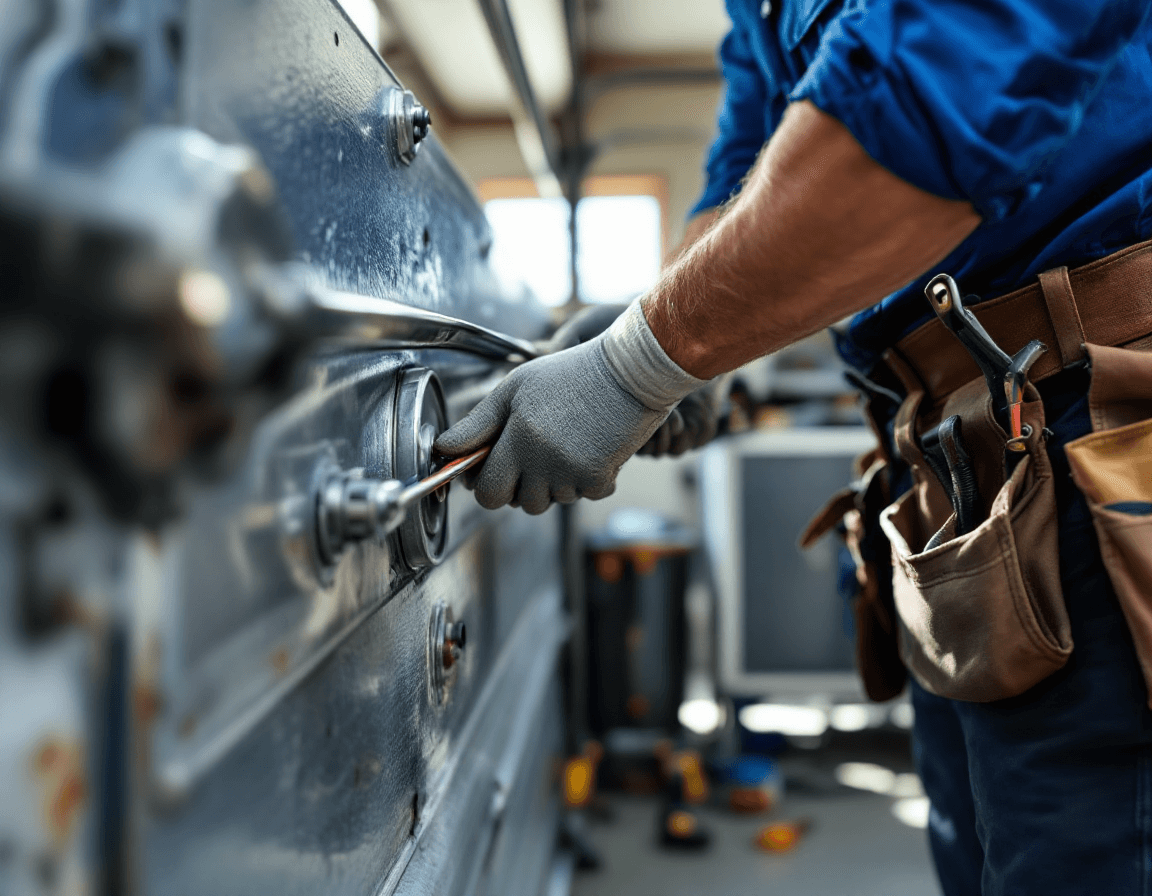
Garage door cable replacement in Algona, WA is one of the more common repairs we get called out for, and it often begins with a sound homeowners don't forget: a sharp crack or bang from the garage, followed by a door that hangs crooked or won't move at all. Algona sits in the lower Green River valley, close to the Pacific Highway corridor and the busy stretch of Algona Blvd, and many of the garages we work on here house two-car doors that carry real weight. When one lift cable gives way, the entire door is suddenly carried by its partner, and that imbalance is what causes the damage you see afterward.
This page explains what lift cables do, how they fail, and why the damp Pacific Northwest climate makes them wear out faster than many people expect. It also covers the cable drum, the part of the system that is often replaced alongside the cable, and what a typical job involves from start to finish. We have tried to be practical rather than theoretical, so you can recognize the warning signs early and understand what a professional visit should look like.
Some of the information here will help you decide when a repair can wait and when it cannot. Other parts make clear why certain steps belong to a licensed technician and not to a homeowner with a ladder and a pair of pliers. Cable work sits close to the spring system, which stores enough tension to cause serious injury, so we will be direct about where the line is drawn.
What a Lift Cable Actually Does Inside Your Garage Door
Most residential garage doors use a torsion or extension spring system, and the lift cables are what connect the door panels to that spring-powered lift. Each side of the door has a cable that runs up the track, wraps around a drum at the top corner, and anchors at the bottom bracket of the bottom panel. As the door rises, the cable winds onto the drum, and as it lowers, the cable unwinds in a controlled way. Without the cables, the springs would have no way to transfer their force evenly across the width of the door.
Because the two sides work as a pair, they are designed to share the load equally. The drums on each side are sized so that the cables move in lockstep, which keeps the bottom edge of the door level as it travels. If one cable slips off its drum or snaps, the balance collapses and the door can tilt, bind in the track, or drop unevenly. That is why a single broken cable is rarely a minor problem, even though the cable itself is inexpensive.
It helps to understand that the cable is a load-bearing component under constant stress. Every open and close cycle flexes the strands as they bend over the drum and pulls against the bottom bracket. Over thousands of cycles, small breaks form inside the wire rope before anything is visible from the outside. This is why cables often fail without much warning, even on doors that seemed to work fine the week before.
Reading the Warning Signs Before a Cable Lets Go
The most reliable early sign is a door that begins to hang differently. Look at the bottom edge of the door from the side while it is closed and then while it is halfway open. If one corner sits lower than the other, or if the door appears to pull to one side as it rises, the cables may be stretched, frayed, or slipping on one drum. A door that looks level when closed can still be lopsided in motion, so the test is worth doing once in a while.
Visual inspection of the cable itself is the next step. Frayed strands, bright or flaking rust, kinks, or a section where the cable looks flattened or birdcaged all point to wear that will eventually fail. Some homeowners notice a small loop of loose cable at the bottom of the drum, which can mean the cable has come off its groove. Any of these signs means the cable should be replaced soon, not after the next storm.
Sound matters too. A grinding or scraping noise as the door travels, or a dull thud when the door reaches the top of its travel, can signal that a cable is rubbing on the track or that the drum is no longer seating correctly. Many of our Algona calls begin with a homeowner who heard a bang, then noticed the door stayed partly open and would not lower. That sequence almost always means a cable has snapped or come free of the drum, and the door should be kept closed and secured until it can be inspected.
- Door sits lower on one side or pulls sideways when opening
- Visible fraying, rust, or kinks anywhere along the cable length
- Loose slack cable near the bottom of the drum
- Grinding, scraping, or thudding noises during travel
- A loud snap followed by a door that will not lift or lower smoothly
- Door closes unevenly, or binds on one track more than the other
Why Algona's Damp Winters Work Against Steel Cable
The Pacific Northwest climate is kind to lawns and hard on steel. Algona's winters bring long stretches of wet, cool weather, and the lower valley can hold moisture near the ground for days at a time. Garages are often less climate-controlled than the living space of a home, so temperature swings and humidity build up inside them. Those conditions create an environment where unprotected steel slowly oxidizes, especially at points where the cable bends over the drum.
Rust on a lift cable does more than look bad. As surface corrosion develops, it works its way into the gaps between strands, reducing the cable's effective diameter and making individual wires brittle. A cable that looks mostly intact from a distance can carry much less load than its rating suggests. Combined with the cyclical stress of daily use, that corrosion can turn a routine season into a failure event.
Seasonal changes also affect how the door behaves. Cold temperatures cause the door and its hardware to contract slightly, and the cable can feel stiffer or more sluggish on a chilly morning. Homeowners sometimes assume a door that sticks in winter needs lubrication, when the real issue is a cable that has begun to fray or a drum that is no longer tracking cleanly. Paying attention to changes that repeat with the seasons can reveal problems before they become emergencies.
Spring Tension and Why Cable Work Belongs to a Licensed Technician
Cables cannot be separated from the spring system that powers them, and this is the most important safety point on this page. Torsion springs and extension springs store large amounts of energy when the door is closed, and that energy is released when the system is adjusted or a component fails. Attempting to remove a cable, change a drum, or adjust tension without the proper tools and training can cause severe injury, including broken bones, lacerations, or worse.
For this reason, we recommend that all spring-related and cable replacement work be handled by a licensed, bonded, and insured professional. A qualified technician will first secure the door, relieve tension in a controlled way, and then remove and replace the damaged cable and drum before rebalancing the system. Those steps require specialized winding bars, correct spring specifications, and an understanding of how the door's weight and counterbalance interact. None of that is appropriate for a do-it-yourself project.
If a cable has snapped, keep people and pets away from the door and do not try to lift or force it open. Use the lock or disconnect the opener if you can do so safely, but never attempt to reach into the spring area or pull on the cable to test it. A call to a professional is the right response, and it is far less costly than an injury or a damaged door panel that drops unexpectedly.
Cable Drum Service: Why the Drum Often Needs Attention Too
The cable drum is the grooved cone or cylinder at the end of the torsion shaft, and it is the component that actually controls how the cable winds and unwinds. Drums can crack, strip their grooves, or develop worn spots that let the cable slip. When a cable comes off the drum, the drum may be damaged in the process, which is why a cable replacement sometimes includes drum service as well. Replacing the cable without checking the drum can lead to a repeat failure within a short time.
Drum service typically involves inspecting the grooves, the set screws or locking collars, and the bearing or bushing that supports the shaft. A technician will look for signs of wear such as bright spots where the cable has rubbed against the metal, cracks near mounting points, or looseness that allows the drum to shift on the shaft. If the drum is sound, it may be cleaned and reseated. If it is damaged, it should be replaced with a matching part so the two sides keep the same geometry.
Drum condition also influences how evenly the door will travel after the repair. A drum that sits slightly off-center or has a worn groove can make the door tilt even with a new cable installed. Experienced technicians check alignment and balance after the work is complete, so the door rises and lowers square and quiet. Asking whether the drum was inspected and rebalanced is a reasonable question to put to any company you are considering.
What a Typical Cable Replacement Covers and Costs
Most residential lift cable replacements fall within a range of $110 to $300, depending on the size of the door, the type of cable needed, and whether additional parts such as a drum or bracket must be replaced. Single-car doors with straightforward hardware usually land near the lower end, while heavier two-car doors, custom sizes, or jobs requiring drum replacement may fall higher. Your exact price is determined on site after the technician confirms the damage and the door's specifications.
A complete visit generally includes securing the door, relieving spring tension according to safe procedures, removing the damaged cable, inspecting the drum and bottom bracket, installing a correctly rated replacement cable, and rebalancing the door. The technician should then test the door through several full cycles, checking that it opens and closes level and that the opener, if present, engages properly. Ask for a clear explanation of what was replaced and why, so you understand the condition of the rest of the system.
Pricing should always reflect the actual work performed. If the technician discovers that a spring, a bearing, or a track also needs attention, they should explain the additional repair and give you the option to proceed. A good visit leaves you with a door that is safe to use, a clear understanding of its condition, and practical advice about what to watch for in the coming months.
Choosing the Right Replacement Cable for a Pacific Northwest Garage
Replacement cables are not all the same. They differ in diameter, construction, and coating, and the correct choice depends on the door's weight and the spring system it works with. Using a cable that is too thin or not rated for the door can lead to premature failure, while an oversized cable may not seat properly on the drum. A technician will match the replacement to the manufacturer's specifications or to the original cable dimensions.
Coating and material matter more in a damp climate. Galvanized cable offers improved corrosion resistance compared with bare steel, and some coated options provide an extra barrier against moisture. Homeowners sometimes ask whether stainless or specialty cables are worth the extra cost, and the answer depends on how the door is used and how exposed the garage is to weather. For most Algona homes, a properly rated, corrosion-resistant cable installed on a sound drum offers good long-term value.
Whatever cable is installed, it should be seated correctly in the drum groove, secured with the proper clamp or fitting, and checked for slack once the door is back in service. Small details like correct wrap count and secure end fittings make a real difference in how long the repair lasts. Your technician should be able to explain the choice in plain terms and tell you what to expect from the new cable over time.
Keeping Cables in Good Shape Between Service Visits
Routine care will not prevent every failure, but it can extend the life of your cables and help you catch wear early. Once a season, inspect the cables along their visible length and look at the drums and bottom brackets for rust, cracks, or unusual wear. Keep the door's tracks clean and free of debris, since grit and leaves can increase friction and stress on the cable as it travels. Do not spray penetrating oil directly onto cables, as it can attract dirt and make the problem worse.
Lubrication has a place in door maintenance, but it should go on the rollers, hinges, and the track surfaces rather than the cable itself. Use a silicone-based or manufacturer-approved lubricant on moving hardware, and wipe away excess so it does not drip onto the floor or collect grime. Keeping the garage reasonably dry also helps. Good ventilation, prompt attention to leaks, and avoiding storage of damp materials near the door can all slow corrosion in the surrounding hardware.
Pay attention to how the door behaves during seasonal changes. If you notice new sticking, uneven movement, or sudden noise after a cold snap or a long rainy stretch, schedule an inspection rather than waiting for the cable to fail. A short visit to check tension, drum condition, and cable wear is far less disruptive than an emergency call on a cold morning when the family needs to leave for work or school.
Booking a Cable Repair Visit Near Algona Blvd and the Pacific Algona Corridor
Our technicians regularly serve Algona and the nearby neighborhoods along Algona Blvd and the Pacific Algona corridor, as well as surrounding parts of King County including the ZIP codes 98001 and 98047. When you call, be ready to describe what you observed: whether the cable snapped, whether the door is hanging crooked, what noises you heard, and whether the door can still be operated. Those details help us plan the visit and bring the right parts, which often shortens the time your garage is out of service.
If your door is stuck partly open or the cable has come off the drum, keep the area clear and avoid trying to fix it yourself. Mention any spring work you have already noticed, such as a loose coil or a gap in the spring, since that information helps the technician prepare. Many repairs can be scheduled promptly, but urgent situations involving a door that will not close securely may be prioritized.
Cable replacement is a job where experience and caution matter as much as parts. If you are dealing with a broken or frayed lift cable, cables that have come off the drum, a door that hangs crooked, or a loud snap followed by a stuck door, call Seattle Garage Door Fix at (888) 799-3819. We will explain what we find, give you a clear price before any work begins, and make sure your door is safe, level, and ready for daily use.