
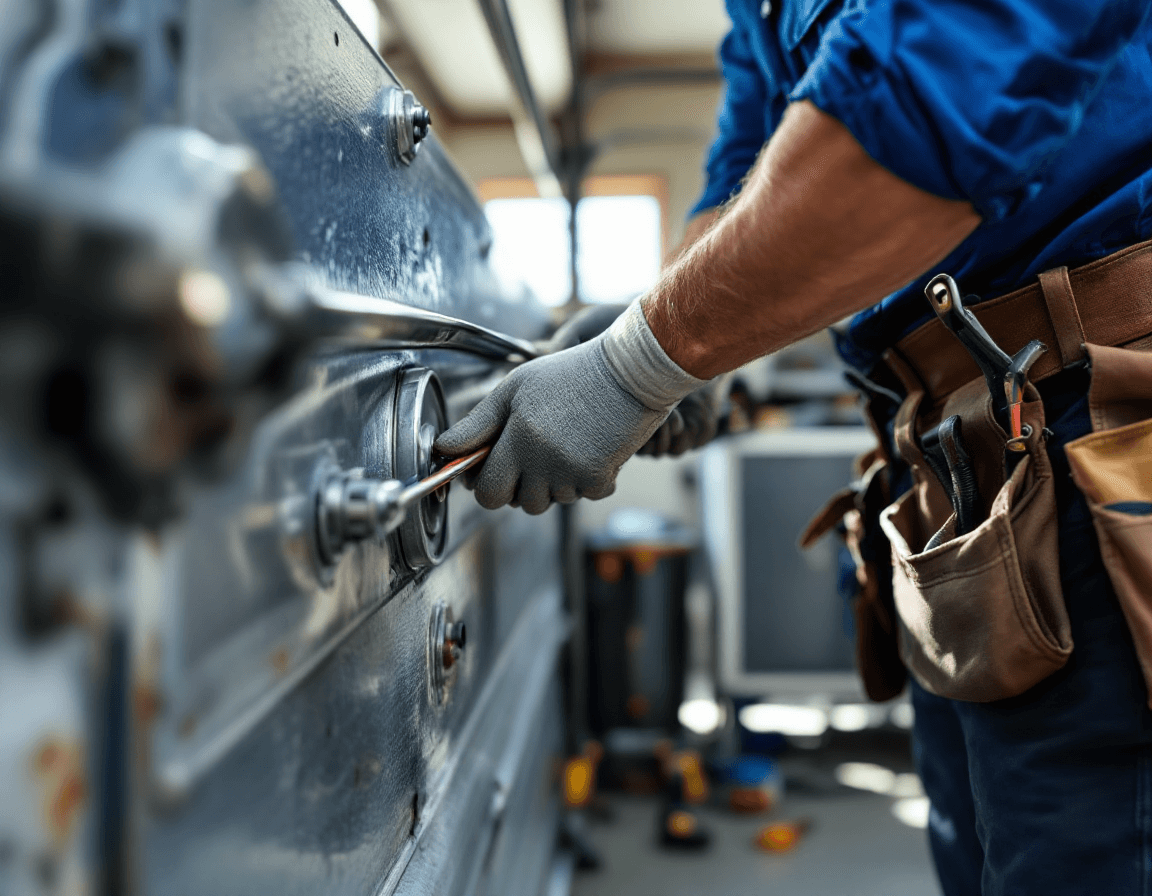
Garage door cable replacement in Milton, WA is one of the most common repairs we handle for homeowners in this part of Pierce County, and it is also one of the most important to get right. The lift cables carry the full weight of a heavy door, and when one snaps, frays, or slips off its drum, the door can drop unevenly, jam in its track, or stop working altogether. Many Milton households first notice the problem when the door suddenly hangs crooked or makes a sharp bang in the middle of the night.
This page explains what lift cables do, how to recognize trouble before a failure, and why this job belongs in the hands of a trained technician rather than a weekend project. We also cover the local conditions that wear on garage door hardware in Milton and the surrounding neighborhoods, including the damp winters and temperature swings that define Western Washington. If you are reading this with a door that is currently stuck or sagging, you will find practical guidance on what to do right now and what to expect when a technician arrives.
Our goal is to give you a clear picture so you can make informed decisions about your door, whether that means scheduling a repair this week or simply keeping an eye on a few warning signs. Cable problems rarely fix themselves, but they are very manageable when they are caught early and handled by someone who works on these systems every day.
What Lift Cables Do and Why Two Matter So Much
Most residential garage doors in Milton use a pair of lift cables, one on each side of the door, that run from the bottom bracket up through a set of pulleys and wrap around a drum at the top of the door. As the door opens, the cables wind onto the drum and pull the door upward in a controlled, balanced way. The cables work in tandem with the springs, which store the energy that makes the door feel light enough to lift by hand. Without functioning cables, the springs cannot translate their force into smooth movement.
Because the two cables share the load, a problem on one side almost always shows up as a problem with the entire door. If one cable stretches, frays, or comes off its drum, the door will tilt, bind, or fall unevenly, even if the other cable looks fine. This is why technicians inspect both cables, both drums, and both sides of the track during any cable visit. Replacing only the failed cable without checking its partner can leave a door that is out of balance and destined for another failure within a few months.
Many older Milton homes have doors that have been in service for well over a decade, and the original cables may have been installed when the house was first built or remodeled. Cable material, thickness, and the way the cable is terminated at the drum all affect how long it lasts. A good replacement restores the original balance and sets the new cables to the correct length and tension for your specific door.
Reading the Warning Signs Before a Cable Lets Go
A lift cable rarely snaps without warning, although the warning is often subtle enough to ignore. Look for fraying along the length of the cable, especially where it bends around pulleys or passes through the bottom bracket. Small broken strands, a fuzzy or whiskery texture, or a cable that looks noticeably thinner in one section are all signs that the wire has reached the end of its service life. Rust streaks or flaking coating on the cable are also meaningful, because corrosion weakens the steel from the inside.
Behavior can tell you just as much as appearance. If the door seems to rise more slowly on one side, pauses partway through its travel, or tilts when you open it, the cables may no longer be sharing the load evenly. A door that closes unevenly or seems to bind against the track on one side should be inspected promptly, since uneven tension is one of the first signs a cable is slipping or stretching. Many homeowners describe a door that "sits differently" in the opening before anything dramatic happens.
Pay attention to sounds as well. A cable that is beginning to slip off its drum may produce a rattling or grinding noise as it winds unevenly. A sudden loud crack, often compared to a gunshot or a heavy branch snapping, is the sound of a cable giving way, and it is usually followed by a door that will not move. If you hear either of these sounds, stop operating the door until a technician has looked at it.
- Visible fraying, broken strands, or thinning along the cable length
- Rust streaks, flaking coating, or kinks in the cable
- A door that hangs crooked, tilts, or rises unevenly
- Grinding, rattling, or popping during operation
- A door that binds or stops partway through its travel
What Happens When a Cable Snaps or Comes Off the Drum
When a lift cable breaks, the door loses the balanced support it depends on. The side with the broken cable can drop quickly, sometimes pulling the door out of its track or leaving it resting at a steep angle. In many cases the door will not open at all using the opener, because the opener is not designed to lift a door that has lost one of its primary support points. Attempting to force the door open by hand or running the opener repeatedly can cause additional damage to the track, rollers, opener, and remaining cable.
A cable that comes off the drum is a somewhat different situation, but it is just as urgent. The cable may still be attached at the bottom bracket while the drum end has slipped free, or the cable may have wound unevenly and jumped its groove. This often happens after a previous cable has stretched or after a drum has been damaged. A cable that has jumped off the drum can bind the door, and continued operation may tear the cable or further damage the drum.
Whenever a cable has failed, the door should be treated as out of service until it is inspected. Keep children and pets clear of the door area, avoid standing beneath the door, and do not try to re-hang the cable yourself. The springs are under significant tension, and that tension is the reason professional technicians use specialized tools and a methodical process when working near the drum and shaft.
How the Cable, Drum, and Spring Work Together
Understanding the relationship between the cable, the drum, and the spring helps explain why this repair is more involved than it first appears. On most residential doors, the spring system stores energy that counterbalances the door's weight. The spring is attached to a torsion shaft or positioned along the track, and it works with the lift cables to control the door's movement. The drum is a grooved pulley at the top of the door that the cable winds around, and the drum is fixed to the shaft so that the two rotate together.
Because these components are interdependent, replacing a cable often reveals other issues. A drum that has been damaged by a jumped cable may need to be replaced, and a worn drum can chew up a new cable quickly. A stretched cable can also be a sign that the spring is losing tension or that the balance has shifted. During a proper cable replacement, a technician evaluates the drum, the shaft, the bearings, and the spring condition together, rather than treating the cable as an isolated part.
This is also why we encourage homeowners to think of cable work as a system repair. Installing a new cable on a worn drum or a sagging door is like putting new tires on a car with a bent axle. The result may look fine on the surface but will not last. Our technicians aim to restore the whole system so that the door opens smoothly and stays balanced for the long term.
Why Frayed Cables Are Not a Do-It-Yourself Job
Garage door spring systems store a large amount of force, and that force is the main reason we always recommend a licensed professional for cable and spring work. Torsion springs in particular can cause serious injury if they are released or wound incorrectly. Even extension springs, which are often considered more approachable, can snap with enough force to cause harm. Cable replacement frequently requires relieving tension, detaching the spring assembly, or working directly on the shaft, and each of these steps carries real risk for an untrained person.
Beyond personal safety, incorrect cable installation can damage the door and the opener. A cable that is the wrong length, improperly seated on the drum, or terminated incorrectly at the bottom bracket will produce uneven tension and may slip again soon after installation. Mismatched cables, or cables that are not rated for the door's weight, can fail under normal operation. Parts that look similar at a hardware store are not always interchangeable, and a door's weight, height, and spring setup all factor into the correct specification.
For these reasons, we ask every homeowner to leave cable and spring work to trained technicians. You can absolutely take simple, safe steps on your own, such as visually inspecting the cables, keeping the tracks clear, and avoiding operation when a problem is evident. But once a cable has failed or a drum has come loose, the repair belongs with a professional who has the tools, training, and experience to do it safely.
Rain, Humidity, and the Rust Problem in Western Washington
Milton's climate plays a real role in how quickly garage door cables wear out. Western Washington winters bring long stretches of rain, damp air, and cool temperatures that linger well into spring. Moisture settles on metal surfaces, and in a garage that is not heated or well ventilated, that moisture can sit on cables and hardware for days at a time. Over time, this exposure encourages surface rust, which can work its way into the strands of a cable and weaken it from within.
Temperature swings add another layer of stress. Cold mornings and warmer afternoons cause metal to expand and contract, and the cables, springs, and drum all respond to these changes. A cable that is already slightly worn may become more vulnerable when the temperature drops sharply, because the metal is less forgiving and any existing weakness becomes more likely to fail under load. Many Milton homeowners notice that a door that worked fine in summer begins to act up during the first hard cold snap.
Garages that double as storage spaces face extra challenges. Stored items may trap humidity against the cables, and fallen debris or accumulated dust can gather in the drum area and track. Keeping the garage reasonably dry, wiping down exposed hardware occasionally, and avoiding the habit of leaning items against the door can all reduce moisture-related wear. These simple habits do not replace professional maintenance, but they help cables last longer between service visits.
When a Cable Tangles, Jumps, or Damages the Drum
Cable tangling is one of the more frustrating problems homeowners encounter. It usually happens when a cable comes partly off the drum and winds unevenly, forming loops or knots that pull against neighboring coils. A tangled cable can bind the door, prevent it from closing fully, or cause a sharp jolt when the opener tries to move it. In some cases the tangle is visible from inside the garage, while in others it is hidden behind the drum or inside the track.
The drum itself can also be damaged. Grooves may become worn, cracked, or bent, especially if a cable has jumped repeatedly or if the door has been forced. A damaged drum will not guide the cable correctly, which leads to repeated tangling and premature cable failure. Sometimes the drum is still usable after a careful inspection and minor adjustment, but other times the drum must be replaced to restore reliable operation.
If you notice a tangle, do not attempt to pull the cable free or force the door to move. Pulling on a tangled cable can increase its tension unpredictably and may cause the cable to whip or snap. Instead, make a note of what you observed, including which side of the door is affected and whether the door is still moving at all. This information helps our technicians prepare the right parts and tools before arriving at your home.
What a Typical Cable Replacement Visit Involves
A cable replacement visit starts with a thorough inspection rather than an immediate parts swap. The technician will check the condition of both cables, both drums, the bottom brackets, the pulleys, and the track alignment. They will also evaluate the springs and the torsion shaft, if your door uses one, to determine whether the spring system is balanced and safe to work on. This assessment helps determine whether the repair can be completed with cables and drum work alone or whether related components also need attention.
Once the assessment is complete, the technician will explain the findings and recommend a path forward. The repair itself generally involves safely relieving spring tension, removing the damaged cable, inspecting or replacing the drum as needed, installing the new cable at the correct length, and restoring tension in a controlled way. The technician then tests the door through its full range of motion, checking for smooth travel, even lift on both sides, and proper closing behavior. We also confirm that the opener is engaging correctly and that safety reversal features are working.
Before leaving, the technician should walk you through the results, point out any wear items that will need future attention, and answer your questions. You should understand what was replaced, what was inspected and found in good condition, and how to operate the door safely in the meantime. A well-run visit leaves you with a door that opens and closes evenly and a clear understanding of how to keep it that way.
Understanding the $110–$300 Price Range for Most Cable Jobs
For most garage door cable replacements, our pricing falls in the range of $110 to $300. That range reflects the typical scope of work for a standard residential door with common cable and drum components. Where a job lands within the range depends on several factors, including the size and weight of the door, the number of cables that need replacing, the condition of the drum, and whether any related parts such as brackets or pulleys also need attention.
It is worth understanding what the range does not automatically cover. If a spring has failed or needs replacement, or if the drum is severely damaged, the scope of work and the final cost can change. The technician should explain any additional needs before proceeding with extra work, and you should feel comfortable asking questions about what is being recommended and why. A transparent quote means knowing what is included, what is optional, and what is required for the door to operate safely.
We encourage Milton homeowners to request a clear explanation before work begins rather than focusing only on the lowest possible number. Cable work done poorly can lead to repeat visits, additional damage, and safety risks, so the value lies in having the job done correctly the first time. Ask whether the price includes both cables, drum inspection, and a full test of the door, and make sure you understand the warranty on parts and labor.
Keeping Milton Garage Door Cables Healthy Through Every Season
Preventive care is one of the most effective ways to extend the life of your garage door cables. A simple visual check every few months can catch fraying, rust, or early signs of imbalance before they become emergencies. Look at the cables from the floor and, if you can do so safely from a stable position, check the upper portions near the drum. Keep the tracks clear of debris, and avoid placing heavy objects against the door or stacking items in a way that stresses the hardware.
Seasonal habits matter in Western Washington. Before the wettest months arrive, make sure the garage is reasonably dry and that any leaks or drafts that let moisture in have been addressed. After long periods of rain, look for signs of rust on exposed metal and wipe down hardware if needed. Lubricating moving parts with a product recommended for garage doors can help, though you should avoid spraying lubricant directly onto cables, since some products can attract dirt or interfere with grip on the drum.
Schedule a professional inspection at least once a year, or sooner if you notice any of the warning signs described earlier. A technician can measure cable tension, check drum wear, confirm balance, and identify small issues before they turn into a stuck door on a cold morning. Preventive service costs far less than an emergency call and keeps your door operating the way it was designed to.
Choosing a Technician for Milton Cable Repairs
When you need cable work done, look for a company that is licensed, bonded, and insured, and ask to see proof of those credentials before any work begins. A reputable technician will be comfortable explaining the safety procedures they follow and will not pressure you into unnecessary repairs. They should be able to describe the difference between a cable problem, a drum problem, and a spring problem, and they should be willing to show you the worn parts they remove.
Local familiarity also helps. Technicians who regularly serve Milton and nearby Pierce County neighborhoods understand the housing styles, garage layouts, and climate conditions that shape how doors wear over time. Many of the doors we see in the area have been in place for years, and a technician who knows what to look for can often identify related issues during a single visit. Our team serves a broad range of communities across Western Washington, which gives us experience with a wide variety of door types and installation histories.
Finally, trust your instincts about communication. A good technician will return your calls, arrive when scheduled, explain the work in plain language, and leave the work area clean. If something does not feel right, ask questions, and do not hesitate to get a second opinion for major repairs. Your garage door is one of the largest moving objects in your home, and it deserves careful, professional attention.
If your Milton garage door has a frayed, snapped, or off-track cable, or if it hangs crooked, binds on one side, or makes a loud snap followed by a stuck door, do not wait for the problem to get worse. Call Seattle Garage Door Fix at (888) 799-3819 to schedule a licensed technician who can inspect the cables, drum, and spring system and explain your options clearly before any work begins.