
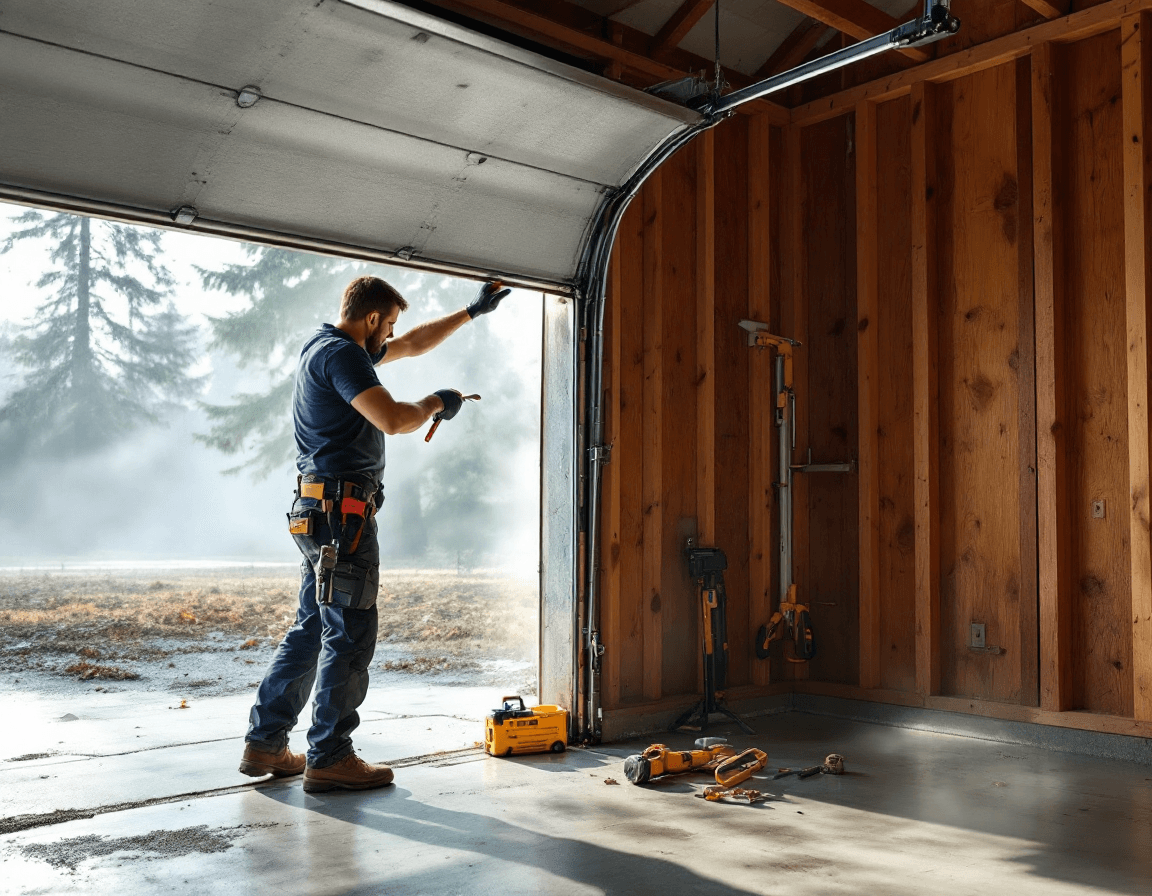
Milton sits in the Pierce County foothills, where the Puyallup River valley meets the gentle rises toward Fife and Edgewood, and many homes here have two-car garages built into sloped driveways. When a garage door comes off its track in Milton, it usually happens after a cold snap, a wet stretch of weather, or a moment of bad luck, and it can leave a household stuck with a door that won't open, won't close, or hangs crooked in its opening. Off-track garage door repair is one of the most common calls we take in this part of Western Washington, and it is also one of the easiest problems to make worse if you try to fix it without the right knowledge.
The good news is that a door that has come off its track is often a repairable problem rather than a total replacement. Most off-track situations involve some combination of a roller that has popped out of its channel, a track section that has shifted or bent, or a door panel that has been pushed slightly out of square. A licensed technician can usually assess the damage in a single visit, identify what caused it, and return the door to smooth operation. For most off-track repairs, our typical range is $125 to $400, depending on how many rollers, track sections, and hinges are involved.
This page explains what off-track problems look like, why they happen so often in our climate, what you can safely check before calling for help, and when the job belongs in the hands of a professional. If your door is jammed, leaning, or sitting unevenly, read the sections below first, then call us at (888) 799-3819 so a technician can look at it before the damage spreads.
What an Off-Track Door Actually Looks Like
A door that is off its track rarely falls completely out of the opening, although that can happen. More often, one side of the door rides up out of the channel while the other side stays put, which puts the whole panel at an angle and forces the rollers to scrape against the track instead of gliding through it. Homeowners often notice a visible gap between the top edge of the door and the header, or a dark stripe where the door seal has dragged along the floor on one side. Sometimes the door looks fine from the outside but makes a grinding, popping, or rattling noise as it moves.
It helps to know the parts involved. Each side of the door rides in a vertical track, and the top of the door curves into a horizontal track that runs back over the ceiling of the garage. Steel rollers attached to the door sections sit inside these tracks, guiding the door up, over, and back. When a roller slips out of the channel, the door loses its guide, and every other roller on that side has to carry extra load. That extra load is what bends track, twists hinges, and eventually cracks a roller stem.
Watch for these signs that your door has left its track or is close to doing so:
- The door sits lower on one side than the other, or looks visibly tilted when closed.
- A roller is visibly sitting outside the track, or the track has a gap or lip where it should be smooth.
- The door stops partway through its travel and refuses to move in either direction.
- You hear loud scraping, banging, or popping during operation, especially near the top corners.
If you see any of these, stop using the opener. Continuing to run a door that is off track can distort the panels and put additional strain on the opener motor and the cables.
Why Pacific Northwest Weather Puts Extra Stress on Tracks
Our climate is kind to lawns and hard on hardware. Milton winters bring long stretches of rain, damp air that lingers for days, and occasional hard freezes that turn wet soil and driveway edges into shifting ground. Water that works its way into the seams of a garage slab can settle under the tracks or the vertical brackets that hold them, slowly loosening the anchor points until the track no longer sits perfectly plumb. Freeze-and-thaw cycles add to this, because moisture trapped in mounting holes expands and contracts with each change in temperature.
Moisture also affects the door itself. Steel and wood panels that absorb rain can warp slightly, changing the way sections hang between the tracks, and a panel that has swollen on one side will pull unevenly on its rollers. Humidity accelerates corrosion on track surfaces and roller bearings, so a roller that once rolled smoothly may begin to stick, causing it to jump or pop free under load. Homes near the Puyallup River valley often see more of this dampness, particularly in garages that are not heated or vented well.
Wind is a factor too. Gusty storms can push a closed door in its frame, particularly on larger two-car doors with wide, lightweight panels, and that lateral pressure can jump a roller out of a track that is already slightly loose. For this reason, many off-track calls we receive come on or just after a stormy night rather than during a dry spell. If your door has been acting strangely after a windstorm, it is worth having it checked before the next one arrives.
The Most Common Causes We See Around Milton
Off-track problems almost never have just one cause. In our experience, the most frequent culprits fall into a few groups, and understanding them helps you describe the problem accurately when you call. The first group is mechanical wear: rollers that have worn flat or cracked, hinges that have loosened, and track brackets that have backed out of the wall or header over time. The second group is impact damage, such as a vehicle that clipped the door while backing out, a bicycle or lawn equipment that struck a lower panel, or a child who pulled on the door while it was partially open.
A third cause is improper operation. When a door is opened manually while the opener is still engaged, or when someone forces a stuck door along its track, the rollers can be driven out of their channels in a single moment. A fourth cause is simple neglect. Tracks that collect grit, leaf debris, and mineral deposits from rain runoff can cause rollers to bind, and a binding roller can eventually climb out of its channel when the door is pushed or pulled at an angle.
Finally, there is the installation factor. Some doors that were set up quickly or without careful leveling never sat perfectly true from the start, and the problem only becomes apparent after years of stress. If your home is older, or if the door was replaced by someone who did not verify the track alignment, the door may be running slightly out of square even when it appears to work fine.
Simple Checks You Can Safely Make Before Calling
There are a few things a homeowner can check without tools or risk, and doing so can help a technician work faster. Start by looking at the door from inside the garage with the lights on. Note which side is higher, whether there is a visible gap between the top of the door and the header, and whether any track section appears bent, dented, or pulled away from its mounting brackets. Take a few clear photographs from both the inside and outside, since these often reveal problems that are hard to describe.
Next, check the rollers and track surfaces, but only while the door is fully closed and the opener is disconnected. Look for rollers that sit out of the channel, rollers with visible cracks or flat spots, and any debris lodged in the track. You can gently wipe out grit with a dry cloth, but do not spray lubricant into the track, since oil and grease can attract more debris and make the problem worse over time. Also confirm that the bottom weatherstrip and the floor are not rubbing hard enough to suggest the door is sitting crooked.
Some things should never be attempted by a homeowner. Do not try to pry a door back into its track with a crowbar, do not loosen the bolts that hold the track to the wall while the door is under tension, and do not stand beneath a door that is unsupported or partially raised. Also avoid attempting any work on the torsion springs or cables, because these components store enormous energy even when they look relaxed. Spring and cable work is genuinely dangerous and should only be performed by a licensed, trained professional.
When Disconnecting the Opener Is the Safer Move
If your door is off track and the opener is still trying to run it, the first priority is to stop the motor. Most openers have a red emergency release cord hanging from the trolley. Pulling that cord disengages the door from the opener so it can be moved by hand, which is useful for protecting the opener and preventing further damage. Once disconnected, the door must be moved slowly and only with both hands, and only after confirming the area beneath it is clear.
Be cautious even after disconnecting. A door that has come partly off its track can shift without warning, especially if one side is hanging on a single roller. Never try to lift or push a heavy door that is sitting at an angle, since the weight can overwhelm your grip and cause the door to drop. If the door will not move smoothly by hand, leave it where it is, close the garage access if possible, and keep people and pets away from the opening until a technician arrives.
Also remember that disconnecting the opener is not a permanent fix. It simply makes the situation safer while you wait. Reconnecting the opener to a door that is still off track can cause the motor to strain, the chain or belt to stretch, or the rollers to jump again. Keep the emergency cord within reach so you can disconnect the door quickly if the opener is ever activated while the problem persists.
How Our Technicians Realign and Reseat a Door
When a licensed technician arrives at a Milton home for an off-track call, the first step is a complete inspection rather than a quick fix. We check the level and plumb of both tracks, measure the gap between the door edges and the frame, and look at each roller, hinge, and bracket. We also confirm that the springs and cables are intact, because a door that has come off track may have a cable that has slipped or a drum that has moved. This assessment usually takes a few minutes and tells us whether the repair will be simple realignment or something more involved.
The actual repair often involves reseating rollers back into their channels, straightening or replacing bent track sections, tightening or replacing loose brackets, and adjusting hinges so the panels hang square. In cases where a roller has cracked or a stem has sheared, we replace the roller with a matching part. Track sections are straightened when the damage is minor and replaced when they are kinked, split, or pulled far from the wall. After the work is complete, we run the door through several full cycles, watching for binding, uneven movement, or noise.
Our pricing for most off-track repairs falls between $125 and $400. The final figure depends on the number of rollers, track sections, and hinges involved, whether the door is a single or double unit, and whether any spring or cable work is needed. Spring and cable work is quoted separately because it requires specialized tools and carries significant safety risk. We will explain the scope of any recommended work before beginning, so you can decide how to proceed.
Track Damage From Vehicles, Storms, and Everyday Accidents
Vehicles are a surprisingly common cause of off-track problems in Milton driveways. A car backing out of a two-car garage can clip the lower corner of the door, bending the bottom section and pushing the adjacent roller out of its channel. A delivery truck or a larger vehicle parked too close to the door can do even more damage, particularly if the impact strikes the track itself. Even a minor bump can knock a track bracket loose, which then allows the track to shift under normal use.
Storm damage deserves attention too. Falling branches, flying debris, and strong gusts can dent track sections or bend the horizontal run near the ceiling. When a track is dented, rollers may catch on the dent and jump free, sometimes repeatedly. Because the damage can be hidden behind the door when it is closed, many homeowners only notice the problem when the door begins to lean or stops moving altogether.
If you suspect impact damage, look for dents, kinks, or paint scrapes on the track, and check whether any section has pulled away from the wall or ceiling. Note the date of the incident and whether anyone witnessed it, since that information helps a technician understand the sequence of damage. If a vehicle was involved, consider whether your auto insurance or homeowner policy might apply, and keep photographs of the damage before any repairs begin. A licensed technician can document the condition of the door and provide a clear written description of the work performed.
Keeping Tracks Aligned Through Milton's Seasons
Prevention is far cheaper than repair, and a few seasonal habits can keep your door tracking smoothly year-round. In late fall, before the heaviest rains arrive, walk the garage and inspect the tracks for loose bolts, visible rust, or debris. Tighten any bolts that have backed out, but do not overtighten them, since that can crack the bracket or strip the wall anchor. Clear leaves and gravel from the threshold and the bottom of the track so water does not pool against the door.
Throughout the year, keep an eye on the weatherstrip along the bottom of the door. A seal that has torn or pulled away can allow wind to push the door inward, while a seal that has become too stiff can make the door drag as it closes. Also watch the garage floor for new cracks or low spots, since shifting slab can change the track geometry over time. If you notice a hairline crack near a track anchor, mention it during your next inspection.
In humid months, ventilation matters. A garage that traps moisture encourages corrosion on tracks and rollers, which in turn increases the risk of binding and derailment. If your garage is not vented or insulated, consider adding a passive vent or a small dehumidifier to reduce condensation. Keeping the tracks clean and dry is one of the simplest ways to extend the life of the entire door system.
Choosing a Licensed Team for Off-Track Work
Because off-track repairs can involve both the door panels and the spring system, it is important to choose a provider who is properly licensed, bonded, and insured. Ask any company you are considering whether its technicians are trained to work with tensioned springs and high-load cables, and whether the company carries liability coverage that protects your home if something goes wrong during the job. A reputable provider will answer these questions directly and will not pressure you to approve work you do not understand.
Be wary of anyone who offers a quote without inspecting the door, or who insists on replacing the entire system when the problem is a single roller. A thorough technician should explain what they found, show you the damaged parts if you ask, and outline the options before starting. Get the scope of work in writing, including what is included in the base price and what might be added if hidden damage is discovered.
Here are questions worth asking when you call:
- Are your technicians licensed and bonded for garage door work in Washington State?
- Do you handle spring and cable repair in-house, or do you subcontract it?
- Will you give me a written estimate that separates track and roller work from any spring or cable work?
- Do you guarantee your workmanship, and how long does that guarantee last?
Clear answers to these questions are a good sign that you have found a team that takes safety and accountability seriously.
Getting Your Milton Garage Door Back on Track
An off-track door is stressful, but it is usually a fixable problem if it is handled promptly and by the right people. The sooner you stop running the opener and call for an inspection, the less likely it is that a bent track or a cracked roller will turn into a larger expense. Keep notes about when the problem started, what you heard or saw, and whether the door has been hit or stressed recently, since those details help a technician diagnose the cause quickly.
Our team serves Milton and surrounding Pierce County neighborhoods, and we work around the schedules of busy households, including early and late appointments when possible. We bring the tools and parts needed for most realignment and roller work on the first visit, and we will explain each step as we go. Whether your door has popped a single roller or has been bent by a vehicle, we will assess the damage honestly and recommend only the work that is needed.
If your garage door is crooked, binding, jammed, or sitting outside its track, do not wait for it to get worse. Call Seattle Garage Door Fix at (888) 799-3819 to schedule an inspection, and let a licensed technician get your Milton door moving safely again.