
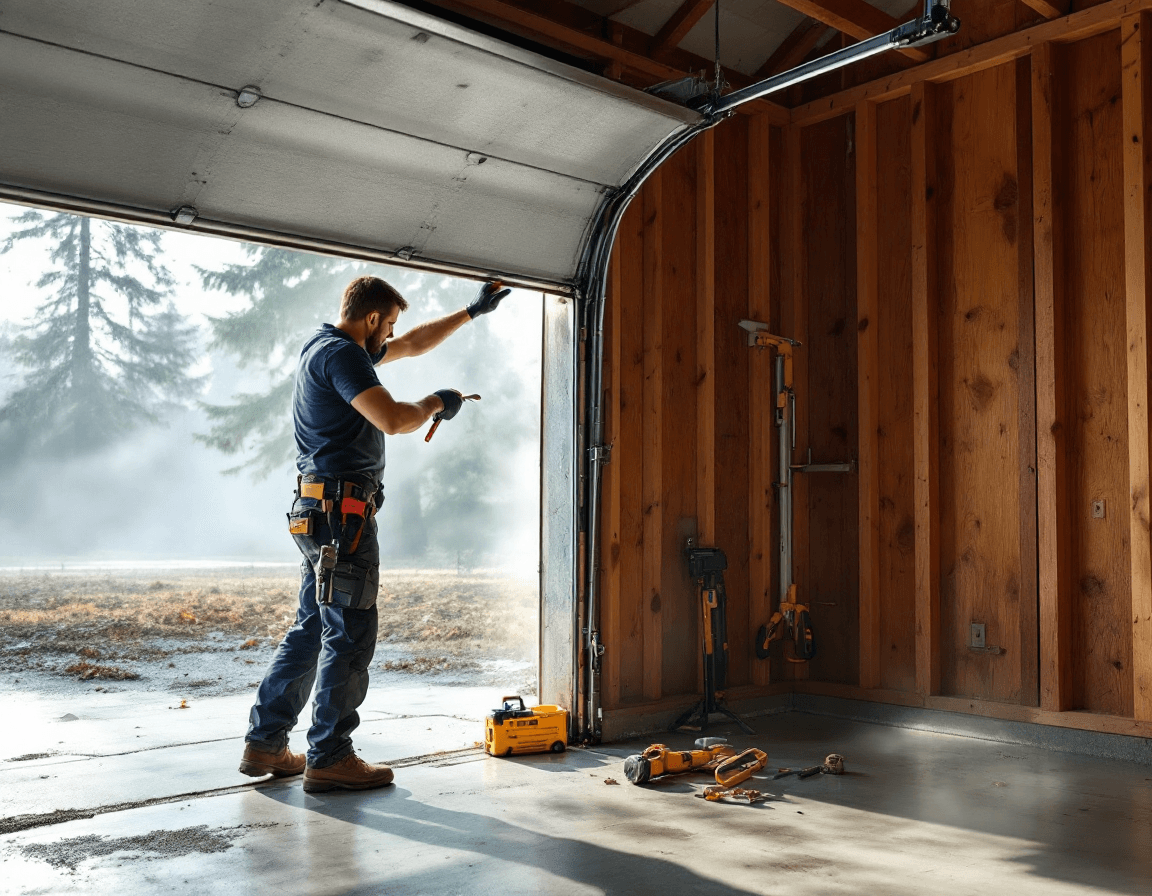
Off-track garage door repair in Fife, WA is one of the most common calls we take from homeowners and business owners along the Pierce County edge of the Tacoma industrial corridor. When a door slips out of its tracks, it often happens without much warning: one morning the door hangs a little low on one side, and by evening a roller has popped free and the panel is wedged at an angle. Fixing it quickly matters, because a door that is off its track can bind the opener, stress the springs, and put strain on panels that were never meant to carry that load. If your door is sitting crooked right now, the safest first step is to stop operating it and call a licensed technician.
Fife sits in a unique spot. The city's homes, small businesses, and warehouses are tucked between the Puyallup River flats and the busy freight routes that run toward the Port of Tacoma, so garage doors here see a mix of daily family use and heavier, more irregular stress. A door on a quiet residential street in the 98424 area might only cycle a few times a day, while a roll-up door at a shop near the industrial core may open and close dozens of times during a single shift. Both kinds of doors can come off track, but the causes and the repair approach are not always identical. That is why a good off-track repair starts with understanding how the door was installed, how it has been used, and what the surrounding conditions are doing to it.
This page explains what usually causes a door to leave its track, how to recognize the early warning signs, what a technician checks during a visit, and what you can reasonably expect to pay. It also covers the safety reasons this work belongs in professional hands, especially anything involving springs or cables. Everything here reflects how we approach these jobs on the ground, and it is meant to help you make a calm, informed decision if your door has just jumped its track.
Why Doors in Fife Tend to Jump Their Tracks
Garage door tracks are simple in concept but unforgiving in practice. Each side of the door rides on a steel track, and the rollers at the edges of each panel must stay seated in those channels for the door to travel smoothly. When a roller misses the track on the way up or down, the panel can tilt, and once one side lifts out, the other side usually follows. In Fife, we see this happen most often when a door has been subjected to a sudden side load, when the track has shifted slightly over time, or when the rollers have worn to the point where they no longer hold their position under normal movement.
Local conditions play a part as well. Western Washington winters bring long stretches of rain, soaked soil, and the freeze-thaw cycles that come with cold snaps in the foothills east of town. As the ground moves, a garage slab can settle unevenly, and even a small change in the floor can throw a track out of plumb by a few millimeters. Over several seasons, that small misalignment can cause a door to ride unevenly until one roller finally slips free. Homes near the river flats can also see more moisture seeping under the garage door, which encourages surface rust on track brackets and bolts that then loosen under vibration.
Commercial and light-industrial doors around the Fife corridor face different pressures. Delivery vehicles, forklifts, and trucks maneuvering in tight yards sometimes clip the bottom panels or the track brackets, especially on older roll-up doors with exposed tracks. Even a glancing hit can bend a track section or pull a bracket out of alignment, and the door may keep working for a few weeks before the problem shows up as a jam. If you operate a business near the Port of Tacoma edge or along the freight routes, it is worth inspecting your tracks after any reported impact, even if no one saw the collision.
Early Warning Signs Your Door Is Heading Off Track
Most doors do not fall off their tracks in a single dramatic moment. More often, they give off a series of signals that are easy to overlook if you are busy getting out the door in the morning. Learning to spot these early signs can turn a potential emergency into a routine adjustment. The goal is to catch the problem before a roller pops out completely and the panel binds against the frame.
Pay attention to changes in sound and motion. A door that starts grinding, squeaking loudly, or making a rattling noise along one side may be dragging a roller against the track lip. You might also notice the door pausing briefly during travel or hesitating before it starts to lift. Visual cues matter too, so take a moment to look at the gap between the top panel and the header, and check whether the bottom edge sits level when the door is closed.
- A visible gap between the door edge and the vertical track on one side that was not there before
- Rollers that look tilted, flattened, or pushed partly out of the channel
- A door that appears higher on one side when fully closed
- Track bolts or brackets that look loose, bent, or rust-stained
- The opener running longer than usual or stopping partway through a cycle
If you notice any of these signs, avoid forcing the door. Pushing or pulling hard on a misaligned panel can bend the track further or cause the rollers to jump the other way. Instead, note what you saw, take a photo if it is safe to do so, and arrange for a technician to inspect it promptly.
What a Technician Checks When a Door Comes Off Track
When a technician arrives at a job like this, the first priority is safety. The door should be disconnected from the opener and kept in a stable position, and the area under the door should be clear. We do not begin by pulling on panels or prying at the track. Instead, we look at the whole system to find out why the door left the track in the first place, because simply popping a roller back in without addressing the cause usually leads to a repeat call within weeks.
A thorough inspection includes checking the track alignment on both sides, measuring the gap between the track and the door panels, and inspecting the rollers for cracks, flat spots, or missing wheels. The technician will also look at the hinges and end caps, since a damaged hinge can change the way a panel travels through the curve of the track. Bottom brackets and bolts are checked for tightness, and the horizontal track sections are examined for dents or separation at the joints. On doors with torsion springs, the spring system is evaluated for safety, though any spring adjustment or replacement must be handled only by trained professionals with the right equipment.
- Track alignment checked on both sides with a level and measuring tools
- Rollers inspected for wear, cracks, and proper seating in the channel
- Hinges, end caps, and bottom brackets checked for damage and tightness
- Horizontal track sections examined for bends, dents, or separated joints
- Panels checked for bowing or damage that could affect tracking
- Opener and safety sensors tested after the door is reseated
Once the inspection is complete, the technician explains what was found and what the repair involves. Some jobs are straightforward, such as re-seating a few rollers and tightening brackets. Others require straightening a bent track section, replacing a damaged roller set, or adjusting the track to correct a slight tilt. A good technician will tell you which parts of the repair are needed now and which items are simply worth monitoring, so you can make a decision that fits your budget and your door's condition.
Rollers, Hinges, and the Small Parts People Forget
Rollers receive more attention than almost any other part of a garage door, and for good reason. They carry the weight of the door as it moves, and they must stay in their track while doing it. Nylon rollers are common on many residential doors, while steel rollers appear on heavier doors and some commercial systems. Both types wear over time, and worn rollers can develop flat spots or cracks that make them more likely to jump the track, especially when the door is cold or when the track has a small amount of misalignment.
Hinges and end caps are easy to overlook but play a major role in keeping a door tracking straight. A hinge that is loose, cracked, or missing a fastener can allow a panel to shift sideways, which then pulls the roller out of its channel. End caps and bottom brackets hold the rollers in position at the edges of each section, and when they loosen, the rollers can drift. During an off-track repair, we often find that a single loose bolt or cracked bracket was the hidden cause of a problem that appeared to be a roller issue.
Replacing these small parts is usually inexpensive compared with the cost of a full track repair, but it should be done with the correct components for your door. Mismatched rollers or hinges can change the way a door travels and may introduce new stress. If you are comparing repair quotes, ask whether the technician plans to replace worn rollers or simply re-seat them, and whether the hinge and bracket hardware will be checked as part of the job. A complete inspection should cover all of these parts rather than focusing only on the most visible issue.
Track Damage From Vehicles and Equipment
Impact damage is one of the most frequent causes of serious off-track problems we see on commercial and light-industrial doors. A forklift tine that clips a bottom panel, a delivery van that backs into a track bracket, or a pickup that brushes the side of a roll-up door can all bend or displace track sections. Sometimes the damage is obvious, with a visible dent or kink in the steel. Other times, the track looks almost normal but sits just a few millimeters out of line, which is enough to make the door bind or ride unevenly.
Separated track sections are another concern, particularly on older doors where the joints between track pieces have worked loose over time. When a joint separates, the rollers can catch on the gap and jump free, and the door may lock up completely at that point. Repairing separated sections typically involves re-securing the joint, replacing damaged brackets, and checking the entire length of the track to make sure the new alignment holds. Straightening a bent section can be done in some cases, but if the steel has been stressed beyond its limit, replacement is the safer choice.
If your door has been hit by a vehicle, do not wait to see whether it continues working. Even minor damage can worsen quickly under the stress of daily operation. Take photos of the impact area, note the time it occurred for insurance purposes if needed, and keep the door out of service until a technician has inspected it. Businesses around the Fife industrial area should also consider reviewing traffic patterns near their doors, since a few small changes, such as bollards or clearer lane markings, can reduce the chance of a repeat incident.
Reading Binding, Gaps, and Crooked Doors by Eye
Not every off-track problem looks like a door that has completely fallen out of its track. Many homeowners notice a crooked door, a gap between the panel and the track, or a door that binds partway through its travel long before a roller actually pops free. These symptoms deserve attention because they often point to the early stages of a tracking problem. Catching them early can keep a simple alignment job from becoming a more expensive repair.
Start by looking at the door when it is fully closed. Check whether the bottom edge sits level from one side to the other, and whether the gap between the door and the track looks even along both vertical runs. Next, open the door slowly by hand if you can do so safely and watch both sides as they travel. If one side seems to lag or hesitate, or if the panels appear to lean as they rise, the track or rollers on that side may need adjustment. Always keep fingers clear of pinch points and never try to force the door if it resists.
- A bottom edge that sits higher or lower on one side when the door is closed
- A gap between the panel and the track that widens or narrows during travel
- Scrape marks on the track or on the edges of the panels
- A door that stops or sticks at the same point each time it moves
- Noise that changes when the door reaches a particular height
These observations are useful for a technician, but they are not a substitute for a professional assessment. A slight binding may be caused by a roller, a track bracket, the opener's force settings, or even the balance of the door. Describing exactly what you see, when it happens, and whether the problem has grown recently will help the technician narrow down the cause quickly.
How Fife's Weather Affects Track Alignment Over Time
Pierce County's weather rarely gives garage doors a break. Long, damp winters keep moisture in the air and in the ground, and the steady rain can seep into garage slabs, wall anchors, and the bottom brackets that hold the track in place. Over time, that moisture encourages rust on steel components, and rust can weaken the bolts and brackets that keep the track rigid. When those supports loosen, even slightly, the door can start to drift out of alignment.
Cold snaps add another layer of stress. Metal contracts in the cold, and garage door components, including rollers and tracks, can behave differently when the temperature drops sharply. Nylon rollers may become stiff, and the lubricant on moving parts can thicken, which makes the door move less smoothly. A door that tracks perfectly in July can start binding in January, and homeowners sometimes assume the door is broken when the real issue is seasonal stiffness combined with a small existing misalignment.
Salt air and coastal moisture also matter in certain parts of the region, especially for homes and businesses closer to the water. Salt residue accelerates corrosion on exposed steel, and garage doors that sit near driveways where road salt is used in winter can see faster wear on their lower brackets and track sections. Regular cleaning and inspection of these areas can help slow the process, and a technician can recommend appropriate maintenance intervals based on your door's exposure. Keeping an eye on the track during the wet season is one of the most practical habits a homeowner can adopt.
Typical Costs for Off-Track Repairs in Fife
Pricing for off-track garage door repair depends on what caused the problem and how much work is required to bring the door back into safe operation. For most off-track repairs, our typical range is $125 to $400. Simpler jobs, such as re-seating a few rollers and tightening loose brackets, tend to fall toward the lower end of that range. Jobs that involve straightening bent track sections, replacing damaged rollers across multiple points, or repairing separated joints usually land higher because they require more time and parts.
Several factors shape the final quote. The type of door matters, since residential sectional doors, steel roll-up doors, and commercial doors use different track configurations and hardware. The accessibility of the track also plays a role, particularly if the damage is high on the wall or if the door is in a tight space. If a spring or cable issue is discovered during the inspection, that work is handled separately and carries its own scope, so the technician should explain it clearly before any additional work begins.
A reliable quote should always be based on an inspection rather than a phone guess. Ask what is included, whether any replacement parts are needed, and whether the price covers testing the opener and safety sensors after the repair. Beware of estimates that seem unusually low without explaining the work, and be cautious of any service that suggests unnecessary replacements without showing you the damage. An honest technician will show you the worn or bent components and explain why they matter.
Why Off-Track Doors Should Never Be a DIY Job
It can be tempting to try fixing a door that has jumped its track using a hammer, a pry bar, or a set of clamps. Unfortunately, this is one of the more dangerous garage door tasks a homeowner can attempt. A door under tension can move unexpectedly, and a panel that is partially off its track can shift, fall, or pinch hands and fingers in an instant. Attempting to lift or push the door by force can also bend the track further, turning a simple realignment into a much larger repair.
Springs and cables deserve particular caution. Torsion springs and extension springs store large amounts of energy, and the cables that run alongside them carry significant tension. If a spring or cable is damaged, or if the door has come off track because of a broken component, attempting to remove or adjust the system without proper training can cause serious injury. Licensed professionals are trained to release tension safely and to use the correct tools, and that training is the reason we always recommend calling a licensed technician for any spring or cable work.
Even when the problem appears to be only a roller or a track bracket, it is wise to keep the door disconnected from the opener until it has been inspected. Opener power can cause the door to move unexpectedly if the track is misaligned or if a roller is partially caught. Keep children and pets away from the door area, and do not allow anyone to stand under a door that is out of its track. Safety should always come before speed when a door is off its track.
Scheduling Service in 98424 and Keeping Your Door Tracking Straight
If your door is off its track or showing signs that it is about to leave, scheduling a visit sooner rather than later is the best approach. Homes and businesses in the 98424 area, including the surrounding parts of Fife, often have busy schedules, and a door that is stuck in the wrong position can disrupt daily routines. A technician who understands local conditions can arrive prepared with the right parts and tools, which helps the repair go smoothly and reduces the chance of a second visit.
Between repairs, a few simple habits can help your door track more reliably. Keep the track clean of debris, leaves, and gravel that can collect at the base of the door. Check the bolts and brackets at the start of each season and tighten any that have worked loose. Lubricate the rollers and hinges with a lubricant recommended for garage doors, and avoid using heavy grease that can attract dirt. If you notice any new noise or movement, make a note of it so you can describe it accurately to your technician.
Keeping a record of your door's service history also helps. Write down when the door was last inspected, what repairs were made, and any impact events or unusual symptoms you have noticed. This information gives a technician a clearer picture of your door's condition and can reveal patterns that might otherwise go unnoticed. For commercial doors, a regular inspection schedule can be especially valuable, since it allows problems to be caught early before they interrupt operations.
If your garage door has come off track, is binding, or shows a gap between the panel and the track, call Seattle Garage Door Fix at (888) 799-3819. Our licensed, bonded, and insured technicians serve Fife and the surrounding Western Washington communities, and we will inspect the door, explain what we find, and walk you through your options before any work begins. For spring or cable concerns, we will always recommend licensed professional service so the job is done safely from start to finish.