
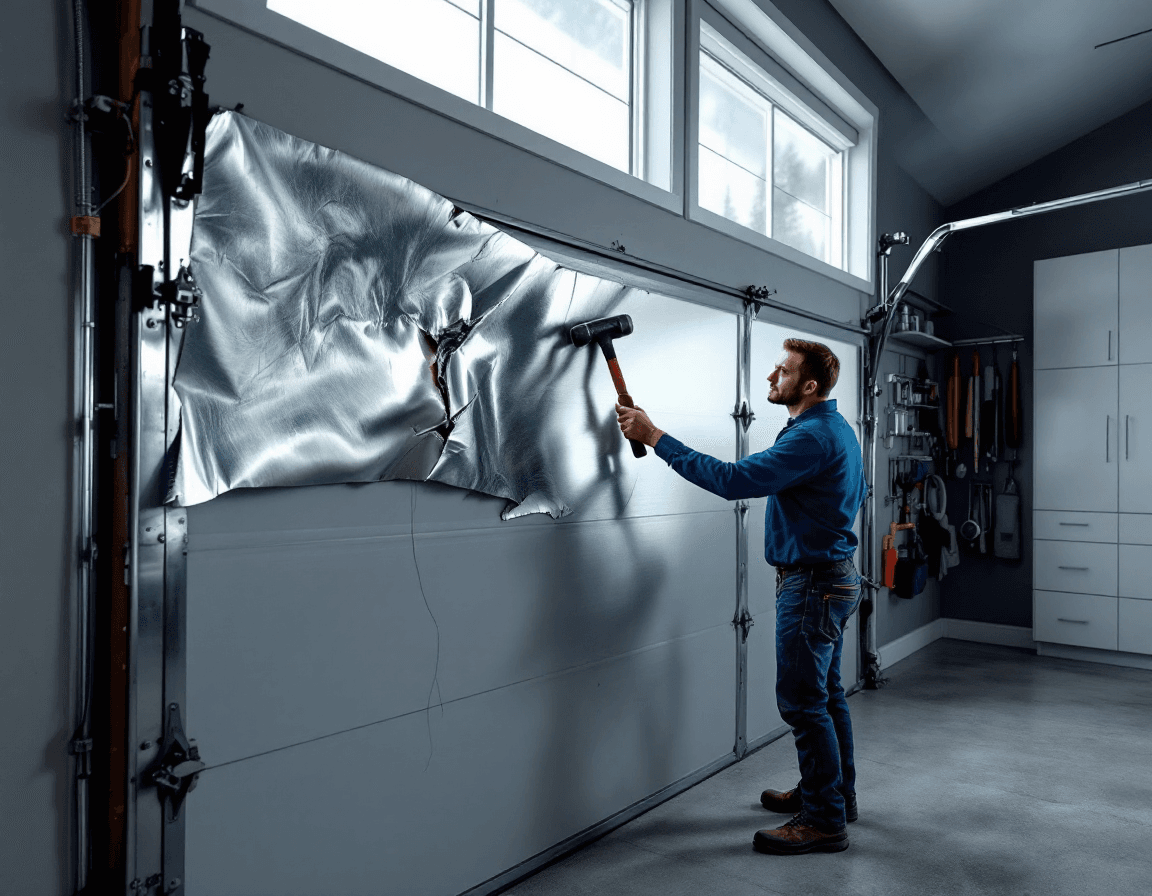
Garage door panel replacement in Fife, WA is one of the more practical repairs a homeowner can request, because a single dented or rotted section often leaves the rest of the door in good working order. Fife sits in the Puyallup River valley just east of the Port of Tacoma, and many of the garages we see here belong to households in older neighborhoods, newer infill, and light-industrial pockets where cars, trucks, and equipment come and go every day. A damaged panel may look like a cosmetic problem, but it affects insulation, weather sealing, and the way the door tracks, so it deserves a careful look rather than a quick cover-up. This page explains how we assess damaged sections, what drives the cost, and when replacing a panel makes more sense than repairing it.
Our technicians work throughout Pierce County and the surrounding Western Washington communities, and Fife garages present a consistent mix of wear patterns. Wet winters, salt-laden air drifting in from the tideflats, and heavy truck traffic on nearby arterials all leave their marks on steel and composite doors. We bring the same approach to every call: inspect the panel, check the hinges and rollers next to it, and explain your options in plain language before any work begins. If you are looking at a crease in your door right now, the information below should help you decide what to do next.
Every door is different, and the price and timeline depend on what we find once we open the section and look at the hardware. The sections below walk through the details, from reading damage and understanding local weather effects to matching a discontinued panel and knowing where safe, non-spring work ends. Pricing for a single section generally falls between $250 and $800, depending on the door style, material, and availability of a matching panel.
Reading the Dent: What Damage Tells You About the Door
Not every dent means the same thing, and the first job of a technician is to figure out how deep the damage goes. A shallow ding in a steel panel often affects only the outer skin, while a crease that runs across a section can distort the internal stiffeners that keep the door flat. We look at whether the dent has cracked the paint, exposed bare metal, or pushed the panel edge out of its groove along the stile and rail. Each of these details changes the repair plan.
Cracks deserve special attention, especially in composite or insulated sections where the foam core can be exposed. Once water reaches that core, it can soak in and weaken the panel from the inside, which is why a crack that looks minor from the driveway can become a larger problem after a few months of Fife rain. Hairline cracks near the edge of a panel often indicate that the section has been flexing, and we check the adjacent hinges and track for signs of misalignment. A small crack is easier and less expensive to address when caught early.
Because panels carry load differently depending on where they sit in the door, we also consider the position of the damage. A dent in the upper section may simply need a cosmetic swap, but damage in a lower section can change how the door balances and seals against the floor. We document what we see, take measurements, and tell you whether the damage is limited to one panel or whether the surrounding sections show the same stress. That honest assessment is the foundation for every recommendation we make.
Salt Air, Rain, and the Tideflats: How Fife Weather Ages Panels
Fife is close enough to Commencement Bay and the Port of Tacoma that the air carries a faint marine influence, especially on days with a westerly wind. Salt particles settle on exposed metal and can accelerate corrosion along panel edges, screw holes, and the bottom seal where moisture collects. Over several seasons, that corrosion can thin the steel enough that a panel which once resisted dents now crumples under a light bump. We pay close attention to galvanized and painted surfaces on doors that face the water or sit close to the roadway.
Our wet season runs long, and garage floors in the area often stay damp for weeks at a time. That moisture travels up from the slab and wicks into the bottom section, where it can rust the bottom rail and the inner edge of the lowest panel. Homeowners frequently notice a brown stain or a bubbling paint line near the floor before anything else goes wrong. Catching that early means the rest of the door may be salvageable, while waiting can turn a single section repair into a larger job.
Temperature swings also matter. Seattle-area winters are mild by national standards, but cold snaps can cause steel and composite materials to contract, while summer afternoons can warm a south-facing door enough to soften old sealants. These cycles loosen fasteners and widen small gaps at seams over time. When we replace a section, we check that the new panel's seams and screw locations will tolerate the same movement the rest of your door has been handling for years.
Repair or Replace: A Practical Decision Path
Deciding between repair and full replacement of a panel comes down to four questions: how much of the panel is damaged, whether the damage is structural, whether a matching section is available, and whether the rest of the door is sound. A light dent that has not cracked the finish may be straightened and touched up, which is often the least expensive path. Once a panel is creased, cracked through, or separated from its frame, a replacement section usually gives you a stronger and cleaner result. We will tell you if a repair will hold, and we will tell you if it will only look acceptable for a short time.
Cost plays a role, but it should not be the only factor. A full door replacement is a significant investment, and in many cases it is unnecessary when a single section has failed while the springs, cables, track, and opener are in good shape. On the other hand, if several panels are damaged, or if the door is an older model that predates standard panel sizes, replacing the whole door may actually cost less per year of service. We walk through both numbers so you can make the choice based on your situation rather than a sales pitch.
Here is a simple way to frame the decision before you call:
- A single dented panel with intact paint and no cracks is often a good candidate for straightening or a cosmetic fix.
- A cracked, split, or water-damaged panel usually calls for a section replacement.
- Two or three damaged panels on a door that is otherwise solid still often makes sense to replace in sections.
- Damage across more than half the door, or a door with failing hardware throughout, may point toward full replacement.
Matching a Discontinued Panel Without a Mismatched Look
One of the most common frustrations we hear is that a replacement panel does not match the rest of the door. Manufacturers change colors, textures, and profiles over the years, and a panel that was available when your door was installed may no longer be stocked. Faded finishes make the problem worse, because a new section that looks perfect in the showroom can appear noticeably brighter next to a door that has spent years in Fife sun and rain. We measure the panel thickness, rib spacing, groove profile, and hardware pattern before ordering anything.
When an exact match is not available, we explore a few options. Sometimes a compatible panel from the same manufacturer's newer line will fit the existing door with minor modifications to the hinges or edge trim. In other cases, we recommend repainting the entire door, which can produce a uniform appearance when the color has faded unevenly. We are candid about the trade-offs, because a close match on the surface is only useful if the panel also fits the frame and seals correctly against the weatherstripping.
Door labels and model numbers are useful clues, so if you have them, keep them handy. Some homeowners find the manufacturer stamp on the inside of a bottom section or along a stile. Photographs of the door from the inside and outside, taken in daylight, also help us identify the style quickly. Good information at the start often shortens the process and reduces the number of trips needed to complete the repair.
Bottom Sections Hit by Water and Impact
The bottom panel takes more abuse than any other section. It meets the floor, collects moisture, and sits at the height where bumpers, trash cans, and car mirrors make contact. Water intrusion here can rot wood-core doors, rust steel edges, and compromise the bottom weatherstrip that keeps leaves, insects, and drafts out of the garage. We inspect the bottom bracket, the astragal if your door has one, and the seal channel at the same time we look at the panel itself.
Impact damage at the bottom often shows up as a bowed or cracked panel that no longer sits flush with the one above it. Even a small gap can allow water to pass into the interior of the door, and over time that water can stain drywall, damage stored items, and encourage mold along the top of the floor. When we replace a bottom section, we confirm that the new panel's edges align with the adjacent sections and that the weatherseal meets the floor evenly. A bottom section that is slightly out of square can cause the door to scrape or lean during operation.
If the floor itself is uneven, we note that as well. Some Fife garages were built on slabs that have settled over the years, and the resulting gap can make a bottom panel look damaged when the real issue is the threshold. We will point this out so you are not paying for a panel replacement that will not solve the leak. Addressing the floor, the seal, and the panel together usually delivers the best long-term result.
Backing Accidents on Narrow Driveways and Shop Bays
Backing into a garage door is one of the most common causes of single-panel damage we see, and it happens more often than most homeowners expect. Driveways in parts of Fife can be tight, especially when a household has multiple vehicles, a work trailer, or a boat parked alongside the garage. A moment's distraction while reversing can leave a crease that runs across an entire section. In shop-style garages common near the industrial areas, equipment carts and pallet jacks can cause similar damage at lower heights.
After a backing incident, check the door for more than just the visible dent. Look at the track on both sides, the roller stems, and the hinges connected to the damaged panel. Sometimes the force of the impact pushes a roller out of its track or bends a hinge, which can make the door operate unevenly. If the door feels different when you run it, or if you hear grinding or popping, stop using it and call for an inspection rather than forcing it through a cycle.
Please do not attempt to disconnect the springs or remove sections that are under tension. Garage door springs store enormous energy, and attempting to release them without proper training and tools is dangerous. Our advice is to keep the door closed, keep people and pets away from the opening, and let a licensed technician handle the disassembly. Insurance questions are a separate matter, so document the damage with photographs before any repair begins.
What a Section Swap Involves on the Bench and in the Opening
A typical section replacement starts with securing the door in a safe position and confirming that the lift system is fully controlled. We then remove the hinges and fasteners that connect the damaged panel to its neighbors, using methods that keep adjacent sections from shifting. The old panel is removed, the groove and edges are cleaned, and the replacement section is checked for fit before it is installed. Any worn hinges, brackets, or rollers attached to the section are inspected and replaced if needed.
Once the new panel is in place, we reattach the hinges and fasteners with attention to torque, because overtightened screws can strip out of the panel and undertightened ones can loosen in the first season. We then operate the door through several full cycles, watching for binding, uneven movement, or any sign that the new section is sitting higher or lower than the others. Weatherstripping along the new panel is replaced if it has hardened or no longer seals against the frame. The final check includes a visual review of the color match and the alignment of grooves and seams.
Most single-section replacements are completed in a single visit once the parts are on hand. When a panel must be ordered, we schedule the install after delivery and let you know the expected timeline before we begin. We keep the work area clean, protect your floor and vehicles, and walk you through the finished door so you know what was replaced and why.
Pricing a Single Section Between $250 and $800
Pricing for panel replacement generally falls between $250 and $800 per section, and the range reflects several real variables. Door material matters, since steel, aluminum, wood, and insulated composite panels each have different costs. The style of the door, the number of grooves, window inserts, and the size of the section all affect the part price. Availability is another factor, because a panel that must be specially ordered can add time and cost compared with a common stock size.
Labor is influenced by access and condition. A section that is easy to reach on a standard track system takes less time than one on a high-lift or commercial-style door. If we find that hinges, rollers, or weatherstripping also need replacement, those items will be quoted separately so you can approve them before work begins. Our goal is to give you a clear estimate after the on-site inspection rather than a vague number over the phone.
We think it is fair to say that the least expensive option is not always the best value. A poorly matched panel that leaks or rattles can cost you more in comfort, energy, and future repairs than a properly fitted section. Ask us to explain each line item on your quote, and we will walk through what is included, what might change, and what you can expect once the work is finished.
Where Panel Work Ends and Spring Work Begins
Panel replacement is a skilled task, but it has a clear boundary. Anything involving torsion springs, extension springs, cable drums, or lift tension belongs in the hands of a licensed professional with the proper equipment and training. Springs can hold tens of pounds of force per turn, and mishandling them can cause serious injury or damage to the door and surrounding structure. Even when a damaged panel seems unrelated to the springs, the removal and reinstallation process can change the balance of the door, and we always check the spring system for wear during these visits.
If your inspection reveals a worn spring, a frayed cable, or a drum that has slipped, we will stop and explain the findings before proceeding. Some homeowners prefer to bundle panel work with spring replacement, which can save a second service call and ensure the door is balanced for the new section. Others want to address the panel now and schedule the spring work later. Either approach is reasonable, as long as the door is operated safely in the meantime.
Please do not attempt to balance the door yourself or adjust tension on the springs. Keep children and pets away from the door during any repair, and avoid standing under a door that is partly raised or disconnected from the opener. A licensed technician carries the training and insurance needed to handle these components responsibly, and that is the right choice for every household we serve in Fife and throughout Pierce County.
Preparing Your Garage for a Panel Visit
A little preparation makes a panel visit smoother for everyone. Clear a path to the door so the technician can open it fully, and move vehicles, bins, and stored items away from the bottom section. If the door has been giving you trouble, note when the problems started and what you were doing when you noticed the damage. Those details help us understand the cause and whether any other components need attention.
Taking photographs before the visit is also useful. Capture the dent or crack from a few angles, include a wide shot of the full door, and photograph the model label if you can see one. If the damage came from a backing accident, a clear record of the scene can support any insurance claim you may file. Keep the receipts and any previous repair invoices, since they may reveal earlier work that affects the current assessment.
Finally, plan for the door to be out of commission for a short period. Most section replacements are completed within the day once parts are available, but a special-order panel may require scheduling a second visit. We will confirm the timeline before we start. Having a backup entrance or a plan for parking outside will make the process easier for your household.
Garage door panel replacement in Fife is straightforward when the damage is caught early and the right section is matched carefully to your door. If you have a dented, cracked, or water-damaged panel, or you are not sure whether repair or replacement makes sense, call Seattle Garage Door Fix at (888) 799-3819 to schedule an inspection. Our licensed, bonded, and insured technicians will assess the damage, explain your options in plain terms, and provide a clear quote before any work begins.