
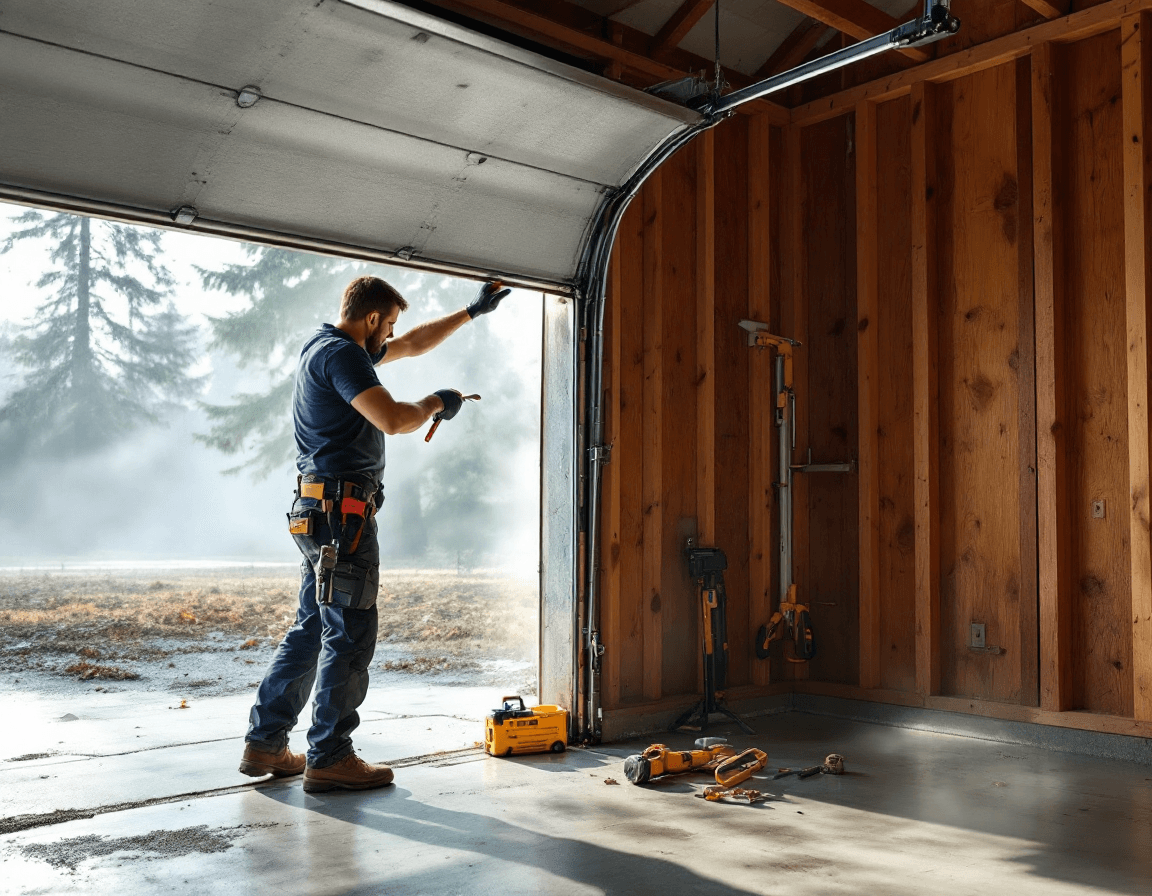
Off-track garage door repair in Pacific, WA is one of the more common calls we answer, and it is also one of the most misunderstood. When a door leaves its track, homeowners often assume the opener has failed or the door is ruined, but in most cases the problem is a roller, a track section, or an alignment issue that a trained technician can correct in a single visit. Our crew works across the Pacific area and the surrounding King County communities, and we see the same patterns repeatedly: a door that sits crooked after a windy night, a roller that has slipped out of its track, or a panel that has been nudged by a car bumper. This page explains what happens when a door comes off track, what you can safely check on your own, and what to expect when you call us.
Pacific sits in a part of the Puget Sound region where weather, soil, and older housing stock all play a role in how garage doors behave. Winter rain soaks into the ground, the soil shifts, and slabs and framing can move just enough to change how a door sits in its opening. Humidity swells wood trim and stresses hardware, while cold mornings make metal parts contract and bind. If your door has been acting strangely through the wet months, you are not imagining it, and the repair is usually more straightforward than you might fear. The rest of this guide walks through the details so you can make a confident decision about your door.
For most off-track repairs, the typical cost falls between $125 and $400, depending on how many rollers, track sections, or brackets need attention and how much access the technician has to the door. We would rather give you an honest picture than an inflated estimate, so the sections below explain what drives that range and what would move a job toward either end. If you are reading this with a door that is stuck halfway up or hanging crooked right now, call us at (888) 799-3819 and we will talk through the situation with you before anything else happens.
Why Doors Jump Their Tracks More Often in the Wet Months
Western Washington winters bring long stretches of rain, saturated ground, and frequent temperature swings, and all of that affects a garage door system in ways that are easy to overlook. Water migrates into the concrete slab and the soil beneath it, and when the ground softens, the floor at the base of the door can settle unevenly. Even a small change in the slab can alter the distance between the bottom bracket and the track, and once that geometry shifts, rollers that used to ride smoothly can start to climb or drift. Homes in the Pacific area range from older construction to newer builds, and both can experience this movement over time.
Moisture also affects the materials themselves. Wood garage doors can swell after a wet season and then shrink during drier stretches, which changes how the panels sit against the tracks and the weatherstripping. Steel doors are more dimensionally stable, but their hinges, track brackets, and fasteners can rust or loosen when they are exposed to damp air year after year. Cold snaps, which happen even in a generally mild climate, make lubricant thicken and metal contract, so a roller that glided through October may catch in January.
Wind is another factor that homeowners in this area notice. A strong gust can push against a large door panel with surprising force, especially if the door is partly open or the opener is not holding it firmly. Over time, repeated stress from wind can knock a roller partially out of its channel. Because the damage often builds gradually, many people do not connect a noisy or crooked door with a storm that happened weeks earlier.
Recognizing the Warning Signs Before a Full Derailment
Most doors do not jump the track without warning. In the days or weeks before a full derailment, a door usually gives off signals that something is out of alignment, and catching those early can turn a larger repair into a quick adjustment. Pay attention to changes in sound, movement, and appearance, particularly if the door has always operated quietly and suddenly begins to grind, pop, or stall. Keep in mind that some of these signs can also indicate worn springs or opener problems, which is why a professional inspection is valuable even when the cause seems obvious.
Here are the signs we most often hear described by homeowners before an off-track event:
- A scraping, rattling, or grinding sound as the door travels up or down, especially near the top of the track
- One side of the door sitting visibly lower than the other when it is closed
- A gap between the top or side of the door and the track or weatherstripping that was not there before
- A roller that looks tilted, cracked, or has a flat spot on its wheel
- The door stopping or reversing partway through its travel without a clear reason
- A track section that looks bent, pinched, or no longer lined up with the next section
If you notice any of these, avoid using the opener repeatedly to force the door through the problem. Each cycle can push a misaligned roller further out of position or bend a track section that might otherwise have been straightened easily. A simple note of when the symptoms started, and whether they got worse after rain, wind, or a cold morning, can also help the technician pinpoint the cause faster when they arrive.
What Happens Inside the Track When a Roller Pops Out
Understanding the mechanics helps explain why a single roller can cause such a dramatic problem. Your door is supported by a set of steel rollers, typically attached to the door panels through hinges and brackets, that ride inside a vertical track on each side and a curved track that carries the door overhead. The rollers are designed to stay seated in a channel that guides them smoothly from closed to open. When one roller slips out of that channel, the door loses its guidance on that side, and the panel can tilt, bind, or come off the track entirely.
Once a roller has popped out, the forces on the rest of the door change quickly. The remaining rollers take more load than they were designed for, and the door may twist as the opener tries to pull it along. That twisting can bend track sections, stress hinges, and damage the bottom bracket or the cable drum on the opener side of the system. This is why a derailed door should be left alone until someone can inspect it, because the longer the door runs in that condition, the more collateral damage it tends to cause.
Rollers themselves wear out over time. Nylon rollers can crack, and steel rollers can develop flat spots, especially if they have been sitting in one spot for years and the lubricant has dried out. A worn roller is more likely to pop out under stress, so replacing it during an off-track repair is often the right call rather than simply pushing it back into the channel. Our technicians check each roller's wheel, stem, and bearing before deciding whether it can be reseated or should be replaced.
A Careful First Look You Can Safely Take Before Calling
Some homeowners want to look at the door before a technician arrives, and a quick visual check is reasonable as long as it stays strictly visual. Start by making sure the door is closed and that nobody is in the garage. Disconnecting the opener is a good first step if the door is off track or hanging unevenly, because it prevents the motor from trying to move a door that is not properly guided. On most openers, pulling the red emergency release cord disconnects the trolley from the door, but do this only while the door is closed, and do not pull it while the door is partly open or hanging, since the door may drop suddenly.
From there, look at the tracks without touching the springs. Note whether the rollers are still in the channel or sitting outside it, whether any track section is visibly bent or separated from its bracket, and whether the door is sitting level when closed. Take a few photographs from the inside and outside. These photos can help you describe the situation accurately when you call, and they can also help you decide whether the job is likely to be a quick realignment or a more involved repair. Do not try to bend track sections back with a hammer, do not stand directly beneath a door that is off its track, and do not attempt to wind or adjust torsion springs yourself.
The springs deserve special mention. Garage doors are counterbalanced by high-tension springs that store enormous energy, and that energy can cause serious injury if released improperly. Spring and cable work must be handled by a licensed, trained professional. If a derailment has also affected a spring, cable, or drum, stay clear of that hardware entirely and let a qualified technician make the repair. Our crew is licensed, bonded, and insured, and we treat every spring-adjacent step with the caution it demands.
How Our Technicians Realign a Door That Has Come Off Its Track
When a technician arrives for an off-track call, the first task is a full assessment rather than an immediate fix. We check the opener's connection, the condition of the springs and cables without adjusting them, the position of each roller, and the straightness of every track section on both sides and overhead. We also look at the header, the jamb, and the floor, because a door that derailed due to structural movement may need more than a mechanical correction. Documenting these conditions before we start helps us explain what we found and why the recommended repair makes sense.
The realignment itself typically involves loosening the track brackets just enough to allow the track to be guided back into true, then reseating each roller in its channel and confirming it moves freely. Where a track section is bent, the technician straightens it carefully or replaces it if the metal has been compromised. Once the tracks are square and the rollers are seated, the door is slowly cycled by hand and then with the opener to confirm smooth travel, consistent balance, and proper closure. The technician also checks that the bottom seal meets the floor evenly and that the door stops at the correct points when opening and closing.
After the realignment, we look for the cause rather than just the symptom. Was a roller worn out, was a bracket loose, was the floor shifting, or was the door struck by a vehicle? Answering that question matters because it determines whether the repair will hold through the next season of rain and wind. We explain what we found in plain language and recommend only the work that the door actually needs.
Bent Track, Dented Sections, and Damage From a Vehicle
Vehicle impacts are a common reason for off-track problems, particularly in driveways where a car backing out or a delivery van clipping the corner can push a door panel or track section out of line. A dent in a track section can be enough to catch a roller every time the door passes that spot, and a bent section can pull the entire door out of square. Even a light impact can loosen brackets or shift the track just enough to cause binding. If a vehicle has hit your door, it is worth having the tracks inspected even if the door still seems to operate.
Track damage falls into a few categories. A dent or kink that is shallow may be straightened and returned to service. A section that is cracked, split at a seam, or badly deformed usually needs replacement, because a weakened track can fail under load. Separation at the joint between two sections is also a concern, since it creates a gap that rollers can drop into or catch on. Our technicians look at each of these conditions closely and explain whether the track can be restored or whether a replacement section makes more sense.
Panel damage matters too. A door that has been struck may have a bent panel edge, a cracked insulation layer, or a damaged top or bottom section. These issues can affect how the door sits in the track and how well the weatherstripping seals, so they should be evaluated along with the track. If your insurance or a third party is involved in the impact, document the damage with photographs before any repair begins, and keep any receipts for the work.
Rollers, Hinges, and the Hidden Wear That Invites Derailment
Many off-track repairs trace back to wear that built up quietly over years. Rollers are the most visible component, but hinges, brackets, and the bottom bracket also influence whether the door stays on track. A hinge that has worked loose can allow a panel to shift, and that shift can push a roller toward the edge of its channel. Bottom brackets that have been bent or fastened into soft framing can cause the door to lean, and a leaning door tends to load the rollers unevenly.
Rollers come in several designs, including nylon-tired and steel versions with ball bearings, and each wears differently. Nylon rollers can flatten, crack, or lose their shape, particularly on doors that see frequent use or have been exposed to temperature extremes. Steel rollers with sealed bearings can seize over time, causing the roller to drag instead of turning. A dragging roller increases friction and can cause the door to bind, which in turn stresses the entire system. When we replace rollers during an off-track repair, we match the type and size to your door rather than using a generic substitute.
Lubrication is part of the picture, but it is not a cure-all. Some homeowners spray oil into the track to quiet a noisy door, and this can attract dirt and grit that makes the problem worse. Track surfaces should be kept clean and dry, and rollers should be lubricated with a product suited to garage door hardware. A professional can tell you how often your specific door needs attention and whether it is time for a more thorough tune-up.
What the $125 to $400 Range Covers in Pacific
For most off-track repairs in the Pacific area, our pricing falls between $125 and $400. The lower end of that range generally applies to a door that has come off one track due to a single roller or a loose bracket, where the tracks are undamaged and the technician can reseat the roller and tighten the hardware in one visit. The higher end typically reflects more involved work, such as replacing several rollers, straightening or replacing a bent track section, or addressing damage from a vehicle impact. The final quote depends on what the inspection reveals, and we will explain the reasons behind each line item before any work begins.
Several factors influence where a job lands within that range. The number of rollers that need attention matters, as does the condition of the track and whether any sections must be replaced. Access also plays a part: a door with clear overhead space and straightforward brackets is often faster to repair than one with tight clearances or a heavily modified installation. If the derailment has also exposed a spring, cable, or drum problem, that work is priced separately because it requires additional safety procedures and specialized parts, and we will always discuss those options with you first.
We believe homeowners should understand what they are paying for. A realignment is not just tightening a bolt; it involves careful diagnosis, safe handling of the door, and a test cycle to confirm the repair holds. If someone offers an extremely low price without inspecting the tracks and rollers, ask what that quote includes. A clear, itemized explanation is a reasonable expectation for any repair involving a heavy, spring-loaded door.
Protecting a Pacific Door From the Next Derailment
Prevention is far cheaper than repeated emergency calls, and a few simple habits can extend the life of your door's tracks and rollers. Keep the tracks free of debris, leaves, and gravel that can collect in the channel during fall and winter storms. Check the weatherstripping and bottom seal periodically to make sure they are not pulling the door out of alignment. Listen for new sounds, and schedule an inspection if the door begins to behave differently, even if it has not yet come off track.
Consider these practical steps for the coming season:
- Inspect the tracks once a month for dents, gaps at joints, and loose bracket bolts, and tighten anything that has backed off
- Clear debris and standing water from the bottom of the track and the floor area where the door meets the slab
- Use only lubricant recommended for garage door rollers and hinges, applied sparingly to moving parts rather than poured into the track
- Keep vehicles and bicycles a safe distance from the door, and consider a visible bollard or wall guard in tight driveways
- Schedule a professional tune-up every year or two, especially before the wet season, to check rollers, brackets, and balance
- Avoid running the opener repeatedly if the door is sticking, and call for service instead of forcing the door through the problem
Because Pacific sees heavy seasonal rain and occasional windstorms, it is wise to check the door after major weather events. A short inspection after a storm can catch a shifted bracket or a rattling roller before it becomes a full derailment. The effort is small, and it can save you from an inconvenient morning with a door stuck halfway up.
Why Pacific Homeowners Call a Local Crew Instead of Waiting It Out
When a door comes off track, the instinct to wait for the situation to resolve itself rarely works in your favor. A derailed door that sits crooked can put uneven stress on the opener, the springs, and the cables, and it can also create a security issue if the door will not close fully. Waiting also gives the problem time to spread, because a bent track or a misaligned bracket can damage parts that would otherwise have been fine. Calling promptly usually means a simpler, less expensive repair.
A local crew brings a few advantages to this work. We know how the wet winters, saturated soils, and wind events in the Pacific area affect garage doors, which helps us diagnose the cause more quickly and recommend fixes that will hold through the season. We arrive prepared to handle rollers, track sections, brackets, and the opener connection, and we are licensed, bonded, and insured for spring and cable work, which is where safety matters most. Our goal is a door that runs quietly, closes fully, and does not surprise you with another derailment next month.
If your door has come off its track, is hanging crooked, has a gap at the track, or was struck by a vehicle, please do not force it. Keep people and pets clear of the area, avoid pulling on the door by hand, and give us a call. Our team will walk you through the next steps and schedule a visit that fits your day. You can reach Seattle Garage Door Fix at (888) 799-3819 for off-track garage door repair in Pacific, WA and the surrounding King County communities.