
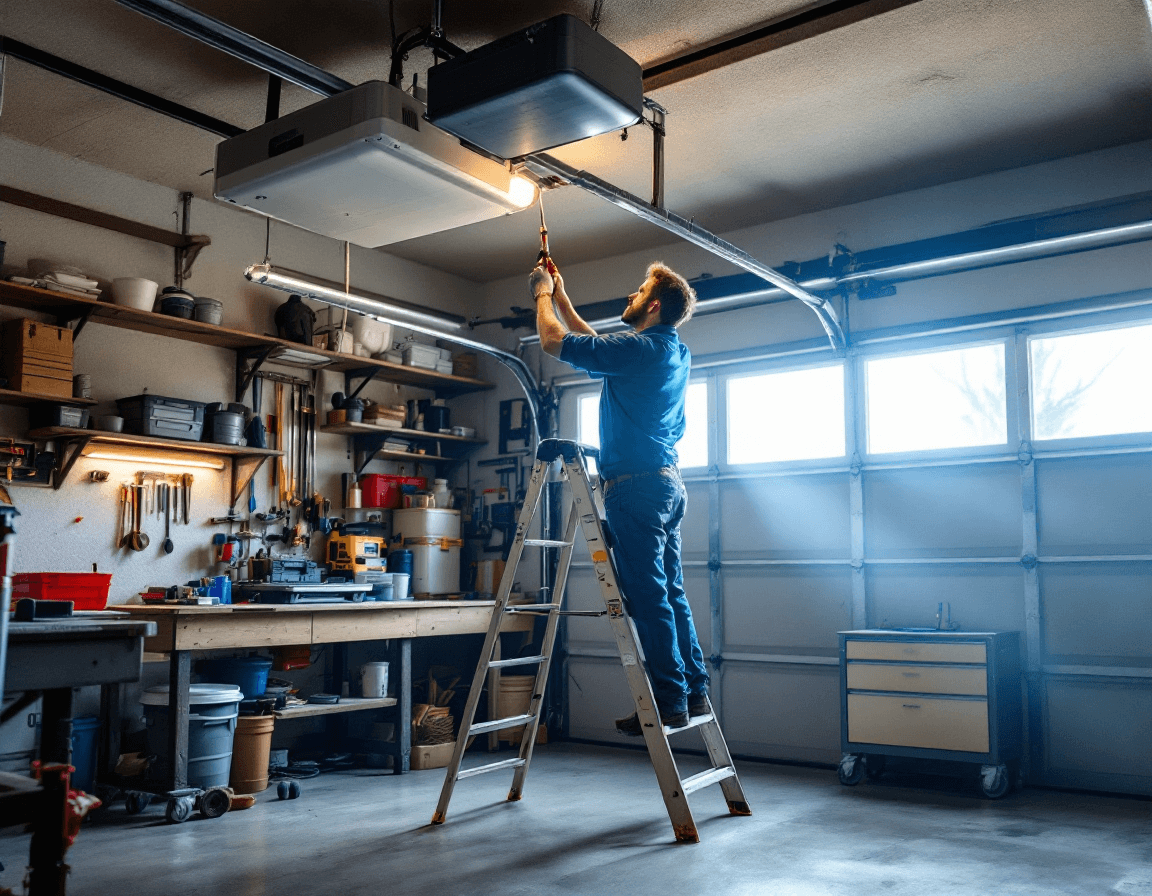
Garage door opener repair in Pacific, WA is often a simpler job than homeowners expect, but only when the problem is diagnosed correctly the first time. An opener that hums without lifting the door, ignores the remote, or reverses for no reason can have a dozen possible causes, and guessing wastes time and money. Our technicians serving Pacific and the surrounding King County communities start by listening to the opener, watching the door's full cycle, and checking the parts that most often fail in this climate. That approach keeps the repair focused on the actual fault.
Pacific sits in a part of King County where garages see long stretches of damp weather, cool temperatures, and humidity that rarely drops far enough to let metal and electronics fully dry out. Many homes here have attached garages with older wiring, detached garages that get less attention, or driveways that collect runoff from heavy rain. Each of these conditions influences how an opener behaves over time. This guide walks through the most common symptoms we see, explains what usually causes them, and describes what to expect when you call for service at (888) 799-3819.
Why Western Washington Weather Shows Up Inside Your Opener
Moisture is the quiet culprit behind many opener complaints in Western Washington. Damp air condenses on the logic board, the wall control wiring, and the terminals inside the motor housing, and over several wet months that moisture can corrode contacts or create intermittent connections. A wall button that works perfectly in July may feel unreliable in January, and that pattern often points to moisture rather than a dead button. Technicians look for green oxidation on terminals, loose wire nuts, and water staining on the ceiling bracket when they inspect an opener in a damp garage.
Temperature swings matter too. Cool mornings followed by milder afternoons cause metal parts to expand and contract slightly, which can change how a chain sits on the sprocket or how a travel limit reacts after many cycles. Lubricants also thicken in cold snaps and thin out when it warms, so an opener that ran smoothly in autumn may sound labored during a cold week. Keeping the garage dry and ventilated helps, but it does not eliminate these stresses. Regular inspection is the most reliable way to catch small changes before they become a stalled door.
When the Motor Runs but the Door Refuses to Move
One of the most frustrating symptoms is hearing the opener motor come on, feeling it vibrate, and then watching the door sit still. This usually means the power is reaching the motor but the force is not transferring to the door. The most common causes are a disconnected or slipping drive chain or belt, a stripped gear inside the head unit, or a release mechanism that has been pulled or left in the disengaged position. Before calling for service, check whether the trolley release cord hangs at its normal height and whether the door moves freely by hand when the opener is disconnected.
If the door is free and the release is engaged, the problem is more likely inside the opener. Worn gears can lose their teeth and spin without turning the drive shaft, and a failing clutch or motor coupling can produce the same silent-but-running result. A technician will test the motor's current draw, inspect the drive gear, and confirm that the trolley carriage is fully connected to the rail. In many Pacific homes we find that a loose carriage bolt or a sheared pin is the real cause, which is a quick and inexpensive fix once it is identified.
Remote and Wall Button Silence: Checking the Simple Links First
When the remote and the wall button both fail to respond, the cause is often not the opener at all. Remote batteries lose charge faster than many people expect, especially in humid conditions, and a fob left in a car or jacket pocket can be drained by a stuck button. Before scheduling a repair, try replacing the remote batteries and testing the wall button at its mounting point. If one control works and the other does not, the fault is almost certainly in the control that failed, not in the opener's receiver.
If neither control responds, a technician will work through the link between the wall console and the opener head. Common findings include a pinched or corroded low-voltage wire, a damaged wall button, or a receiver that has been knocked out of its socket. Homeowners can safely check a few things themselves:
- Confirm the opener has power by looking for the indicator light on the head unit or the wall console.
- Check that the wall button wire is not frayed, pinched behind the wall plate, or loose at the terminals.
- Replace remote batteries and try a second remote if one is available, so you know whether the fault is in the transmitter or the receiver.
- Look for a light that blinks when you press a remote button, which suggests the transmitter is working.
Anything beyond these checks, including opening the head unit or working with the logic board, should be left to a trained technician.
Safety Sensors and the Door That Reverses Without Warning
Modern openers are required to include photo-eye safety sensors, and when those sensors are misaligned or obstructed, the door will often refuse to close or will reverse immediately after it begins to descend. Pacific homes are not unusual in this regard, because dust, cobwebs, spider activity, and winter condensation can all cloud the sensor lenses. A sensor mounted too high or too low can also drift out of alignment after the door has been bumped or after the bracket has loosened slightly over several seasons. The sensor pair should line up so that the indicator light on each one is steady rather than flashing.
Inspect the sensors by wiping the lenses with a dry cloth and checking that the wires are secure and not chewed by pests or damaged by the door track. Make sure nothing, including a bicycle, a stored bin, or a pet bowl, sits in the sensor path. If the lights are steady and the door still reverses, the problem may be in the sensor wiring, the logic board, or a force setting that has drifted. Because the sensors protect people and pets from being struck by a closing door, a technician should confirm the auto-reverse function works correctly after any repair.
Travel Limits That Stop the Door Too Early or Too Late
Travel limits tell the opener where the door should stop when fully open and fully closed. When these settings slip, the door may stop short of the floor, stop too high and leave a gap, or keep pushing against the threshold and strain the opener. Limit drift is especially common after a power outage, after a long stretch of cold weather that changes the track's tension, or after someone adjusts the door without understanding the setting. Many openers store limits in the head unit, so a glitch in memory can also reset them without warning.
Relearning travel limits is usually straightforward, but the procedure varies by brand. Some openers use a dial on the head unit, while others use buttons on the wall console or a combination of both. A technician will confirm that the door is balanced, that the track is level and square, and that the limits are set so the door fully closes without forcing the bottom seal into the floor. A door that is out of balance can also cause limit errors, so balance and limits should be checked together rather than in isolation.
Stripped Gears, Grinding Heads, and Worn Drive Parts
A grinding or clicking sound from the opener head is one of the clearest signals that something inside the gearbox has worn or broken. Plastic drive gears, which are common in many residential openers, can strip teeth after years of use, especially if the door has been forced by hand, if the springs are unbalanced, or if the opener has been running with a loose chain. Once teeth are missing, the motor may hum, the door may jerk, and the sound often becomes louder with each cycle. Continuing to operate a stripped opener can damage the motor or the carriage, turning a modest repair into a larger one.
Replacing a gear assembly is a common and reasonably priced repair for many models. The technician will open the head unit, examine the worm gear, drive gear, and clutch, and determine whether a single component can be replaced or whether the unit is nearing the end of its service life. For most opener repairs we perform, pricing falls in the range of $95 to $375, though the exact figure depends on the brand, the parts needed, and the complexity of the diagnosis. A written estimate before any parts are installed lets you decide between repair and replacement with clear information.
Chains, Belts, and Trolley Trouble
Chain-drive and belt-drive openers depend on proper tension to move the door smoothly. A chain that is too loose can jump off the sprocket, while a chain that is too tight strains the motor and shortens the life of the gears. Belt drives are quieter and handle damp conditions well, but they can still stretch over time, slip on the pulley, or pick up debris that causes noise. When the chain or belt comes off, the trolley may disconnect from the door, and the door may appear to move on its own or stay stuck partway open.
Tension adjustments on a chain should be made gently and according to the manufacturer's specifications, because over-tightening can distort the rail and damage the motor. A technician will also inspect the trolley arm, the mounting bracket, and the rail for bent or loose sections. Pacific homes with older rails or with garage ceilings that flex slightly may need the rail braced to keep the drive line aligned. Keeping the chain lightly lubricated with a product recommended for garage door hardware, rather than a heavy grease that attracts dust, is a simple habit that extends its life.
Decoding Flashing Lights on the Opener Head
Many openers have a status light that flashes in a repeating pattern to indicate a specific fault. A series of quick blinks may point to a safety sensor problem, a long blink may mean a travel limit error, and a rapid flash may signal a communication issue with the wall console. The exact meaning depends entirely on the manufacturer, which is why the service manual or the label inside the head unit cover is the most reliable reference. Homeowners sometimes misread these patterns and replace parts that were not the cause.
When the light pattern repeats and the door does not respond, write down the number of flashes and any sounds you heard before calling. This information helps the technician narrow the diagnosis quickly. Some flash codes clear themselves after a power cycle, but repeated codes usually indicate a condition that needs attention. A pattern that appears only in the damp months may point to moisture on a connector or sensor, which a technician can often confirm with a visual inspection and a few simple tests.
What a Typical Repair Visit Covers and What It Costs
A service call for opener trouble usually begins with a conversation about the symptoms, followed by a full inspection of the door, the opener, the sensors, the controls, and the wiring. The technician confirms the door is balanced, checks the tracks for alignment, tests the safety reversal function, and reviews the travel limits. The goal is to identify the root cause and explain it clearly before recommending any work. Good diagnosis often prevents unnecessary parts from being installed, which keeps costs manageable.
Here is what a visit commonly includes for opener repairs:
- A diagnostic inspection of the motor, gear assembly, and head unit.
- Testing of remote, wall console, and safety sensor operation.
- Verification of travel limit settings and auto-reverse function.
- Chain, belt, or trolley adjustment and minor component replacement when needed.
- A written explanation of findings and an estimate before major parts are ordered.
For most opener repairs, pricing runs from $95 to $375, depending on the brand, the parts required, and how much labor the diagnosis involves. Simple adjustments and control fixes often fall at the lower end of that range, while gear or logic board replacements typically fall higher. We aim to explain the options so you can make an informed decision.
Keeping Your Opener Reliable Through Pacific's Seasons
Preventive care is one of the best investments a Pacific homeowner can make in their garage door system. Twice a year, ideally before the wettest months and again in late spring, it helps to check that the door moves smoothly, that the sensors are clean and aligned, and that the remote and wall button respond consistently. Look for visible rust on the rails, loose hardware, and any gap at the bottom of the door that lets water or drafts in. These small checks reveal problems while they are still inexpensive to fix.
Keeping the garage ventilated and dry also protects the opener's electronics. Running a dehumidifier in a damp garage, clearing debris from the sensor area, and avoiding stacked items that block the door's path all reduce strain. If you park a vehicle inside, make sure the door's safety features are working before the car is in the path. Good habits do not replace professional maintenance, but they make the opener more predictable and easier to diagnose when something does change.
Where Professional Help Stops: Springs, Cables, and Safety
Opener repair is a task that many homeowners can understand conceptually, but certain parts of a garage door system carry serious risk and should never be handled without training and proper equipment. Torsion springs and extension springs store enormous amounts of energy, and a broken spring can cause injury even when the door appears to be at rest. Cables under tension can snap, and a door that drops unexpectedly can crush fingers, vehicles, or anything beneath it. These components require licensed professionals with the right tools.
If your opener repair reveals a spring or cable issue, our recommendation is to leave that work to a licensed technician and to keep the door closed and the opener disconnected until the repair is complete. Our team is licensed, bonded, and insured, and we will explain exactly what needs professional attention before any work begins. Opener repairs themselves are often straightforward once the diagnosis is clear, and we are glad to handle the motor, gear, circuit board, sensor, and travel-limit work that keeps your door running reliably.
If your garage door opener in Pacific is humming without lifting the door, ignoring the remote, grinding, reversing, flashing unusual lights, or running unpredictably, call Seattle Garage Door Fix at (888) 799-3819. Describe what you are seeing and hearing, and we will help you determine whether a simple adjustment or a targeted repair will get your door working again.