
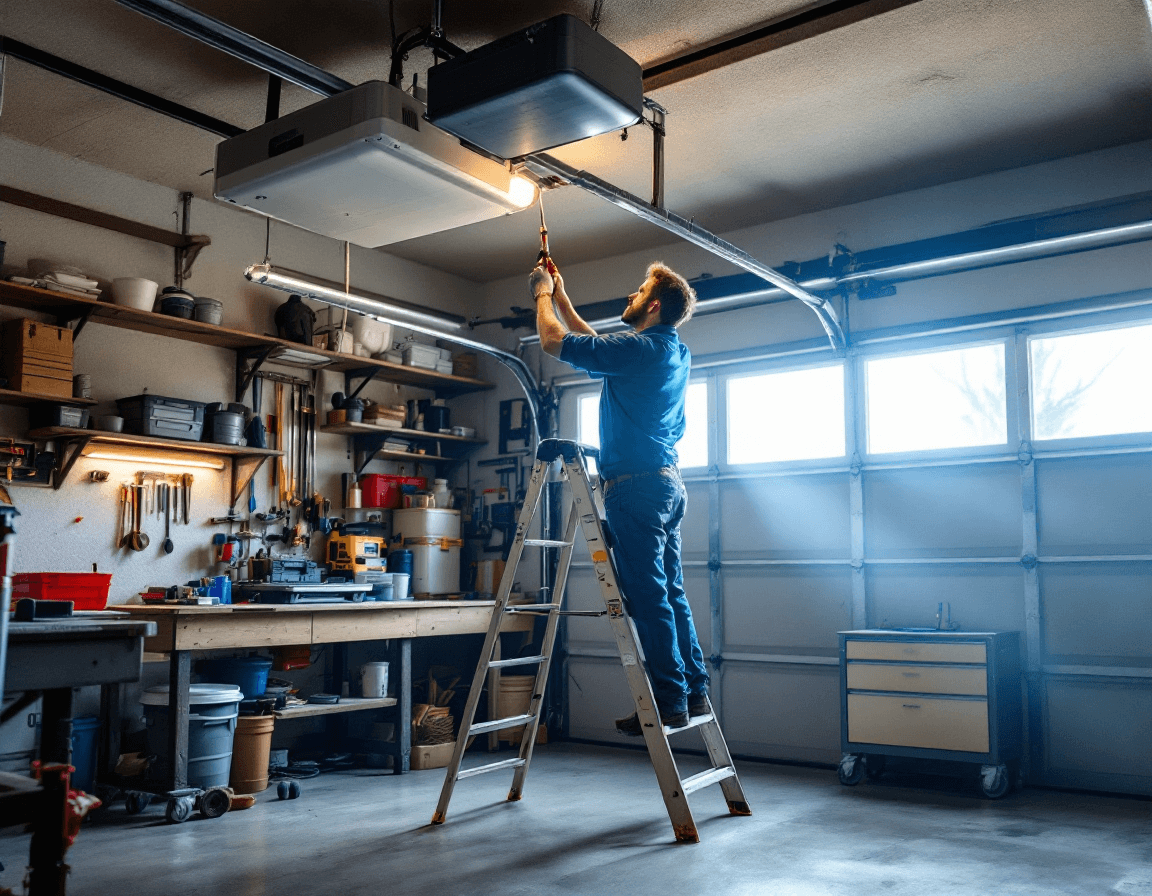
Garage door opener repair in Auburn, WA is one of the most common calls our technicians handle, and it usually starts with something small: a remote that stops working, a door that stalls halfway, or a motor that hums without lifting anything. Auburn sits in the Green River valley, where wet winters, humid spring mornings, and cool nights all put extra strain on the electronics and moving parts inside an opener. Homes across the city, from the older blocks near downtown to the newer subdivisions up on the hills, have openers that have been working through the same damp cycles for years. Knowing what those symptoms mean can save you a service call, or help you describe the problem clearly when you do call.
This page walks through the failures we see most often in Auburn and the surrounding King County neighborhoods. We cover motors, gears, logic boards, travel limits, safety sensors, and drive components for the major opener brands. We also explain what a typical repair visit involves and where the costs usually fall. Most opener repairs we perform land between $95 and $375, depending on the part, the brand, and how much diagnostic time the problem requires. Your exact quote will depend on what the technician finds once the cover is off.
Nothing here replaces an in-person inspection, but understanding the basics will help you tell a fixable opener problem from one that needs a licensed professional right away. If anything involves torsion springs, cables, or drums, stop and call a technician. Those components store enough energy to cause serious injury, and they should never be adjusted by a homeowner.
Why Auburn Openers Struggle Under Valley Damp
Auburn's climate is mild by most national standards, but the moisture is persistent. Winter rain can linger for weeks, and the humidity that follows in spring keeps garages damp even when the weather is calm. That moisture finds its way into the places it causes the most trouble: the opener's logic board, the limit switch contacts, the wiring terminals in the wall control, and the photo-eye sensors near the floor. Over time, corrosion on those contacts creates intermittent connections that are hard to diagnose because the opener works fine on some days and not others.
Temperature swings add another layer of stress. A garage that is cold at six in the morning and warmer by mid-afternoon causes metal parts to expand and contract, which can shift tracks slightly and change how the door loads the opener. Lubricants that were adequate in a dry climate can thicken during cool snaps and fail to protect the gear train. Our technicians often find that openers which seemed fine through summer begin acting up once the first sustained wet weather arrives in October or November.
Many Auburn homes have attached garages that also serve as workshops, storage areas, or laundry rooms. Those uses bring in dust, dampness from wet boots and bikes, and the occasional leak from a water heater or exterior wall. A garage that stays humid all winter will age an opener faster than one kept dry. Good ventilation, keeping the floor clear of standing water, and sealing gaps around the door are simple steps that extend the life of the entire system.
Reading the Symptoms Before You Call: Motor Hums but Door Stays Put
One of the most common complaints we hear is a motor that runs, sometimes with a loud hum, but the door does not move. This symptom points to a disconnect somewhere between the motor and the door. The motor itself may be fine, but the drive system is not transferring that power to the door. On many chain-drive and belt-drive openers, the most likely cause is a broken or disengaged drive component, such as a stripped gear or a chain that has slipped off the sprocket.
Another frequent cause is a failed trolley or a release mechanism that has been pulled into the manual disconnect position. Many homeowners pull the emergency release cord during a power outage or while troubleshooting, then forget to re-engage the trolley. If the door is stuck and the motor is running, check the red release handle first. Make sure it is in the locked position before assuming a larger failure.
Sometimes the door itself is the problem. A seized roller, a bent track, or a door that has become unbalanced can cause the opener to strain against resistance it cannot overcome. Auburn's damp winters can cause rollers and hinges to corrode, making the door drag. If the motor hums and then shuts off after a few seconds, the opener may be protecting itself from overload. In that case, have a technician evaluate both the opener and the door hardware together rather than replacing the opener on its own.
Remote and Wall Button Silence: Checking the Easy Links First
When the door won't respond to the remote or the wall button, it is tempting to assume the opener has died. In practice, the cause is often a simple communication problem. Start by checking whether the remote's battery is weak or dead. Replace the battery with a fresh one of the correct type, then test the remote from a few feet away from the door. If the door responds from the driveway but not from inside the car, the remote itself may be failing or the antenna on the opener may need attention.
Next, look at the wall control. Its wiring runs from the opener head to a low-voltage terminal, and corrosion or loose connections at that terminal are common in humid garages. Gently check whether the button feels firm and whether the indicator light on the wall unit illuminates when pressed. If the wall control seems dead while the remote works, the problem is usually a wiring fault or a failed button, both of which are straightforward repairs.
Some Auburn homeowners have also noticed that a remote stops working after a nearby construction project, a new Wi-Fi router, or a neighbor's upgraded system causes interference. Radio-frequency problems are less common than battery or wiring issues, but they do happen. If you have ruled out batteries and wiring, a technician can check the receiver board, reprogram the remotes, and confirm the frequency your opener uses. Reprogramming steps vary by brand, so avoid guessing with the learn button, which can accidentally erase existing codes.
Stripped Gears and Grinding Heads: What the Noise Means
A grinding or clicking sound from the opener head, especially when the door starts or stops, often indicates a stripped gear in the drive mechanism. Most residential openers use a plastic or nylon drive gear that meshes with a metal worm gear. Over years of use, the teeth wear down, and a gear that once ran smoothly begins to slip or skip. The noise is a warning. Continuing to run the opener with a stripped gear can damage the motor shaft and the surrounding housing, which turns a moderate repair into a full replacement.
Auburn households that run their doors frequently, such as families with teenage drivers or home-based businesses with regular deliveries, tend to wear out gears sooner. Heavier doors, including insulated steel doors common in newer Lakeland Hills and Lea Hill homes, put more load on the gear train with every cycle. A door that is out of balance adds to the strain, which is one reason we often check door balance during the same visit. Lubrication also matters. Gears that have dried out or collected grit from the garage floor wear faster than those that are properly maintained.
Replacing a stripped gear typically involves opening the drive housing, removing the damaged gear, and installing a matching replacement. The correct part depends on the opener brand, model, and gear ratio, so it is important that the technician verify the part before ordering. Our technicians service every major opener brand and keep a broad range of common gears and drive components on hand, which often allows same-visit repairs. Do not attempt to force the door open manually while the gear is grinding, as that can break the gear teeth further and make the repair more involved.
Reversing Doors and Travel-Limit Trouble
A door that closes partway and then immediately reverses is one of the more frustrating symptoms to live with, and it usually has one of three causes. The first is the safety reverse system. Modern openers are required to reverse the door if they detect an obstruction, and the photo-eye sensors near the floor are the first line of detection. If the sensors are misaligned, dirty, or blocked by something as small as a cobweb or a leaf, the opener will reverse the door as if an object were in the path. Check that the two sensor lenses face each other, that their indicator lights are steady, and that nothing sits between them.
The second cause is the travel-limit setting. The travel limits tell the opener where the door should stop when it is fully open and fully closed. If those limits have drifted, perhaps after a power outage, a belt adjustment, or a component replacement, the opener may think it has met an obstruction when it has not. Some openers store force settings that work in conjunction with the limits, and if the force is set too low for a heavier door, the opener will reverse during normal travel.
The third cause is the door itself. A door that drags on one side, has a damaged track, or has lost its balance can exert enough resistance to trigger the reverse function. This is why we check the door's movement by hand and look at the rollers, hinges, and track alignment before adjusting the opener. Adjusting limits and force settings should be done carefully, because incorrect settings can compromise the safety reverse feature that protects people and pets.
Blinking Lights on the Opener: Decoding the Pattern
Many openers have a status light on the motor head or a diagnostic LED on the logic board, and that light often flashes a specific pattern to indicate a fault. A repeating pattern, such as a set of rapid flashes followed by a pause, is the opener's way of telling you what it sees. The exact meaning varies by manufacturer, so the first step is to find the model number on the motor housing and consult the brand's diagnostic chart. Writing down the number of flashes and the timing before calling makes the diagnosis faster, whether you are speaking to a technician or checking the manual yourself.
Common meanings for repeating flash codes include sensor faults, where the photo-eyes are not detecting each other; limit or position errors, where the opener has lost track of the door's location; and communication faults, where the wall control or remote receiver is not sending clean signals. Some codes point to a logic board issue, and those can be harder to resolve because they may require a replacement board matched to the exact model. Because the pattern depends on the brand and firmware, it is worth checking before assuming the worst.
If you see a flashing light that appears alongside a grinding noise, a burning smell, or visible wiring damage, turn off the power at the breaker and call for service. Do not keep cycling the door to see if the code changes. Repeated attempts can stress components that are already compromised. A calm, documented description of what the light is doing is often the fastest path to a correct repair.
Loose Chain and Belt Problems Without Risky DIY
A chain or belt that has come off the track or sagged noticeably is a serious sign that the drive system needs attention. Chain-drive openers, which are common in older Auburn garages, run a steel chain along a rail to lift the trolley. Belt-drive openers use a reinforced rubber belt that is quieter but still needs proper tension. When either one loosens or slips off, the trolley may stop moving, the motor may strain, or the door may jerk during travel. A loose chain can also whip or rattle, which is an early warning that something is wrong.
Homeowners sometimes try to tighten a chain by hand or reseat a belt themselves. While a simple check of the outside of the rail is reasonable, you should never attempt adjustments that involve the door's springs, cables, drums, or the tension of the door itself. Those parts are under high load, and mistakes can cause serious injury. Tensioning the opener's chain or belt is usually a task for a trained technician who can confirm the drive is aligned and the trolley is properly connected before the door is powered again.
When we replace a chain or belt, we also inspect the sprocket or pulley, the rail, and the trolley arm. A worn sprocket can cause a new chain to loosen quickly, and a bent rail will keep wearing components unevenly. Replacing parts in the right order saves money and prevents a repeat visit. We recommend asking the technician to show you the old and new components so you understand what failed and why.
Intermittent Operation That Comes and Goes with the Weather
Some of the hardest calls involve an opener that works perfectly for days and then refuses to respond on a damp morning. Intermittent operation is frustrating because it makes the problem seem to disappear whenever a technician arrives. In Auburn, weather is often the common thread. Moisture on wall control terminals, condensation inside the motor housing, or corrosion on limit switch contacts can all create connections that open and close with changes in humidity and temperature.
To help a technician track down an intermittent problem, keep a simple log for a week or two. Note the date, time, weather conditions, what you tried, and what happened. If the door fails only after rain or only in the early morning, that detail narrows the search considerably. Take a quick look at the garage for water sources as well, such as a leaking gutter that drips near the opener or a door seal that lets water pool on the floor. Water near electrical components is never a good sign, and it should be addressed.
Once the cause is identified, the repair often involves cleaning or replacing corroded contacts, improving wiring connections, adding a protective cover or drip shield where appropriate, or replacing a board that has failed under humidity stress. Intermittent faults can also signal early logic board failure, which is why we recommend addressing them before the opener stops working entirely. A timely repair is usually less expensive than an emergency call on a cold, rainy night when the door is stuck in the open or closed position.
Brand Coverage and Parts Sourcing for Auburn Homes
Auburn garages contain openers from many manufacturers, including the most widely sold residential brands and a number of older or regional models that are no longer produced. Our technicians work on major brands across chain-drive, belt-drive, and direct-drive designs, and we can diagnose motors, gear sets, logic boards, travel-limit systems, remote receivers, and safety sensors for each. Brand knowledge matters because the diagnostic procedures, wiring diagrams, and replacement parts differ from one manufacturer to the next.
Parts availability is an important factor in any opener repair. Some components are standard and widely stocked, while others must be ordered for a specific model number. When a part needs to be sourced, the technician will explain the timeline and confirm the correct fit before ordering. For older openers, we sometimes recommend discussing whether a repair is the most cost-effective choice compared with a modern replacement opener, especially when multiple components are wearing out at once. Honest comparisons help homeowners make decisions based on the actual condition of the equipment.
If you have the opener's brand name, model number, and manufacture date, write them down before calling. That information helps the technician prepare the right tools and parts for your visit. It also helps avoid return trips, which save time and keep the overall cost in the expected range for most repairs. Many openers have the model number printed on a label on the motor housing or the back of the rail, so a quick check in the garage is usually enough.
What a Typical Repair Visit Covers and What It Costs
A typical opener repair visit begins with a conversation about the symptoms you have noticed, when they started, and whether anything changed before the problem began, such as a power outage, a storm, or a recent door adjustment. The technician then inspects the opener, the wall control, the remotes, the safety sensors, the travel-limit settings, and the door's movement by hand. This diagnostic step is important because the visible symptom is often not the root cause, and fixing only the surface problem can lead to a repeat call.
Once the cause is confirmed, the technician will explain the repair options and provide a clear price before any work begins. Most opener repairs we perform fall between $95 and $375, depending on the component, the brand, the time required, and whether a part must be ordered. Simple fixes such as sensor realignment, battery and remote programming, or a tightened connection are usually at the lower end. Motor replacements, logic board swaps, and gear replacements generally fall higher on the range. Your technician will tell you where your repair fits before proceeding.
Please note that spring replacement, cable work, drum repair, and any adjustment to the door's counterbalance system are outside the scope of a homeowner repair and should be performed only by a licensed professional. Those components carry high tension and can cause serious injury. If your technician finds that the door's springs or cables need attention during an opener visit, they will explain the issue and recommend a qualified service. Never attempt those repairs on your own, even if a video or forum suggests it is straightforward.
Call Seattle Garage Door Fix in Auburn
If your Auburn garage door opener is humming without moving, ignoring your remote, grinding, reversing, flashing a repeating light, or working only when the weather cooperates, a licensed technician can help you find the cause and fix it correctly. We serve Auburn Downtown, Lakeland Hills, Lea Hill, and surrounding neighborhoods across ZIP codes 98001, 98002, and 98092, and we work on the major opener brands homeowners in this area rely on. Call Seattle Garage Door Fix at (888) 799-3819 to describe your symptoms, ask about pricing for your specific opener, and schedule a visit that gets your door moving safely again.