
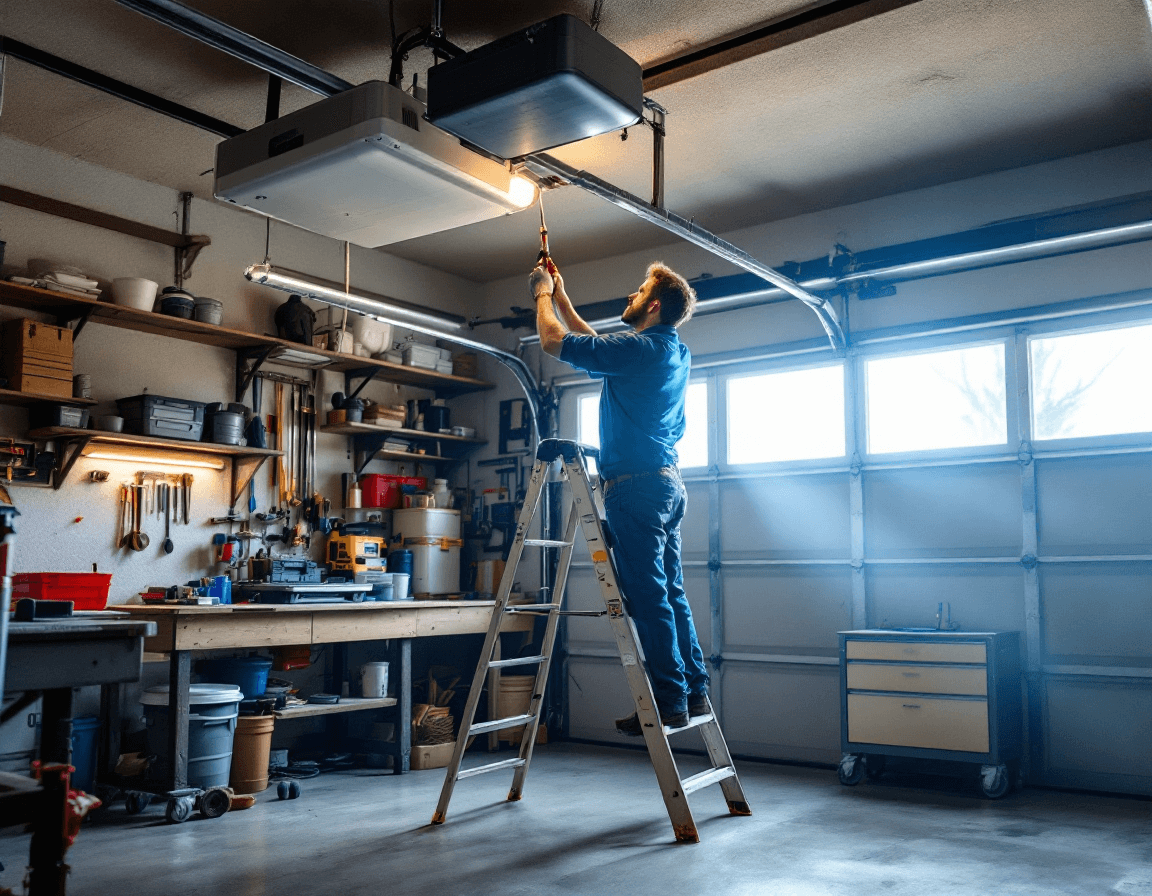
Garage Door Opener Repair in Federal Way, WA is often the difference between a garage you can use every morning and one you're forced to open by hand. Federal Way homeowners call us when the opener motor still hums, the lights still blink, but the door sits stubbornly in place or closes only halfway. Most of these problems have identifiable causes, and many can be fixed in a single visit once a technician works through the motor, gears, logic board, and travel limits in the right order.
This page explains the most common opener problems we see across Federal Way, from the neighborhoods near Twin Lakes to the older homes closer to the Dash Point shoreline. It also covers what the symptoms usually mean, what a diagnostic visit involves, and what repairs typically cost. Our typical range for most opener repairs is $95 to $375, though the final number depends on what the diagnosis uncovers and which parts are needed.
If you're reading this with the door stuck open or closed right now, you don't have to work through every section. Call us at (888) 799-3819 and describe what you're hearing, seeing, and noticing about the door. A short description over the phone often helps us decide whether the job needs a same-day visit or can wait a day or two.
How Western Washington Weather Wears Down Openers
Federal Way sits in the south end of King County, where long gray stretches from October through March bring steady rain, damp air, and the kind of cool humidity that never fully dries out a garage. Even a well-sealed garage can see condensation on metal rails and inside the opener housing when morning temperatures drop near freezing and then warm up by afternoon. That moisture finds its way into wall-switch wiring, connectors, and the small control board that tells the motor when to start and stop. Over several seasons, it quietly corrodes contacts and makes electrical connections less reliable.
The area's mix of mature trees also adds to the problem. Fir and maple debris collects in tracks and on the top of the door, and wet leaves hold moisture against the bottom seal for weeks at a time. When the door drags or binds because of grit and swollen weatherstripping, the opener works harder, and that extra load can expose a weak capacitor, a tired motor winding, or a gear that was already close to failing. Homes near Dash Point may also pick up a bit more salt-laden air on certain winds, which speeds corrosion on exposed hardware and metal brackets.
Because so many symptoms in Federal Way trace back to moisture and load, we always check the door balance, track alignment, and weatherstripping during an opener visit. Fixing the opener alone without addressing the door's condition often leads to a repeat call within a few months. A complete look at the system gives you a better chance of a repair that lasts through a wet winter.
Motor Hums but the Door Stays Put
A motor that runs and makes a noise without moving the door is one of the most common complaints we hear. Homeowners often describe a steady hum or a short buzz when they press the button, followed by silence and no movement. This usually points to a problem somewhere between the motor and the door, not necessarily a dead motor. The drive mechanism may be disengaged, the trolley may have come off the rail, or the release handle may have been pulled and left in the manual position.
Before calling, check the emergency release cord that hangs from the trolley. If it's dangling or has been pulled, the door is disconnected from the opener, and the motor will spin without lifting anything. Re-engaging it usually requires lifting the cord to reconnect the trolley, then running the opener once more. If it engages cleanly and the door still doesn't move, the problem is probably deeper in the drive system.
Inside the opener, a humming motor that won't turn the drive often means a seized gear set, a broken drive coupling, or a motor that has lost torque because of a failing capacitor or worn brushes. A good technician measures current draw, checks the drive shaft for play, and listens for the difference between a motor that is struggling and one that is stuck. Our technicians look at the whole chain from the motor to the rail to avoid replacing parts that were never the cause.
Remote and Wall Button Both Go Silent
When neither the remote nor the wall button responds, it's easy to assume the opener has died. In many Federal Way homes, though, the problem is much simpler. A remote may have dead batteries or a worn button contact, while the wall control may have a broken wire or a loose terminal at the opener's header. Pulling the power cord for a few seconds and plugging it back in sometimes clears a temporary lockup, but that doesn't address why it happened in the first place.
We start with the easy checks: replacing remote batteries, confirming the wall control wiring at both ends, and looking for signs of water in the receptacle or junction box near the door. Wall controls in garages that face the weather often fail at the low-voltage run, especially where the cable passes through a rim joist or outside wall. Once those are confirmed, we test the receiver on the logic board, since the antenna and radio module are the next most likely suspects. Some older openers simply stop recognizing remotes after a power surge, and reprogramming is the fix.
Keep in mind that a receiver issue can look like a remote problem and a wiring issue can look like a motor problem. A technician who tests each piece separately avoids guessing. If you have a second remote or a keypad, try them to narrow things down before the visit, and note whether the wall button lights up when pressed.
Grinding Head and Stripped Gears
A grinding, clicking, or rattling sound from the opener head is one of the more urgent symptoms, because it often means a gear is wearing down or has partially stripped. The nylon or steel drive gear inside many openers takes the brunt of every cycle, and years of cold starts, sudden stops, and heavy doors can wear teeth until the gear slips. Once a gear strips, the door may move unevenly, stop midway, or refuse to lift at all, and continuing to run the opener can damage the motor and the drive shaft.
When we open the housing on a grinding unit, we look for metal shavings, cracked nylon teeth, and wobble in the drive shaft. In many cases the gear set can be replaced as a unit, which costs less than a full opener replacement and restores smooth operation. In other cases the motor has already been damaged by a slipping gear, and the repair becomes a combined gear and motor job. Either way, a quick diagnosis helps you decide whether repair is worth it.
Homeowners sometimes try to lubricate their way out of a grinding opener. A light lubricant on the rail and chain may quiet the noise temporarily, but it won't rebuild worn teeth. If the sound changes in pitch or appears only at certain points in the travel, that is a sign the gears need attention, and it's better to schedule a visit before the damage spreads.
Door Reverses or Won't Close Completely
A door that closes partway and then goes back up is often reacting to a safety sensor, a travel limit that's out of adjustment, or an obstruction the opener detects. Modern openers include photo-eye sensors near the floor that must see each other across the door opening, and a sensor that is bumped, misaligned, or covered with cobweb or road grime will cause the door to reverse immediately. Federal Way garages with trash cans, bikes, or storage bins near the sensor line are especially prone to this kind of nuisance reversal.
If the sensors look fine, the next suspect is the travel limit setting. Openers store the point where the door should stop when closed and open, and if those limits have drifted because of a cable stretch, a track shift, or a board reset, the door may reverse before reaching the floor. Resetting limits is a precise procedure that depends on the brand, and the wrong setting can leave the door short of fully closing, which is a security and weather-sealing issue. We confirm both limits and check the force settings so the door closes firmly without slamming.
A door that won't close fully can also be a balance or weatherstripping issue, particularly after a wet season. Swollen bottom seals and warped panels add resistance, and the opener's force setting may trip before the door seats. We inspect the bottom seal, the lower panels, and the track alignment to find out whether the door or the opener is responsible for the reversal.
Blinking Light Patterns and What They Mean
Many openers use a blinking light on the motor housing or logic board to signal faults, and a repeating pattern is a clue worth paying attention to. The exact meaning varies by manufacturer, and the code may indicate a sensor fault, a stuck button, a force error, or a board problem. Writing down the number of blinks, the timing, and whether the light stays on between sequences can save time during a visit, and the owner's manual or the brand's support material usually lists the codes.
Here are a few patterns homeowners often describe to us, along with what they commonly point toward:
- Rapid, steady blinking when the door is idle often suggests a stuck wall button or a shorted control wire.
- A pattern that repeats every few seconds usually indicates a sensor alignment or obstruction fault.
- A light that blinks several times and then pauses can signal a force or travel limit error.
- Lights that flicker only in damp weather may point to moisture in a connector or a failing board.
These are general patterns, not a replacement for a proper diagnosis. Two openers from different brands can use the same blink count for different faults, so we confirm the code against the specific model before recommending parts. Keep a photo of the light or a short video of the sequence if the pattern is hard to describe.
Loose Chains, Slipping Belts, and Rail Trouble
A chain or belt drive that has come loose, stretched, or slipped off the sprocket can make the opener jerk, rattle, or stop mid-cycle. Chain drives are common in Federal Way garages because they handle heavy doors reliably, but the chain stretches over time and can jump teeth if the tension is wrong. Belt drives run quieter and resist the damp air better, yet they still need periodic tension checks and can slip when the rail is dirty or the trolley binds.
When we inspect a loose chain or belt, we check tension at the midpoint, look for worn sprocket teeth, and confirm the trolley is still securely attached to the door arm. A chain that has come off the rail can sometimes be re-seated safely, but if the sprocket is damaged or the chain has stretched beyond adjustment, replacement is the better choice. We also check the rail for bends, because a bent rail can pinch the chain and cause repeated derailments.
Chain and belt adjustments are within reach for many homeowners, but tension and alignment mistakes can damage the opener or the door. If you find the chain off the rail, avoid forcing the trolley or pulling on the door, and call for service instead. We recommend the work be done after the power is disconnected and the door is secured.
Intermittent Operation That Comes and Goes
Some of the most frustrating calls involve an opener that works perfectly one day and fails the next. The door may open on the first press, then ignore the remote on the way back, or it may run fine in the morning and stall after the afternoon rain begins. Intermittent failure is hard to fix by guessing, because the cause may be a loose connection, a cracked solder joint on the board, a weak power supply, or a sensor that's failing only when humidity rises.
Our approach is to test each component under the conditions where the failure happens. If the problem appears during damp weather, we check for moisture in connectors, junction boxes, and the opener housing. If it happens after the door has been running for a while, we measure motor temperature and current draw, looking for a motor that's overheating or a binding track. Voltage drops from a tired outlet or an overloaded circuit can also cause random resets, so we verify the power supply before replacing expensive parts.
We also check whether the issue is connected to Wi-Fi or smart-control hardware, since many newer openers combine radio, app, and wall control functions on one board. A smart module that loses its connection can make the opener appear unreliable even when the mechanical system is fine. Writing down when the failure happens, what the weather was like, and which controls you used will give us a useful starting point.
Brand Coverage and What a Diagnostic Visit Includes
We service motors, gears, logic boards, and travel-limit settings across the major opener brands found in Federal Way homes, including older chain-drive units and newer belt-drive and smart-control models. Brand matters because part numbers, programming steps, and error codes differ, and the technician needs access to the correct documentation to make an accurate repair. If you're not sure which opener you have, the label is usually on the motor housing or the back of the unit near the light lens.
A diagnostic visit typically begins with a quick walk-through of the door and opener. The technician checks the door balance, track alignment, safety sensors, wall control wiring, remote programming, and travel limits. Next, we test the motor, drive, and logic board under load, and confirm whether the problem is isolated or related to a broader system issue. We explain what we found, show you the affected parts when possible, and provide a clear repair recommendation before any work begins.
Some repairs can be completed on the first visit, such as replacing a remote receiver, resetting limits, or swapping a sensor. Others, like a motor replacement or a full gear set, may require a part order. In those cases we tell you what to expect so you can plan around the door's downtime, and we work to minimize the time your garage stays out of service.
Typical Repair Costs in the Federal Way Area
Most opener repairs we handle fall in the range of $95 to $375, depending on the parts, labor, and complexity of the diagnosis. A simple sensor realignment, limit adjustment, or remote reprogramming usually lands at the lower end, while a logic board, motor, or gear set replacement sits higher in the range. Each quote is based on what we find during the visit, and we discuss the options before proceeding.
Several factors shape the final cost. Older openers may require parts that are harder to source, and some smart-control models use proprietary boards that cost more to replace. Door condition matters too, since a poorly balanced door or damaged track can add work that isn't strictly part of the opener itself. We'll point out when a secondary issue is affecting the opener and let you decide how to proceed.
Repair versus replacement is a question we help homeowners answer honestly. If the opener is more than a decade old, the repair cost is close to a large share of a new unit, and the motor or gears are showing wear, replacement may give you better reliability and newer safety features. We never recommend a replacement that isn't justified by the diagnosis, and we'll show you the reasoning behind the advice.
Safety Limits: What to Leave to a Professional
Opener troubleshooting is something many homeowners can handle safely, such as checking remote batteries, confirming the emergency release is engaged, and cleaning the photo-eye lenses. Those steps don't involve the door's spring system or high-tension components. Beyond that, the risks increase quickly, and the most important rule is that torsion springs and cables should never be adjusted, removed, or replaced by an untrained person. Those parts store enough energy to cause serious injury even when the door looks still.
If the door is off track, if a cable has snapped, or if a spring appears broken, keep everyone away from the door and avoid operating the opener. Disconnect power to the opener only if you can do so safely and without reaching into the door area. Then call a licensed professional. Our technicians are licensed, bonded, and insured, and they handle spring and cable work only with the proper tools and procedures.
When you call, describe whether the door is moving at all, whether you hear unusual noises, and whether any part of the system looks damaged. That information helps us plan the right visit and bring the right parts. If the problem is opener-only, we can often resolve it quickly, and if it involves the door's counterbalance system, we'll tell you clearly before any work begins.
Your Federal Way opener deserves a technician who understands both the equipment and the damp, changeable weather that tests it every season. Whether the motor hums without moving the door, the gears grind, or the lights blink a pattern you can't decode, call Seattle Garage Door Fix at (888) 799-3819 to schedule a diagnostic visit. We serve Federal Way and nearby neighborhoods, including homes near Twin Lakes, Dash Point, and the Wild Waves area, and we'll help you get your garage door working reliably again.