
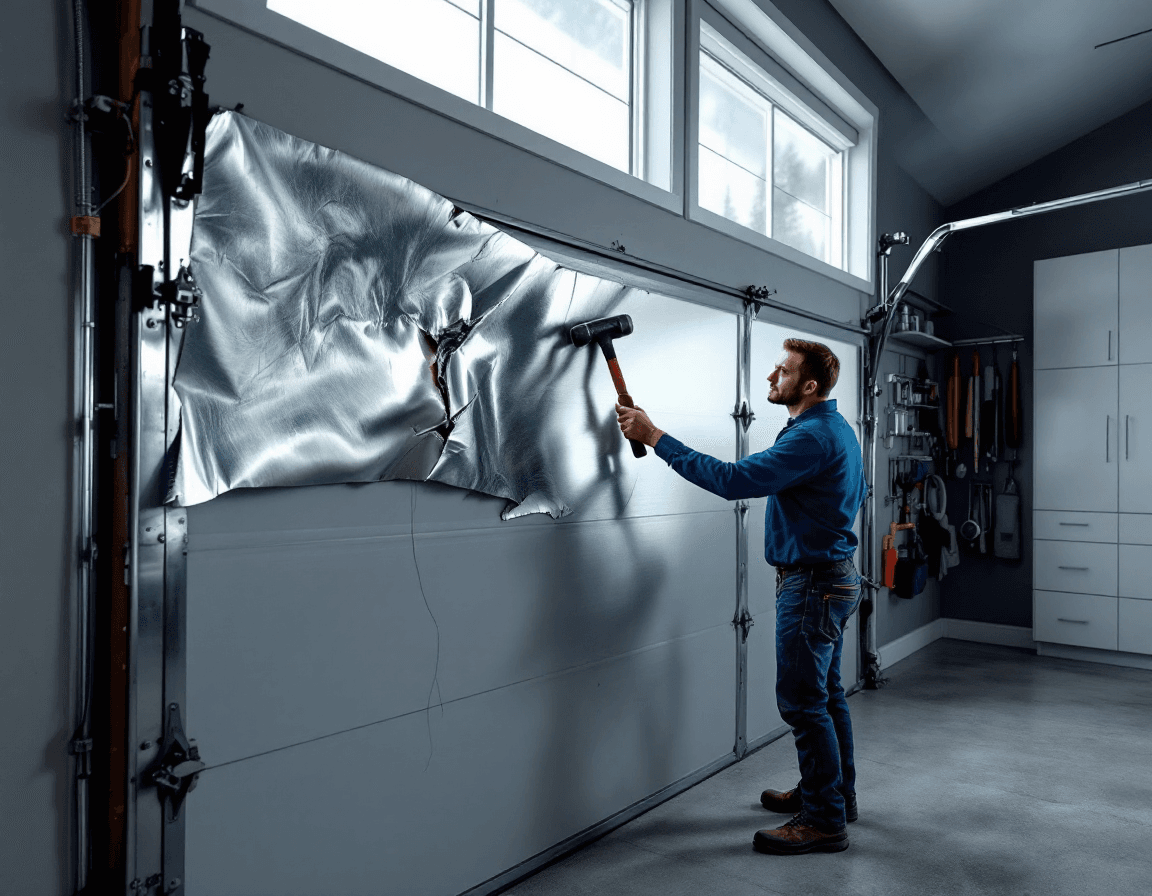
Garage Door Panel Replacement in Federal Way, WA is often the smartest fix for a door that works perfectly but looks worn, dented, or patched after a rough season. Many homeowners assume a damaged panel means buying an entire new door, yet a sectional door is built so that individual panels can be removed and replaced. Our technicians serve homes across Federal Way and nearby King County communities, and we regularly see doors where one or two panels are the only real problem. This page explains when a single-section swap makes sense, what it involves, and what you can expect to pay.
A damaged panel is more than a cosmetic issue, even when the opener runs smoothly and the door closes without complaint. A cracked or bent panel can alter how the sections track through the vertical and horizontal rails, and it can weaken the door's resistance to wind and forced entry. Water that gets into a split panel can also travel into the insulation foam in insulated doors, where it stays hidden until the surface starts to bubble or peel. Catching the problem early keeps the repair small and the bill predictable.
Reading the Damage: Which Panels Can Be Swapped Alone
Start by walking the full length of the door with the garage lit and the door closed, then again with it partly raised. Look for dents that have creased the steel, cracks along the seams where panels join, and areas where the paint has lifted to bare metal. Pay special attention to the bottom section, because it takes the brunt of curb strikes, lawn equipment, and standing water. A dent that is shallow and smooth may be cosmetic, while a dent with a sharp fold line usually means the metal has been permanently stressed.
Single-panel replacement works best when the damage is confined to one or two sections and the surrounding panels are still square and rigid. If the frame has been bent, the hinges are loose, or the rollers are wearing grooves into the track, replacing a panel will not solve the underlying problem. In those cases a technician will usually recommend correcting the hardware first, then deciding whether a panel swap still makes financial sense. Honest assessment at this stage saves homeowners from paying for cosmetic work on a door that needs structural attention.
Document what you find before the visit. A few clear photos taken from the inside and outside, along with notes about when the damage first appeared, help the technician quote accurately and identify any related issues. If you remember a specific event, such as a backing mishap or a storm that blew debris against the door, write that down too. This information is useful for your own records and for any insurance conversation that might follow.
Why Federal Way Doors Take a Beating from Wet Winters and Road Debris
Federal Way sits in a part of the Puget Sound region where the winters are long, damp, and frequently gray. Rain falls for weeks at a time, and the moisture that settles on the lower edge of a garage door can stay there for days. Steel panels that are not fully dried after a storm become prime candidates for surface rust, especially where a scratch has broken through the factory coating. Over several wet seasons, that rust can eat through the bottom of a panel and leave a rough, flaky edge that no longer bonds well with paint.
Traffic and daily life add their own wear. Homes near busier arterials and in neighborhoods with narrow driveways often see more frequent contact with bumpers, bikes, and trash bins. Gusty windstorms, which can roll through the south King County area during the colder months, sometimes toss branches and yard debris against exposed doors. Even a small pebble kicked up by a passing truck can leave a chip that starts to rust within a single wet season.
Coastal and near-water influences matter too. Homes in the general direction of Dash Point and other areas closer to the water tend to sit in air that carries more moisture and salt-laden mist during parts of the year. That environment accelerates corrosion on exposed steel, particularly on the lower sections that are closest to the driveway surface. Homeowners in these areas often benefit from checking the bottom panels a few times each year and wiping away any grime that collects along the threshold.
Matching a Panel That Has Been Sitting in the Sun
Color and texture matching is one of the trickiest parts of any panel job. Garage doors in the Federal Way area have spent years facing the sun on sunny summer afternoons, and that exposure fades paint unevenly. A new panel that comes straight from the factory may look bright and slightly different next to a door that has weathered to a softer shade. The gap can be obvious from the street, which is why matching is a major part of the planning process.
Start by identifying the manufacturer, the model series, and the approximate install date if you can find it. Many doors carry a label or a stamp on the inside of a panel or along the bottom bracket, and that information helps determine whether an exact match is still available. When a precise match is no longer produced, a technician can often recommend a closely related color, a different panel profile that fits the existing hardware, or a plan to refinish adjacent sections so the transition looks deliberate. Each path has tradeoffs in cost, appearance, and lead time.
Insulated and non-insulated panels are not interchangeable, and this is a common surprise for homeowners. A non-insulated replacement panel placed in an insulated door will create a noticeable change in thickness and thermal performance, and it may not line up with the neighboring sections. Your technician should confirm the panel type, thickness, and window or hardware pattern before ordering. Taking a clear photo of the door's face and the panel edges helps speed this up considerably.
Repair or Replace: A Practical Decision Path
Not every dented panel needs to come out. Minor dents on a flat section, especially those that have not cracked the paint or creased the metal, sometimes can be pushed out or smoothed with the correct tools. Surface rust can often be cleaned, primed, and painted, provided the metal underneath is still solid when tapped with a screwdriver. The key question is whether the damage affects the panel's structural strength, its weather seal, or its ability to sit flush with the sections beside it.
Replacement becomes the better choice when the panel has a split, a deep crease, or rust that has perforated the metal. It also makes sense when water has penetrated an insulated panel and the foam has begun to deteriorate, because surface repairs will not restore the insulation. If the damage has spread to several sections in a short time, the frequency of problems may suggest that the door is nearing the end of its useful life, and a full replacement conversation becomes more appropriate. A technician can walk you through these points on site and explain the reasoning in plain terms.
Consider these factors when weighing your options:
- Whether the damage is limited to the surface or extends into the metal or insulation
- How many panels are affected and whether they sit in the lower or upper sections
- The age of the door and whether replacement parts are still readily available
- Whether the frame, hinges, rollers, and tracks remain straight and properly aligned
- Your plans for the home, such as a near-term sale or a long-term renovation
What a Typical Section Swap Involves on a Sectional Door
A panel replacement is a careful, methodical job that begins with securing the door. Before anything is removed, the technician disconnects power to the opener and confirms the door is supported so it cannot move unexpectedly. The spring system is not adjusted during a standard panel swap, and this is an important safety boundary that we will discuss in more detail later. The work focuses on the panel and the hardware directly connected to it, including hinges, rollers, and brackets.
Once the door is stable, the technician removes the fasteners holding the damaged section to its neighbors and carefully lifts out the panel. The rollers and hinges that connect to that section may need to be unbolted, inspected, and reinstalled with the new panel. The new section is fitted, aligned with the adjacent panels, and fastened so the seams line up cleanly. A final test confirms that the door tracks smoothly, that the weather seal makes contact at the bottom, and that the opener reverses properly when it encounters resistance.
Timing for most single-section jobs is measured in hours, but parts availability can extend the calendar. If the panel must be ordered, the technician will usually provide an estimated lead time before work begins. Some homeowners prefer to schedule the swap for a dry window of weather, since rain or wind makes handling large panels more difficult and can complicate the seal work at the bottom. Planning around the forecast helps the job finish on schedule.
Price Factors Between $250 and $800 Per Section
Our panel replacement pricing generally falls between $250 and $800 per section, and the spread reflects real differences in the job. A basic, non-insulated steel panel on a common door model sits near the lower end of that range, while an insulated panel with windows, a custom profile, or a discontinued color sits near the upper end. The door's size, age, and manufacturer all play a role, as does how much hardware must be replaced alongside the panel.
Labor depends on how accessible the damaged section is and whether the surrounding panels need to be removed to reach it. A bottom section is often easier to reach, while a middle or upper panel may require more disassembly and careful alignment. If the door has worn rollers, a bent track, or loose hinges, those repairs will add to the total, and a responsible technician will explain them before proceeding. Requesting an itemized estimate helps you see exactly what the price includes.
Before approving work, ask whether the quote covers the panel, labor, disposal of the old section, and a test of the door after installation. Confirm the expected warranty on both the part and the labor, and ask whether the color match is guaranteed or simply the closest available option. Clear answers now prevent surprises later and make comparing estimates much easier.
Bottom Seal and Rust Checks Before You Commit
The bottom section of a door is where most of the water, grit, and road salt collect, so it deserves extra attention during any panel conversation. Check the rubber weather seal along the threshold for cracks, flattening, or gaps where light shows through when the door is closed. A failing seal lets water and insects in, and it can accelerate rust on the bottom panel even after a new section has been installed. Replacing the seal is typically a modest add-on that protects the investment.
Look carefully at the lower edges of each panel and the bottom bracket for flaky or bubbling paint. Rust that has begun at a seam or a fastener hole can spread quietly behind the surface, so scrape a small test area and look at the metal with a flashlight. If you find active corrosion, mention it to the technician so it can be treated before the new panel is set. Addressing the source of moisture is just as important as replacing the damaged metal.
Good maintenance habits help a repaired door last longer. Rinse the bottom of the door periodically during the wet months to remove salt and mud, and dry any standing moisture from the threshold when you can. Keep the drainage area at the driveway edge clear so water does not pool against the door. Small routine steps make a noticeable difference in how long a finish holds up in the Pacific Northwest climate.
Insurance, Backing Accidents, and Documenting the Damage
A single damaged panel often results from an ordinary accident, such as a vehicle backing too far into the garage opening or a delivery cart striking the door. When this happens, the homeowner may wonder whether an insurance claim is worth filing. The answer depends on your policy, your deductible, and the total cost of the repair, so it is wise to review your coverage before making a decision. Many homeowners find that a modest panel repair falls below their deductible, which makes a claim impractical.
If you do plan to file a claim, document the damage thoroughly. Take photos from several angles, include a shot showing the door's full width for context, and note the date and time of the incident. Keep the original invoice and any written estimate, and ask the technician to describe the damage in a short written summary that you can attach to your claim. Accurate records make the process smoother and reduce the chance of disputes about the timeline.
Be honest and specific when describing the event to your insurer, and avoid guessing about details you did not witness. If another driver or a contractor caused the damage, exchange contact information and record the circumstances while they are fresh in your mind. Keep any messages or receipts related to the incident, since they may be useful later. Clear documentation protects you whether you file a claim or simply handle the repair out of pocket.
Keeping the Rest of the Door Healthy After Panel Work
A new panel can make an old door look dramatically better, but the rest of the system still needs attention. The springs, cables, rollers, and hinges all carry load every time the door opens and closes, and a single weak component can put strain on a freshly installed section. After a panel swap, pay attention to whether the door moves evenly, whether any panel sits slightly out of line, and whether the opener strains or runs unusually long. These signs can point to hardware that needs service.
Lubrication and tightening are simple tasks that homeowners can handle safely. Use a lubricant recommended for garage door components on the rollers and hinge pivots, and avoid heavy grease that attracts dust and grit. Check that the bolts holding the panels and the hinges are snug, but do not overtighten them, since that can crack the steel around the fastener. Periodic checks like these help the new panel blend in with the rest of the door over time.
Schedule a professional inspection if you notice grinding, popping, or the door drifting when it is partly open. Those symptoms often reflect worn rollers, a loose track, or a tired spring, and they will continue to stress panels if left alone. A technician can determine whether the issue is minor adjustment work or a component that should be replaced. Catching these items early protects your investment in the panel repair.
Safety Lines: What Stays With a Licensed Technician
Garage doors store a great deal of mechanical energy in their springs and cables, and that energy can cause serious injury if the system is handled incorrectly. Torsion springs and extension springs are under high tension even when the door appears to be at rest, and a sudden release can strike with enough force to cause lasting harm. For this reason, we strongly advise homeowners never to attempt spring adjustment, cable replacement, or drum work on their own. These tasks belong to a licensed, trained professional with the right equipment.
Panel replacement is different from spring work, but it still requires caution. The door must be supported and the opener disconnected before any section is removed, and the panel must be handled carefully because the edges are sharp and the sections are heavy. Never stand under a door that is being lifted or adjusted, and keep children and pets away from the work area. If the job involves any component under tension, leave it to the technician.
Our licensed, bonded, and insured technicians follow established safety practices on every job, and we will tell you clearly when a repair crosses into territory that should not be handled without specialized training. If a technician recommends spring or cable work alongside a panel replacement, ask for a written explanation of what is needed and why. Responsible service protects your household as much as it protects the door.
Scheduling Service Across Federal Way Neighborhoods
Homeowners in Federal Way and nearby communities have different driveway layouts, access constraints, and garage configurations, and these details influence how a panel job is planned. Some homes have narrow side access or a tight turnaround, which affects where a technician can stage the new panel and how the old section is removed. Others have two-car doors with a single damaged section that must match a door that has been in the sun for many years. Describing your setup when you call helps us plan the visit more accurately.
Our service area includes the 98003 and 98023 ZIP codes, as well as the wider King County region around them. If you live near Twin Lakes, Dash Point, or the Wild Waves area, mention your location and any access considerations when you book. Letting us know whether the door is insulated, what year it was installed if you know, and whether you have photos of the damage will help us prepare the right parts. The more information you share up front, the smoother the visit.
When you are ready to move forward, call (888) 799-3819 to describe the damage and ask about a panel replacement estimate. Our team can explain your repair-versus-replace options, outline the expected price range of $250 to $800 per section, and schedule a visit that fits your household. We are happy to walk you through the process from the first inspection to the final test, so you know exactly what to expect for your Federal Way garage door.