
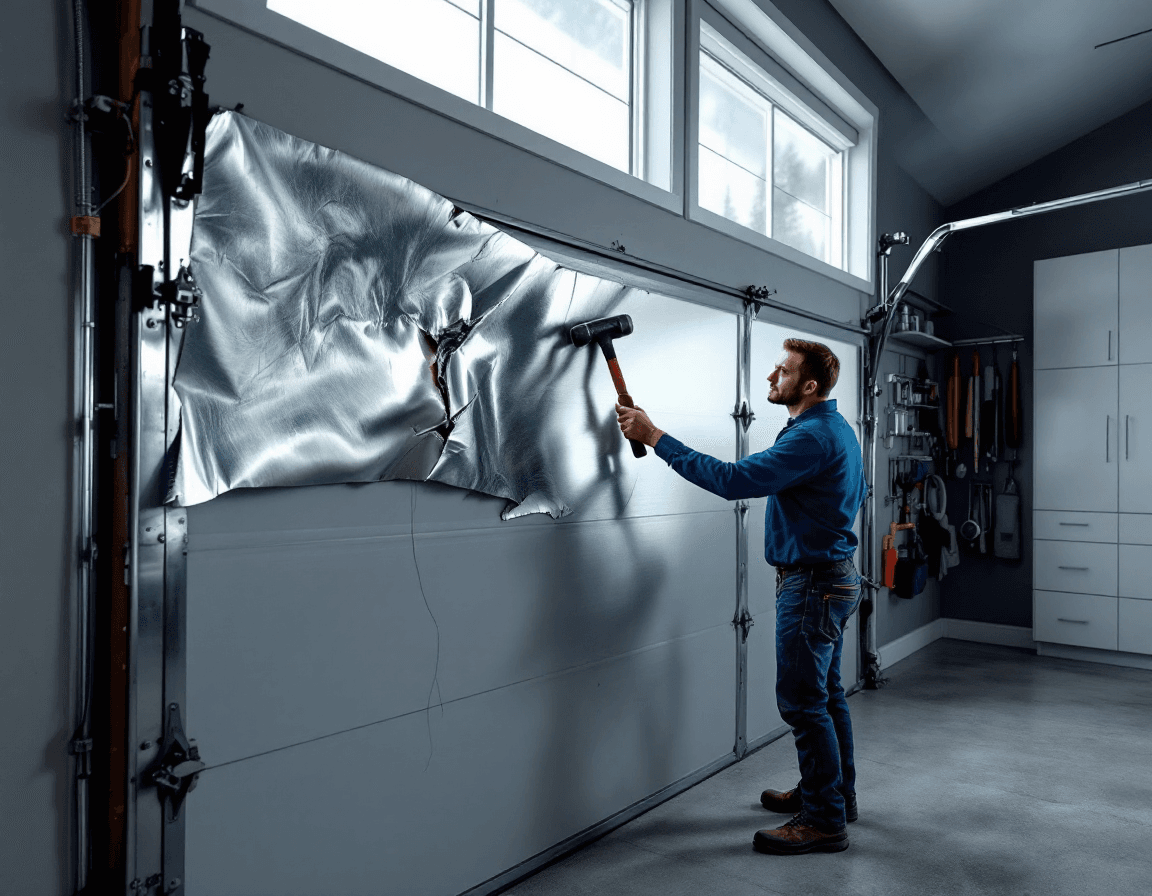
Garage Door Panel Replacement in Auburn, WA is often the most practical fix when a garage door still runs smoothly but one or more sections have taken a hit. Auburn homeowners deal with everything from a delivery truck clipping the bottom panel in a tight driveway to years of wet winters slowly softening the lowest section. A single damaged panel can make an otherwise healthy door look tired, leak drafts, and feel less secure, yet it rarely means the whole door needs to go. Replacing only the affected section can restore the door's appearance and weather resistance at a fraction of the cost of a new door.
This page explains how panel replacement works for Auburn homes, from recognizing early damage to understanding what a section swap typically involves. We serve Auburn Downtown, Lakeland Hills, Lea Hill, and neighborhoods across ZIP codes 98001, 98002, and 98092, and the advice below reflects the conditions our technicians see in this part of King County. Panel work is one of the more approachable repairs in garage door service, but it still involves heavy, spring-loaded hardware, so we explain where the job stays simple and where it needs a licensed professional.
If you are reading this because you noticed a crease, a crack, or a soft spot and you are not sure whether it is worth fixing, you are in the right place. Most of the questions homeowners ask come down to three things: how bad the damage really is, whether a matching panel can be found, and what the work will cost. We address each of those directly, and we aim to be straightforward about the situations where a panel swap is not the best answer.
How the Auburn Climate Wears Down Garage Door Panels
Auburn sits in the Green River valley, and the valley's weather shapes how garage doors age. Our winters bring long stretches of rain, cold mornings, and humidity that rarely drops far from saturation for weeks at a time. Steel panels that are not sealed and painted well will begin to show surface rust at seams and edges, and wood or composite panels can absorb moisture and swell or delaminate. Because the bottom section sits closest to the driveway, it collects splashback, road grime, and pooled water more than any other part of the door.
The summer months bring a different kind of stress. Warm afternoons followed by cool evenings cause panels to expand and contract, which can loosen fasteners and encourage hairline cracks in older vinyl and fiberglass. Sun exposure on south- and west-facing garage fronts fades paint and clear coats over time, leaving a chalky look that makes a single replacement panel stand out when it does not match. Many Auburn homes have doors that have been in place for fifteen or twenty years, so color fade is often the first thing that complicates a repair.
Seasonal shifts also affect how a damaged panel behaves. A panel with a small dent may seem harmless in July but can trap water in the fall, and that water will work its way into the joint between sections. Keeping an eye on the door through the change of seasons helps you catch these problems while the fix is still a simple section swap rather than a larger rebuild.
Reading the Damage: Dents, Cracks, and Hidden Rot
Not every mark on a garage door panel means the panel has to be replaced. A shallow dent that does not crease the metal, or a scuff that only affects the paint, may be cosmetic. Deeper dents, however, can weaken the panel's ribs and stress the connecting hinges and rollers. When a panel is bent along a rib, it may not track correctly through the tracks, which is why a dent that looks minor can sometimes cause the door to bind or make noise.
Cracks deserve closer attention. A crack in a vinyl or fiberglass panel usually grows, especially when temperatures swing, and it can let water into the core of the section. On steel doors, a crack in the paint often leads to rust forming underneath, and rust tends to spread outward from the damaged spot. Rot is most common in wood or wood-composite sections near the bottom of the door, where moisture from the slab and driveway wicks upward.
Hidden damage is the trickiest. Sometimes the outer skin of a panel looks acceptable while the inside foam core has softened or the bottom edge has lost its structural strength. Press gently along the lower edge of each panel and check for flex, soft spots, or a musty smell. If the section feels spongy or if you see daylight through a seam that was previously tight, the damage likely goes deeper than it appears.
Repair or Replace: Making the Call on a Single Section
The decision between repairing a panel and replacing it depends on the material, the extent of the damage, and whether a close match is available. Small dents in steel panels can sometimes be pushed out and refinished, although the result will rarely be invisible. Minor cracks in vinyl may be stabilized with a sealant, but this is usually a temporary measure. When the crack runs through a structural rib or the damage covers more than a small portion of the panel, replacement is generally the more durable choice.
Consider the cost of repeated fixes as well. A panel that has been patched two or three times may become a weak point that keeps needing attention, and each patch can change the look of the section. Replacing the panel outright gives you a clean, uniform surface and eliminates the risk that a patch will fail during the next wet season. Replacement also restores the door's insulation values if the panel was insulated, which matters in an unheated Auburn garage where winter temperatures can drop into the low 30s.
On the other hand, replacement is not always necessary. If the damage is limited to scuffs in the paint on an otherwise sound panel, touch-up paint or a professional refinish may be the most economical solution. If the entire door is aged, cracked across multiple sections, and the opener is struggling, it may be time to discuss a full door replacement. Our technicians will tell you honestly which path makes sense for your door.
- Panels that are dented along a rib or cause binding in the tracks usually need replacement.
- Surface scratches on steel that have not begun to rust can often be touched up.
- Rot that extends into the panel core or the bottom edge is a reason to replace the section.
- Doors with several failing panels may be better served by a broader evaluation of the whole door.
Matching an Older Panel to a New One
Matching is where many panel replacements succeed or struggle. Garage door manufacturers have changed profiles, colors, and thicknesses over the decades, and a panel that looked identical when your door was installed may no longer be sold in the same form. Before ordering anything, we check the door's model information, the panel dimensions, the number of ribs, the thickness, and the existing finish. Taking clear photos of the door from several angles and noting any stamped model or serial labels can make the search far faster.
Color presents its own challenge. Sun-faded panels rarely match a fresh replacement straight out of the box, so a brand-new section may look noticeably brighter next to a twenty-year-old neighbor. In some cases, the best approach is to repaint the adjacent sections so the whole door reads as a single unit, although this is a larger job and should be discussed before work begins. For homeowners who want the new panel to blend without repainting, we can advise on which finishes weather more evenly in the Auburn sun.
When an exact match is impossible, we will say so. Sometimes the closest available panel differs slightly in profile, which can affect how it fits the tracks or seals against the adjacent section. In those cases we will explain the trade-offs so you can decide whether a near match is acceptable or whether the door as a whole deserves a second look.
What a Typical Section Replacement Costs in Auburn
Panel replacement is priced per section, and our typical range is $250 to $800 per section depending on the door. Several factors move the number within that range. The material is one of the largest: a standard steel section costs less than a insulated section, and wood or specialty composite panels usually cost more. The door's age and manufacturer matter because older or less common profiles may require special ordering. The size and location of the panel also play a role, since a bottom section on a large double door can be more involved than a middle section on a standard single.
Labor is part of the total as well. Replacing a section involves removing the damaged panel, checking the rollers and hinges that connect to it, installing the new section, and confirming that the door tracks smoothly without binding. If the panel is damaged alongside hinges or rollers, those parts may need replacement too, which we will quote separately so you understand each component. We provide the estimate before we begin, and we do not start work that changes the price without your approval.
Costs can also shift if the door needs additional attention found during the visit, such as worn weatherstripping, loose hardware, or a bent track. We would rather point these out early than have them surface halfway through the job. Keep in mind that the $250 to $800 range is a general guide and is not a fixed quote, so the most accurate figure always comes from a look at your specific door.
Bottom Sections, Water Lines, and the Lowest Panel
The bottom section takes more abuse than any other panel on the door, and in Auburn it is often the first to fail. Splashback from the driveway, road salt during the occasional icy stretch, and water that pools against the threshold all target the lowest panel. Over time, this can lead to rust at the base of steel doors, soft spots in composite panels, and corrosion of the bottom bracket and the weatherseal that rides against the concrete.
Water damage at the bottom also tends to hide problems that appear higher up. Moisture can travel inside a panel's hollow ribs and surface along the seam above, which is why a bottom section that looks only moderately worn may be feeding a larger issue. When we replace the bottom panel, we inspect the weatherseal, the threshold, and the lower hinges to make sure water is not getting around the new section.
If your bottom panel shows staining, flaking paint, or a gap at the floor, it is worth addressing soon. A leak under the door can damage stored items, encourage mildew, and let cold air into an attached garage that shares a wall with living space. Replacing the bottom section and refreshing the seal is often the most effective way to stop the cycle before it spreads.
Backing Accidents and Working With Your Insurance
A single panel damaged after a backing accident is one of the most common reasons homeowners call us. A car reversing too quickly, a moving van clipping the door, or a bicycle or lawn equipment striking the lower section can crease or split a panel in an instant. These incidents are often frustrating because the rest of the door works perfectly, and the damage looks like it should be a simple fix.
If the damage resulted from an accident, check your homeowners policy before scheduling work. Some policies cover accidental damage to garage doors, while others apply a deductible that may be higher than the repair cost. We are not insurance advisers and cannot promise how a claim will be handled, but we can provide a written, itemized estimate and photos of the damage that you can share with your insurer. Keeping those records organized will make the process smoother if a claim is filed.
Take photos before any repair begins, including close-ups of the dent or crack and wide shots showing the panel's position on the door. Note the date and what you believe caused the damage, and keep any receipts or estimates. If the accident involved a vehicle or another person, be sure you understand what details you need for your own records, since handling those matters is outside what we do.
Neighborhood Notes: Lakeland Hills, Lea Hill, and Downtown Auburn
Auburn is not one uniform landscape, and the neighborhoods we serve reflect that variety. In Auburn Downtown, many homes are older and sit closer to the street, which means garage doors can take more hits from parking maneuvers and delivery traffic. Older doors in these areas are also more likely to have discontinued panel profiles, so matching sometimes requires a longer search. Downtown homeowners often benefit from a careful side-by-side comparison before choosing a replacement finish.
Lakeland Hills has a mix of newer construction and established streets, and many garages there house two or three vehicles, along with bikes, strollers, and yard equipment. Those busy garages create frequent contact points with the lower panels, so bottom-section damage is common. Because many doors in newer communities are insulated, we pay close attention to whether a replacement panel preserves the door's thermal performance.
Lea Hill sits on higher ground in southeast Auburn, where driveways can slope and winter weather can bring more wind and moisture exposure to garage fronts. Doors in this area may show wear on the lower panels from runoff, and sloped approaches can make a backing accident more likely. Whatever part of Auburn you call home, a local look at your door's exposure helps us recommend the right materials and finish for the years ahead.
What Happens During a Panel Swap Visit
A panel replacement visit follows a consistent sequence, although each door has its own quirks. We begin by inspecting the damaged section and the surrounding panels, checking for hidden damage, and confirming the door's model and dimensions. We then discuss your options, explain the expected cost range for the specific door, and provide a written estimate before any work begins. If the replacement panel needs to be ordered, we will tell you the expected timeline so you can plan around it.
Once the new panel is on hand, the technician will carefully disengage the door from the opener and secure it so it cannot move unexpectedly. The damaged section is removed, the rollers and hinges that connect to it are checked, and the new panel is fitted into place. After installation, the door is tested through several full cycles to confirm smooth tracking, proper seal contact at the bottom, and no unusual noise. We clean up the work area and walk you through any maintenance steps that will help the new panel last.
Here is what most homeowners can expect from the visit:
- A written inspection of the damaged section and adjacent panels before any work begins.
- A clear estimate that reflects the door type, material, and any necessary hardware.
- Confirmation of the replacement panel's size, profile, and finish before installation.
- A full test cycle of the door after the new section is in place.
- A short review of cleaning and inspection habits to protect the repair.
Safety Lines We Won't Cross Without a Licensed Pro
Panel replacement is manageable for a trained technician, but garage doors carry real hazards. Torsion springs and extension springs store enormous energy, and cable systems can snap with force capable of causing serious injury. Panel work sometimes touches these components, especially when a damaged section is near a spring bracket or when the door is out of balance after an impact. For this reason, homeowners should never attempt to adjust, remove, or replace springs or cables on their own.
Some situations call for extra caution even if the panel itself seems straightforward. A door that has been bent in a backing accident may have a track that is no longer true, a cable that has stretched or frayed, or a spring that has been stressed by the impact. These conditions can make the door unpredictable when it moves. If you notice a door that is crooked, jerky, or sagging, stop using it and call a licensed professional rather than attempting a fix.
Our technicians are licensed, bonded, and insured, and they follow safety procedures designed to protect your household during every visit. If we find that spring or cable work is needed in addition to the panel swap, we will explain why and provide a separate estimate. We will never recommend that you handle spring or cable work yourself, and we encourage every homeowner to treat those components with the respect they deserve.
Simple Habits That Help Your Panels Last Longer
Once a damaged panel has been replaced, a few simple habits can extend the life of the whole door. Wash the lower panels periodically with mild soap and water to remove road grime, salt residue, and the grit that wears paint away. Rinse the bottom edge and the threshold after winter storms, and check that the weatherseal stays pliable and in contact with the floor. In Auburn's wet months, a quick glance at the bottom of the door once a month can reveal early signs of trouble.
Protect the door from impacts where you can. Consider placing a visible marker or a low bollard where a vehicle or equipment might strike the door, and remind household members to back in carefully. Store bikes, ladders, and yard tools away from the door's path so they do not lean into the lower panels. Small changes like these can prevent the kind of single-panel damage that leads to a repair call.
Finally, schedule a periodic inspection. A technician can spot hairline cracks, early rust, and worn seals before they become larger problems, and can recommend small fixes while they are still inexpensive. Catching a problem early is almost always easier and less costly than waiting until a panel has failed completely.
Ready to get your Auburn garage door looking solid again? Call Seattle Garage Door Fix at (888) 799-3819 to schedule an inspection for a dented, cracked, or water-damaged panel. We are licensed, bonded, and insured, and we will give you a clear, written estimate before any work begins, whether you live near Auburn Downtown, in Lakeland Hills, on Lea Hill, or anywhere across the 98001, 98002, and 98092 service area.