
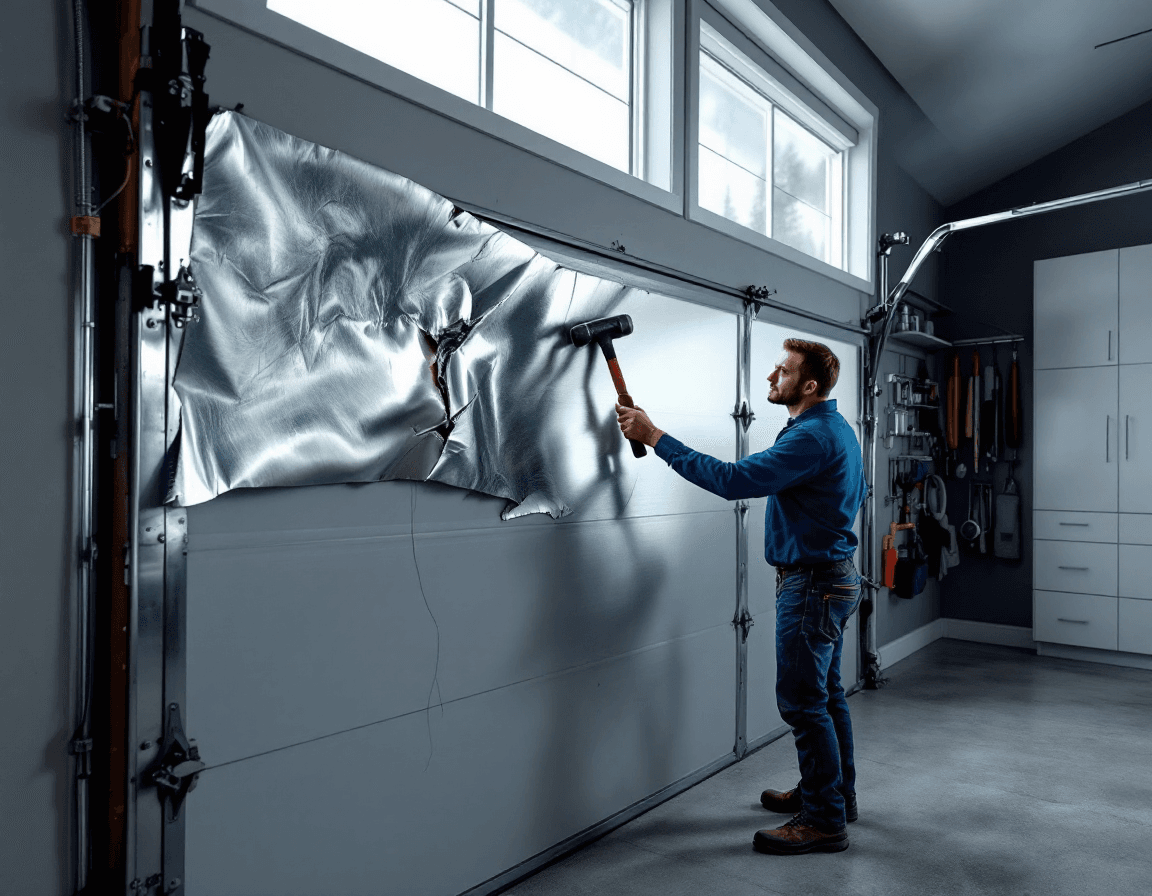
Garage door panel replacement in Sumner, WA is often the smartest fix for a door that still works well but has one section that looks worse than it should. A dented panel, a cracked lite window, or a bottom section swollen by water can make an otherwise sound door look neglected and can let in drafts, moisture, and pests. Because the rest of the door is usually in good shape, replacing only the damaged section is frequently far cheaper than buying a new door.
Sumner sits in the Puyallup Valley, where the rivers, low-lying ground, and frequent winter rain keep garages damp for long stretches. Homes around downtown Sumner include older houses with detached or shallow garages, while newer subdivisions and the Lakeland Hills area have larger attached garages with wider openings. Those differences shape which panels get damaged, how quickly they deteriorate, and how easy they are to match. This guide explains what to look for, how to decide between repair and replacement, and what a typical panel job involves.
Seattle Garage Door Fix is a licensed, bonded, and insured company serving Sumner and more than 60 cities across Western Washington. The advice below is meant to help you make an informed decision before you call, and to set realistic expectations once a technician is on site.
Why Panel Damage Looks Different in the Puyallup Valley
Garage doors in Sumner live a harder life than many homeowners expect. Winter storms roll in from the southwest, driving rain against the lower sections of the door, and the flat, low-lying terrain means moisture lingers in the air and on the ground long after the clouds clear. A door that faces a driveway with little overhang can take a steady soaking every week from October through April. That pattern is very different from a dry climate, where damage tends to come from sun and heat rather than standing water.
Summers are generally mild by comparison, but they bring their own stresses. Afternoons can warm a steel or aluminum door enough to expand it, then the cool evenings cause it to contract again, which over years can stress seams, lite frames, and the bonds between a panel's skin and its insulation. Foam-insulated steel panels are especially sensitive to repeated moisture getting into the seams at the bottom edge of each section.
Traffic patterns matter as well. Many Sumner driveways are used for turning cars, delivery vans, trailers, and kids on bikes, and garages in tighter neighborhoods often sit close to the curb or a neighbor's fence line. A panel that looks lightly scuffed from the street may already have a crack or a loosened skin hidden on the inside, so it is worth examining the door closely even when the damage seems minor.
Reading the Damage: Dents, Cracks, and Hidden Rot
The first step in any panel assessment is figuring out what kind of damage you are dealing with, because each type behaves differently over time. A shallow dent in a steel panel may be purely cosmetic, while a dent that has creased the panel's ribs can weaken the section and make it sag. A crack in a polycarbonate or glass lite window is a safety issue that deserves prompt attention, since a broken lite can shatter and leave sharp edges along the bottom of the door.
Rust and rot tend to hide. Look at the inside of each panel along the bottom edge, around hinge brackets, and where the sections meet, because that is where water collects and where the metal or wood fails first. On steel doors, a bubbling or flaking paint line often signals corrosion underneath. On wood doors, soft spots that give under a screwdriver tip point to rot that has likely spread beyond what you can see.
- Dents that have creased ribs or pushed panel edges out of their track channel
- Cracks through the skin, lite window, or along a seam between two sections
- Rust bubbles, flaking paint, or a crusty white or brown residue at the bottom edge
- Soft, spongy wood or delaminated edges on wood or composite panels
- Gaps or light showing at the seam where a damaged panel meets its neighbors
- Insulation that is wet, crumbly, or discolored when the panel is viewed from the inside
If you find more than one of these signs on the same panel, it is usually a sign to replace the section rather than attempt patch work. Patching may look acceptable from the driveway but often fails within a season in our wet winters.
Water Damage on the Bottom Section and What Causes It
The bottom section takes the most abuse on any residential door. It sits closest to the ground, catches splash from the driveway, and is the first place where rain and melting slush seep into the joint with the threshold. Over time that moisture can work its way into the insulation core, swell the edges, and weaken the adhesive that holds the panel together. Many Sumner homeowners first notice the problem as a door that looks slightly bowed or a bottom panel that makes a hollow sound when tapped.
Several factors make bottom panels fail faster in our area. A worn or missing bottom seal lets water blow under the door during windstorms. A garage floor that slopes toward the door or has a low spot in front of it can create a standing puddle that the door sits in for days. Pressure-washing the driveway and aiming the spray at the base of the door, a habit that is easy to fall into during spring cleaning, can drive water into seams that are not designed to handle it.
If the bottom section is the only one damaged, replacing it is often the right move, but it is worth checking the seal, the threshold, and the drainage in front of the door at the same time. Otherwise the new panel will be exposed to the same conditions that damaged the old one. A technician can often identify those issues during the same visit and tell you whether they are simple fixes or signs of a larger drainage problem around the garage.
When One Panel Is Enough and When It Isn't
Replacing a single panel makes the most sense when the damage is confined to one section, the remaining panels are solid, and the door's tracks, rollers, hinges, and springs are functioning normally. Many doors that have been struck by a car backing out, a lawn tool, or a flying object lose only one panel in the process. In those cases, the rest of the door is usually fine, and a targeted replacement restores the door's appearance and weather protection at a fraction of the cost of a new door.
Single-panel replacement becomes less sensible when damage is spread across several sections, when the panels around the damaged one show the same wear, or when the door is so old that its color and profile have been discontinued. A door with rust migrating along three or four sections, for example, is a candidate for a broader conversation about repair versus full replacement. The same is true when the door has been hit hard enough to bend the frame, misalign the tracks, or damage the bottom roller brackets.
It is also important to be honest with yourself about the door's age. A panel swap on a door that is nearing the end of its useful life can be a good temporary fix, but it may not justify the expense if the springs, opener, and tracks are also worn. A licensed technician can help you weigh those factors so you are not spending money on a section when the door as a whole needs a different plan.
Matching a Panel You Can't Find Anymore
Matching is one of the most common challenges with panel work in Sumner. Garage door manufacturers update their designs, change colors, and phase out profiles over the years, and many homeowners have doors that are fifteen or twenty years old. Finding an identical replacement section requires knowing the exact manufacturer, model or series, panel height, width, and color, and sometimes the style of the embossing or the window insert.
The easiest place to start is the manufacturer's label, which is often printed on a sticker or metal tag on an inside panel, usually near the top or along one edge. If the label is painted over or missing, a technician can often identify the door by its profile, the spacing of the grooves, the hardware style, and the way the sections fit together. Measuring the height and width of an intact section, along with noting how many sections the door has, gives a supplier what they need to confirm compatibility.
Even with the correct part number, color match can be tricky. Sun exposure fades the finish on the surrounding panels over time, which means a brand-new section can look slightly different even when it is technically identical. Many homeowners find that a new panel looks best when it is installed alongside a light cleaning or refinishing of the rest of the door, and a technician can discuss which approach suits your situation. If a perfect color match is essential, it is worth asking about options before the work begins so expectations are realistic.
Repair or Replace: A Practical Decision Guide
Deciding between repairing a panel and replacing the entire door depends on the extent of the damage, the condition of the other components, and how long you plan to keep the house. The following checklist captures the questions that tend to matter most for homeowners in our service area.
- Is the damage limited to one or two sections, with the rest of the door structurally sound?
- Does the door still track smoothly, close fully, and seal reasonably well at the bottom?
- Are the springs, cables, and bottom brackets in good condition, or do they show wear?
- Is the door's style and color still available, so matching is realistic?
- Do you plan to stay in the home for several more years, which makes a long-term fix more valuable?
If you answered yes to most of these questions, panel replacement is typically the right choice. If the door is aging across the board, has damage in several places, or is difficult to match, a full replacement may give you better insulation, a more consistent appearance, and fewer repairs over the next decade. Either way, get a written estimate that spells out what is included so you can compare options fairly.
What a Panel Replacement Visit Usually Involves
A panel replacement is a focused job, but it still requires care and the right tools. The technician begins by confirming the door's manufacturer and model, checking the condition of the surrounding sections, and inspecting the tracks, rollers, hinges, and springs for any issues that could affect the new panel. The door is then secured so it cannot move unexpectedly, which is a critical step before any sections are removed from the track assembly.
The old panel is disconnected from its hinges and rollers, then slid or lifted out according to the door's design. The replacement section is checked against the old one for fit and orientation, including the position of any windows, hardware holes, and bottom seal. Once it is seated correctly, the hinges and rollers are reattached, the door is balanced and tested, and the seals are checked for any gaps that could let in water. The technician should walk you through the result and point out anything else that needs attention.
Most single-panel visits take a few hours, though the timing depends on how quickly the part can be sourced and whether the door needs additional adjustments. Ask whether the replacement section is ordered in advance or must be fabricated, because that can affect how many visits are needed. A clear plan up front saves time and keeps the job on track.
Costs for Panel Work in Sumner: What to Expect
Panel replacement in our service area is generally priced at $250 to $800 per section, depending on the door. The range reflects the differences in materials, insulation, window inserts, and the availability of matching parts. A simple steel section on a common residential door will usually fall near the lower end, while a insulated section with a glass or acrylic lite, a wood-grain finish, or a discontinued profile will often cost more.
Several factors can push the price within that range. A door with an older or less common design may require a special order, and rush sourcing can add to the total. Damage that extends into the hinges, bottom brackets, or track may require additional parts that are not part of the panel itself. Access also matters, since a door that is hard to reach or heavily obstructed by storage can take longer to work on.
- Standard steel or insulated sections on common residential doors
- Sections with lite windows, decorative inserts, or wood-grain finishes
- Discontinued or hard-to-match profiles that require sourcing time
- Additional hardware, seals, or track components uncovered during the job
- Access constraints, such as stored items or a tight garage layout
Always ask for a written estimate that lists the part, the labor, and any potential additional items. A reputable technician will explain the reasoning behind each line item rather than leaving you to guess.
Local Details for Downtown Sumner and Lakeland Hills Garages
Homes in downtown Sumner vary widely in age and layout. Some properties have detached garages set back from older alleys or shared driveways, where doors may be exposed to more wind and standing water. Access can be tight, and the garage may have been built before modern door standards, which sometimes means a non-standard opening that requires careful measuring. A technician familiar with older Sumner homes will plan for these quirks before the first panel comes off.
The Lakeland Hills area includes many newer attached garages with wider openings and more uniform door sizes, which generally makes matching easier. Still, homes in these neighborhoods often have contemporary panel designs with insulation and decorative elements that are more involved to replace than basic steel sections. Homeowners in both areas benefit from keeping the manufacturer label, purchase paperwork, and any previous repair records in one place, since those details speed up sourcing considerably.
Wherever you live in the 98390 or 98391 ZIP codes, the same principle applies: the closer the replacement matches the original, the better the result will look and perform. A good local technician will consider the exposure of your garage, the way water moves across your driveway, and the style of your home when recommending a panel. That context is what turns a basic part swap into a durable repair.
Safety Boundaries: What Should Stay With a Licensed Professional
Panel replacement itself is a manageable job for a trained technician, but it sits close to parts of the door that carry serious risk. Torsion springs and extension springs store enormous amounts of energy, and cables can snap under tension and cause injury. Any work involving springs, cables, or the spring-tensioning system should be left to a licensed and trained professional, not handled as a weekend project. Even a seemingly simple panel removal can shift the door's balance, which is why the technician will check and adjust the system before calling the job complete.
Homeowners can take a few safe steps while they wait for a visit. Keep the door closed and do not attempt to lift a damaged section by hand, since a dented panel can separate from its hinges unexpectedly. Avoid running the opener if the door is visibly out of track or leaning, and keep children and pets clear of the door area. If the door falls, becomes stuck halfway, or makes a sudden loud noise, disconnect the opener if you can do so safely and call for help.
Seattle Garage Door Fix recommends licensed professional service for all spring, cable, and track work, and for any panel job that requires the door to be lifted or disassembled. If you are unsure whether a problem is within your comfort zone, that uncertainty alone is a good reason to call.
Damaged panels rarely fix themselves, and small problems tend to grow during a wet Sumner winter. If you are seeing dents, cracks, rust, or water damage on your garage door, call Seattle Garage Door Fix at (888) 799-3819 to schedule an inspection. A licensed technician will review the damage, explain your repair-or-replace options, and provide a clear written estimate before any work begins.