
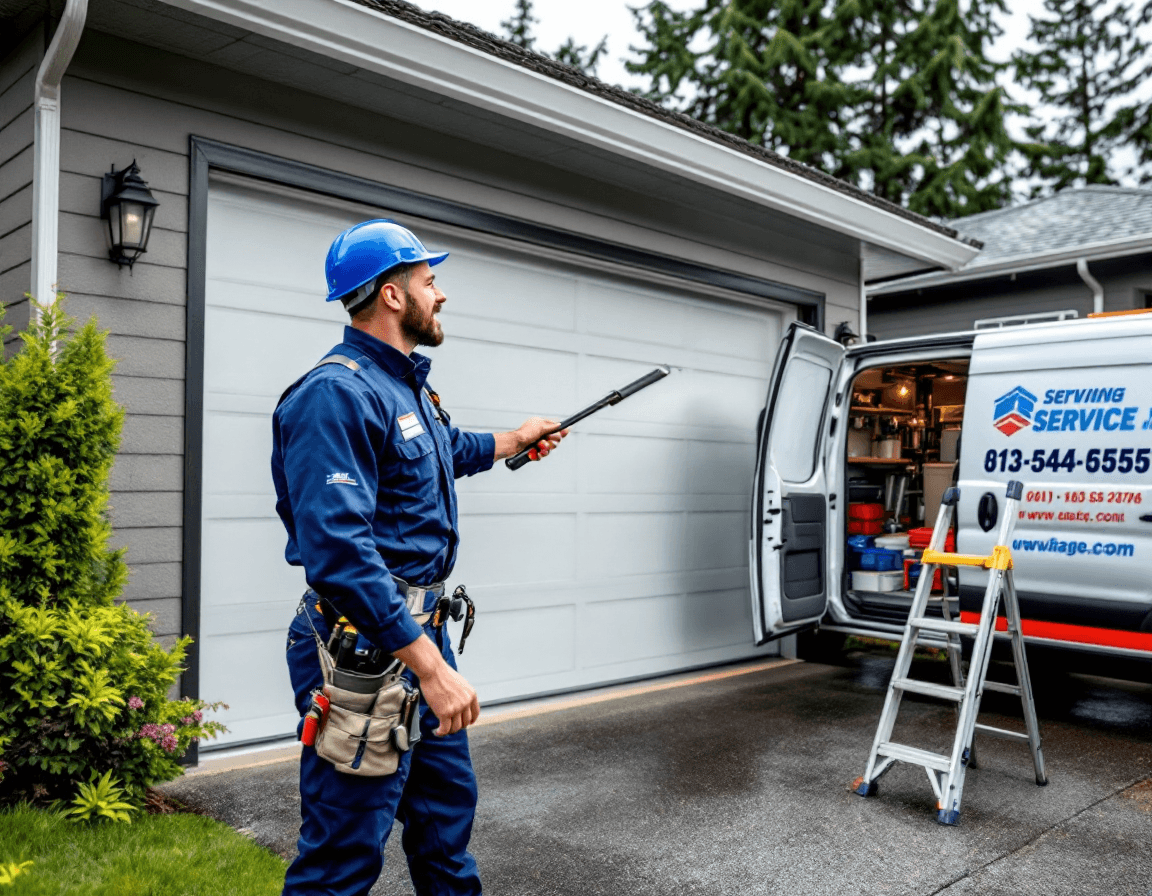
Garage door repair in Sumner, WA is usually something homeowners think about only after a door stops cooperating, often on a weekday morning when the car is already late. A door that won't lift, closes unevenly, or simply ignores the remote can disrupt a household quickly, especially when the garage is the family's main entry. Seattle Garage Door Fix handles these calls across Sumner and the surrounding Pierce County communities, and this page explains what tends to go wrong, what the symptoms mean, and how to make a sensible decision about the next step.
Sumner has a mix of older homes near the historic downtown core and newer single-family houses in developments such as Lakeland Hills, which means garage doors here range from original builder-grade units to much newer models with quieter motors and smart openers. Age and installation quality matter a great deal, because a door that has been running on the same spring set for fifteen years behaves very differently from one installed in the last few years. Knowing which category your door falls into helps when you talk with a technician and when you weigh whether a small repair or a bigger overhaul makes more sense.
Most residential repairs in this area fall in the range of $95 to $450, depending on what has failed and how much labor is involved. Simple fixes such as replacing a sensor, realigning a track, or swapping a worn remote battery sit at the low end, while rollers, hinges, openers, or larger panel work push costs higher. The sections below walk through the most common problems we see, explain why they happen, and point out which jobs should always be left to a licensed professional.
How Pacific Northwest Weather Quietly Wears Down Sumner Garage Doors
Western Washington's climate is hard on garage doors in ways that are easy to overlook. The region gets long stretches of drizzle and damp air from fall through spring, and that moisture finds its way into hinges, roller bearings, and the metal tracks that guide each panel. Steel parts that sit in humid conditions can develop surface rust, and the lubricant that keeps rollers moving quietly tends to wash out or gum up over time. Homes near the Puyallup River corridor and lower-lying lots can notice this more, since the air often stays damp for days at a stretch.
Temperature swings add another layer of stress. A cold snap in January can make a torsion spring contract and tighten its wind, while a warm afternoon in late summer can change how the door balances. These seasonal shifts are subtle, but they accumulate, and a door that was barely working well in February may suddenly struggle the first cold morning of the year. Technicians often see calls spike during the first freezing mornings of the season, when the door's balance is at its least forgiving.
Moss and debris are also a factor in older Sumner neighborhoods with mature trees. Fir needles, leaves, and grit collect in the track channels and at the bottom weatherstripping, where they can drag on rollers and cause uneven travel. Cleaning the track with a dry cloth or a soft brush each season is a reasonable maintenance habit, but avoid heavy solvents or greasy sprays on the track itself, since they attract dirt. A good technician will clean and lubricate the right points during a service visit and will show you where a homeowner should and should not apply product.
Reading the Warning Signs Before a Door Fails
Garage doors rarely die without warning. Most failures are preceded by a series of smaller symptoms that get dismissed as quirks, and catching them early often means a simpler and less expensive repair. Paying attention to how the door sounds, how smoothly it moves, and how it stops can save a lot of frustration later.
Common early warning signs include:
- A door that pauses or hesitates for a second before it begins to rise
- Visible rust streaks or flaking paint near hinges, rollers, or track joints
- One side of the door lagging behind the other when it opens or closes
- A new rattle or clicking sound at the top of the travel path
- Weatherstripping that is torn, flattened, or pulling away from the bottom panel
If you notice two or more of these symptoms together, schedule an inspection rather than waiting for the door to stop altogether. Rollers that begin to fail often damage the track if they seize, and a damaged track can turn a modest repair into a larger job. A quick evaluation can also reveal whether the opener is straining under a problem elsewhere in the system, which is a common cause of premature motor failure.
When the Door Won't Respond to the Remote or Wall Button
A door that ignores the remote or wall switch is one of the most frequent calls we receive, and the cause is not always the door itself. Start with the simplest possibilities: check that the remote battery has power, that the wall button is not stuck, and that the opener's light or lock feature has not been engaged. Many openers include a vacation or lock setting that disables button input, and it is easy to activate by accident.
If those basics check out, the next suspect is usually the safety sensors. Most modern openers will not close the door if the photo-eye beams are misaligned, obstructed, or dirty, and the opener's indicator lights are designed to tell you where the problem sits. Sensors mounted low on each side of the door should face each other with a clear line of sight, and a spider web, a bent bracket, or a dusty lens can break the connection. Wiring damage from a stray bump with a bicycle or a lawn tool is also common in driveways with tight clearances.
Sometimes the problem is in the receiver or logic board inside the opener, or in a remote that has fallen out of sync after a power outage. Reprogramming a remote is often a quick task, but if the opener itself has failed, the repair may require parts and a more detailed diagnosis. A licensed technician can test each component in sequence and tell you whether the fix is a $95 adjustment or a larger part replacement.
Why a Door Reverses Before It Reaches the Floor
A door that starts down, then bounces back up before it touches the ground, is doing exactly what it was designed to do, but for the wrong reason. The opener has detected resistance or an obstruction, and the safety reversal system has triggered as a protective measure. The cause may be as minor as a toy or a bag of soil in the door's path, or it may reflect a misaligned sensor, a worn cable on the force settings, or a door that has drifted out of balance.
Reversal problems in older openers often trace back to force settings that have drifted over time. Many units have adjustment screws or electronic controls that determine how much pressure the door can exert before stopping, and those settings can become too sensitive as parts age. Adjusting them requires care, because the force limits exist for safety, and a setting that is too loose can create a real hazard. Any change to force settings should be verified by testing the reversal function with a solid object on the floor, which a trained technician will do as part of the repair.
Sometimes the real issue is balance. A door that is heavier on one side, or whose springs have lost tension, will strain the opener on the way down and trigger reversal. You can check for a basic balance problem by disconnecting the opener and lifting the door by hand partway up. A balanced door should stay roughly where you leave it, but a door that drops suddenly or pulls hard in one direction needs professional attention. Spring work must be handled by a licensed pro, since stored tension can cause serious injury.
Slamming, Fast Closing, and Other Motion Problems
Doors that close too quickly or slam onto the floor are less common than reversal problems, but they signal wear that should not be ignored. A door that drops faster than it should may have a damaged or disconnected drive component, a stripped gear in the opener, or a worn cable that no longer holds the panel at a steady pace. In some cases, the door's track has shifted slightly, creating friction in one area and free movement in another, which makes the panel accelerate unevenly.
The closing speed on many openers can be adjusted, but adjustments only address the symptom if the mechanical parts are healthy. Before adjusting anything, look for obvious signs of trouble such as a loose chain, a cracked drive belt, or a door bottom seal that has torn away from the panel. A door that slams can damage the floor, the seal, and the panels themselves, so treating it promptly is worthwhile.
Motion problems can also involve the door's rollers. Worn nylon rollers can flatten on one side, causing the door to wobble or lean as it travels. Steel rollers that have lost their bearing lubricant may squeal and resist movement. Replacing rollers is a common repair in Sumner homes, typically one of the more affordable service calls, and it often restores smooth travel and reduces strain on the opener.
Grinding, Squealing, and Banging That Points to Hardware Wear
Garage doors make noise, but the sound tells you a great deal about what is happening inside. A steady squeal usually means a dry hinge, roller, or bearing that needs lubrication or replacement. A grinding noise that changes with the door's position often indicates a gear or chain problem in the opener, while a sharp bang at the top or bottom of the travel path can mean a loose bracket, a worn stop, or a panel that is hitting the track.
Banging is especially worth investigating. When a door strikes the ground or the top of the opening with force, it can crack panels, loosen fasteners, and strain the entire system. Many homeowners in Sumner notice this noise most during winter months, when cold metal contracts and parts that were quiet in summer begin to rattle. A technician can tighten hardware, check the stops, and inspect the rollers to determine whether the noise is a simple adjustment or an early sign of a more serious failure.
Do not ignore grinding that continues for more than a few cycles. Grit trapped in a bearing or a worn drive gear can destroy components quickly, and the cost of the repair grows with each use. If the noise is accompanied by slow movement or a motor that hums without moving the door, turn the opener off at the wall and call for service before attempting further operation.
Uneven Travel, Crooked Panels, and Off-Track Doors
A door that looks crooked, rises unevenly, or has a visible gap along one edge is telling you that something is out of alignment. The most common causes are worn or missing rollers, a bent track section, a loosened bracket, or a cable that has slipped on one side. In Sumner's older homes, the framing around the garage opening may have settled slightly over the years, which can change the track geometry and cause the door to ride unevenly.
When a door comes completely off its track, stop using it immediately. Attempting to force the door back into place can bend the track further, damage the panels, or injure the person handling it. Keep children and pets away from the opening, and avoid working under a door that is hanging unevenly. Call a licensed technician, who can reseat the door safely, inspect the track and cables, and determine why the derailment happened.
Sagging is another sign of trouble. A door that droops in the middle or sits lower at one end may have a broken panel, a stretched cable, or a spring that has lost tension. Visible gaps at the top or bottom can also indicate weatherstripping failure, which allows cold air, water, and pests into the garage. Addressing these issues promptly keeps the door working properly and protects the rest of the system.
Stuck Halfway or Jammed: What the Door Is Trying to Tell You
A door that stops partway up or down is one of the most stressful symptoms, because it leaves the garage partially open and the vehicle or household routine stalled. Usually the door has triggered an internal safety feature, such as the limit switch or force sensor, because something is interfering with the travel path or because the balance has changed. Less commonly, a broken cable, a disconnected drive chain, or a failed spring can prevent the door from moving at all.
Start by checking for obvious obstructions along the track, including loose items, debris, or a shifted panel. Make sure the opener's disconnect release has not been pulled, since that mechanism separates the door from the opener and must be reconnected before the motor can move the panels. If the door is jammed with the opener still engaged, do not force it or pull on the cables. Forcing a jammed door can snap a cable, damage the track, or cause the spring to release unexpectedly.
Jams involving cables or springs require professional help. These components store significant energy, and mishandling them is one of the more dangerous situations a homeowner can face. A licensed technician will assess the tension, replace the damaged parts, and test the balance before returning the door to normal use. Attempting this work without training is not worth the risk, regardless of how simple the repair looks online.
What Repairs Usually Cost in Sumner and What Changes the Price
Homeowners often ask for a straight answer about cost, and the honest reality is that most residential repairs fall between $95 and $450. Where a particular job lands within that range depends on several factors, and understanding them makes it easier to decide what to approve during a service call. A technician should explain the diagnosis clearly and give you a recommendation rather than pressuring you toward the largest option.
Several factors shape the final bill:
- The number of components involved, such as one roller set versus a full track realignment
- Whether the repair requires specialized parts that must be ordered
- The age and model of the opener, and whether the unit is still supported
- Access issues, such as a garage with limited clearance or a door that is heavy
- Whether the repair is a standard service or an emergency visit outside normal hours
Keep in mind that the lowest quote is not always the best value. A rushed repair that does not address the root cause can lead to a second visit and additional expense. Ask what was inspected, what was adjusted, and what would fail next if nothing else were done. A thorough technician will explain the difference between a repair that restores function and one that extends the door's working life.
Why Spring and Cable Work Belongs in Licensed Hands
Torsion springs and lift cables are the most dangerous parts of a garage door system, and they are the reason we always recommend a licensed, insured professional for this work. A torsion spring under high tension can release with enough force to cause serious injury, and lift cables that snap can whip across a garage with little warning. Many homeowners underestimate these hazards because the parts look like ordinary hardware, but the stored energy is substantial.
Spring replacement and cable repair require the right tools, correct measurements, and a clear understanding of how the balance system works. Winding springs incorrectly can cause them to break prematurely or create an unsafe door that drops under its own weight. Cables must be seated properly on the drums to keep the panels level, and a mismatch can cause the door to rack or jam. These are not tasks that a homeowner should attempt, even with online instructions.
A licensed technician also brings accountability. Reputable companies carry insurance and bonding, and they stand behind their workmanship. If a question arises after the job, you have a clear path to follow up. When you hire for spring or cable work, ask for proof of licensing and insurance and confirm that the crew will explain every step before beginning.
Choosing a Local Repair Team for Sumner and Lakeland Hills
Selecting a garage door repair provider in Sumner comes down to a few practical questions. Does the company serve your specific area, including downtown Sumner and newer neighborhoods such as Lakeland Hills? Will a technician arrive with the parts most likely to be needed, so the repair can be completed in one visit? Are the staff clear about pricing and willing to explain what they found before doing the work? Those answers tell you more than any slogan.
Local familiarity has real benefits. Technicians who work across Pierce County and nearby communities see the same weather patterns, the same common door models, and the same installation habits that shape how doors perform in this region. They know that a door in a low, damp lot may need a different maintenance schedule than one on a sunny slope, and they can recommend lubricants and inspection intervals accordingly. That kind of practical experience is valuable when a door is acting up and you need a fast, accurate diagnosis.
If your garage door is not opening, closing, or moving smoothly, the best next step is a professional inspection. Call Seattle Garage Door Fix at (888) 799-3819 to describe the symptoms, ask about scheduling, and get a clear picture of what the repair will involve. Our licensed, bonded, and insured technicians serve Sumner and the surrounding communities, and we will explain your options before any work begins.