
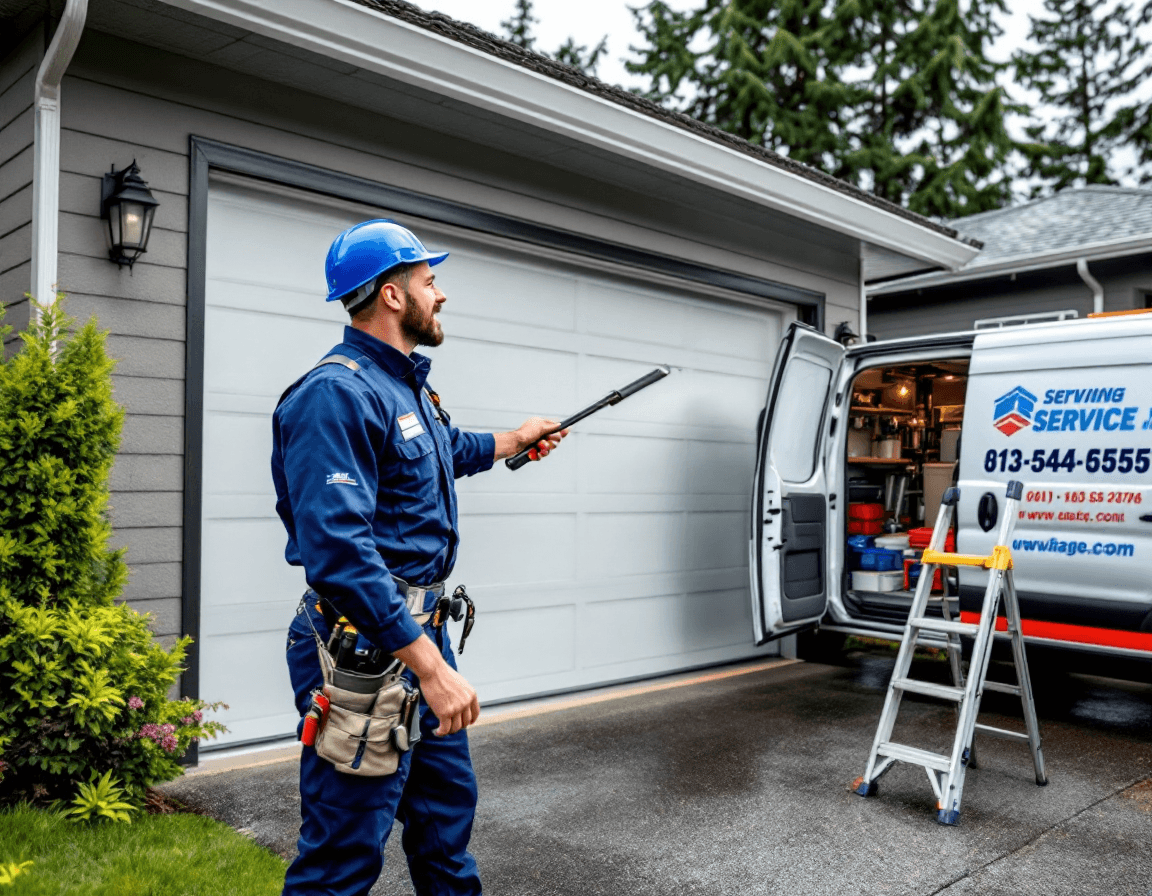
Garage Door Repair in Puyallup, WA is a common need for homeowners across the city, from the older bungalows near Downtown Puyallup to newer subdivisions along the edges of town. When a door refuses to open, stops halfway, or drops with a bang, most people want it fixed the same day without a long wait or a surprise bill. Seattle Garage Door Fix is a licensed, bonded, and insured repair company that serves Puyallup and surrounding Pierce County communities, and we work on residential doors of every age and style.
This page explains what tends to go wrong with garage doors in Puyallup, how to recognize the early warning signs, and what a typical repair involves. We cover the symptoms we see most often, including doors that reverse before closing, remotes that stop responding, and doors that have drifted off their tracks. We also describe what a realistic repair costs, with most residential jobs falling between $95 and $450 depending on the part and the labor involved. Where a problem involves high-tension springs or cables, we explain why that work should always go to a licensed professional.
If your door is giving you trouble right now, you do not need to read every section before calling. Note what the door is doing, whether there are any unusual sounds or movements, and whether the opener light is blinking. Those details help a technician diagnose the problem faster. For immediate help, call (888) 799-3819.
Why Puyallup's Wet Winters Wear On Garage Doors
Puyallup sits in the Puget Sound lowland, where the winters are long, gray, and wet. Rain can fall on many days from late autumn through early spring, and the damp air rarely fully dries out between storms. That steady moisture is one of the main reasons garage door hardware in this area develops problems that homeowners in drier climates might not see for years. Steel hinges, rollers, and torsion springs can develop surface rust, and the lubricant on moving parts can wash out or turn gummy.
Temperature swings add another layer of stress. A cold snap that drops the garage down into the low twenties, followed by a few mild days, makes metal contract and expand, and it changes how the door balances. Many Puyallup garages are attached to homes with heated living space, so the garage floor and door panels can see sharp temperature differences from one side to the other. Over time that flexing can loosen fasteners, shift roller alignment, and make a door that once rolled quietly start to complain.
Moss and debris also deserve attention. Tall evergreens and shaded lots are common across Puyallup, and the wet season brings needles, moss, and grime into the tracks at the base of the door. When debris builds up in a track, rollers can catch or hop, and the door may stop, reverse, or grind. A quick look at the tracks after a long wet stretch can prevent many of these problems from developing into full breakdowns.
Reading the Warning Signs Before a Door Fails Completely
Most garage doors do not fail without warning. In the weeks before a complete breakdown, homeowners often notice small changes, such as a door that takes a second longer to start moving or a sound that was not there before. Learning to recognize those early signs can save you from being stuck in the driveway on a rainy morning with a car that cannot get out.
Some of the most common symptoms we hear about from Puyallup homeowners include:
- The door will not open or close at all, even when the opener motor hums
- The door reverses direction before it reaches the floor when closing
- The door stops partway up or down and stays there
- The door moves unevenly, with one side lagging behind the other
- The door slams shut much faster than it used to
Each of these symptoms points to a different area of the system. A door that reverses before reaching the floor often has a safety sensor issue or an obstruction in the path, while a door that stops halfway may have a balance problem or a worn drive component. Because several causes can look similar from the outside, a technician needs to test the door's balance, sensor alignment, and opener settings before recommending a repair.
When the Remote or Wall Button Stops Responding
A remote that suddenly does nothing is one of the most frustrating garage door problems, but it is often one of the easiest to address. Before calling for service, check the remote's battery, which is a small coin cell in most models. Look at the wall button too, since the wiring for a wall control can loosen over time, especially in older homes where the switch is mounted on drywall that has shifted with the seasons.
If the remote and wall button both fail, the problem is more likely with the opener's receiver or logic board, or with a power interruption that reset the system. Many Puyallup homes have experienced brief outages during winter storms, and some openers do not reconnect cleanly after a power blip. A technician can check the opener's settings, confirm the receiver is working, and reprogram remotes if necessary. Repairs of this type usually fall at the lower end of our pricing range.
Pay attention to the safety sensors as well. These small photo-eye units mount near the bottom of each track, and they must line up so the beams connect. If a sensor is knocked out of position, a dirty lens, or damaged wiring, the opener will refuse to close the door. The lights on the sensors can tell you a lot. A steady light on both sensors usually means they are communicating, while a blinking or absent light signals a problem worth investigating.
Noises That Point Toward Specific Parts
Garage doors are noisy by nature, but certain sounds are useful clues. A high-pitched squeal usually means dry or unlubricated rollers or hinges. A deep grinding noise often comes from the opener's gear or chain, while a sharp bang can point to a roller that has jumped the track or a loose bracket. Listening carefully when the door operates can help you describe the problem accurately when you call.
Here is a general guide to what different sounds often indicate:
- Squealing or chirping from the rollers: dry bearings or worn nylon rollers that need replacement
- Grinding or clunking from the opener: a worn chain, a stripped gear, or a loose trolley
- Banging at the top or bottom of travel: a loose track bracket or a door that is out of balance
- Scraping along one side: a bent track or a roller that has shifted out of its groove
These sounds are useful descriptions, but they are not diagnoses. A grinding opener might be a simple adjustment or a sign the motor is nearing the end of its service life, and a banging door might have a broken spring that needs immediate attention. We encourage homeowners to note what they hear and when it happens, then let a technician confirm the cause.
Crooked, Uneven, or Off-Track Doors on Sloped Driveways
Several Puyallup neighborhoods, including parts of South Hill, have driveways that slope toward the street or toward a garage opening at a slight angle. Even a gentle grade can affect how a garage door sits in its tracks over time. When one side of the door works harder than the other, the result can be a door that looks crooked, moves unevenly, or begins to pull out of its track.
Off-track doors are especially concerning. If a door has jumped its track, do not try to force it back into position while it is under tension. Keep people and vehicles clear of the opening, disconnect the opener if you can do so safely, and call a licensed technician. Attempting to lift or realign a door with its springs still loaded can cause serious injury, and it can also damage the track, the rollers, or the door panels.
A door that looks crooked from the street may simply have a roller stem that has worked loose or a track bracket that has pulled away from the wall. These are often repairable with hardware and adjustment work, and they are much easier to fix before the door begins to bind. If you notice a gap between the door and the top seal or a visible tilt when the door is closed, schedule an inspection rather than waiting for the problem to get worse.
Doors That Slam, Sag, or Show Gaps After Storms
Puyallup's windstorms and heavy rain events can push garage doors harder than they were designed to handle. A door that slams shut when released, or one that seems to sag in the middle, may be showing signs of worn springs, damaged hinges, or a bottom seal that has torn away. Gaps along the sides or top can let rain, leaves, and cold air into the garage, which becomes an issue during the wet months.
A door that closes too fast often has a problem with its balance or its opener's speed setting, and in some cases a weakened spring is the root cause. A door that sags in the middle may have a cracked panel or a bent section that needs to be replaced. Gaps at the bottom usually come from a worn or misaligned weatherstrip, which is a relatively inexpensive fix that makes a noticeable difference in winter comfort.
Be cautious about attempting spring adjustments yourself. Torsion springs store a great deal of energy, and even a small mistake can cause serious harm. Our technicians use proper winding bars and safety equipment, and we recommend that every spring or cable replacement be handled by a licensed professional. When in doubt, have the door inspected before the problem spreads to other components.
What a Typical Repair Visit Looks Like
Every garage door is different, so the exact steps depend on the problem. In general, a repair visit starts with a conversation about what the door is doing and how long the problem has been happening. The technician then inspects the door's balance, tracks, rollers, hinges, sensors, and opener, and tests the system through a full cycle of opening and closing. This process helps identify the root cause rather than just treating the most visible symptom.
Once the cause is clear, the technician explains the repair in plain language and provides a quote before any work begins. Many common repairs, such as replacing a sensor, adjusting a track, or swapping out a set of rollers, can be completed in a single visit. More involved repairs, such as replacing a torsion spring or a cable drum, may require additional time and sometimes a parts order. We aim to let you know upfront what to expect so there are no surprises.
After the repair, the technician should test the door several times to confirm it operates smoothly, reverses correctly when it should, and stops at the right points. We also recommend reviewing a few simple maintenance habits, which are covered later on this page. A well-tested repair protects your home and your vehicles, and it gives you confidence that the door will perform reliably through the next wet season.
Honest Pricing: What the $95 to $450 Range Covers
Most residential garage door repairs we perform fall between $95 and $450. The final cost depends on the part, the complexity of the diagnosis, and the amount of labor required. A remote programming or sensor alignment visit tends to sit at the lower end, while a roller replacement across a full door, a track repair, or an opener component may fall in the middle. Larger jobs involving multiple parts or specialized hardware can reach the upper end of the range.
Several factors can push a repair toward the higher side. Doors that are older or custom-sized may need parts that are not stocked locally, and heavy insulated doors can require more time to balance and test. A door that has been neglected for a long time may also reveal additional issues once the first problem is addressed. A good technician will explain these possibilities before starting work so you can decide how to proceed.
When you call, a technician can give you a more specific estimate based on your symptoms and your door's make and model. We do not recommend choosing a repair based on the lowest number alone. A quick fix that does not address the underlying cause often leads to a second visit, and the total cost can end up higher. A proper diagnosis is usually the most economical path over the long run.
Why Springs and Cables Belong to a Licensed Technician
Torsion springs and lift cables are the most hazardous components in a residential garage door. Torsion springs are wound under very high tension to help lift the door's weight, and when they break, they can release that energy suddenly. Lift cables carry heavy loads and can snap or unravel if they are worn or improperly installed. Both types of failure can cause serious injury, and they should never be handled by an untrained person.
We strongly recommend that homeowners in Puyallup and across Pierce County leave spring and cable work entirely to licensed, bonded, and insured professionals. A licensed technician has the training, tools, and safety procedures needed to release tension correctly and install replacement parts that are sized for your door. Attempting this work with household tools or online instructions is one of the most common ways people end up hurt in their garages.
If you see a broken spring, a cable hanging loose, or a door that has dropped suddenly, keep everyone away from the door, avoid touching the springs or cables, and call for service. Until a technician arrives, you can close the door manually only if it moves freely and you can do so without lifting it under tension. Your safety is worth more than any short-term fix.
Keeping Your Door Working Between Repair Visits
A little regular attention goes a long way toward keeping a garage door reliable in Puyallup's damp climate. Once or twice a year, wipe down the tracks with a dry cloth to remove grit and moss, then apply a silicone-based lubricant to the rollers, hinges, and the bearings of the torsion shaft. Avoid heavy grease on the tracks, since it can attract dirt. Keep the area around the sensors clean, and check that the photo-eyes still line up when the door closes.
Watch the weatherstripping along the bottom of the door and the sides. Replacing a worn seal before winter can keep rain and cold air out of your garage and reduce strain on the door's motor. Test the auto-reverse feature every few months by placing a small object in the door's path. The door should stop and reverse when it contacts the object. If it does not, call for service right away, since this safety feature is important for children, pets, and anyone else who may walk near the door.
Finally, pay attention to changes in how the door sounds and moves. A small noise that appears in the spring may be an early warning of a bigger problem by the time the fall rains arrive. Addressing it promptly is almost always less expensive and less disruptive than waiting for a complete failure.
Garage doors in Puyallup take a lot of wet weather and daily use, and they deserve prompt, honest service when something goes wrong. If your door is reversing, stalling, grinding, slamming, or refusing to respond, call Seattle Garage Door Fix at (888) 799-3819. Our licensed, bonded, and insured technicians can diagnose the problem, explain your options clearly, and get your door moving safely again.