
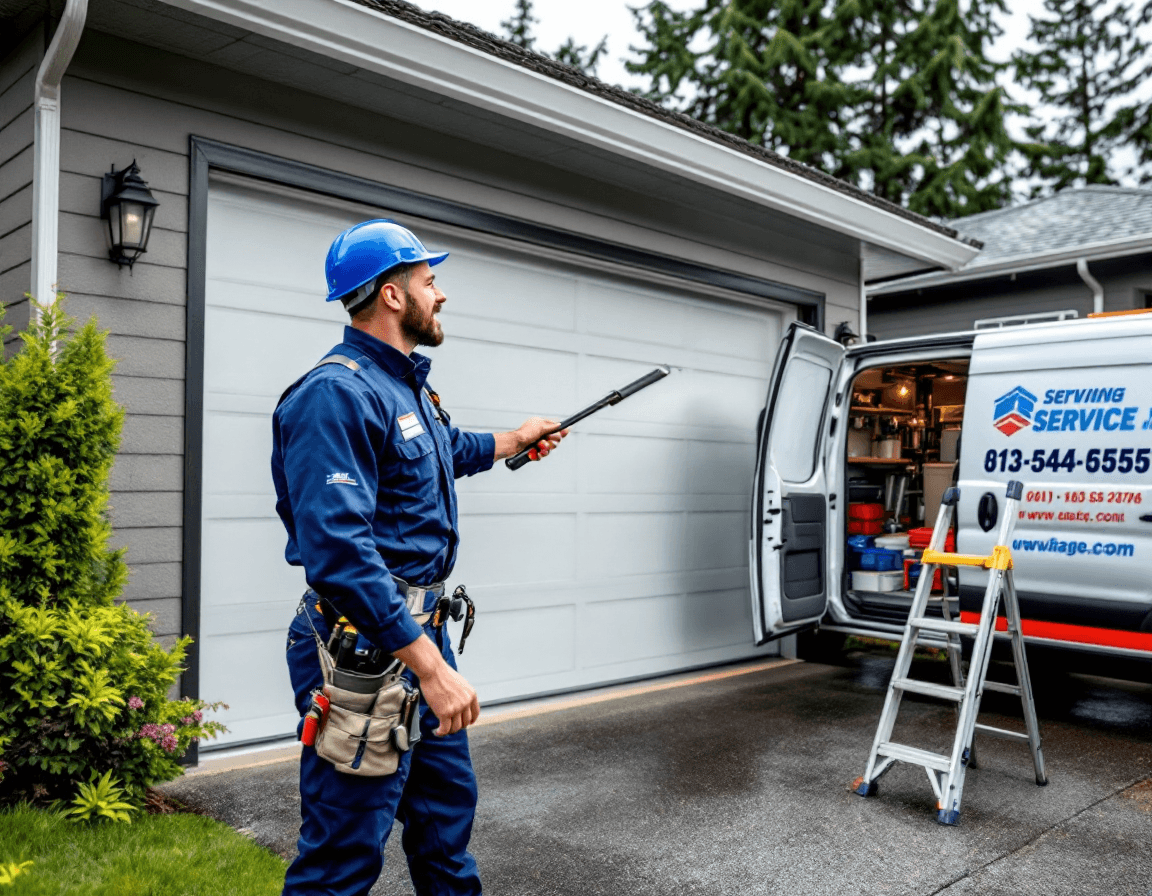
Garage door repair in Tacoma, WA is a common need for homeowners across the city, from the older bungalows and foursquares near Downtown to newer subdivisions on the outskirts of Pierce County. Our technicians see the same problems come up again and again: a door that stops halfway, a remote that suddenly goes quiet, or a panel that looks slightly out of square. Most of these issues are fixable in a single visit, but catching them early keeps a small problem from turning into a damaged opener or a panel that bends under its own weight. This page explains what we typically find, what it means, and how to decide when to call.
Tacoma's weather plays a bigger role in garage door health than many homeowners realize. Our winters bring long stretches of cold rain, and the air stays damp for much of the year, which invites rust on steel tracks, hinges, and roller brackets. Homes close to Commencement Bay and the Port area can also see more salt-laden air, and that accelerates corrosion on exposed hardware. If your garage door works fine in July but starts acting up in November, moisture is often the first suspect. Understanding that pattern makes it easier to explain what you are seeing and to choose the right fix.
Our goal here is to help you think through the problem clearly, not to replace a hands-on inspection. Every door is different, and the same symptom can have several causes. A door that reverses before reaching the floor might be a sensor issue on one property and a travel-limit problem on another. We will walk through the common symptoms we hear about, explain the likely causes, and point out where a licensed professional needs to take over. For most residential repairs, pricing typically falls between $95 and $450, depending on the parts involved and the complexity of the work.
Why Tacoma Garage Doors Face a Harder Life Than Most
Garage doors in Tacoma live a demanding existence, and it starts with the climate. Persistent moisture swells wood trim and weathers the bottom seal, while rain blown sideways under a poorly sealed door can soak the lower panels and the tracks. Steel components that were installed dry in spring can develop surface rust within a couple of wet seasons if they were never coated or lubricated. Over time, that rust increases friction in the rollers and hinges, which makes the motor work harder than it was designed to.
Housing stock adds another layer. Many homes in the North End, Stadium District, and Hilltop were built decades ago, and some have detached garages, sloped driveways, or door openings that are not perfectly square. A slight out-of-level condition in an older frame can cause a door to track unevenly from day one, and the imbalance grows as hardware wears. Newer homes in the outlying ZIP codes often have standard openings, but they can still suffer from builder-grade components that were never upgraded. Knowing what kind of structure your door sits in helps explain why two doors with the same symptom may need different fixes.
Finally, the way Tacoma households use their garages matters. Many residents rely on the garage as their main entry point, so the door cycles several times a day, sometimes with kids, bikes, and recycling bins moving in and out. That frequency adds up quickly. A door that opens and closes a few thousand times a year will show wear on rollers, cables, and the opener's drive system long before a rarely used door would. Keeping that daily rhythm in mind makes it easier to schedule maintenance before a failure leaves you stuck in the driveway.
When the Door Reverses Before It Reaches the Floor
One of the most frequent calls we take is about a door that starts to close, then suddenly reverses and goes back up. Most openers are designed to do this when they detect an obstacle, and that safety feature is a good thing. However, the same reaction can happen for reasons that have nothing to do with an object in the way. The most common culprit is a photo eye sensor pair, the two small units mounted near the bottom of the door tracks. If one sensor is knocked out of alignment, dirty, or blocked by a cobweb or a spider, the opener thinks something is in the path and reverses.
Sensor problems are easy to test. Look for the indicator lights on each sensor, usually a steady light on the receiver and a light on the sender. If one light blinks or stays off, the sensors may be misaligned or the wiring may be damaged. Wipe the lenses with a dry cloth and make sure nothing reflects bright sunlight directly into the receiver, since afternoon glare can confuse some models in the winter months when the sun sits lower in the sky. Gently nudging a sensor so it points straight across to its partner often fixes the problem, but if the lights still do not stabilize, the wiring or the sensor itself may need replacement.
A second cause is the close-limit setting on the opener. Over time, a door can settle slightly, and the travel limits can drift out of their original calibration. If the door stops and reverses just before touching the ground, the close limit may need adjustment, and the force settings may also need a look. Adjusting force is not a casual task, because the opener's safety function protects people and pets. For that reason, we recommend a professional check if the reversal continues after cleaning and aligning the sensors. The door should always reverse when it meets resistance on the floor, and the opener should be tested with a standard object to confirm that it does.
Dead Remotes and Silent Wall Buttons
When a remote or wall button does nothing, the first question is whether the problem lies in the transmitter, the receiver, or the power supply. It sounds simple, but many homeowners spend time troubleshooting the opener when the real issue is a worn battery in the remote. Replace the battery with a fresh one of the correct type before doing anything else. If the remote's indicator light does not come on at all when you press a button, the battery or the remote itself is the likely source.
If the remote works in one location but not another, distance and interference may be playing a role. Metal car frames, new wireless devices, and even thick exterior walls can weaken the signal. Try the remote from a few different spots, including the driveway edge, to see whether the response changes. If it works close to the opener but fails outside, the problem may be a fading signal from an aging transmitter or a receiver that needs a fresh antenna wire check. Reprogramming the remote to the opener is also sometimes necessary after a power outage or a change in the unit, and the instructions are usually printed on the opener's back cover or in the manual.
A silent wall button points toward wiring, a failed switch, or a power issue at the opener itself. Check whether the opener's light and motor respond to the button at all. If nothing happens, the low-voltage wiring may have been damaged by rodents, which are a real concern in older Tacoma garages, or a connection may have loosened behind the wall plate. Make sure the outlet supplying the opener has power, and confirm the breaker has not tripped. If you are comfortable doing a visual check, you can inspect the wiring from the button to the opener, but any repair involving the opener's internal circuit board should be left to a qualified technician.
Grinding, Squealing, and Banging: Decoding the Noise
Garage doors are noisy by nature, but certain sounds signal that something needs attention before it fails outright. A squeal usually points to dry or rusted rollers, hinges, or bearings. In Tacoma's damp climate, that squeal often gets louder after a long rainy stretch because moisture washes away lubricant and leaves metal exposed. Applying a silicone-based or garage-door-specific lubricant to the rollers, hinge pivots, and track edges can quiet things down, though the lubricant should be applied sparingly so it does not drip onto the floor or attract dirt.
Grinding is a more serious sign. It often means the opener's drive gear, the chain, or the belt is worn, or that the rollers have seized in the track. A grinding noise that starts during the opening cycle and continues steadily may indicate that the door is binding somewhere along its path. Stop using the door until the cause is found, because continued operation can strip gears or pull a track out of alignment. Banging, especially at the top or bottom of the travel, often comes from loose track bolts, worn roller stems, or a bottom bracket that has shifted.
Here is a quick guide to the sounds we hear most often and what they usually point to:
- A high-pitched squeal during movement usually means dry or rusted rollers, hinges, or bearings.
- A grinding noise while the door moves suggests worn drive components or binding in the track.
- A sharp bang at the top or bottom of travel often points to loose track hardware or a damaged roller.
- A rattling sound when the door is still usually means loose brackets, bolts, or an unsecured opener mount.
Any sound that comes with visible damage, such as a bent track section, a cracked panel, or a door that sits crooked, should prompt a service call instead of a home fix. Track and spring work involves stored energy that can cause serious injury if released improperly, so these components belong in the hands of licensed professionals.
Crooked Doors, Uneven Movement, and Tracks That Have Jumped
A door that moves unevenly, leans to one side, or has visible gaps at the top or bottom is telling you that one side is working harder than the other. In Tacoma homes with older framing or sloped driveways, the opening may not be perfectly plumb, and the track installation can drift as the house settles through wet seasons. You may notice the door pausing on one side during travel, or you may see a noticeable difference in the gap between the panel and the header on either side. Any of these signs suggests an alignment or balance problem that deserves attention.
The track is the first place to look. Check that the vertical and horizontal sections are straight, that the bolts holding them to the wall and the ceiling are tight, and that no section has pulled away from the roller path. A track that has jumped out of its channel usually shows a clear gap or a visible bend, and it should not be forced back into position by the homeowner. Rollers that have popped out of the track also cause the door to lean, and they can be reseated once the door is safely supported, but if the track itself is damaged, the repair becomes more involved.
Uneven movement can also reflect a problem with the springs or cables. Because those components are under high tension, we do not recommend that homeowners adjust, replace, or loosen them. Our technicians test balance, examine cable drums, and check spring condition with the proper tools and safety procedures. If the door sags, leans, or appears to hang lower on one side, schedule a licensed inspection rather than trying to correct the imbalance yourself. A proper assessment will confirm whether the fix is a simple track realignment or a more significant component replacement.
Stuck Halfway, Jammed, or Slamming Shut
A door that stops partway up or down is one of the more unsettling problems a homeowner can face, especially when it traps a car inside or blocks access in the middle of a busy morning. A stall can result from an obstruction in the track, a binding roller, a sensor that has triggered incorrectly, or a power interruption that the opener did not recover from cleanly. Before attempting anything else, make sure no objects, toys, or debris sit in the door's path, and confirm that the sensors are clear. If the door remains stuck, avoid forcing it, because a jammed door can put strain on the opener and the track.
Slamming shut is the opposite problem and is equally concerning. When a door drops quickly instead of closing at a steady pace, the opener's force or speed settings may have changed, or the balance of the door may have shifted. A door that falls too fast can damage the floor, the bottom seal, and the opener, and it can also create a pinch hazard for children or pets. Because the speed and force of the door depend on both the opener and the physical balance, this symptom almost always needs a professional diagnosis.
If you have a door that is both stuck and uneven, do not attempt to force it open or closed. Disconnect the opener only if you know how to do so safely, and never place your hands or body in the path of a door that is hanging unevenly. Use the manual release only when the door is fully closed and you have confirmed that the spring system is not under immediate strain. In most cases, a licensed technician can stabilize the door, identify the root cause, and restore normal operation without further damage.
Springs and Cables Stay With a Licensed Technician
Springs and cables are the parts of a garage door system that carry the most risk, and they are the reason we are firm about who should work on them. Torsion and extension springs store a large amount of tension, and when they fail or are released incorrectly, they can cause serious injury. The cables that run alongside the springs also hold significant load, and a frayed or broken cable can cause the door to drop unevenly or come off its drum. Even experienced homeowners can underestimate how much force these parts carry.
Our recommendation is simple: do not attempt spring or cable repairs yourself, and do not buy replacement parts and try to install them without training. A licensed, bonded, and insured technician has the proper winding bars, safety equipment, and experience to handle these components. Professional technicians also check the entire system during the repair, including the drums, bearings, and mounting brackets, so that one failed part does not lead to another within a few months. If you are unsure whether a spring or cable is the cause of a problem, a service visit will give you a clear answer.
There are a few maintenance tasks homeowners can safely handle without touching the high-tension components. Keeping the door clean, lubricating the rollers and hinges, tightening visible nuts and bolts that are not under spring load, and testing the auto-reverse function are all reasonable steps. Anything involving springs, cables, drums, or the shaft that carries the springs should be left to professionals. When in doubt, step back and call. The cost of a professional visit is far less than the cost of an injury or a damaged door.
What a Typical Tacoma Repair Visit Looks Like
When you call us for service, we start by asking about the symptoms: what the door does, when it started, whether it happens every time, and whether anything changed recently, such as a storm, a power outage, or a new remote. That conversation helps us prepare the right tools and parts before we arrive. Once on site, the technician tests the opener, checks the sensors, inspects the track alignment, examines the rollers and hinges, and evaluates the balance of the door. We look at the whole system, because a symptom at one point often reflects a problem somewhere else.
After diagnosis, the technician explains what they found in plain language and gives you options where they exist. A sensor realignment or a remote battery replacement is usually quick and inexpensive. A roller replacement, track adjustment, or opener repair takes more time and parts. Our pricing for most residential repairs typically falls between $95 and $450, depending on the parts required and the complexity of the job. We believe you should understand what you are paying for before any work begins, so we walk through the scope of the repair with you first.
Here is what homeowners in Tacoma can generally expect from a standard service call:
- A clear description of the symptoms and a quick walkthrough of the door system before any work begins.
- A diagnostic check of the opener, sensors, remotes, track, rollers, and hinges.
- An explanation of the recommended repair, including parts needed and approximate cost range.
- Testing of the door's safety reversal and travel limits after the repair is complete.
- Cleanup of the work area and a final review of any maintenance steps you can handle at home.
Our service area covers Downtown Tacoma, the North End, Proctor, the Stadium District, and Hilltop, along with the wider set of ZIP codes across Pierce County, including 98402, 98404 through 98409, 98418, 98421, 98422, 98444, 98445, and 98465 through 98467. Scheduling depends on location and availability, so the easiest way to get a firm timeline is to call the office directly.
A Maintenance Rhythm That Fits Rainy-Season Households
Preventive care is one of the best ways to avoid an emergency call in the middle of a wet January. Because Tacoma's moisture and damp air wear on metal hardware year-round, a simple seasonal routine makes a real difference. Early fall is a good time to inspect the door before the rainy months arrive, and early spring is a good time to check for any winter damage. Between those points, a few minutes of attention every month or two can catch small problems before they grow.
Start with the weather seal along the bottom of the door and the side and top seals along the frame. Look for cracks, flattened sections, or gaps where daylight or water can enter. Next, check the sensors for dirt and alignment, and test the auto-reverse by placing a soft object on the floor under the closing door. Look at the tracks for rust, debris, or loose bolts, and wipe down the rollers and hinges. Lubricate moving parts with a product made for garage doors, and avoid heavy grease that collects grit.
Finally, pay attention to the sound and feel of the door during normal use. If it starts to strain, squeal, or pause, make a note and schedule service before it stops working. Keeping a simple log of symptoms, including the date and what you noticed, can help a technician diagnose the issue faster. A little regular attention protects your opener, your vehicle, and the people who use the garage every day.
Choosing a Repair Partner in Pierce County
Selecting a garage door company is an important decision, especially when the work involves components that carry real safety risks. Look for a business that is licensed, bonded, and insured, and ask to confirm those credentials before scheduling. A reputable company will be willing to explain its process, describe its scope of work, and provide a clear estimate before beginning any repair. Be cautious of anyone who pushes for unnecessary replacements or refuses to explain what they are fixing.
It also helps to choose a company familiar with the local conditions in Tacoma and the surrounding Pierce County communities. Technicians who regularly work in the North End, Hilltop, Proctor, and Stadium District understand how older framing, sloped driveways, and damp seasons affect garage doors. That familiarity helps with accurate diagnosis, appropriate parts selection, and realistic maintenance advice. Ask whether the company has experience with your opener brand and door style, since those details influence how quickly a repair can be completed.
Finally, trust your instincts about communication. A good technician will answer your questions, respect your budget, and explain the difference between urgent safety repairs and items that can wait. If a company cannot be reached, cannot describe its process, or cannot give a clear range for the work, keep looking. The right partner will make the repair simpler and help you understand how to keep your door running smoothly through every Tacoma season.
If your garage door is stuck, crooked, noisy, or simply not responding, do not wait for the problem to get worse. Call Seattle Garage Door Fix at (888) 799-3819 to describe what your door is doing and schedule service in Tacoma or anywhere across Pierce County. We are licensed, bonded, and insured, and we will explain your options clearly before any work begins.