
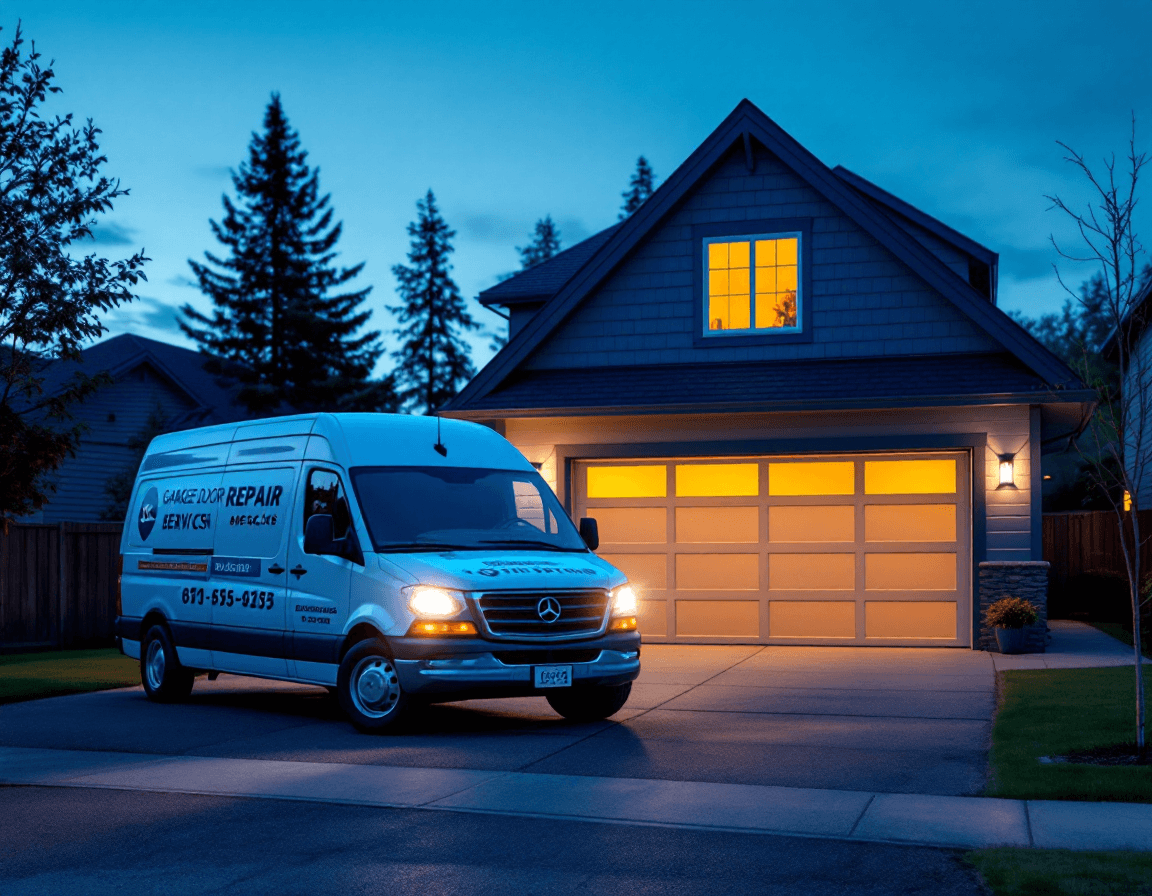
Garage doors fail at the worst possible moments, and in Tacoma the timing is often worse than usual. A cable snaps on a wet Sunday night, a spring lets go before a 6 a.m. shift, or a windstorm off Commencement Bay rattles a door off its tracks. When that happens, Seattle Garage Door Fix provides emergency garage door repair in Tacoma, WA, with 24/7 availability and same-day visits for homes across Pierce County. We are a licensed, bonded, and insured company, and we quote upfront so you know the cost before any work begins.
This page explains what to do in the first few minutes of a garage door emergency, why certain problems are more common in our region, and what to expect when a technician arrives. Tacoma's housing stock is varied, from early-twentieth-century bungalows in the North End and Stadium District to newer builds on the Hilltop slopes and along the Proctor corridor. Each setting presents its own quirks, from detached garages reached by narrow alleys to attached garages that share a driveway with a steep grade. Understanding those details helps you describe the problem clearly when you call.
Not every garage door problem is an emergency, but some situations demand immediate attention. A door stuck open leaves your home exposed. A door that has come off its tracks can bind, tilt, or fall. A broken spring under tension is dangerous to handle without training. The sections below walk through the most common scenarios we see in Tacoma and how to respond safely while help is on the way.
When Your Car Is Trapped Inside: Safe First Moves
A car stuck inside a closed garage is one of the most frustrating emergencies because the fix is often simple, but only if you approach it carefully. Start by checking whether the door is fully closed and whether the opener is still receiving power. Many Tacoma homes have openers plugged into outlets that share circuits with other appliances, so a tripped breaker can make a working door seem broken. Look at the wall control and the opener's indicator light before assuming the mechanism has failed.
If the door is closed and you cannot open it electrically, most residential openers have a red emergency release cord hanging from the trolley. Pulling that cord disconnects the door from the opener so you can lift it manually, but it should be done only when the door is fully closed and the car is not in the path of travel. If the door is partly open or you are unsure of its weight balance, do not pull the release, because the door can drop suddenly. Keep children and pets away from the door while you work through these checks.
Avoid lifting the door by hand if you hear grinding, see a cable hanging loose, or notice the door sitting crooked in its frame. Those signs usually point to a broken cable or spring, which means the door is carrying weight it cannot safely manage. Call us and describe what you see. A technician can often plan the approach over the phone and bring the right parts on the first visit.
Tacoma's Wet, Salty Air and Hardware Wear
Western Washington winters are long, damp, and mild enough that moisture lingers for months. In Tacoma, that persistent wetness combined with salt-laden air drifting in from the Sound creates an environment where steel hardware corrodes more quickly than in drier climates. Rust on torsion spring cones, hinge pins, and cable drums can weaken parts gradually until a single cold morning or heavy load pushes them past their limit. This slow deterioration is why many emergencies seem to arrive without warning.
Galvanized steel and painted tracks resist corrosion better than bare metal, but even protected components benefit from periodic inspection. Homes near the water, along the tideflats or on lower-lying blocks downtown, may see more airborne salt than homes farther inland on the Hilltop. Garage doors on south- and west-facing walls can also absorb more rain and weather cycling, which affects the wood and composite panels as well as the hardware. None of this means your door is doomed, but it does mean that a visual check every few months can catch rust before it becomes a failure.
Lubrication matters too. Use a silicone-based or white lithium spray on rollers, hinges, and tracks, and avoid heavy grease that attracts grit. Wipe off excess lubricant so it does not drip onto a concrete floor, where it can create a slip hazard on wet days. Keep the bottom weather seal in good shape, because gaps there let in water that pools against the threshold and speeds up rust in the lowest components.
A Door Stuck Open: Closing the Security Gap
A garage door that will not close is a security problem as well as an inconvenience. An open garage exposes tools, bicycles, and anything stored on shelves, and it signals to passersby that the house may be unattended. In neighborhoods where people walk dogs at all hours or commute past parked cars late at night, a door left open for even a few hours feels like a serious risk. Your first priority is to make the opening as secure as possible until repairs are done.
Start by checking the photo-eye sensors near the floor on each side of the door. Those two small units face each other and must be aligned and unobstructed for the door to close. Sun glare on a bright afternoon, a bent bracket, a cobweb, or a bicycle wheel can block the beam and keep the door from closing. Wiping the lenses and gently realigning the brackets often resolves the issue. If the lights on the sensors are not steady, the problem may be wiring, and it is worth calling a technician rather than cutting or splicing wires yourself.
If the door still refuses to close, do not attempt to force it down or repair the spring. A door stuck open may have a broken spring or a cable that has slipped off the drum, and either condition makes manual handling dangerous. Secure what you can inside the garage, move valuables to a locked room, and lock the interior door between the garage and the house. Then call us so a technician can arrive quickly and restore the door to a safe, closed position.
- Check that nothing blocks the photo-eye sensors and that both lights are steady.
- Confirm the opener has power and that the wall control is working.
- Lock the door between the garage and the house before you leave the garage.
- Do not attempt to repair springs or cables yourself while the door is open.
Broken Torsion Springs Versus Extension Springs
Many Tacoma garage doors use torsion springs mounted on a steel shaft above the opening, while older or lighter doors may use extension springs running along the side tracks. A broken torsion spring usually produces a loud bang and leaves the door unable to lift, sometimes with a gap visible in the coil. A broken extension spring often makes a softer snap and may leave the door sagging or hanging unevenly. The sound and the behavior of the door both help a technician identify the failure before arriving.
Torsion springs store a great deal of energy, and their winding requires specialized tools and training. Attempting to adjust or replace a torsion spring without the right equipment can cause severe injury. For that reason, we recommend licensed professionals for all spring work, and we do not suggest homeowners try it themselves. Extension springs carry less stored energy than torsion springs but still pose a risk when they fail, because the tension can snap back and cause injury if the door is not properly secured.
When you call, tell the dispatcher which type of spring you think you have, if you know. Mention whether you heard a bang, whether the door moved after the sound, and whether you can see any gaps in the coils. This information helps us bring the right replacement springs and avoids a second trip. Many springs are rated for a specific number of cycles, so an older door that has seen heavy daily use may simply have reached the end of its service life.
Off-Track After an Impact: Reading the Rails and Rollers
A door knocked off its tracks often gives a clear signal: a sudden shudder, a grinding noise, or a gap between a panel and the frame. Impacts from a delivery truck backing into the driveway, a car clipping the door while pulling in, or a runaway toy or bicycle can bend the track or pop a roller out of its channel. Once a roller leaves the track, the door can bind, tilt sideways, and put strain on the cables and springs that were never meant to handle the uneven load.
Do not try to force the door back into the track while it is hanging crooked. Instead, look for obvious debris, a bent track section, or a roller that has jumped out but still sits within reach. If the track is only slightly out of alignment, a technician can often straighten it and reset the rollers. If the damage is more severe, the track may need replacement, and the door may need to be re-hung to restore even tension across the panels.
Shake the door gently only if it is fully closed and you are certain it is secured. Otherwise, keep your distance. Off-track doors can shift without warning, especially if the cable has slipped on one side. Take a few photos of the damage from a safe distance; these can help us assess the situation before we arrive and can support any insurance claim later.
Storm Damage and Wind Loads Near Commencement Bay
Tacoma's exposure to Pacific storms and gusts funneling through the Sound means that wind events can strain garage doors more than homeowners expect. Wide, single-car and double-car doors act like sails when wind hits them squarely, and older tracks or weak bracing can flex until a bolt loosens or a panel buckles. During heavy storms, a door that was working fine yesterday may bow inward, pop out of its header, or let water pour under the threshold. These problems often show up after the storm passes, when the damage is first noticed in the morning.
After a windy night, check the door's bottom edge for gaps, look at the top corners for separation from the framing, and note whether the panels line up evenly. Water intrusion around the seal can soak insulation and drywall at the base of the wall, so look for dark stains, soft spots, or musty odors. If the door is bowed or any section has come loose, keep the opener disconnected and call for service rather than running the door, because a damaged panel can separate further under load.
Keep in mind that homeowners' insurance policies vary, and we cannot tell you how a particular claim will be handled. Document any damage with dated photos before cleanup begins. Our technicians can describe the condition of the door and its components in a written summary if you need that for your insurer, but the coverage decision rests with your carrier.
After a Break-In: Securing the Opening and Recording the Damage
Garage break-ins sometimes involve pry marks on the bottom panel, bent tracks from forced lifting, or a damaged locking mechanism. Even when the intruder leaves quickly, the door may be compromised enough that it cannot be closed securely. If you discover damage after someone has entered, your first call should be to the police, not the garage door company. Once the scene is safe and any report has been filed, we can help restore the door and its locks.
Once a police report is complete, a technician will inspect the door for bent sections, damaged tracks, a compromised lock bar, and any broken opener components. In some cases, a temporary barrier or a reinforced lock can secure the opening until permanent parts arrive. We always recommend replacing damaged locks and reinforcing weak points rather than relying on a patch, especially for doors that serve as an entry point to the home.
Keep a written list of what was damaged and take photos from several angles before any repairs. Note the time you discovered the problem and any items that were stolen or disturbed. This record helps your insurer evaluate the claim and helps us prioritize the repairs that matter most for your security.
Keeping Emergency Calls Predictable: Our Same-Day and Upfront Pricing Approach
When an emergency strikes, the last thing most homeowners want is a surprise on the invoice. Seattle Garage Door Fix offers same-day emergency service across our Tacoma service area, including ZIP codes 98402, 98404, 98405, 98406, 98407, 98408, 98409, 98418, 98421, 98422, 98444, 98445, 98465, 98466, and 98467. We provide upfront pricing for emergency calls, which means the dispatcher explains the expected cost before a technician begins work. If the situation turns out to be different from what you described, the technician will explain the change and get your approval before proceeding.
To keep the call efficient, have a few details ready when you dial. Know your street address and whether the garage is attached or detached, because detached garages in older Tacoma neighborhoods sometimes sit behind houses off an alley. Note the door brand and approximate width if you know it, and describe the symptoms in plain language, such as "the door shook, then stopped halfway" or "I heard a crack and now it won't lift." Let us know whether a vehicle is inside, whether children or pets are nearby, and whether the house can be accessed through the garage.
We bring common replacement parts on service vehicles, but some components, such as custom-sized panels or specialty openers, may need to be ordered. The technician will tell you if that is the case and whether a temporary fix can keep the door secure until the right part arrives. We believe a clear explanation is part of responsible service, especially when the work involves safety-critical components.
Neighborhood Notes: Downtown, North End, Proctor, Stadium District, and Hilltop
Each Tacoma neighborhood has its own garage door character, and knowing those patterns helps us prepare for calls. Downtown Tacoma includes a mix of older commercial-adjacent buildings, converted homes, and newer multi-family properties, where garages may be shared or tucked into lower levels. Access and parking can be tight, so describing the building entrance and any gate codes in advance speeds up the visit. Downtown's proximity to the waterfront also means salt exposure is a factor for some properties.
The North End is known for established homes with detached garages, many of which sit near alleys or on lots with steep driveways. Doors in this area often see freeze-thaw cycles that loosen fasteners, and older openers may need more frequent adjustment. In Proctor, many homes feature single-car garages attached to modest houses, and doors there often take daily use, so spring and cable fatigue is common. The Stadium District's historic homes can have unusual garage openings or non-standard door sizes, which means parts may need custom sizing. Hilltop properties sometimes sit on sloped lots where driveway grade affects how the door sits and how much weight the opener must handle, so the technician will check alignment carefully on every visit.
These are general patterns rather than promises about any single home. Every garage is different, and the most reliable way to know what your door needs is a proper inspection. Mentioning your neighborhood helps us anticipate access and parking, but the diagnosis always comes from what the technician finds on-site.
Simple Habits That Reduce Emergency Repair Costs
Most garage door emergencies begin with a small problem that went unnoticed. A squeak that grew louder, a door that started closing slower, or a hairline gap at the seal are early signals that something needs attention. Scheduling a routine inspection once or twice a year gives a technician the chance to tighten hardware, check cable condition, lubricate moving parts, and measure spring wear before failure occurs. Preventive maintenance rarely eliminates every risk, but it can reduce the frequency of late-night calls.
Test your auto-reverse safety feature every few months by placing a small object on the floor in the door's path and confirming that the door reverses when it contacts the object. Check the emergency release cord to make sure it is intact and accessible, and keep the cord out of the reach of children. Replace worn weatherstripping and check the bottom seal for cracks, because a good seal protects the lower panel and the opener from moisture.
Finally, keep a record of past repairs, part replacements, and inspection dates. This history helps a technician understand what has already been done and can guide decisions about whether a repair or replacement makes more sense. For homes where a door is approaching the end of its useful life, we can discuss options that improve safety and reliability, but we always explain the tradeoffs in plain language.
If your garage door has stopped working, is stuck open, or has come off its tracks anywhere in Tacoma or the surrounding Pierce County area, call Seattle Garage Door Fix right away at (888) 799-3819. We offer 24/7 emergency garage door repair with same-day service and upfront pricing, and our licensed, bonded, and insured technicians will make the door safe and secure as quickly as possible.