
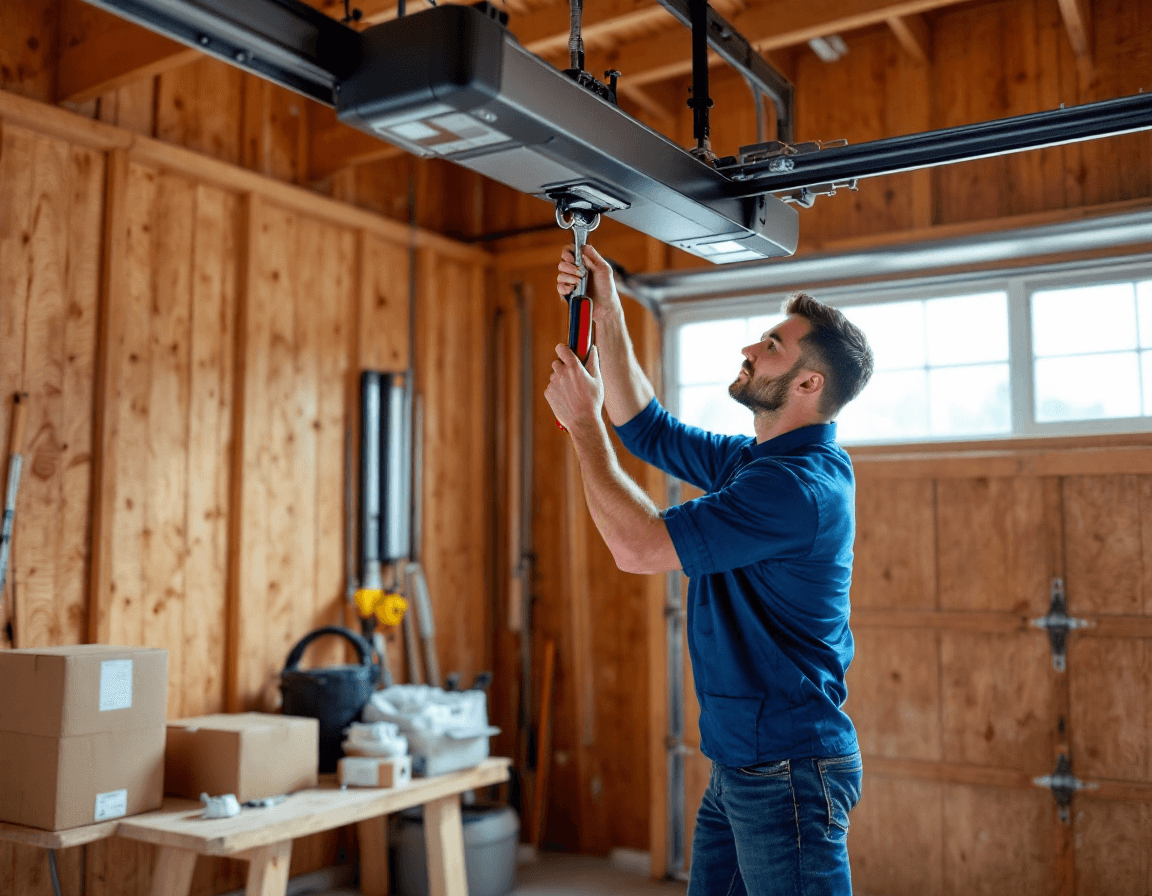
Garage Door Opener Installation & Replacement in Tacoma, WA is one of the most practical upgrades a homeowner can make to a garage, and it is often overdue. A tired opener can turn a simple morning exit into a loud, stuttering ordeal, while an older unit with outdated security can leave the household quietly exposed. Tacoma's damp, mild winters, salty air drifting in from Commencement Bay, and steep residential streets all put extra demands on the hardware that moves your door.
At Seattle Garage Door Fix, we install and replace belt-drive, chain-drive, and wall-mount openers across Tacoma and Pierce County. Our crews are licensed, bonded, and insured, and we work on the full range of residential units, from budget chain drives in older Proctor bungalows to quiet belt systems in newer Hilltop builds. Installed pricing typically falls between $275 and $650, depending on the opener model, the drive type, and any extras you choose, such as battery backup or smart controls.
This page explains how to tell when replacement makes more sense than another repair, how to choose among the main opener styles, and what a Tacoma installation visit actually involves. It also covers the security and smart-home questions homeowners ask most often, and it draws a clear line around the work that belongs only with a licensed professional. If you are weighing a new opener right now, read through the sections below before you commit to a model.
Why Tacoma Garage Doors Wear Openers Out Faster Than You Might Expect
Pacific Northwest weather is gentler than the Midwest's extremes, but it is persistent, and persistence is hard on garage equipment. Tacoma sees long stretches of drizzle, high humidity, and damp concrete slabs that stay cool well into spring. Moisture finds its way into wiring junctions, sensor housings, and the metal brackets that hold the opener to the ceiling. Over several years, that slow dampness contributes to corrosion, sticky contacts, and erratic limit settings.
Coastal exposure matters too. Homes closer to the water, including parts of the North End and areas that catch breezes from the Sound, see more salt-laden air than inland neighborhoods. Salt accelerates rust on steel rails, trolley arms, and mounting hardware, and it can creep into exposed electrical connections. An opener in a poorly ventilated garage may run hotter and wear its drive components sooner, especially if the door is heavy or the springs are out of balance.
Many Tacoma homes also have older garages built around single-car footprints, with openers mounted close to the ceiling joists and little room to spare. That tight geometry can cause vibration, rattling, and uneven travel. When an opener has been working against an imbalanced door for years, the motor carries strain it was never designed to handle. Replacing the opener is a good moment to have the whole system checked, because a new unit can only perform as well as the door it is attached to.
Reading the Warning Signs That Your Current Opener Is Finished
Most openers do not fail overnight. They give hints for months, and homeowners often adapt without realizing how far the performance has slipped. Learning to spot these signals early lets you plan a replacement on your schedule rather than scrambling after the door stops in the middle of the driveway. A quick check of your daily routine can reveal more than you might expect.
Pay attention to changes in sound, speed, and reliability. A healthy opener hums steadily and reverses cleanly when it meets resistance. A failing one grinds, clunks at the end of travel, or stops and starts. If you find yourself pressing the remote two or three times, or if the door reverses for no obvious reason, the logic board or the motor may be on its way out.
Common signs that replacement is more sensible than repair include:
- The motor is loud enough that neighbors comment on it, or it has grown noticeably louder over the past year
- The door opens or closes noticeably slower than it used to, even after the springs have been properly balanced
- Remotes, keypads, or wall controls work intermittently, particularly after rain or during cold snaps
- Repair estimates are approaching the cost of a new unit, especially if the model is discontinued or parts are hard to source
- The opener lacks rolling-code security, which leaves older remotes vulnerable to copying
- You want smart features such as phone alerts, scheduling, or remote status checks
- The unit has no battery backup, so a power outage leaves you stuck inside or outside the garage
If several of these apply, a replacement is usually the better investment. Our technicians will tell you honestly if a simple repair would solve the problem, and they will also explain when the economics favor a new opener.
Belt-Drive, Chain-Drive, or Wall-Mount: Matching the Drive to Your Garage
Choosing the right drive style is the first decision that shapes how your new opener will sound, perform, and fit into your space. Chain-drive openers use a steel chain running along a rail. They are typically the most affordable option and are durable, well understood, and easy to service. Their trade-off is noise, since the chain makes a distinct rattle as it moves, which can be bothersome in an attached garage with a bedroom above or next to it.
Belt-drive openers use a reinforced rubber belt in place of the chain. The result is noticeably quieter operation, which is why many Tacoma homeowners choose belt drives for attached garages, townhomes, and houses where the garage shares a wall with living space. Belts stretch slightly over time, so they need occasional tension checks, but the difference in noise level is usually the deciding factor. If your current opener is a loud chain drive and you value a calm evening in the living room, a belt drive is often the right upgrade.
Wall-mount openers attach to the side wall rather than the ceiling. This design is valuable in garages with low ceilings, unusual joist layouts, or storage racks overhead that you want to keep clear. Wall-mount units can also suit homes with tall or heavy doors, though the wall must be solid enough to carry the load. Our technicians check the wall structure, the door height, and your ceiling clearance before recommending one. A wall-mount installation can be a clean solution when a standard ceiling mount would interfere with your garage's layout.
Rolling-Code Security and Why Older Remotes Are a Liability
Older openers often relied on fixed-code remotes, meaning the signal sent from your transmitter never changed. Anyone with a basic code-grabbing device could record that signal and replay it later to open the door. Rolling-code technology solves this by generating a new code every time you press the button, so a captured signal becomes useless once it has been used. If your opener predates this standard, upgrading is one of the most meaningful security improvements you can make.
The risk is not theoretical for homeowners who park on busy streets or live in apartment-adjacent blocks where neighbors share alleys and parking. A garage door that opens to a copied code can expose tools, bicycles, and anything stored inside, and it can give an intruder access to the house if the garage connects to the interior. Rolling-code openers, paired with newer remotes and keypads, make this kind of attack far harder. Many newer models also allow you to delete lost remotes from the unit, which is something older openers often cannot do.
Good security also depends on habits. Keep remotes out of sight in parked cars, avoid leaving a remote clipped to a sun visor where it can be seen through a window, and replace any remote you have lost. When you schedule a replacement, our technicians will walk you through how to program each remote, how to clear old ones, and how to set up any keypad codes so the system remains tidy and secure.
Smart Control, myQ, and Wi-Fi Features Without the Headaches
Smart openers have become a popular choice in Tacoma, particularly among households that juggle commutes, school pickups, and deliveries. Wi-Fi-enabled units, including models compatible with myQ, let you open and close the door from a phone, check whether it is closed, and receive alerts when it has been left open. Some systems also support scheduled closing and integration with voice assistants, which can be useful if you often forget the garage when heading out for the day.
The key to a pleasant smart-opener experience is a stable home network. Garages are often the farthest point from the router, and thick walls or distance can cause dropped connections. Before installation, we check signal strength in the garage and recommend a mesh extender or relocated router if necessary. We also help you set up the app account, pair the opener to your network, and configure notifications so you receive only the alerts you actually want.
Smart features do add complexity, and that is worth acknowledging. Every connected device is another item to keep updated, and a weak password on a cloud account can create a vulnerability of its own. Use a unique password, enable two-factor authentication where offered, and keep the app updated. A well-configured smart opener is a convenience and a security asset, but it works best when you understand its settings rather than leaving them on factory defaults.
Battery Backup for Power Outages and Winter Storms
Pierce County is not immune to power interruptions. Windstorms, wet-season outages, and the occasional winter ice event can leave neighborhoods dark for hours. A standard opener depends entirely on mains electricity, so when the power fails, the door does not move, and if the auto-release is needed, the process can be tricky for anyone unfamiliar with the emergency cord. Battery backup addresses this gap by keeping the opener running for a limited number of cycles during an outage.
Backup batteries vary by model. Some provide enough power for several door cycles, which is often enough to get a car out or to bring it back in during a short interruption. Others are designed primarily to keep remotes and keypads responsive, which is helpful in cold or damp conditions when you want to confirm the door is secure. We discuss the expected backup capacity for each model we install so that your expectations match what the unit can actually deliver.
Battery backup is also a practical safety feature. During an outage, a family member who needs to leave the house quickly, or a caregiver who relies on the garage for access, benefits from knowing the door will still operate. Our technicians will show you where the backup battery is located, how to check its status, and when it should be replaced, which is typically every few years depending on use and conditions.
What a Typical Tacoma Installation Visit Covers
A professional installation is more than unboxing a motor and bolting it to the ceiling. Our crews begin with an inspection of the door, the tracks, the rollers, the hinges, and the existing wiring. We confirm that the door is balanced and moving smoothly, because an opener installed on a stiff or unbalanced door will struggle and shorten its own service life. If we find problems with the door hardware, we explain them clearly and give you the option to address them at the same visit.
Next, we select the correct opener for your door's weight, size, and drive style, then mount the rail, motor unit, and header bracket. The header bracket must be secured to solid framing, which in many Tacoma garages means working around joists, ductwork, or older plaster ceilings. We then install the wall control, run the wiring to the correct outlet, and program the safety reversing sensors, which must be aligned and tested before the job is finished. Limit settings, force settings, and auto-close timing are all adjusted to match your door.
The visit ends with a walkthrough. We test the door repeatedly, confirm that the safety sensors reverse the door when an obstruction is placed in the path, and show you how the emergency release works. We also program your remotes and any keypad codes, explain the battery backup, and provide written information about your warranty and maintenance schedule. Taking a few minutes to ask questions at this stage is well worth the time.
Pricing From $275 to $650: What Shapes the Final Number
Installed pricing for a new opener generally runs from $275 to $650. The spread reflects differences in the opener itself, since a basic chain-drive unit costs less than a quiet belt-drive model with Wi-Fi and battery backup. The price also depends on the complexity of the installation, such as whether the ceiling has adequate clearance, whether a wall-mount bracket is needed, and whether any electrical work is required to add a dedicated outlet.
Several factors commonly push the final price up or down. Door weight matters, since heavier doors require a more powerful motor. Specialty features, including integrated lighting upgrades or certain smart-home accessories, add cost. Replacing a very old unit may also reveal wiring or structural issues that need attention before the new opener can be mounted safely. We provide a clear estimate before work begins so that you understand what is included and what might change.
When comparing quotes, look beyond the headline price. Confirm that the company is licensed, bonded, and insured, that the quote includes programming and a walkthrough, and that the warranty terms are written down. A low price that omits these items can cost more over time, especially if a poorly installed unit causes repeated service calls. Our goal is to deliver a reliable installation that you can rely on for years.
Neighborhood Notes: Downtown, North End, Proctor, Stadium District, and Hilltop
Tacoma is a city of distinct neighborhoods, and the garages in each area tend to reflect their history and layout. Downtown and the surrounding blocks include many older homes and converted buildings where garage access can be tight, and ceiling clearance is sometimes limited. Wall-mount openers are frequently the right answer in these spaces, and our technicians plan the mounting carefully to avoid conflicts with stored items and existing lighting.
The North End is known for its historic homes, many with detached or rear-alley garages that have seen decades of weather. Older doors in these neighborhoods often need balancing before a new opener can perform well, and we take that into account when scheduling. Proctor, with its mix of bungalows and mid-century houses, often features single-car garages where a quiet belt drive can make a noticeable difference for nearby bedrooms. Homes in the Stadium District, which sit on sloped streets with dramatic views, may have garages set into hillsides, and we check for moisture and drainage issues that affect the slab and the door bottom seal.
On the Hilltop, many properties are older and some have garages that were added later, sometimes with framing that needs careful evaluation before mounting. Wind exposure on higher ground can also affect how often a door is opened and closed in storm conditions, which is one reason battery backup and reliable safety sensors matter. Across all these neighborhoods, our approach is the same: inspect first, recommend the right drive style, and install only what your garage can support safely.
Safety Boundaries: What Stays With a Licensed Technician
Garage door openers are powerful machines, and their safe operation depends on correct installation and calibration. Homeowners can and should perform simple tasks such as testing the safety reversal by placing a flat object in the door's path, keeping the sensors clean, and using the emergency release carefully. Beyond these basics, certain work belongs only with a licensed professional, and we want to be direct about where those lines fall.
Spring and cable work is the most serious example. Torsion and extension springs store enormous tension, and a single mistake during adjustment or replacement can cause severe injury. Cables can snap and whip with force, and damaged drums can release the door unexpectedly. Never attempt to wind, unwind, or replace a spring yourself, and do not try to disconnect the opener from a door that is under spring tension without knowing exactly what you are doing. Our licensed technicians handle these components with the proper tools and training.
Electrical work also deserves caution. If a new outlet is needed, or if existing wiring looks damaged, scorched, or improperly grounded, call a qualified professional rather than improvising. The same goes for mounting hardware into weak framing, because an opener that pulls loose can drop the motor onto a vehicle or a person. When you schedule a Tacoma installation with us, every spring, cable, wire, and mounting point is handled by someone licensed to do the work safely.
Serving Pierce County ZIP Codes With Dependable Installation
Our opener installation and replacement service covers Tacoma and surrounding Pierce County communities. Whether your home sits near downtown, out toward the southern neighborhoods, or in the quieter residential blocks nearby, our crews can schedule a visit and bring the right equipment for your garage. We serve the following ZIP codes:
- 98402
- 98404
- 98405
- 98406
- 98407
- 98408
- 98409
- 98418
- 98421
- 98422
- 98444
- 98445
- 98465
- 98466
- 98467
If your ZIP code is not on this list but you are close to the area, call us anyway. Our dispatch team can confirm coverage and let you know what to expect. We also serve many additional communities across Western Washington, so an inquiry is always welcome.
Ready to upgrade a noisy, slow, or outdated opener? Call Seattle Garage Door Fix at (888) 799-3819 to schedule a Tacoma installation, ask about belt-drive, chain-drive, and wall-mount options, or request a clear estimate for your garage. Our licensed, bonded, and insured technicians will inspect your door, recommend the right opener for your home, and make sure your new system is safe, quiet, and ready for whatever the Pacific Northwest weather brings.