
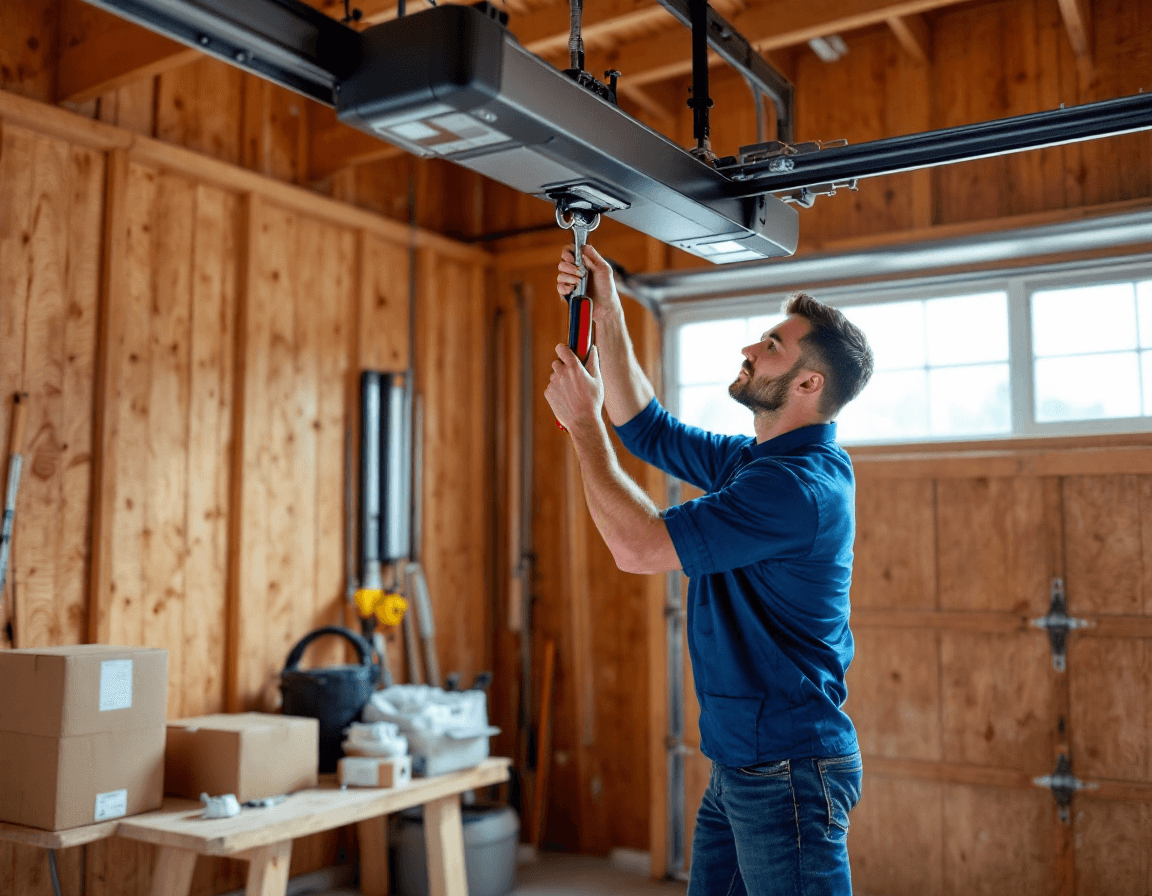
Garage door opener installation and replacement in Ruston, WA is one of the most practical upgrades a homeowner can make, and it often delivers more daily benefit than people expect. Ruston is a small, close-knit town tucked between the Commencement Bay shoreline and the wooded bluffs of north Tacoma, and many of the garages here were built decades ago for cars and storage that look nothing like today's households. A tired opener in one of these garages can be loud enough to wake the neighbors, slow enough to frustrate a commute, and unreliable enough to leave you sitting in the driveway on a rainy night. Replacing it is usually a straightforward job, and the right unit can make the door feel brand new.
Seattle Garage Door Fix works with Ruston homeowners on opener installs, replacements, and the smart-control upgrades that have become common over the past several years. Our technicians are licensed, bonded, and insured, and we treat every opener job as a complete system check rather than a simple box swap. The door, the tracks, the safety sensors, the wiring, and the wall control all affect how the new opener performs. That is why we look at the whole setup before recommending a model, and why the final price depends on which opener fits your door and your priorities.
This page explains what to expect when you consider a new opener in Ruston, from recognizing when your current unit has reached the end of its useful life to understanding drive types, security, smart features, battery backup, and installed pricing. Each section is written for a homeowner who wants practical answers rather than sales language. If you are weighing repair against replacement, or you simply want a quieter, safer, more modern system, the sections below will help you make a confident decision.
Why Ruston Garages Put Openers to the Test
Ruston's location shapes how a garage door opener lives its life. Homes here sit close to the water, and the salt-tinged marine air that drifts off Commencement Bay settles on metal hardware over time. Combined with the damp, mild winters typical of the Puget Sound lowlands, that moisture can encourage rust on exposed brackets, corrosion on electrical contacts, and sluggish movement in trolley carriages. Openers installed in attached garages that share walls with heated living space may fare better, while detached or poorly ventilated garages often show wear sooner.
Many Ruston residences were built in eras when garage doors were lighter, simpler, and operated by older openers with fewer safety features. Those original openers may still turn on, but they often work harder than they should to lift heavier modern insulated doors. Homeowners who have added a second car, a workbench, or a heavier door panel may notice that the opener strains more than it used to. Over time this extra load wears gears, motors, and mounting hardware until the unit becomes noisy or unpredictable.
Power conditions in the region also matter. Winter windstorms that sweep across the Sound can knock out power for hours at a time, and when they do, the garage door may be the only way to reach your vehicle or leave the house in an emergency. An opener without any backup can leave you stranded, which is one reason many Ruston homeowners ask about battery options during a replacement. Thinking about these conditions early helps you choose equipment that will hold up to the local environment and the local habits of your household.
Reading the Warning Signs Your Opener Is Finished
Most openers do not fail without warning. They give off clues for weeks or months before a complete breakdown, and learning to recognize those clues can save you from an inconvenient failure on a cold morning. Some signs are merely annoying, while others point to a safety concern that should be addressed right away. A replacement becomes the smarter choice when several of these symptoms appear together or when a repair estimate starts to approach the cost of a new unit.
- The motor runs but the door moves slowly, stops partway, or hesitates before opening.
- The opener makes grinding, rattling, or squealing noises that seem to get worse with each cycle.
- The door reverses for no clear reason, or the travel limits drift so the door does not close fully.
- The remote works only when you stand close to the door, or the range has dropped noticeably.
- The unit feels hot to the touch after normal use, or you notice a burning smell from the motor housing.
- Replacement parts are no longer available for the model, which makes repairs costly and uncertain.
When a unit is more than roughly a decade old and shows two or more of these signs, replacing it usually makes more sense than continuing to patch it. Replacement also gives you a chance to fix security and convenience gaps, such as an outdated remote system or no backup power. A good technician will tell you plainly whether a repair is worth the money, and will not push a new unit if a simple adjustment or a sensor fix will solve the problem. Our goal is to recommend the option that is safe, reliable, and fair for your situation.
Belt, Chain, or Wall-Mount: Matching Drive to Your Garage
The drive style is the mechanism that moves the trolley along the rail and lifts the door, and it has the biggest effect on noise and maintenance. Chain-drive openers use a metal chain running along the rail. They are rugged, widely compatible, and typically the most budget-friendly option, but they produce more noise and vibration. Belt-drive openers use a reinforced rubber belt that runs much more quietly and smoothly, which is why many homeowners choose them when the garage is attached to a bedroom or family room. Wall-mount openers attach the motor to the side wall instead of the ceiling, freeing overhead space for storage or a high-lift track setup.
Choosing among these styles depends on how you use the garage and how much space you have. A belt-drive opener is often the best match for an attached garage in a residential neighborhood where quiet evenings matter, and it tends to hold up well in the damp conditions common along the Sound. A chain-drive unit remains a solid, durable choice for a detached garage or a workshop where noise is less of a concern. A wall-mount model can be a strong option in a garage with low ceilings or unusual track geometry, since it keeps the motor out of the way while still handling the door's weight.
Our technicians measure the door height, track configuration, ceiling clearance, and existing wiring before suggesting a drive type. We also consider whether the door is a standard one-piece, a multi-section insulated panel, or a heavier custom design, because that affects the horsepower you need. Some doors need a stronger motor even if they look ordinary from the street. Matching the drive to the door protects the motor from overheating and extends the life of the entire system.
Rolling Code Security and Why Older Remotes Matter
Security is one of the most important reasons homeowners replace an opener, even when the old one still runs. Older openers, especially those built before rolling-code technology became standard, transmit a fixed signal that never changes. A determined person with simple equipment could record that signal and replay it to open the door. Rolling-code systems solve this problem by changing the transmitted code every time the remote is used, so a recorded signal is useless for opening the door a second time.
For a Ruston household, this upgrade matters whether you live on a quiet street or near busier thoroughfares. Garages are a common entry point for opportunistic theft, and a door that opens with a stolen or copied signal can expose everything stored inside, including tools, bikes, and the connection to your home. A modern opener with rolling-code security gives you confidence that your remotes and keypads are not quietly handing out access. It also makes it easy to delete lost remotes from the system, something older units often cannot do.
Replacing the opener is also a good moment to review the rest of your access points. We recommend checking the wall control, keypad codes, and any old remotes that family members no longer use, and clearing out anything that is not needed. If you have an older unit that cannot be reprogrammed, a replacement gives you a clean slate. We walk homeowners through pairing new remotes and deleting old ones so the system matches who actually needs access today.
Phone Control, Wi-Fi, and Living With myQ
Smart openers have moved from novelty to everyday convenience, and many Ruston homeowners now want to check the door from their phones, grant temporary access to a family member, or receive an alert when the garage has been left open. Wi-Fi-enabled openers, including models compatible with the myQ app ecosystem, make these features possible. Many units also work with voice assistants and home automation platforms, so the door can become part of a broader routine instead of a separate device.
Smart control is useful, but it works best when the home network is stable and the opener is placed where it can maintain a reliable connection. Garages with thick walls or distant routers sometimes need a range extender or a relocated access point to keep the opener online. We check signal strength during installation and tell you honestly whether your garage setup is ready for smart features. If it is not, we will suggest a practical fix rather than selling a feature that will frustrate you later.
Privacy and account management deserve attention too. When you connect an opener to a cloud app, you should know who has access, how guest users are added, and how to remove them when they no longer need the door. We recommend setting up strong passwords, enabling two-factor authentication where available, and reviewing the list of connected users every few months. Smart convenience is a real benefit, but it is most valuable when you control it confidently.
Battery Backup for Winter Windstorms and Outages
A battery backup kit allows the opener to run for several cycles when household power goes out, which can be a lifesaver during a winter storm. Without backup, a standard opener is dead weight during an outage, leaving you unable to open the door from the driveway or get a car out in the early morning. Battery units are typically compact modules that mount near the opener and charge continuously while the power is on. Their run time depends on the model, the door weight, and how often the door cycles.
In Ruston, where windstorms occasionally bring down lines or cause extended interruptions, a backup system can offer real peace of mind. It also helps households that rely on an electric vehicle, since being able to pull out of the garage during an outage can matter for work, school, or medical appointments. Battery backup is not a substitute for a manual release plan, and it should be combined with a clear understanding of how to disengage the opener and lift the door safely by hand when needed.
Battery backup is an optional add-on, and the decision should be based on how much you would lose without it. Some homeowners prefer a basic setup for a detached garage used mainly for storage, while others want a more robust module for an attached garage that serves as the main entrance. We explain what each option delivers, how long the battery typically lasts before replacement, and what maintenance it requires. The right choice keeps your household moving even when the grid does not cooperate.
What Installation Looks Like on a Ruston Visit
A typical opener installation begins with an inspection rather than an immediate unboxing. Our technician checks the door's weight, balance, track alignment, spring condition, and existing wiring, then confirms that the old opener can be removed without damaging the structure above the door. We also verify that the new unit will clear the ceiling, match the door's lift style, and fit the available space for any wall-mount bracket. Taking time at this stage prevents surprises halfway through the job.
Once the plan is set, the old opener is removed, the new rail and motor are assembled, and the unit is mounted securely to the ceiling joists or the wall, depending on the model. The trolley is connected to the door, the limit settings are programmed, and the auto-reverse safety system is tested. Wiring is connected to the wall control and any keypads, and the remote transmitters are paired with the new receiver. The technician then runs the door through multiple full cycles to confirm smooth travel, proper stopping points, and correct reversal behavior.
Before leaving, we walk you through how the system works, how to use the remotes, how to set up any app features, and how to perform the manual release safely. We also explain what routine checks to expect, such as monthly tests of the auto-reverse feature by placing a flat object on the closed door's path and confirming the door reverses. These basic habits help you catch problems early and keep your opener performing well for years. If anything in the installation reveals a spring, cable, or track concern, we will explain it clearly and recommend the right next step.
Decoding the $275–$650 Installed Price Range
Installed pricing for a garage door opener in our service area typically falls between $275 and $650, and the final number depends mainly on the opener model you choose. Entry-level chain-drive units generally sit at the lower end, while belt-drive, wall-mount, smart-enabled, and battery-backup models generally fall higher in the range. The installed price includes the opener itself, mounting hardware, and the labor needed to set up and test the system. We confirm the exact figure after reviewing your door and your preferences, so you know what you are paying before work begins.
Several factors can influence where your project lands within that range. A door that requires additional track modifications, a non-standard mounting configuration, or updated wiring may need extra parts or time. Choosing a higher-capacity motor for a heavy insulated door is often a wise investment, because it reduces strain and extends service life. We will always explain why a specific model is recommended for your door, rather than simply offering the most expensive option on the shelf.
It is also worth comparing the price of replacement against the cost of repeated repairs. If you have already paid for several service calls on an aging unit, the cumulative expense may approach the cost of a modern opener with a warranty on the new equipment. A new installation also brings improved safety and security features that are difficult to add to an old system. We are happy to review your situation and give you a clear, honest recommendation.
Quiet Nights Near Point Ruston and Point Defiance
Ruston sits within easy reach of two places that define the local landscape: Point Ruston, the redeveloped waterfront district on the former industrial shoreline, and Point Defiance, the large wooded park at the edge of Tacoma with trails, shoreline views, and mature trees. Homes in and around these areas often enjoy evening walks, bay breezes, and the sound of water and wind. A loud garage door can disrupt that peaceful rhythm, especially when it opens early in the morning or late at night. A quieter drive system helps protect that atmosphere for everyone nearby.
Noise is not only about the opener's motor. The door's hinges, rollers, and track alignment all contribute to how the system sounds. During installation, we check the rollers and lubricate moving parts appropriately, and we make sure the track is level and secure so the door does not rattle against the frame. A belt-drive opener paired with well-maintained hardware can make a noticeable difference in how the garage feels during daily use. Many homeowners are surprised by how much calmer the whole setup becomes after a replacement.
Thoughtful placement also helps. If the garage shares a wall with a bedroom or sits near a neighbor's windows, we can discuss ways to reduce vibration transfer, such as using appropriate mounting hardware and checking that the opener is not resting directly against framing that carries sound. We do not make promises about specific decibel levels, since real results vary by door and building. What we can do is pair the right drive type with careful installation, so the opener runs as smoothly and quietly as your garage allows.
Safety Checks We Never Skip, and Where Springs Fit In
Safety is the foundation of every opener job we perform. Modern openers include automatic reversal systems that stop and reverse the door if it contacts an obstruction, along with photo-eye sensors near the floor that prevent closing when something breaks the beam. During installation, we test both systems, confirm that the force settings are correct, and verify that the door reverses reliably. These checks are required for a safe installation, and they are something every homeowner should understand and test periodically.
It is equally important to understand the boundaries of an opener project. An opener installation does not include working on the torsion springs or cables that counterbalance the door, and those components should never be adjusted or replaced by an untrained person. Spring tension stores enormous energy, and improper handling can cause severe injury. Spring and cable work must be performed by a licensed, trained professional with the right tools and safety procedures. If we notice a worn spring or frayed cable during an opener visit, we will flag it clearly and recommend a licensed repair rather than attempting it as part of the opener job.
For homeowners in Ruston who are unsure whether their door is ready for a new opener, we are happy to perform a complete evaluation. We check balance, track condition, safety sensors, and the general health of the door before recommending a unit. This approach ensures the new opener is not asked to carry a door that is out of balance, which would shorten its life and create unnecessary risk. Calling (888) 799-3819 is a simple first step toward a safer, quieter, and more reliable garage.
Ready to talk through your options? Call Seattle Garage Door Fix at (888) 799-3819 to schedule an opener installation or replacement in Ruston. Our licensed, bonded, and insured technicians can review your door, recommend the right drive style and features, and give you a clear installed price before any work begins.